Business Diplomat: Local Knowledge, Large Investment, the Witness of History
This interview features Prof. Dr. Ragıp Kutay Karaca, a scholar, political historian, and international relations specialist with a military background, recognized for his research on political history, Turkish foreign policy, international security, and Sino-Turkish relations
Introduction
The success of an international investment is usually measured by feasibility reports: cost, market size, payback period. Yet a factor that does not appear in the reports can decide the fate of the investment: how well the investor knows the country they are going to. In this part of its interview series, Business Diplomat presents three observations that start from this factor and reach to the diplomatic nature of investment and its historical roots.
First observation: what makes an investment last?
Entering a market and staying in it are separate tasks. The first takes capital and courage; the second takes knowledge. The first observation says what that knowledge is:
"Having knowledge of local culture, society's expectations and ways of doing business provides an important advantage for the sustainability of international business relations."
Three fields of knowledge are named, and each answers a separate question. Local culture shows what people value. Society's expectations reveal what is wanted from a company beyond its product: employment, respect, a contribution to the locality. Ways of doing business explain how decisions are made, how trust is built and how a contract is understood. The emphasis of the sentence falls on "sustainability". An agreement can be signed without this knowledge, but the relationship is shaken at the first problem. An investor with local knowledge sees a problem before it arises and stops being a stranger in the eyes of society.
Second observation: why did investment become a matter for diplomacy?
An activity so closely bound up with local society cannot remain a purely commercial transaction. As the scale grows, so does the effect. The second observation draws this conclusion:
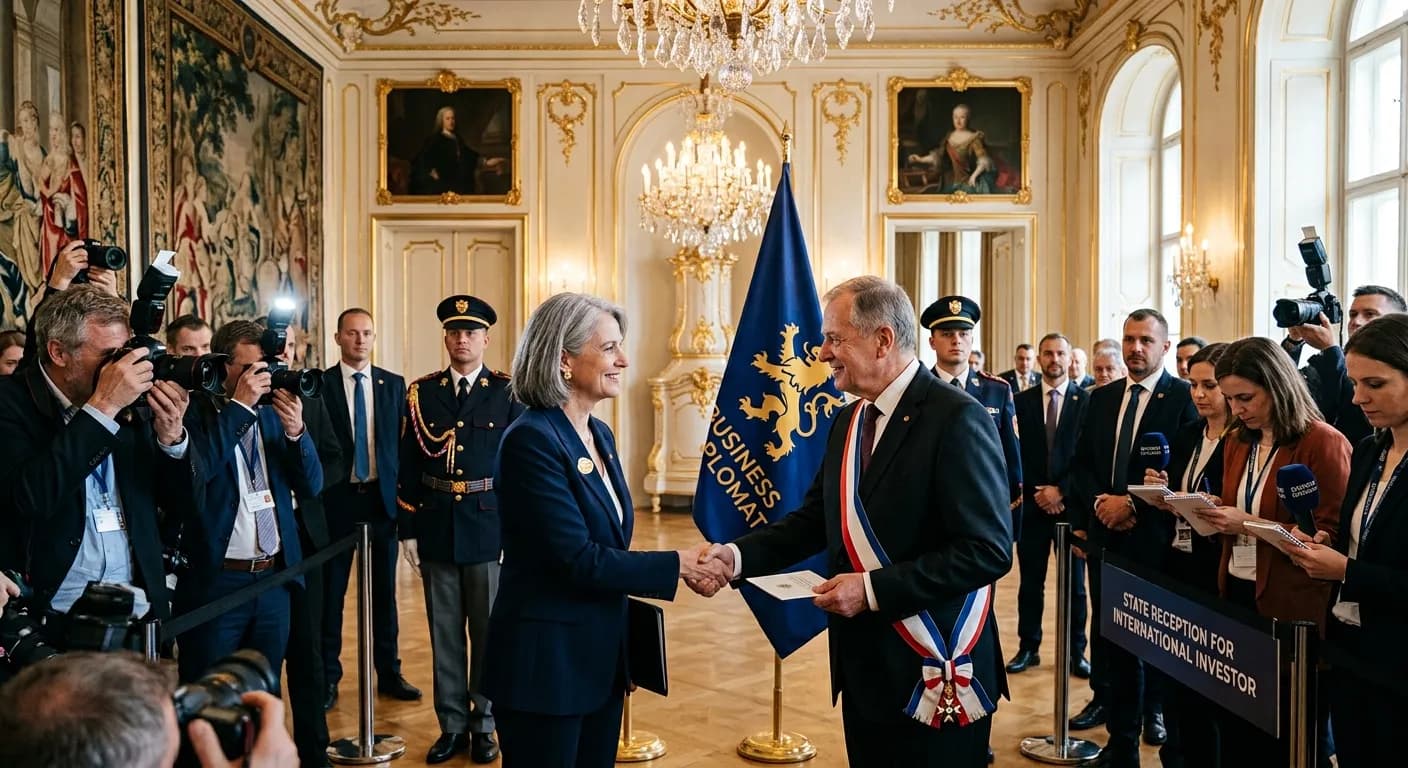
"Therefore, large-scale investments today are ceasing to be a purely economic matter and are increasingly becoming a part of diplomatic relations."
The sentence begins with "therefore" and links to the one before: because investment touches the life of a society, it also becomes a matter between states. A large investment provides work for thousands, changes infrastructure, brings technology and binds two countries together for years. This is why such projects are often discussed in intergovernmental talks, announced during official visits and regarded as an indicator of bilateral relations. The word "increasingly" also shows a direction: the trend is strengthening. The political climate between two countries affects investment, and investment affects that climate.
Third observation: is this a new situation?
Today's picture may look new. The third observation recalls that history offers examples:
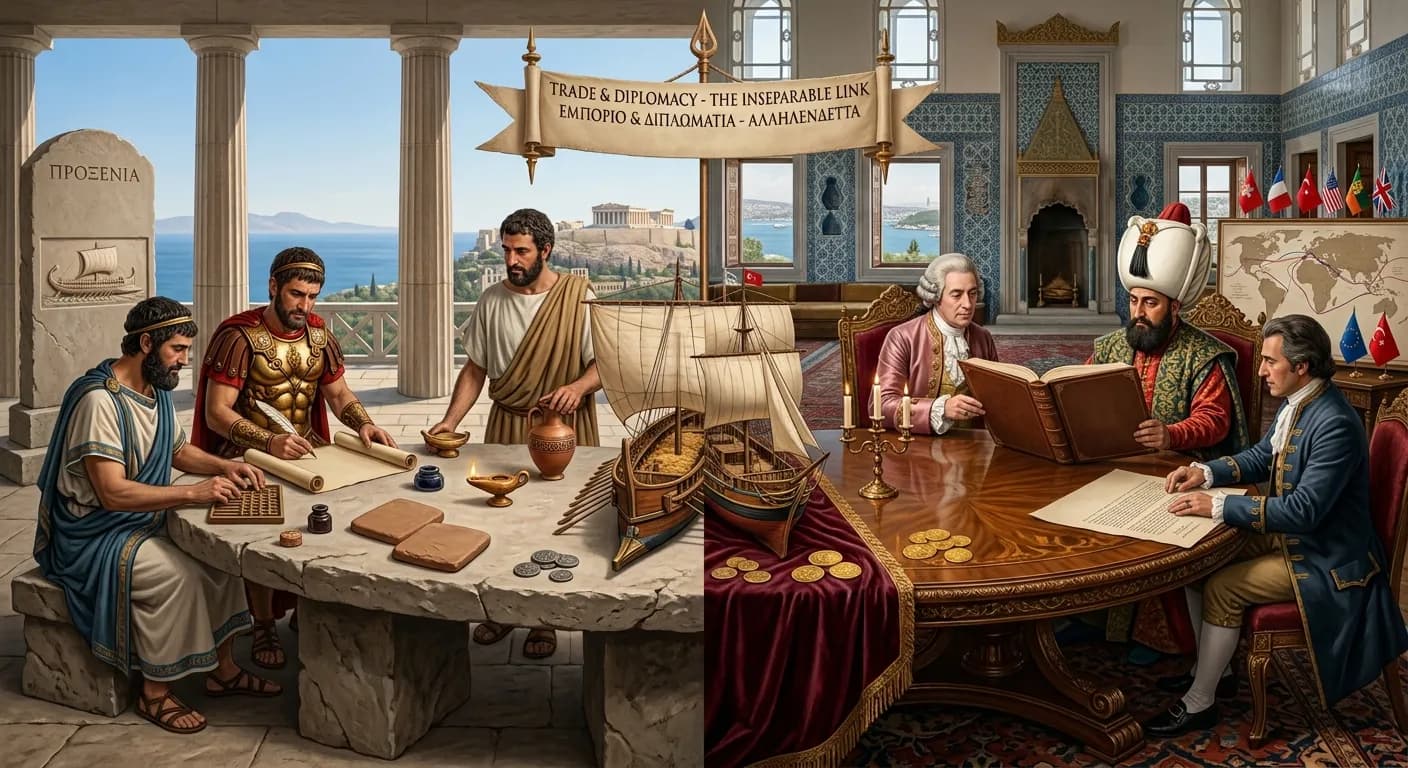
"Historical examples also show that economic actors have been able to take on important roles in line with the foreign policy objectives of states."
History is rich on this point. Venetian and Genoese merchants carried their cities' political presence in the eastern Mediterranean. In northern Europe the Hanseatic League, formed by merchant towns, made agreements with rulers to protect its commercial interests. From the seventeenth century, the large trading companies chartered by states carried their states' influence, alongside trade, into distant regions. This last example is also a warning: when an economic actor becomes an instrument of state policy, the balance of mutual benefit can easily be lost. The wording "have been able to" is measured too. This is not a rule but a possibility that history has shown again and again.
The logic of the three
The observations move from small to large. The first describes what a single investor needs: local knowledge. The second widens the scale: large investment is part of the diplomatic relationship. The third adds the dimension of time: this has been seen throughout history. What they share is this: at no level is economic activity independent of society and politics. An investor in the field should know the society, one at the table should know the state, and one who looks at history should know the weight of their own role.
The role of Business Diplomat
The platform's mission is to give young people experience, bring a diplomatic order to the business world, and benefit states by revitalising the economy. The first observation describes a concrete area of service for the platform: preparing businesspeople on the culture, expectations and business practices of the country they are going to. The second and third show why that preparation is a necessity, not a refinement. Business Diplomat aims to give its members local knowledge and the equipment to manage the diplomatic dimension of investment.
Conclusion
Knowing local culture, society's expectations and ways of doing business makes international business relations last. Large investments today are part of diplomatic as well as economic relations, and history has shown repeatedly that economic actors can take on a role in foreign policy. Business Diplomat aims to raise a generation of business diplomats who know the country they go to and are aware of the role they carry.

İsmail Polat
Ph. D. in International Relations
Follow EUReflect
See more of our reporting on Google
Mark EUReflect as a preferred source and our stories are ranked higher for you in Top Stories, Discover and Google News — and carry a “preferred” badge when they are cited in AI results.
Add EUReflect as a preferred source