Can Washington and Beijing Escape the Thucydides Trap?
The US-China relationship combines strategic competition with deep economic interdependence. While tensions over technology, security, and Taiwan persist, economic ties, military communication, and selective cooperation on global issues help prevent rivalry from escalating into conflict.
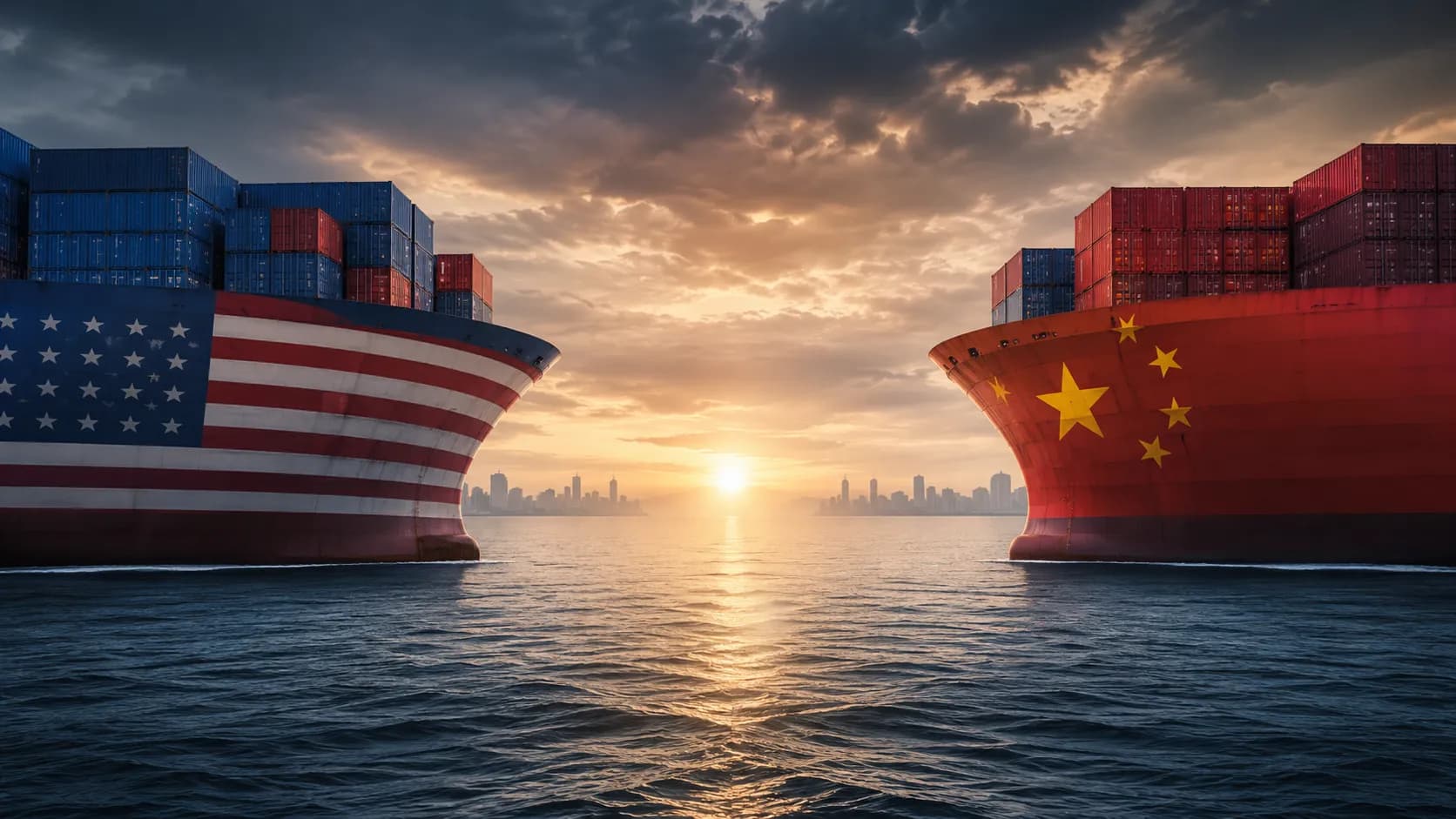
Avoiding the Thucydides Trap has emerged as one of the defining geopolitical challenges of the twenty first century. Coined by political scientist Graham Allison, the concept describes the dangerous dynamic that can arise when a rising power threatens to displace an established one. Historical studies suggest that such transitions have often resulted in conflict, making the evolving relationship between the United States and China a central concern for policymakers worldwide.
Yet the contemporary rivalry differs significantly from historical precedents. Unlike Athens and Sparta, Washington and Beijing are deeply connected through trade, finance, technology, and global governance institutions. Their relationship is characterized not only by competition but also by interdependence. While conflict is not inevitable, avoiding it requires careful management of economic competition, military tensions, and selective cooperation.
The economic relationship between the two countries has undergone a profound transformation. What was once regarded as a stabilizing force has gradually shifted toward strategic decoupling. Bilateral trade remains substantial, but both governments have increasingly sought to reduce vulnerabilities created by dependence on each other. The United States has imposed restrictions on advanced technology exports, particularly semiconductors, while China has responded through trade measures and by leveraging its dominance in critical mineral processing.
Despite these tensions, economic interdependence continues to act as a powerful restraint. The potential costs of a major disruption, particularly over Taiwan, would be severe for both economies and for the global system. This reality has encouraged the development of crisis management mechanisms, including high level trade dialogues and agreements to prevent further tariff escalation. Although economic ties have weakened, they continue to discourage reckless confrontation by imposing substantial costs on both sides.
Military competition presents a far greater challenge. Taiwan remains the most dangerous flashpoint, while disputes in the South China Sea and concerns over regional influence continue to fuel mistrust. The United States seeks to maintain deterrence and reassure its allies, whereas China views many American initiatives as attempts to contain its rise.
The result has been an intensifying security competition. Rising defense expenditures, expanding military capabilities, and frequent demonstrations of force have increased the risk of miscalculation. In such an environment, communication becomes essential. The restoration of military to military dialogue and crisis communication channels represents a modest but important safeguard. These mechanisms cannot eliminate strategic rivalry, but they can help prevent accidents or misunderstandings from escalating into a broader conflict.
Nevertheless, deterrence and crisis management alone cannot provide lasting stability. The absence of war does not constitute genuine peace. A more durable framework requires cooperation on issues where both countries share common interests.
Climate change, public health, and scientific research offer potential areas for collaboration. Agreements on scientific and technological cooperation have provided platforms for joint initiatives, particularly in clean energy and environmental research. Such efforts demonstrate that competition and cooperation can coexist. However, these achievements remain limited by persistent strategic distrust. Every diplomatic breakthrough is accompanied by concerns about technological competition, security risks, and geopolitical influence.
This contradiction reflects the central dilemma of the relationship. While both governments acknowledge the dangers of confrontation, neither is willing to compromise on core national interests. Consequently, cooperation remains selective and transactional rather than transformative.
The most realistic path forward is not partnership but managed strategic competition. This approach recognizes that the United States and China will continue to compete across economic, technological, military, and diplomatic domains. The objective is not to eliminate rivalry but to prevent it from becoming catastrophic.
Existing guardrails, including economic dialogue, military communication channels, and limited cooperation on global challenges, form the foundation of this strategy. They are imperfect and often fragile, yet they remain essential. Recent summit diplomacy has not resolved the structural tensions between the two powers, but it has demonstrated a shared recognition that unmanaged rivalry carries unacceptable risks.
Ultimately, the Thucydides Trap should not be viewed as a prediction of inevitable war. Rather, it serves as a warning about the consequences of strategic miscalculation. The future of United States China relations will depend less on declarations of friendship and more on the ability of both powers to manage competition responsibly. Whether current safeguards prove sufficient remains uncertain, but preserving them is essential for maintaining international stability in an increasingly contested world.
Uroosa Khan
Contributing writer at EUReflect.
Follow EUReflect
See more of our reporting on Google
Mark EUReflect as a preferred source and our stories are ranked higher for you in Top Stories, Discover and Google News — and carry a “preferred” badge when they are cited in AI results.
Add EUReflect as a preferred source