Davos 2026: Greenland Sparks NATO Rift
At the 2026 Davos Forum, Trump’s claim that the U.S. should control Greenland sparked strong European backlash. Denmark and NATO allies defended sovereignty, revealing growing tensions within the alliance over security priorities, unilateralism, and the future of transatlantic relations.
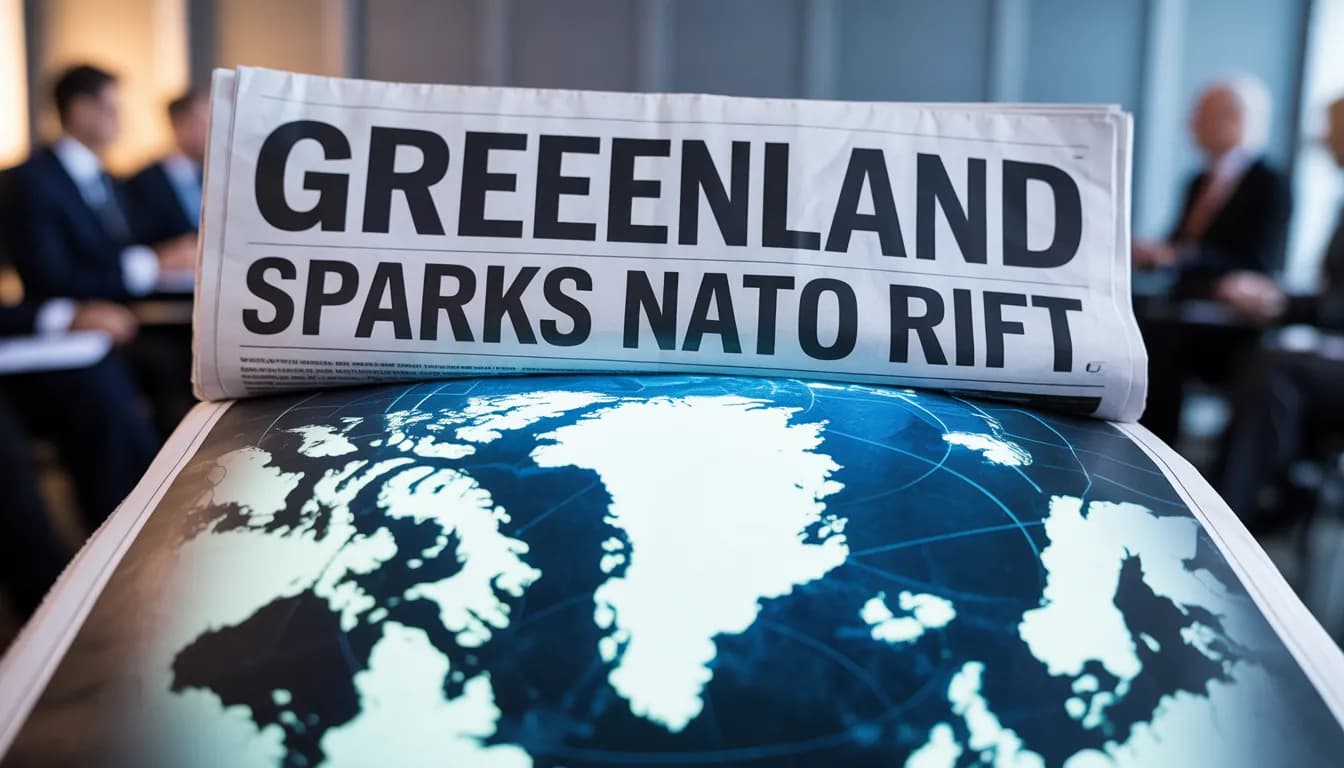
When U.S. President Donald Trump spoke at the 2026 World Economic Forum in Davos, Switzerland, he surprised the world by raising the controversial issue of Greenland. He argued that the United States should take control of Greenland, claiming it was essential for Arctic security and NATO. His remarks immediately created tension with European allies, especially Denmark and Greenland itself, which rejected any idea of giving up their sovereignty. This moment showed how strategic interests, economic competition, and alliance politics are now intertwined, and how the North Atlantic relationship faces new challenges in a changing global order.
Trump’s statement sparked strong reactions. European leaders, including EuropeanCommission President Ursula von der Leyen, emphasized that Denmark and Greenland’s sovereignty must not be compromised. Denmark and Greenland’s governments firmly rejectedany transfer of control, insisting that their independence is a red line. NATO allies also signaled support for Denmark, showing that the alliance would not accept unilateral attempts to influence territorial issues. This disagreement revealed a growing tension within the North Atlantic alliance: while the United States focused on its strategic and military goals, European countries emphasized the importance of rules, norms, and shared decision-making.
The Greenland issue highlights a larger problem within NATO. The alliance was built on collective defense and mutual respect among allies. Traditionally, countries trusted thatsecurity cooperation would respect the sovereignty of each member. However, Trump’s speechsuggested that the United States might prioritize its own strategic interests even over the concerns of allies. This raised questions about how NATO will manage internal disagreements inthe future, especially as strategic competition with China and Russia grows. European leaders’strong reaction at Davos showed that unilateral moves by any member could create fractures in the alliance and reduce trust among partners.
Greenland’s importance goes beyond politics. It is located in a critical Arctic region, with accessto new shipping routes and valuable natural resources like rare earth minerals. These resources are essential for advanced technology and military applications, making the Arctic strategically and economically important. The United States framed its interest in Greenland as necessary for national security. European states, however, argued that these goals could be achievedthrough joint security measures without violating Greenland’s sovereignty. By investing inshared Arctic security infrastructure, such as icebreakers, surveillance technology, and NATO cooperation, allies can ensure security while maintaining legal and political norms.
The 2026 Davos Forum also showed how economic and political issues are now inseparable. Davos is usually a platform for global economic discussion and cooperation, but this year it became a stage for geopolitical conflict. Leaders openly debated sovereignty, strategic priorities, and alliance obligations, showing that economic forums are no longer just about trade and investment. Instead, they reflect the broader challenges of a multipolar world where different powers compete over resources, territory, and influence.
Looking to the future, the Greenland issue will likely have significant effects on NATO and transatlantic relations. European countries may increasingly pursue strategic autonomy, investing more in their own defense capabilities while balancing cooperation with the United States. NATO may need to adapt by clarifying its mission, emphasizing mutual respect, andmanaging diverse strategic priorities among members. The alliance’s success will depend onwhether it can maintain unity while accommodating different interests and protecting sovereignty.
The Arctic itself will become an area of growing geopolitical competition. The U.S., China, and Russia all have strategic interests there, from natural resources to shipping routes. Europe’sfocus on environmental protection, multilateral regulation, and local governance could clash with U.S. priorities, making careful diplomacy essential. How these powers manage competition will shape the security, economic, and environmental future of the Arctic.
Finally, Davos has highlighted a broader truth about the global system. Forums that were once neutral spaces for dialogue are increasingly arenas for testing power, norms, and alliances. The Greenland episode revealed that Western unity is no longer guaranteed, and that cooperation depends on mutual trust, respect for sovereignty, and shared norms. The responses of European leaders showed that unilateral moves, even by powerful allies, can generate pushback and force reconsideration of strategies.
In conclusion, the Greenland controversy at Davos is more than a territorial dispute; it reflects a deeper transformation in global politics. NATO and North Atlantic relations face challenges from shifting power dynamics, strategic competition, and changing expectations about sovereignty. How the alliance responds will determine its credibility and effectiveness in the future. If European countries continue to assert their autonomy while working with the United States, NATO can remain strong and relevant. But if unilateral strategies dominate, trust within the alliance may weaken, and global cooperation could become more fragmented. In a world where power is shifting, alliances will succeed not by dominance, but by legitimacy, balance, and respect for the rules that govern international relations.
Uroosa Khan
Contributing writer at EUReflect.
Follow EUReflect
See more of our reporting on Google
Mark EUReflect as a preferred source and our stories are ranked higher for you in Top Stories, Discover and Google News — and carry a “preferred” badge when they are cited in AI results.
Add EUReflect as a preferred source