Defense Diplomacy and Power Balancing: How Central Asia Seeks Security Beyond Alliances
The recent Meeting of the Defense Ministers of Central Asian States in Samarkand, Uzbekistan, marks a significant move toward potentially consolidating regional military capabilities and reshaping the collective security architecture.
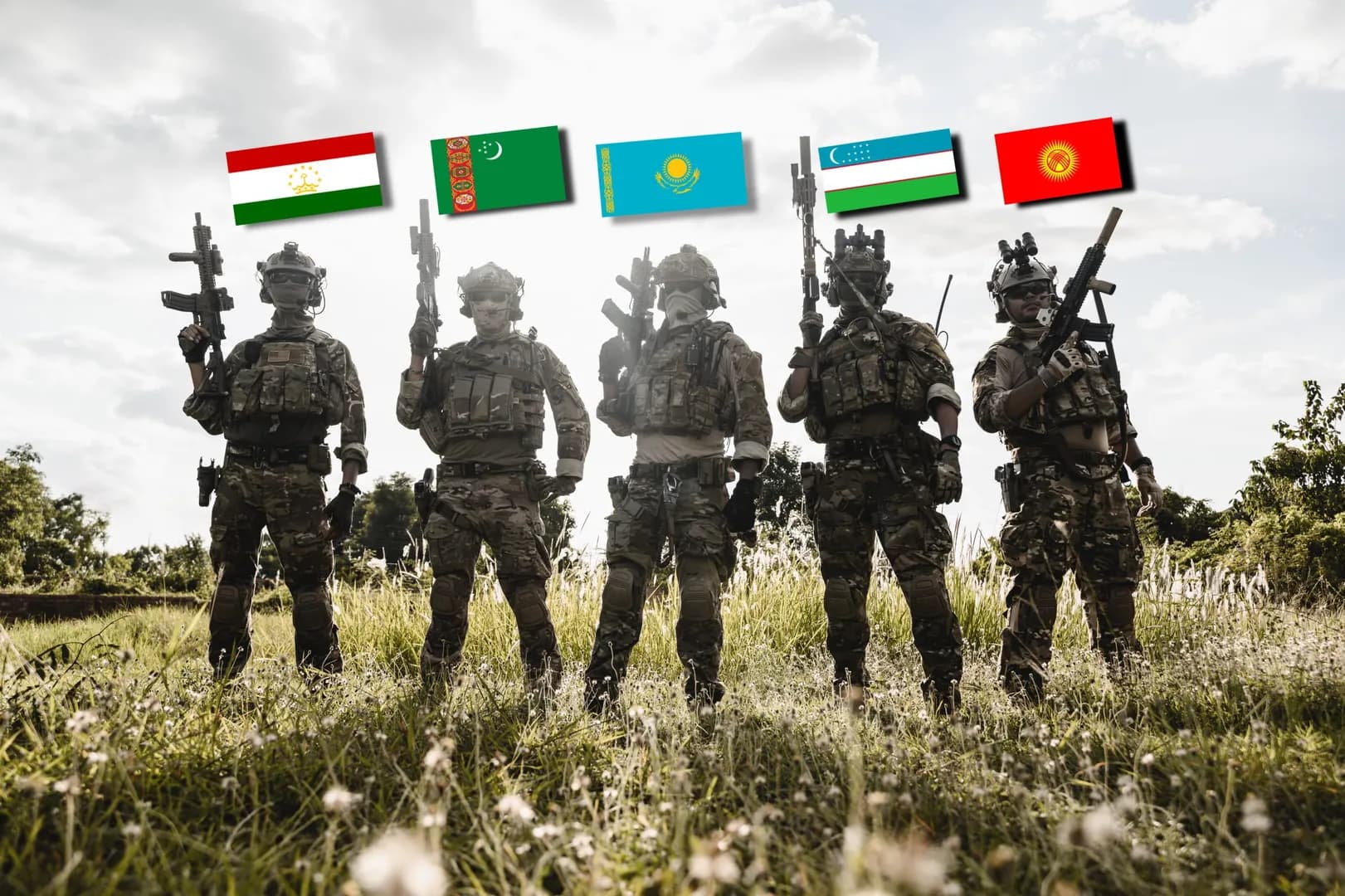
Can Central Asia consolidate its military capabilities into a unified structure? This question has gained renewed prominence in both Turkish and Russian strategic circles. Recently, for the first time in modern history, the defense ministers of the Central Asian republics convened in the ancient city of Samarkand, Uzbekistan, to deliberate on regional security and defense cooperation. Hosted by Lieutenant General Shukhrat Khalmukhamedov, Minister of Defense of Uzbekistan, the “First Meeting of the Defense Ministers of Central Asian States” has been widely interpreted as a symbolic and substantive step toward reshaping the region’s collective security architecture.
Prior to the discussions, the ministers visited the “Weeping Mother Monument” in Samarkand, paying tribute to those who perished during the Second World War. The session, attended by the defense ministers of Kazakhstan, Kyrgyzstan, Turkmenistan, and Tajikistan, addressed key strategic issues including regional stability, the enhancement of military-technical cooperation, and the strengthening of joint efforts against international terrorism. In the political culture of Central Asia, these themes clearly signal a shared message: “We do not welcome external interference.”
In a written message to the participants, President Shavkat Mirziyoyev of Uzbekistan emphasized that “peace and unity among brotherly nations are strengthened through mutual solidarity and cooperation,” underscoring that regional stability remains the essential precondition for sustainable development.
From Defense Dialogue to a Collective Security Model
The Samarkand meeting represents not only a military dialogue but also a historic milestone in building strategic trustamong the nations of Central Asia. The institutionalization of a regular defense dialogue could lay the groundwork for the emergence of a distinct Central Asian security framework, positioned between NATO and the Shanghai Cooperation Organization (SCO).
Experts point out that the ongoing instability in Afghanistan, along with cross-border threats, illicit arms trafficking, and narcotics smuggling, has underscored the urgency of regional coordination. In this context, the “Unity-2025” joint military exercise, involving Azerbaijan alongside the Central Asian states, will serve as the first platform to test the collective defense reflexes of the participating forces.
Is a “Central Asian NATO” Possible?
In recent years, the Central Asian states—operating outside major global defense alliances such as NATO and the SCO—have shown growing interest in an “independent yet cooperative” defense approach. Such a model could simultaneously reduce external dependency and institutionalize regional solidarity. However, the realization of this vision depends not merely on military cooperation but on the political will to transform shared security interests into a common strategic vision.
The Samarkand summit can thus be interpreted as an initial step toward the possible establishment of a Central Asian Defense Council or even a Regional Collective Security Pact. It is no coincidence that Uzbekistan took the lead in hosting this dialogue—reflecting President Mirziyoyev’s doctrine of regional leadership and balanced diplomacy, which aligns with Kazakhstan’s President Kassym-Jomart Tokayev’s “Diplomacy First” principle and Kyrgyzstan’s “Grow Together” initiative.
Conclusion: Without Unity, There Is No Strength
The Samarkand summit has clearly demonstrated Central Asia’s determination to reclaim ownership of its own security agenda, rather than allowing external actors to define it. The event symbolizes the dawn of a new era—not only in military cooperation but also in political cohesion and strategic autonomy for the region.
Enduring stability cannot be achieved without trust, coordination, and solidarity among the Central Asian nations. Undoubtedly, these states will continue to engage in bilateral and multilateral agreements with Russia, China, the United States, and the European Union. Yet, they must remain vigilant against any form of rivalry or manipulation that could divide the region or undermine its unity.
The true strength of Central Asia lies in its unity — a unity born not of necessity, but of shared destiny and collective vision.

İsmail Polat
Ph. D. in International Relations
Follow EUReflect
See more of our reporting on Google
Mark EUReflect as a preferred source and our stories are ranked higher for you in Top Stories, Discover and Google News — and carry a “preferred” badge when they are cited in AI results.
Add EUReflect as a preferred source