Diplomacy or Propaganda? Media Analysis of the Pakistan Talks
Pakistan-hosted negotiations generated contrasting media narratives worldwide. Pakistan stressed prestige, Central Asia focused on trade and energy, Russia and China promoted multipolarity, Turkey emphasized mediation, while U.S. outlets framed events through Washington’s strategic interests.
Introduction
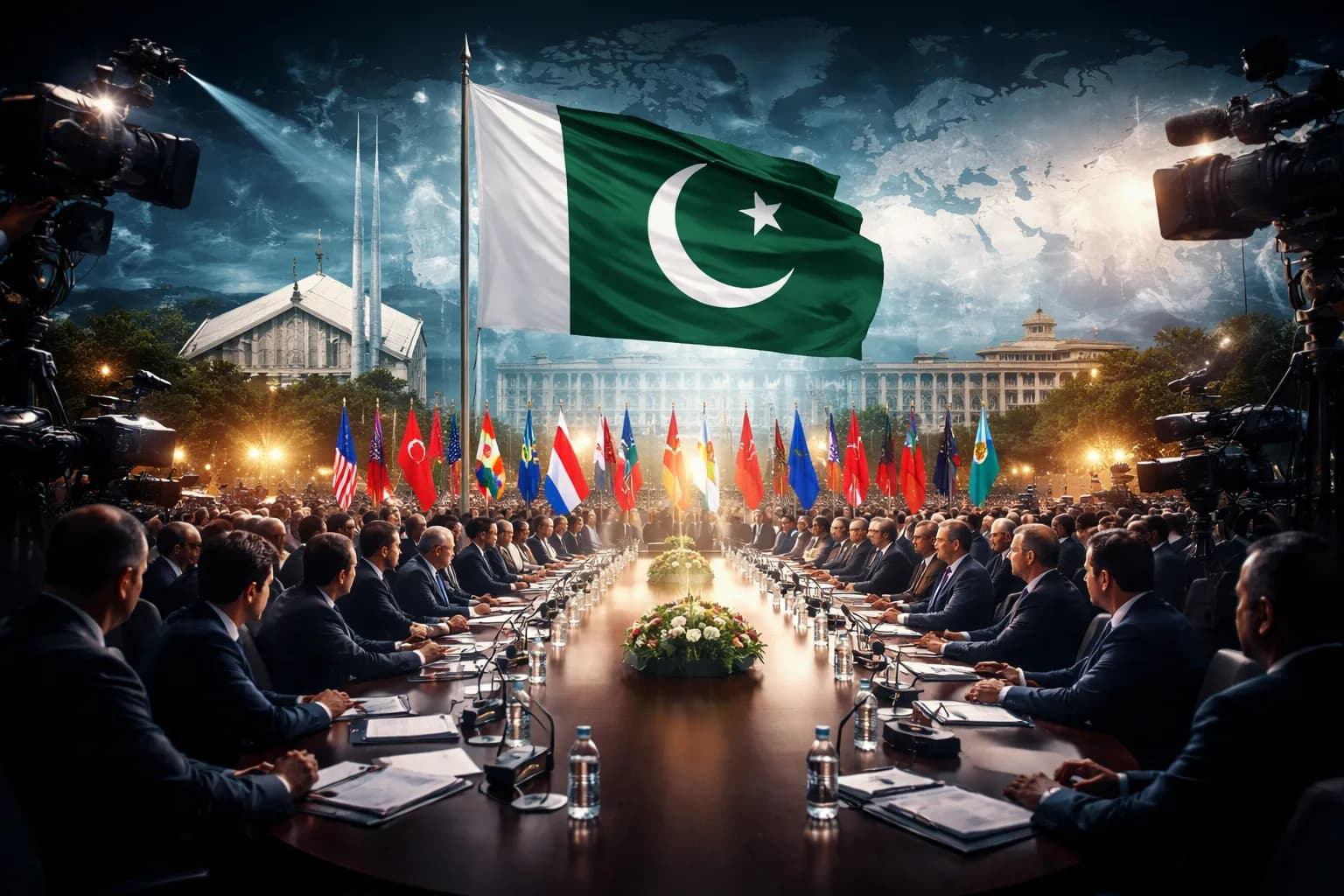
The international negotiations held in Pakistan emerged as a significant development not only in terms of diplomatic engagement but also through their global media resonance. Pakistan’s assumption of a mediating or host role triggered renewed debates over shifting balances among South Asia, Central Asia, and major powers. Leading media outlets across different countries interpreted the process according to their respective strategic priorities. A closer examination demonstrates that these reports functioned not merely as information delivery, but also as discursive instruments through which geopolitical positions were reproduced.
1. Reflections in Pakistani and Regional Media
Pakistani media largely framed the negotiations as a national diplomatic success. Major outlets such as Geo News, Dawn, and ARY News emphasized that the government in Islamabad had regained a central role in international crises. Coverage highlighted Pakistan’s transformation from a country associated primarily with security challenges into an actor capable of generating solutions. This narrative appeared designed to strengthen perceptions of state capacity within domestic public opinion.
In Uzbekistan, media commentary focused more heavily on economic and logistical implications. Outlets such as Kun.uzand Gazeta.uz concentrated on the impact of regional tensions on energy prices, transit corridors, and Central Asian trade. Pakistan’s stabilizing role was presented as a positive factor for Central Asia’s access to southern routes.
The press in Kazakhstan adopted a similarly pragmatic approach. Sources including Kazinform and Tengrinewsprioritized discussions on energy markets, oil prices, and the investment climate. For Kazakh media, the issue was framed less ideologically and more through a balance of economic opportunities and risks.
2. Strategic Readings in Russian, Chinese, and Turkish Media
Russian media interpreted the developments as evidence of the limitations of U.S. regional pressure policies. Organizations such as TASS, RT, and Sputnik argued that unilateral American power projection had failed and that countries such as Pakistan were assuming more autonomous roles in an emerging multipolar order. This framing was consistent with broader anti-Western narratives.
Chinese media, by contrast, indirectly portrayed Pakistan’s success as an extension of Chinese diplomacy. Xinhua, CGTN, and Global Times foregrounded concepts such as dialogue, stability, and peace, arguing that the multilateral diplomatic model supported by Beijing was gaining strength. Given Pakistan’s close ties with China, this approach can be interpreted as a reflection of strategic partnership.
Turkish media adopted a more balanced and multidimensional stance. Anadolu Agency, TRT World, and other outlets evaluated the developments in relation to regional peace and energy security. Commentary also noted the possibility that Turkey could play a facilitating role in similar future processes. This perspective aligns with Ankara’s recent emphasis on mediation diplomacy.
3. Power and Crisis Management Perspective in American Media
In American media, the events were assessed less through a Pakistan-centered lens and more within the framework of U.S. policy toward Iran and the broader region. Organizations such as Reuters, Associated Press, CNN, and The New York Times gave secondary emphasis to Pakistan’s role, while focusing primarily on Washington’s diplomatic options, pressure strategies, and crisis-management capacity.
Within these accounts, the negotiations were frequently described as compelled diplomacy or controlled engagement. Pakistan was therefore not framed as an autonomous actor, but rather as a venue hosting the talks. This reflects the broader tendency of American media to interpret international events through the prism of U.S. foreign policy interests.
Conclusion
The media narratives surrounding the Pakistan negotiations demonstrate that information production itself constitutes an arena of power competition in international politics. Pakistani media emphasized national prestige, Central Asian outlets prioritized economic consequences, Russian and Chinese media reinforced multipolarity narratives, Turkish media highlighted balancing diplomacy, and American media interpreted developments through their own foreign policy framework. Consequently, the same event acquired different meanings across national contexts, revealing how media discourse functions as a strategic instrument through which national interests are projected.
Alvara Merrick
Contributing writer at EUReflect.
Follow EUReflect
See more of our reporting on Google
Mark EUReflect as a preferred source and our stories are ranked higher for you in Top Stories, Discover and Google News — and carry a “preferred” badge when they are cited in AI results.
Add EUReflect as a preferred source