Ethiopian Victory Day: Adwa’s Eternal Flame of Freedom for Africa's Soul
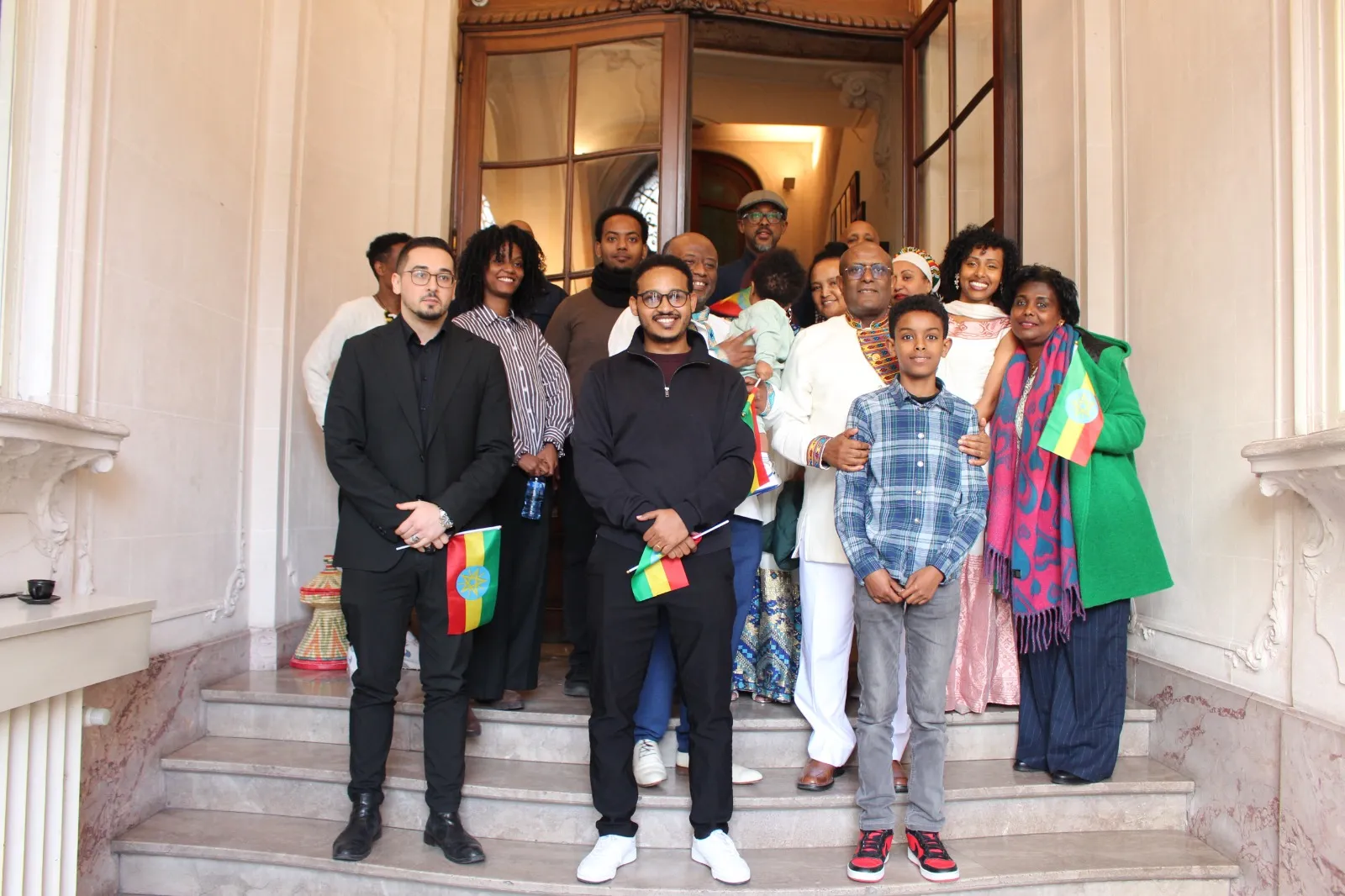
Eureflect had the honour to attend the commemoration of the 130th anniversary of the Adwa Victory Day at the Embassy of Ethiopia in Brussels. This event brought Ethiopian diplomats, members of the Ethiopian diaspora from across the BENELUX region and friends of Ethiopia together. The event marked the anniversary under the theme Adwa: “Glorious Past, Radiant Horizon” as the Black People’s Victory globally. It demonstrates that the people of Ethiopia hold the values of freedom, sovereignty, and cultural pride in high esteem. This commemoration matters because Adwa is not only a national holiday for Ethiopia. Rather the Adwa Victory Day stands as a beacon of freedom in the whole African continent and Black People history.
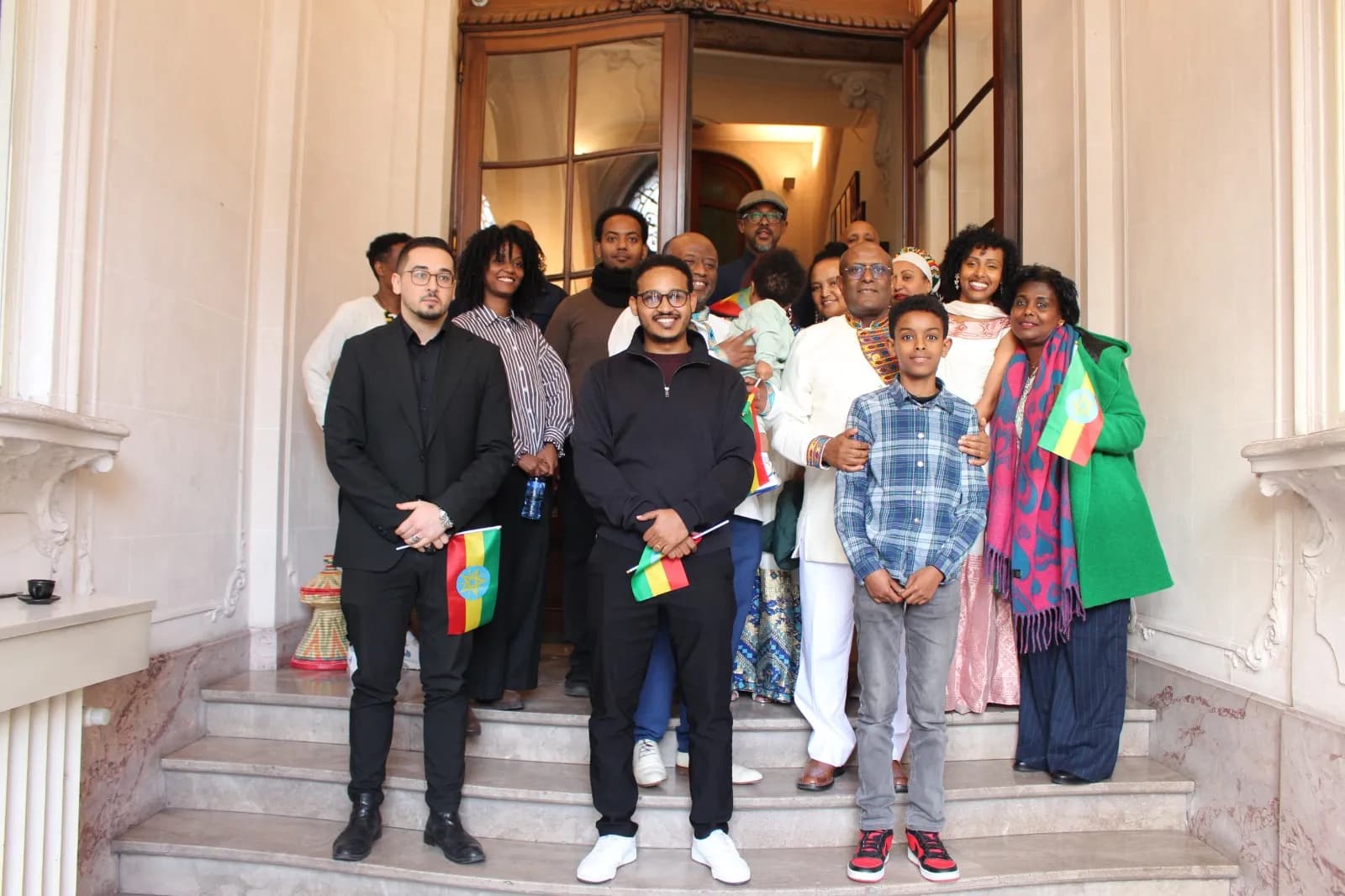
Ambassador's Voice Ignites the Flame of Freedom.
The ceremony opened in a uplifting atmosphere with the Ethiopian national anthem, immediately grounding the audience in a shared sense of identity and purpose. After the anthem, H.E. Ambassador Eshete Tilahun did not deliver merely a formal protocol speech, but a heartfelt call to reignite the flame of Ethiopian freedom by commemorating the Battle of Adwa.
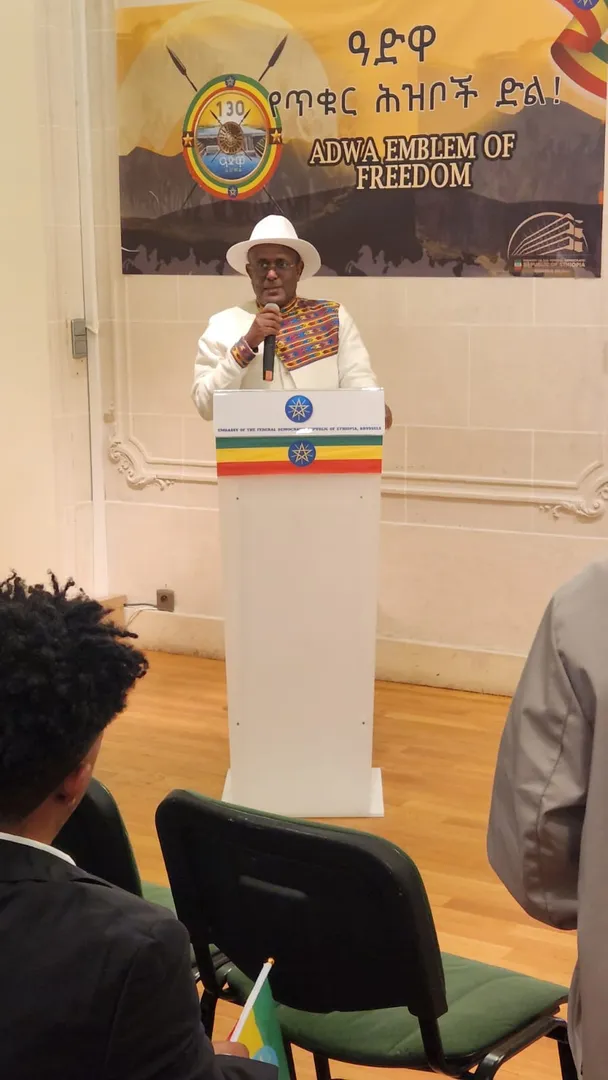
In particular, the Ambassador underlined Adwa as a symbol of African resilience and the long struggle for freedom, dignity, and sovereignty. Furthermore, he stressed that Ethiopia’s sovereignty and national honour remain non-negotiable. In his address he framed the battle of Adwa not only as a national milestone but a global turning point for the African continent and Black People everywhere. He recalled how the historic battle on March 1,1896 became the “Sunrise of Freedom” for all the people across the African continent. In this case a leading symbol of Pan-Africanism, by virtue of which equality of all people of the world recognized.
Moreover, The Ambassador underlined that Adwa is more than a historical memory: it is an enduring expression of Ethiopian identity. This Ethiopian identity was embodied by various heroes and heroines during the battle. A powerful example is the hero Minister of War Fitawrari Gebeyehu, who declared: “If I fall shot from front, mix me with the soil of my country, other wise put my body aside.” This quote shows how much the Ethiopian people were prepared to make the greatest sacrifices for their homeland.
In addition, the Ambassador recalled that the victory of Adwa was made possible of because three fundamental Ethiopian values: unity, sovereignty and a victorious spirit. He emphasized that, at that time, every Ethiopians from north to south, from east to west marched unified under one flag and saved the dignity of their nation. In concrete terms, peoples from all corners of Ethiopia set aside ethnic and religious differences and united under one central command led by Emperor Menelik II to shatter the voracious colonial ambitions. This left future generations the rare inheritance of political freedom and a powerful affirmation that Black people are equally human beings.
In particular, he also highlighted the decisive role of women during the battle. The Battle of Adwa was exceptional for the role of women because it placed them at the heart of a national liberation struggle in a way that was highly unusual for the late 19th century. Women did not stay in the background; they marched with the army, carried supplies and water, treated the wounded, prepared food, and in many cases took up arms and fought alongside men. This visible participation challenged traditional gender roles and showed that defending the nation and claiming freedom were shared responsibilities, not a matter reserved for men alone. The critical contribution, leadership and courage of Empress Taytu Betul, her strategy and encouragement of follower turned Adwa into an early symbol of women’s freedom. Her leadership and political presence was instrumental. This has automatically, inspired past and present ideas of women’s emancipation in Ethiopia and across Africa.
As he conclude, the Ambassador linked the ancient spirit of the 19th-century battle to Ethiopia’s 21st-century policy of self-reliance. This spirit must be seen in the eyes of the Adwa Agenda for Ethiopia’s 21st-century policy of safeguarding the national interests. Examples of this “Adwa Agenda” are: using Ethiopia’s natural resources in a just and fair manner without obstruction, resolving questions such as access to the sea through peaceful diplomacy, and driving development projects successfully. In concrete terms, The Grand Ethiopian Renaissance Dam is one of the modern day Adwa, a flagship project for which all citizens have contributed at household levels. In closing, he emphasized that the spirit of Adwa continues as a living force of national renewal and another turning point for Ethiopia.
The following paragraphs will explain the key moments of the battle, the vital role played by women and how they continue to be honoured today, showcasing why this battle deserves a unique place in African history and how its signify the need for commitment by present and future generations of young Africans.
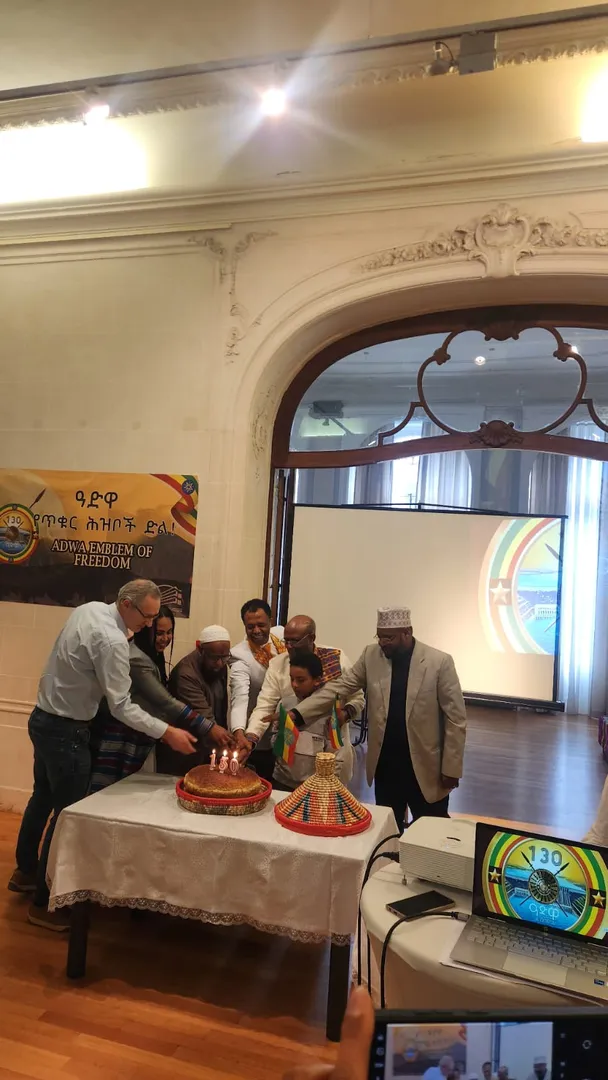
Adwa: When an African Mountain Roared Back
From the 15th to the mid-20th century, a group of European empires used their military power to dominate vast regions across the African continent. In 1884, European powers met in Berlin to give a “legal” shape to their conquest. The colonial powers agreed on how to slice the continent among themselves in what became known as the “Scramble for Africa”. They installed their colonial systems that served their domestic and global political and economic interests. Africa, rich in people and resources, became a prime target in the race. Every African country at the time was colonized except Ethiopia, and the Liberia as domain of returnees from USA.
Italy was one of the latecomers to this colonial game and looked to Ethiopia as its big prize, and tried to gain control not by open war at first, but through the “Wuchale Treaty”, signed in 1889 between Emperor Menelik II and the Italian Representative. The key problem sat in Article 17. In Amharic, the emperor could, if he wish, choose to conduct foreign relations via Italy. While in Italian, Ethiopia was forced to do so only through Italy. Hidden in this “translation” was an attempt to strip Ethiopia of real independence and quietly turn it into an Italian protectorate.
Behind this clause were several goals. Italy wanted to dominate Ethiopia without the financial and human cost of a full-scale war. It saw the Horn of Africa as a doorway to a new Roman-style empire and hoped to block Ethiopia from forming alliances or buying weapons on its own. Furthermore, control over the Red Sea and key trade routes were crucial.
Italy tried to exploit internal difference and tensions inside Ethiopia, posing as a friendly partner while quietly working to divide and weaken the country from within. In short, this was not a treaty of friendship but a diplomatic trap.
Once Emperor Menelik and Empress Taytu understood the true meaning of Article 17, they refused to accept it. Menelik formally cancelled the treaty in 1893 and informed other states so that Italy could not claim Ethiopia as its protectorate. Italy then dropped the mask and sent troops across the border, expanding its occupation step by step. In response, Menelik issued a national decree calling upon all Ethiopians to defend their homeland and sovereignty. His appeal spread across the country, and Empress Taytu unequivocally made it clear that, Ethiopians cannot accept foreign domination.
Italy moved forward with a modern army of approximately 38,000 well-trained soldiers. This army was heavily supported by artillery, canons, modern supplies, and transport. On the contrary Ethiopia’s army was made of traditional spears, swords shields and different small calibres. Ethiopian soldiers were basically peasants. Farmers in normal times and transformed into warriors when their homeland was threatened. Though they were mostly armed with traditional weapons and only a limited number of firearms, they were driven by strong patriotism and sense of unity. Answering the emperor’s call, they walked for more than five months from all parts of the country until they gathered in the Adwa area in February 1896. The name Adwa refers to a mountainous are in the northern part of the country, specifically the present day Tigray region.
The actual battle began when General Baratieri launched a dawn attack on 1 March 1896. Some Ethiopians turned local intelligence sources, and the mountainous terrain served as a powerful tools. They fed misleading information to the Italian command, making it appear as if Ethiopian forces were scattered and weak.
Convinced of the superior firepower the Italian General thought the victory would be quickly decided. Instead, his troops collided with a prepared and united Ethiopian army fighting on home ground with fierce determination. The battle raged across the steep hills and ravines of Adwa. The Italian units were crushed. Multiple generals died during the battle which lowered the morale of the Italian forces. The battle ended as the Italians withdraw their remaining forces from the front and retreated crossing mountains and rivers in vein. The Italians underestimated Ethiopian unity and paid heavy price against an opponent that was both strategically prepared and fiercely motivated.
Adwa was far more than a tactical victory. It broke the myth that European armies could not be defeated by Africans. It reinforced the idea that nations, regardless of race or geography, were entitled to equality. In particular, it confirmed Ethiopia’s place as the only African country to decisively beat a colonial power during the Scramble for Africa and keeping its sovereignty. The victory became a living monument to resistance, dignity, and the unbreakable spirit of African people.
To conclude, its impact spread well beyond Ethiopia’s borders. In a continent largely under foreign rule, the battle of Adwa proved that united African resistance could succeed against European imperial forces. Black thinkers, activists, and liberation movements across Africa and the diaspora drew lessons and strength from this example. The battle fuelled early Pan-African ideas, inspired calls for unity and self-determination. In its example offered concrete proof that African sovereignty was not a dream but a reality that could be defended. For generations, Adwa turned Ethiopia into a symbol of pride, resilience, and continental solidarity. A victory that still echoes in Ethiopia, Africa and Black memory today.
Women at the Heart of Adwa and Today’s Narratives
Women were indispensable to the Victory of Adwa because they sustained, strengthened, and in many cases directly joined the battle. They marched with the armies for weeks, carrying food, water, and supplies. Furthermore they cared for the wounded on the battlefield, which allowed the Ethiopian army to keep marching despite long distances and brutal conditions. In addition, many women also took up arms themselves, and fought alongside men proving that defending the country was a shared duty, not solely a male-duty. Figures like Empress Taytu Betul involved in key leadership tasks. The Empress was a huge visible face. She is remembered for her resolve, and strategic insight. In particular, showing other women that their voices and decisions mattered at the highest level during the battle. Concrete, these initiatives turned women from “supporters” into full “actors” in the story of Adwa. Thus making the victory not just a triumph of a nation, but also a powerful moment in the history of women’s courage in Ethiopia and across the entire African continent.
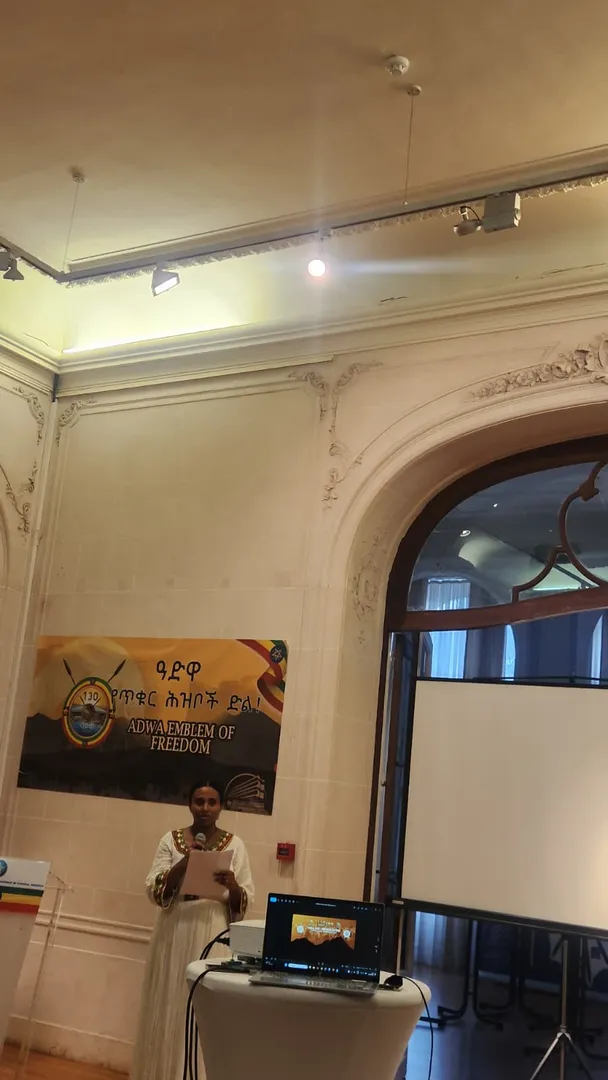
During the event at the Embassy, the remarkable symbol of women’s courage, Empress Taytu Betul, was honoured with a poem performed by Second Secretary and diplomat Mrs. Rediet Kassahun Chaka. The poem, dedicated to the occasion, highlighted the heroic stories of women, with a special focus on Empress Taytu Betul. Through her storytelling, Mrs. Rediet Kassahun Chaka carried the audience back onto the battlefield. Listeners could vividly imagine how women cared for wounded soldiers, brought vital supplies to the front lines, and stood beside the men with both physical and moral support. A beautiful example of gender equality that did not yet exist in many other parts of the world at that time. It shows that Ethiopia grants its women an equal and participatory role into their society.
Adwa's Eternal Flame for Africa's Soul
Adwa is not just a memory; it is a living eternal flame that continues to ignite the spirit of freedom to Ethiopia, Africa and the wider Black world. As Ethiopia marks the 130th anniversary under a Pan-African banner, Adwa reminds us that when Africans stand united in purpose, they can overturn even the most entrenched internal challenges.
Furthermore, the Brussels event framed Adwa as “Black People’s Victory,” stressing that this history belongs not only to Ethiopians but to Black communities everywhere who still confront the legacies of colonialism and racism. In an age of contested borders, forced migration, and identity struggles, Adwa offers a counter-narrative of dignity and unity.
For anyone wishing to immerse themselves more deeply in this history, a visit to the Adwa Victory Memorial Museum in Addis Ababa is highly recommended. Located in the heart of the capital, the museum combines artifacts, interactive exhibits, and educational spaces to bring the spirit of the battle and the victory thereof to life.
To all African readers, and Ethiopian readers in particular, do not let this eternal spiritual flame fade. Use this eternal Ethiopian flame and pass it to the next generations as a guiding example of African pride, freedom, and self-determination.
መልካምየአድዋ ድል በዓል (Melkam Ye Adwa Dil Beal) - Happy Victory Day to all the Ethiopian people.
İbrahimjan Abdimutalipjan
Contributing writer at EUReflect.
Follow EUReflect
See more of our reporting on Google
Mark EUReflect as a preferred source and our stories are ranked higher for you in Top Stories, Discover and Google News — and carry a “preferred” badge when they are cited in AI results.
Add EUReflect as a preferred source