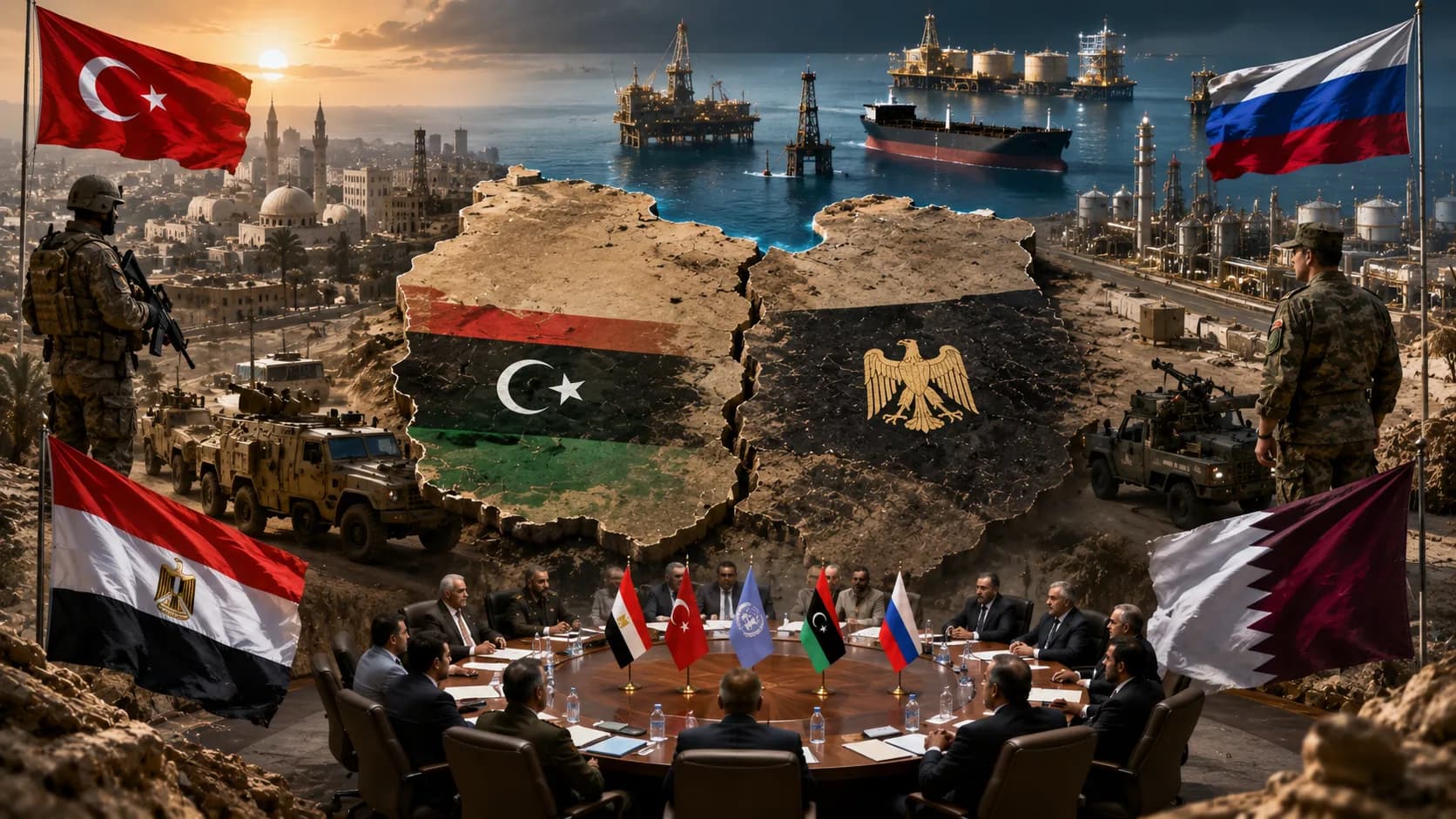
Europe Doesn’t Want a “Turkish Scapegoat”
Why Europe Prefers the Balkans Over Turkey The European Union’s enlargement strategy has taken a decisive turn: the Western Balkans are moving forward, while Turkey remains frozen in its accession process. This is not accidental , it’s the result of political, strategic, and institutional choices. Here are the key reasons why the EU prioritises the Balkans over Turkey
Why Turkey remains the only EU candidate left in the freezer while the Balkans move ahead at full speed
By Kadir Duran /Bruxelles Korner
The EU’s next enlargement: an increasingly tangible horizon
The European Union is entering a new phase of enlargement.
Among the nine official candidate countries , Montenegro, Albania, Ukraine, Moldova, Serbia, North Macedonia, Bosnia and Herzegovina, Türkiye and Georgia
two countries stand clearly ahead: Montenegro and Albania.
Brussels repeats its fundamental principle:
Enlargement is merit-based and built on concrete commitments.
Progress requires reforms, the rule of law, and gradual alignment with EU standards.
For several member states, including France, the logic is straightforward:
A larger but stronger Union,
Meaning more security, stability, and geopolitical weight in an increasingly fragmented world.
Preparing enlargement means preparing Europe’s future.
But that future at least for now does not seem to include Turkey.
Why is Turkey no longer advancing in its EU accession process?
The question keeps coming back.
And the answer cold, bureaucratic, and political is simple:
The conditions are no longer met. Not in Brussels. Not in Ankara.
1. An accession process officially “frozen” since 2018
The EU Council has confirmed it:
No new accession negotiation chapters can be opened under current conditions.
Turkey remains an official candidate,
but its file is sealed, labelled “until further notice.”
2. Rule of law and fundamental rights: the core obstacle
Since 2016, the EU has recorded:
• declining judicial independence,
• pressure on the media,
• broad use of anti-terror laws,
• restrictions on NGOs,
• weakening of democratic opposition.
Until these areas return to EU standards,
no accession chapter will reopen.
3. A political system deemed incompatible
The shift towards a hyper-presidential model, concentration of power,
and internal political tensions are viewed as divergence from the Copenhagen criteria.
4. Tensions in the Eastern Mediterranean and the Middle East
The Aegean Sea, Syria, Libya, gas exploration, airspace incidents:
Dialogue is interrupted by crises.
A country in conflict with several EU neighbours is not seen as “enlargement-compatible.”
5. The Cyprus issue: a built-in veto
This is the structural deadlock.
A frozen conflict with an EU member =
automatic veto on accession.
Simple. Mechanical. Unbreakable.
6. EU membership is no longer Ankara’s priority
Turkey is shifting toward:
• strategic autonomy,
• flexible alliances (NATO, Central Asia, Gulf states, Russia),
• bilateral partnerships rather than binding EU integration.
And Turkish public opinion has cooled significantly.
7. The EU now prioritises the East not Anatolia
Ukraine, Moldova, the Western Balkans:
security against Russia,
stabilising the Balkans,
countering Russian and Chinese influence.
Turkey is no longer part of this strategic equation.
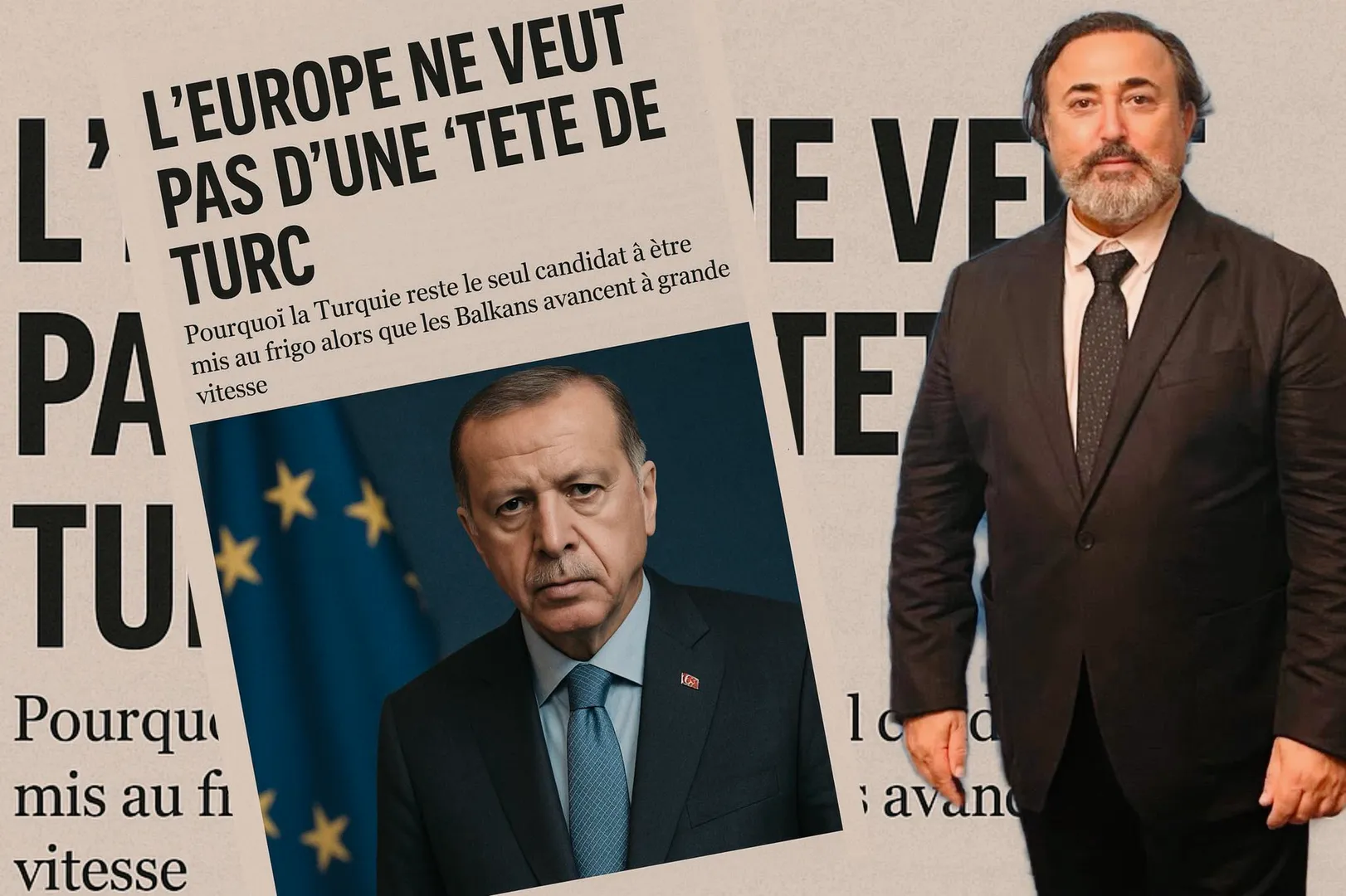
Interim conclusion:
Turkey is not excluded… but it is no longer in the active queue
The current EU–Turkey model is clear:
strategic cooperation,
customs union modernisation,
migration agreements,
security and energy cooperation.
Not accession.
Not even pre-accession.
A functional partnership, with no integration horizon.
The blunt truth: today, the EU wants “easy” countries not complicated partners
And Turkey is by far the most complex partner on the continent.Here are the three systemic reasons.
A. A geopolitical conflict with Cyprus
One bilateral conflict = one permanent veto.
Not religious.
Not cultural.
Pure institutional mechanics.
B. Minimal diplomatic alignment
CFSP alignment rate (2024–2025):
• Türkiye: 5–7%
• Albania: 100%
• Montenegro: 100%
You can be Muslim, Christian, Buddhist, or atheist:
To join the EU, you must speak with the EU’s voice in foreign policy.
Ankara does not.
Brussels shuts the door.
C. Persistent gaps in rule of law
The 2025 EU report is explicit:
• no progress on implementing ECHR rulings,
• pressure on the media (RSF 2025: 159th/180),
• insufficient anti-corruption framework,
• politicised judiciary.
Not religious.
Institutional.
Breakdown of the “Türkiye 2025” report — Chapter by chapter
EU–Turkey relations
• Accession frozen since 2018
• Record trade: €210 billion
• EU funds for Syrian refugees: €11 billion
• Essential cooperation on migration
Foreign policy (Chapter 31)
• Very low CFSP alignment
• Turkish positions diverge from EU priorities
Rule of law & fundamental rights
• 69 ECHR rulings not implemented
• 205 cases under enhanced monitoring
• Media freedom “very serious” (RSF)
Good neighbourly relations
• Total deadlock on Cyprus
• Gas drilling tensions → limited sanctions
Economic criteria
• Macroeconomic imbalances, governance weaknesses
Climate, energy, environment
• Progress on Turkish ETS
• But alignment with EU norms still incomplete
Why are the Balkans moving faster?
Nothing to do with religion.
Everything to do with geopolitics and political compatibility.
Albania & Montenegro
• 100% alignment with EU foreign policy
• More advanced judicial reforms
• No conflicts with EU member states
• Full support for sanctions
• Technical dossiers (market access, SEPA, acquis) progressing fast
Türkiye
• Minimal alignment
• Conflict with Cyprus
• Politically sensitive file
• Large population → institutional absorption challenge
• Rule of law gap too wide
Final conclusion , The unfiltered truth
Turkey is not blocked because it is Muslim.
It is blocked because it is:
A powerful, non-submissive regional actor;
in conflict with an EU member state;
misaligned with EU foreign policy;
far from the Copenhagen criteria;
too large for easy integration;
now considered a strategic partner, not a political candidate.
The Balkans move faster not because they are “Christian”,
but because they are small, aligned, strategically useful, and politically manageable.
Kadir Duran
Contributing writer at EUReflect.
Follow EUReflect
See more of our reporting on Google
Mark EUReflect as a preferred source and our stories are ranked higher for you in Top Stories, Discover and Google News — and carry a “preferred” badge when they are cited in AI results.
Add EUReflect as a preferred source