Europe’s Growing South American Role
The EU-Mercosur trade deal, now provisionally in force, gives South American nations a third major economic partner beyond China and the US.
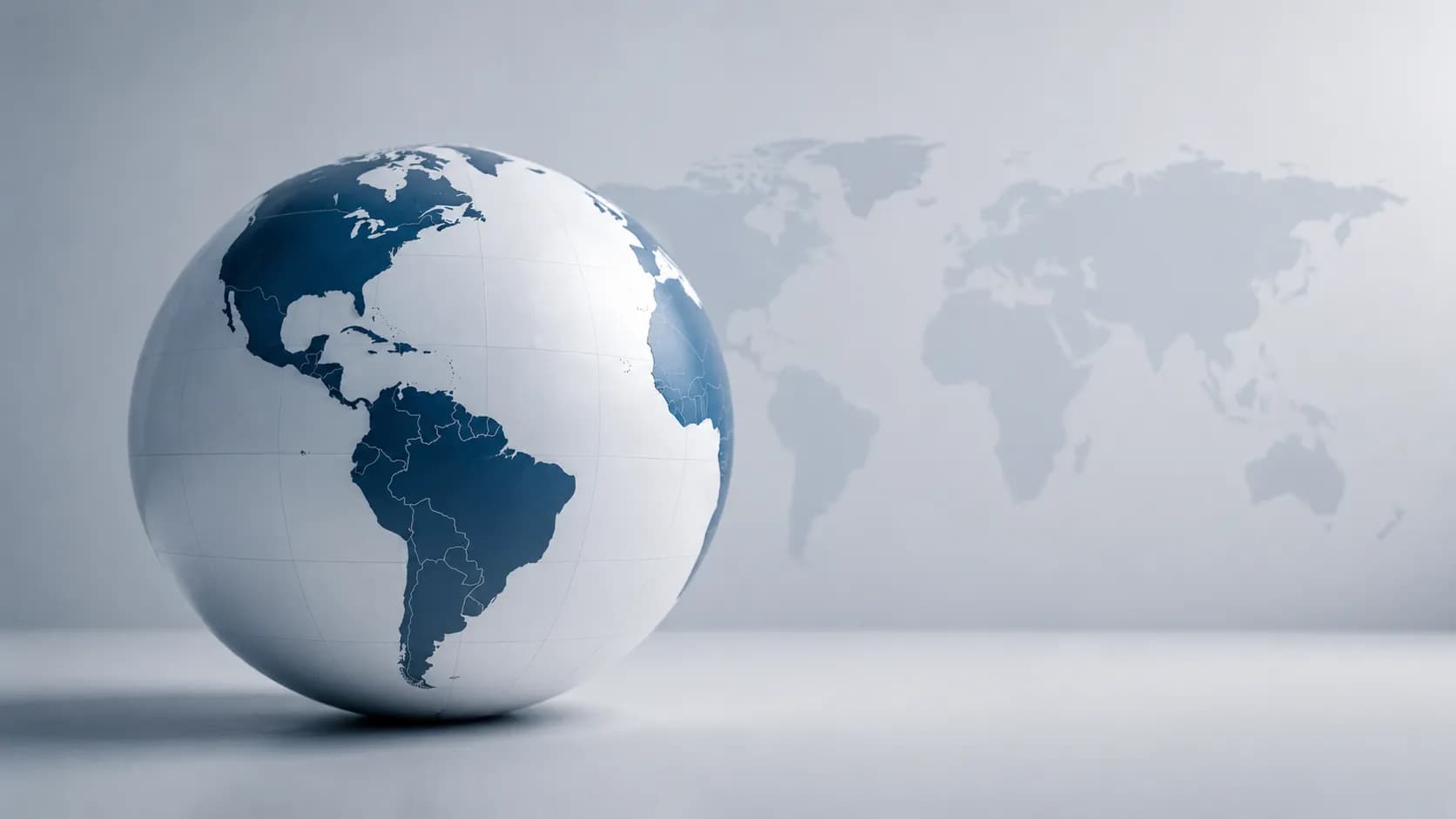
The European Union is becoming an increasingly important factor in the foreign policies of South American countries as governments across the continent attempt to balance relations with China, the United States and Europe.
The EU cannot match China's position as a major commodity buyer or the United States' traditional political and security influence in the Western Hemisphere. But Europe possesses a different set of instruments: trade agreements, investment, development financing, environmental standards, technology cooperation and access to one of the world's largest consumer markets.
In 2026, those instruments are becoming considerably more important.
The provisional application of the EU-Mercosur trade agreement, expanding European investment in Brazil and strategic partnerships with Chile and Argentina over critical minerals are giving Brussels a stronger position in South America's economic diplomacy.
The result is not a European sphere of influence.
Instead, the EU is becoming another strategic pole that South American governments can use to diversify their foreign relations.
Mercosur Changes the Relationship
The biggest development came on May 1, when the EU-Mercosur Interim Trade Agreement began provisional application.
The agreement covers the European Union and the four founding Mercosur members — Argentina, Brazil, Paraguay and Uruguay.
The economic scale is considerable.
In 2025, EU exports to the four Mercosur economies reached €53.3 billion, while Mercosur exported approximately €56.1 billion to Europe.
The EU is already Mercosur's second-largest trading partner in goods after China and ahead of the United States.
The agreement therefore gives South American governments another major economic channel outside their relationships with Washington and Beijing.
For Brazil and Argentina in particular, access to European markets can become an important element of economic diversification.
For Europe, Mercosur provides access to agricultural products, minerals, energy resources and one of the world's largest emerging consumer markets.
Brazil Is Central to Europe’s Strategy
No South American country is more important to the EU's regional strategy than Brazil.
Brazil combines enormous agricultural resources, critical minerals, renewable energy potential, industrial capacity and considerable diplomatic influence.
European policy toward Brasília increasingly reflects that importance.
In June, European Commissioner Jozef Síkela completed a major Global Gateway investment mission to Brazil focused on critical raw materials, sustainable transportation, digital infrastructure and clean energy.
One of the principal announcements was a new €260.8 million investment in the EllaLink digital corridor, which provides a direct high-capacity fibre-optic connection between Europe and Latin America.
The EU has committed €10 billion under its wider Global Gateway Investment Agenda for Latin America and the Caribbean, with Brazil positioned as one of the central destinations for future European investment.
This demonstrates how Brussels is attempting to convert trade relations into strategic infrastructure partnerships.
Chile Connects Europe to Critical Minerals
Chile represents another important dimension of Europe's strategy.
The EU-Chile Interim Trade Agreement has been in force since February 2025 and is designed not simply to increase conventional trade but also to strengthen cooperation in strategic industries.
Bilateral goods trade reached approximately €21 billion in 2025.
More importantly, the EU is Chile's largest source of foreign direct investment, with European investment stocks reaching around €57 billion in 2024, equivalent to roughly one-third of Chile's total FDI stock.
Copper and lithium make the relationship increasingly geopolitical.
Both minerals are essential for batteries, electric vehicles, electricity networks and Europe's clean-energy transition.
European Global Gateway projects are consequently supporting critical raw-material value chains involving lithium and copper as well as green hydrogen development in Chile.
For Santiago, Europe provides investment and technology.
For Brussels, Chile provides an opportunity to diversify strategic mineral supplies.
Argentina Is Becoming Strategically Important
Argentina is developing similar importance.
The EU already maintains a strategic partnership with Argentina on critical raw materials.
This matters because Argentina forms part of South America's lithium triangle and possesses significant potential in copper and other minerals required for the global energy transition.
The EU's Critical Raw Materials strategy explicitly seeks to reduce excessive dependence on individual suppliers by creating partnerships with alternative producers.
As of early 2026, both Argentina and Chile were among the 16 countries with which the EU had established strategic raw-material partnerships.
Recent developments could increase their importance further.
Argentina and Chile are now reviving cross-border mining cooperation that could unlock more than $20 billion in investment and substantially increase copper production.
For Europe, deeper integration between the two countries could eventually create a larger South American mineral supply chain capable of serving European industrial demand.
Uruguay Shows the Political Dimension
Europe's influence is not limited to the region's largest economies.
Uruguay has traditionally maintained strong relationships with European institutions and supports multilateral diplomacy.
In June, Uruguay and the EU held their fourteenth Joint Cooperation Commission meeting in Montevideo.
The discussions covered bilateral cooperation as well as wider EU-CELAC relations, while Uruguay was holding the rotating presidency of CELAC.
This gives countries such as Uruguay an important intermediary role between Europe and the wider Latin American region.
The EU therefore operates simultaneously through bilateral relationships, Mercosur and CELAC.
That multilayered structure is one of Brussels' main diplomatic advantages.
China Changes Europe’s Importance
China remains essential to understanding the EU's growing role.
Over the past two decades, Beijing has dramatically expanded trade, infrastructure financing and commodity relationships across South America.
Brazil, Chile, Peru and several other economies have developed particularly strong commercial links with China.
Europe is not attempting simply to replace Beijing.
Instead, Brussels offers South American governments another option.
A country exporting minerals or agricultural products does not necessarily want to become excessively dependent on one major market.
European trade agreements allow governments to diversify export destinations while European investment can provide alternatives in infrastructure, energy and technology.
This gives South American governments greater negotiating leverage with all major powers.
The United States Is Another Factor
Relations with Washington provide another reason for diversification.
The Trump administration's more transactional foreign and trade policies have created uncertainty over the future structure of US relations with Latin America.
The European Parliament has explicitly argued that geopolitical uncertainty created by recent US policies reinforces the importance of a stronger and more autonomous EU-Latin America partnership.
European policymakers increasingly present the EU as a predictable economic partner committed to multilateral institutions and long-term agreements.
For South American governments, this does not mean choosing Europe over the United States.
It means having more than one major Western partner.
Europe’s Influence Has Limits
The EU nevertheless faces significant constraints.
South American governments do not automatically accept European environmental, political or regulatory demands.
Brazil has repeatedly demonstrated its willingness to pursue an independent foreign policy.
Argentina's economic diplomacy increasingly emphasizes investment and market access.
Other governments maintain close economic relationships with China regardless of European concerns.
South America therefore should not be understood as moving into Europe's geopolitical camp.
The relationship is transactional in both directions.
Europe wants commodities, energy, markets and diversified supply chains.
South America wants investment, technology, financing and access to European consumers.
A Multipolar South America
The deeper transformation is taking place within South American foreign policy itself.
Countries across the continent increasingly operate in a multipolar international environment.
They can sell commodities to China.
They can maintain political and financial relationships with the United States.
They can attract European investment.
They can cooperate with regional organizations and develop relationships with India, Gulf countries and other emerging powers.
The EU's growing presence strengthens this ability to diversify.
That may ultimately represent Europe's most important influence in South America.
Brussels is unlikely to dominate the continent politically.
But through Mercosur, Global Gateway, investment, critical-mineral partnerships, renewable energy and access to the European market, it is becoming increasingly difficult for South American governments to design their economic foreign policies without considering Europe.
In an era of US-China competition, the European Union is offering South America something particularly valuable:
a third major economic relationship without requiring the region to choose between the other two.
Ahmet Balakan
Contributing writer at EUReflect.
Follow EUReflect
See more of our reporting on Google
Mark EUReflect as a preferred source and our stories are ranked higher for you in Top Stories, Discover and Google News — and carry a “preferred” badge when they are cited in AI results.
Add EUReflect as a preferred source