Experts Gather in Brussels to Unveil New Research on Foreign Information Manipulation in Central Asia
Written by Horina Olha and Melnyk Dmytro. On Monday April 13th, informational experts organized an event in Brussels titled: “Information Integrity in Central Asia: New Research Findings on Foreign Information Manipulation and Interference”. Organized by the European Neighbourhood Council (ENC) and implemented by Internews in Central Asia, the event was part of the European Union-funded “Cultivating Audience Resilience through Amplification of Vibrant and Authentic Narratives (CARAVAN)” project.
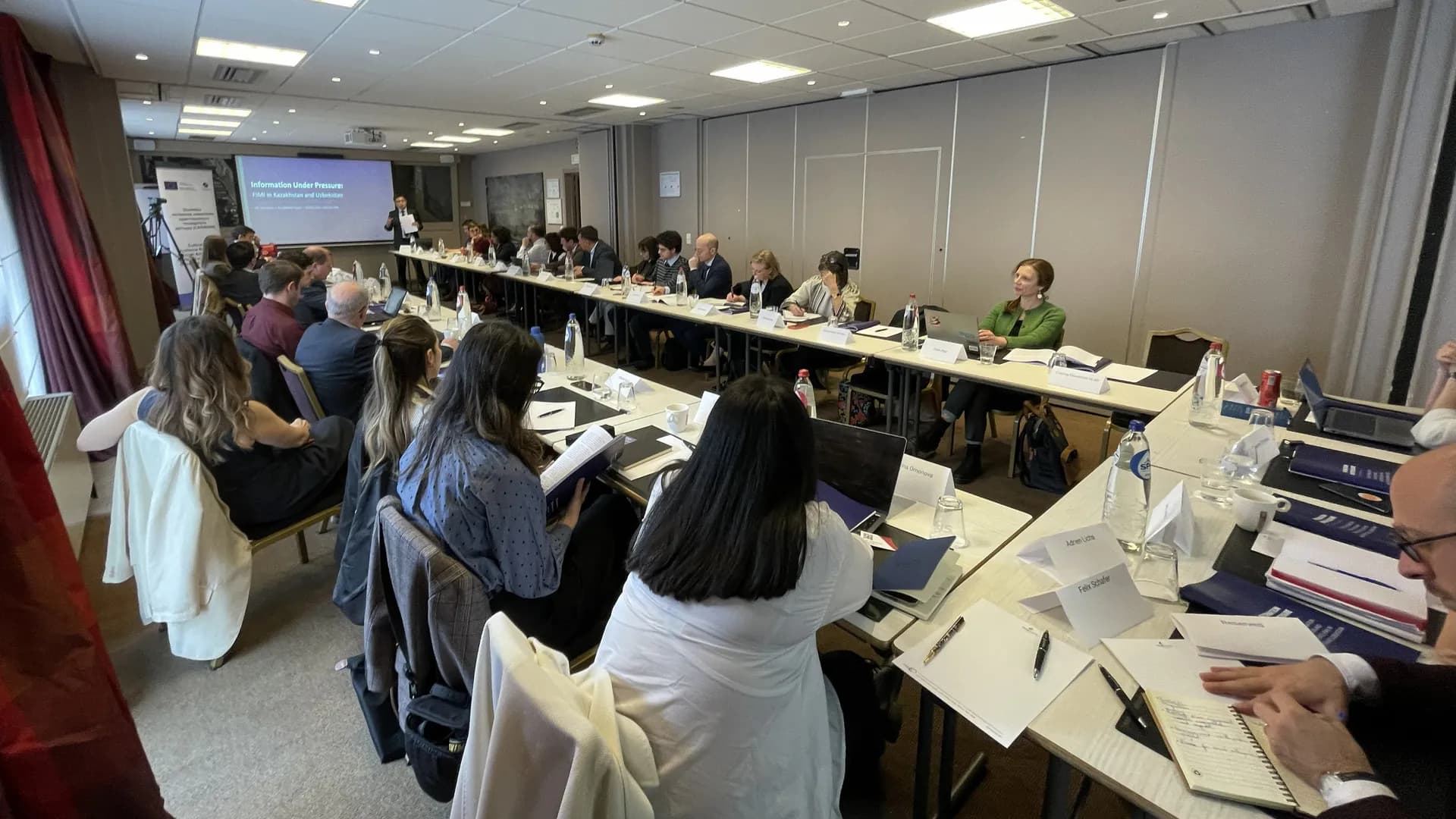
Setting the Stage: The Complexity of Contemporary FIMI
Opening remarks highlighted how Foreign Information Manipulation and Interference (FIMI) today operates via highly coordinated networks, combining technology and the dynamic, ideal elements that adapt rapidly to new contexts. The speakers emphasized that this is not only about spreading disinformation; it is also about shaping perceptions, impacting the cognitive domain, and affecting public perception on a larger scale.
The resulting complexity requires a shift towards ensuring readers have access to reliable, evidence-based information. The CARAVAN project’s approach, rooted in cooperation with media, civil society, and researchers, aims to strengthen resilience and create space for local voices, rather than imposing external models.
Unveiling the Findings: Mapping the Russian and Chinese Information Footprints
The central segment of the event was the detailed presentation of new research findings by Dr. Shairbek Dzhuraev, and ENC Researcher, President of Crossroads Central Asia & Visiting Lecturer at the OSCE Academy
Building upon a previous pilot study focused on Kyrgyzstan, this new research provides a systematic, evidence-based analysis of the information environment in Kazakhstan and Uzbekistan. Methodologically, the study employed a hybrid quantitative-qualitative approach: an AI-driven quantitative scan of nearly 600,000 media posts from 577 identified accounts over five months (October to February),
Dr. Dzhuraev shared five key takeaways from the research:
1. FIMI is a real and sustained phenomenon: There was 100% agreement among all interviewed experts that their respective countries are active objects of FIMI.
2. Telegram Messenger is the platform of choice: While usage nuances exist, Telegram remains the dominant platform for digital communication and FIMI dissemination across the region.
3. Anti-Western Core, Different Targeting: While sharing a common anti-Western theme, FIMI narratives are adapted to the unique political, geographical, and historical contexts of Kazakhstan and Uzbekistan.
4. Russia remains the primary actor: Findings showed that 8% of analyzed posts originating from Russian "seed" accounts were flagged as FIMI, compared to 2% from Chinese accounts, making Russia the "elephant in the room" in the regional information space. A high concentration was noted, with the top 20 media outlets producing 60% of flagged posts.
5. National media governance requires strengthening: There is a continued need for domestic media sectors to evolve to effectively meet rising information challenges.
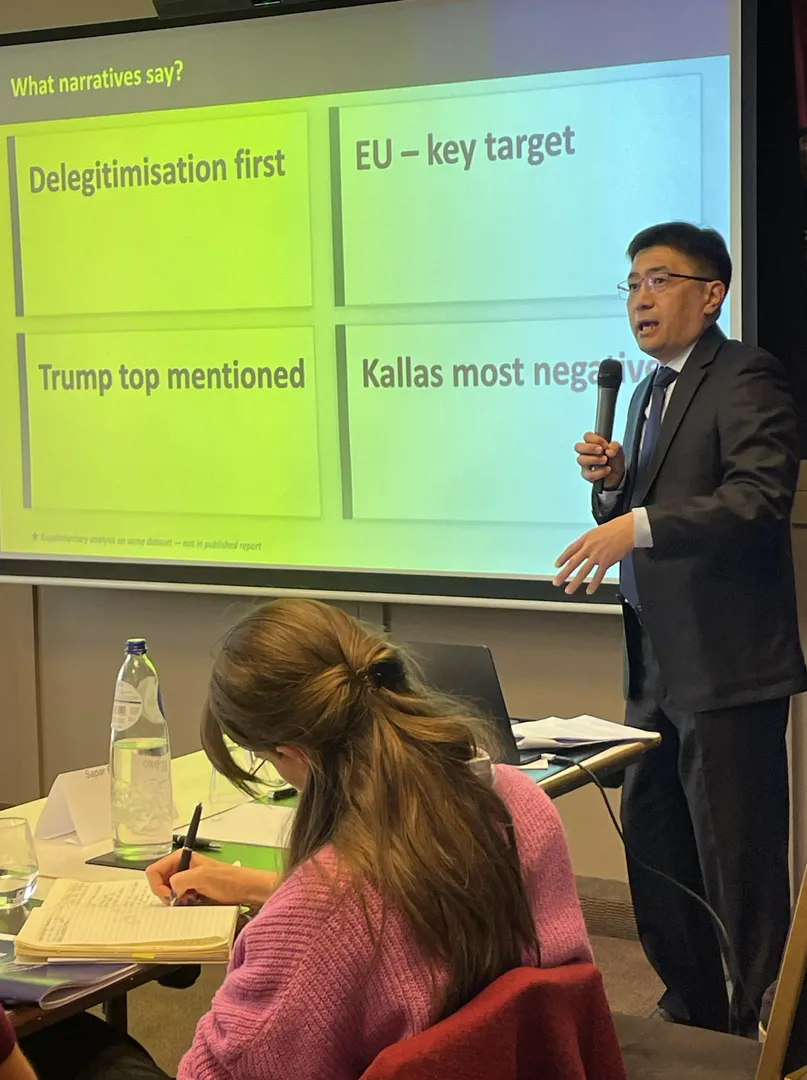
Frequency vs. Exposure: Narrative Dynamics and Country Differences
The presentation revealed striking differences between how FIMI operates in Kazakhstan versus Uzbekistan. In terms of frequency, Kazakhstan appeared to be the primary arena, with nearly five times more FIMI instances tracked than in Uzbekistan.
However, when measuring exposure, the situation reverses: total views of FIMI content are much higher in Uzbekistan, with FIMI posts averaging 30,000 views in Uzbekistan compared to 6,000 in Kazakhstan. This suggests widespread audience exposure in Uzbekistan despite a lower frequency of specific posts.
The research also highlighted distinct narrative focuses:
In Kazakhstan: Narratives are often "direct and fear-mongering," specifically targeting domestic stability concerns unique to the country.
In Uzbekistan: FIMI content focuses more on "global geopolitical level narratives" (such as general criticism of the West or the Ukraine war), often appearing "cleaned up" of country-specific issues.
The findings showed that negative, delegitimizing narratives (criticizing the West, Western institutions, or cultural paradigms) are much more prevalent than proactive, positive narratives promoting Russia or China. Notably, the European Union is emerging as a primary target of FIMI, with discussions moving beyond typical anti-NATO or anti-US rhetoric.
Understanding Vulnerabilities and Recommendations
Dr. Dzhuraev identified several key systemic vulnerabilities that make Central Asia susceptible to foreign information manipulation. Among them was continuous high use of the Russian language, particularly in urban and decision-making circles; a deficit of quality national language content, which pulls audiences towards Russian language information ecosystems.
The event concluded with a clear call for a "whole society approach" to building information resilience. Experts agreed that the solution lies not in chasing down specific narratives or actors, but in empowering entire populations to critically absorb information, distinguish credible sources from intentional manipulation, and support the strengthening of civil society and media freedom as critical elements of resilience.
Olha Horina
Contributing writer at EUReflect.
Follow EUReflect
See more of our reporting on Google
Mark EUReflect as a preferred source and our stories are ranked higher for you in Top Stories, Discover and Google News — and carry a “preferred” badge when they are cited in AI results.
Add EUReflect as a preferred source