Germany calls for ending the unanimity rule in EU
Johann Wadephul, German Minister of Foreign Affairs calls for reforms in the EU, especially in regards to voting.
Written by journalist Danylo Aleksandrov
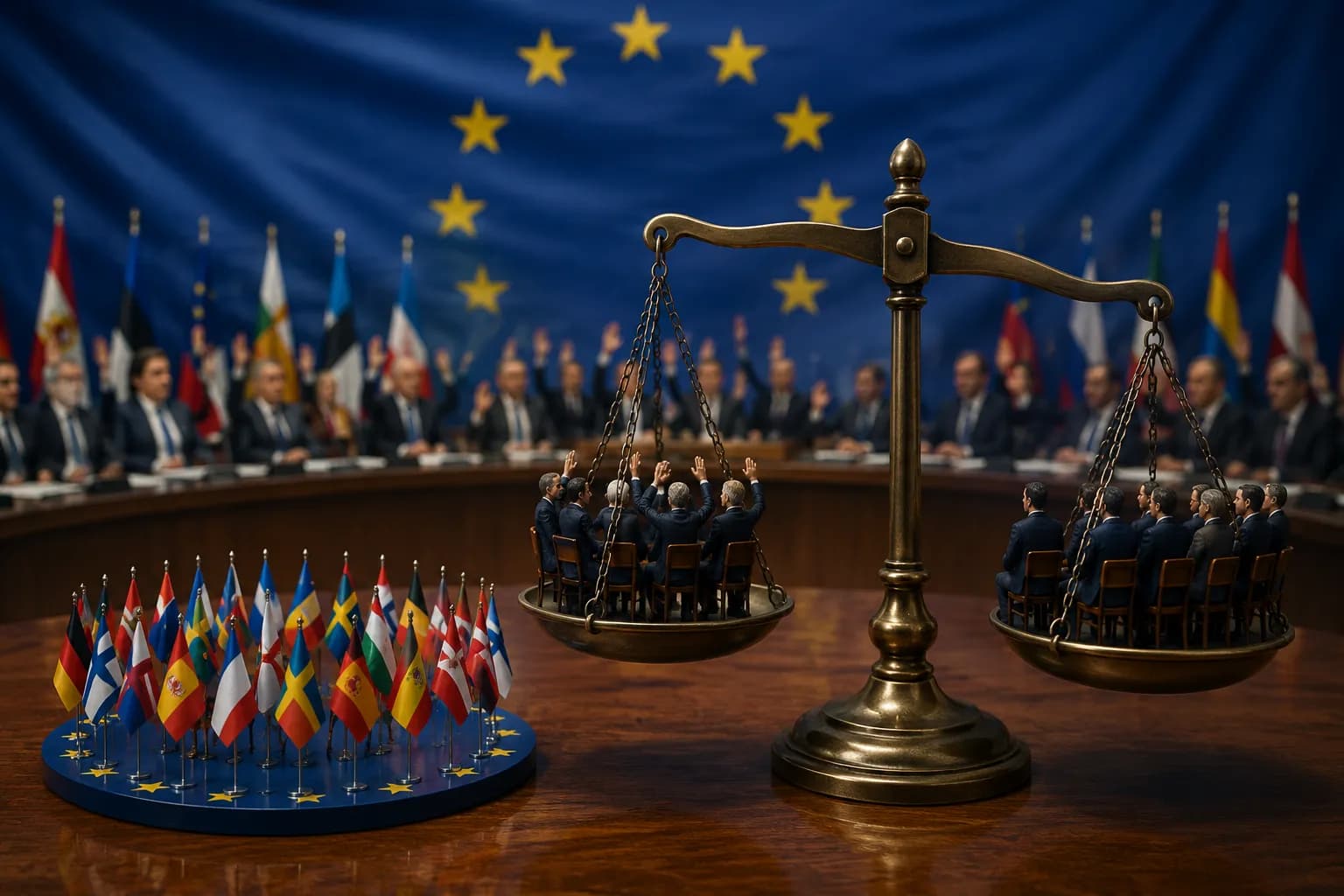
On Wednesday in his speech at the Konrad Adenauer Foundation, German Minister of Foreign Affairs Johann Wadephul called for abolishing the requirement for unanimity when voting for EU affairs, changing it to the principle of "qualified majority".
During his speech, Wadephul stated, that the qualified majority rule would enable the EU to act in those areas where nothing is happening because of current requirement for unanimity, as well as veto rights, which enable every member country to block proposals, even if all other EU states voted in favour. Although, unanimity would remain the most desirable outcome. German Foreign Minister also said that 12 countries are supporting this initiative.
Another of his points is that EU as a whole needs reforms. For example, if member states do not achieve much progress in some questions, a smaller group of countries should lead – a principle that, in his opinion, should be applied to Common Foreign and Security Policy of EU. Financial assistance should be allocated to those countries, where the rule of law and EU values are followed. Combating bureaucracy is another question mentioned by Wadephul. He said that it is vital to keep the functioning of institutions even if new countries join. As potential measures the smaller European Commission, composed of commissioners from two-thirds of member states and changes to the European Parliament, were outlined.
The reasons for such statements may lie in actions of former Hungarian PM Viktor Orbán. For months he used the veto right to time and time again block the €90 billion loan for Ukraine, using this as leverage to gain political and economical benefits for Hungary. Although this ended after his loss to Peter Magyar in the elections, this showed how one member country can block the EU voting, even when all other states are in agreement. This raised concerns and as consequence calls for reforms in EU and some of its mechanisms.
EUReflect News
Site Administrator
Follow EUReflect
See more of our reporting on Google
Mark EUReflect as a preferred source and our stories are ranked higher for you in Top Stories, Discover and Google News — and carry a “preferred” badge when they are cited in AI results.
Add EUReflect as a preferred source