Kazakhstan and Africa: The Next Great Partnership
From Astana to Nairobi, from Almaty to Johannesburg, a quiet wave of new embassies, state visits and investment agreements is redrawing the map of South–South cooperation.

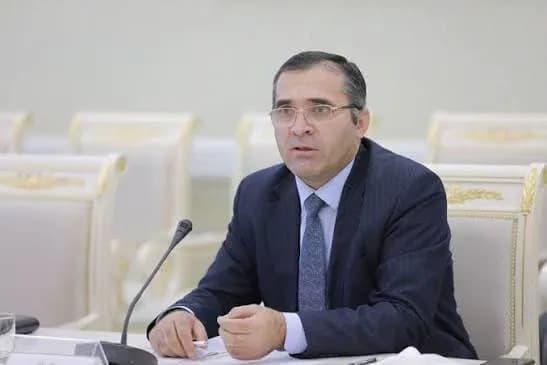
photo credit: akorda
Three weeks ago, Vladimir Norov, the former Minister of Foreign Affairs of Uzbekistan, framed the same idea differently in a post titled “Central Asia × Africa: From Potential to Investment Corridors,” asking a question that deserves far more attention than it currently receives: what if the next major investment corridor of the century runs not only East–West, but Central Asia–Africa?
The numbers behind that question are difficult to ignore. According to the United Nations, Africa will host roughly 25 percent of humanity by 2050 — more than 2.5 billion people. The continent also holds up to 30 percent of the world’s mineral reserves, including many of the inputs that modern industry, defence manufacturing and advanced technology cannot function without.
Over the past eighteen months, something genuinely unusual has been unfolding between two regions that spent most of the post-Cold War era barely acknowledging one another. Kazakhstan has opened embassies in six African capitals. Kenya’s head of state travelled to Astana for the first official visit in the history of the relationship. Kyrgyzstan — a country with virtually no previous African diplomatic footprint — received, within a span of roughly ten weeks, its first African head of state and its first African foreign minister, while dispatching its own top diplomat on unprecedented missions to Mozambique and Namibia. Uzbekistan, for its part, has established diplomatic relations with seven African states in two years and sent its first textile trade delegation to Johannesburg.
None of this is coincidence, and none of it is diplomatic theatre. It is the visible surface of a deeper structural convergence between two regions that the twentieth century pushed to opposite ends of the world map — and that the twenty-first century is quietly pulling back together.
A Relationship With Deep Historical Roots
Long before “Africa” and “Central Asia” became geopolitical categories, the two were already connected. Gold, salt, textiles, manuscripts and ideas circulated along trans-Saharan and Silk Road networks that tied Samarkand and Bukhara to Cairo, Fez and Timbuktu. Islamic scholarship, legal traditions and the pilgrimage routes toward Mecca stitched large parts of both regions into a shared intellectual and spiritual world centuries before either had heard of colonial partition or Cold War blocs.
A second and very different layer came later. The Soviet Union was a major patron of African liberation movements and post-independence development projects from the 1960s through the 1980s. Thousands of African students were trained in Soviet universities, including in Tashkent. When the USSR collapsed in 1991, that channel fell silent. Both regions turned inward, absorbed by the demands of nation-building. For nearly three decades, Africa and Central Asia simply stopped noticing each other.
“We are not approaching Africa from a donor perspective, but as an equal partner.” — Kazakh Deputy Foreign Minister Alibek Kuantyrov, Astana International Forum, May 2025
Why Now? Five Forces
1. A demographic and economic profile built for complementarity
Africa is the youngest continent on the planet, with a median age of just 19 and a population set to grow from roughly 1.5 to 2.5 billion by 2050, supplying more than a quarter of the world’s workforce. Central Asia presents almost the mirror image: a smaller, capital-accumulating region of some 78 million people whose combined economy has been expanding faster than nearly any other, driven by gold, uranium, chromium, cotton and wheat. One side holds the labour force and the consumer market; the other holds the capital and the export surplus. This is a rare instance of genuine complementarity rather than head-on competition.
2. Mineral wealth
Kazakhstan alone accounts for roughly 40 percent of global uranium production and holds the world’s largest chromium reserves. Africa holds the majority of global cobalt, alongside vast lithium, manganese and copper deposits. Rather than treating each other as rivals, the two regions are increasingly described,including by Kazakh President Kassym-Jomart Tokayev, who has called critical minerals “the new oil”, as parallel suppliers with a shared interest in capturing more value at the processing and refining stage that both currently lack.
3. New roads, rails and sea lanes shrinking the distance
The Middle Corridor (running from China across Kazakhstan, over the Caspian Sea, through the South Caucasus and into Türkiye) has seen cargo volumes quadruple since 2022, with the World Bank projecting a further tripling by 2030. Its western terminus already plugs, via the Suez Canal and Gulf ports, into the maritime networks serving East and North Africa. The missing link, a direct freight connection between East African ports and Central Asian rail, may well be the single largest infrastructure opportunity of the coming decade. President Tokayev proposed linking the Middle Corridor with Africa’s maritime arteries, leveraging the potential of the Belt and Road Initiative. Kenya, for its part, has promised to grant Kazakh exporters access to its largest seaports, Mombasa and Lamu. This will optimize the supply of metal products, construction materials, and foodstuffs from Kazakhstan to the East African Community market, which boasts a population of 300 million people.
4. Multi-vector foreign policy
Kazakhstan renounced the world’s fourth-largest nuclear arsenal in the 1990s. Turkmenistan is constitutionally neutral. Uzbekistan pursues a deliberately multi-vector foreign policy. That instinct closely mirrors African Union doctrine on non-interference and strategic autonomy, first articulated at Bandung in 1955. Courted simultaneously by Washington, Beijing, Moscow, Brussels and the Gulf, neither region wants to be captured by a single power and deepening ties with each other is one of the most effective ways of preserving that independence.
5. faith?
The global halal economy, worth trillions of dollars and growing quickly, is emerging as one of the most concrete connective threads between the two regions, from Kazakhstan’s ambitions as a halal food supplier to African markets, to joint certification standards and Islamic-finance cooperation.
Institutional anchoring is following: Kyrgyzstan and Kazakhstan have each secured African Union observer status, with three additional Central Asian states expected to follow by 2030.
Kazakhstan and Africa
Among all Central Asian states, Kazakhstan has moved furthest and fastest. Its engagement is no longer a series of isolated gestures but a codified policy.
Writing for dknews.kz earlier this year, Yessenova, M. argued that Kazakhstan’s engagement with the African Union “reflects a broader strategic vision,” noting that as the world becomes increasingly multipolar, Astana is actively diversifying its foreign policy partnerships beyond traditional Eurasian frameworks.
Kazakhstan, in effect, is bringing Central Asia closer to Africa. Dipanjan Roy Chaudhury, writing for The Economic Times, highlighted the visit of Rwandan President Paul Kagame as part of this pattern. Over the past year, Astana has welcomed the President of Rwanda, the Spiritual Leader of the Yoruba People of Nigeria, and — as Caspian Post reported — President Félix Tshisekedi of the Democratic Republic of the Congo on his first state visit to the country.
The institutional backbone of this outreach was made explicit in April, when Deputy Minister of Foreign Affairs Alibek Bakayev met with the ambassadors of African states in Astana. According to the official website of Kazakhstan’s Ministry of Foreign Affairs, the Kazakh diplomat stressed that Africa is treated as one of the priority directions of the country’s balanced foreign policy, with engagement structured around the Concept for Cooperation with African States and the African Union for 2025–2030. Participants noted the intensification of political dialogue — including exchanges of visits at the highest levels — the expansion of inter-ministerial consultations and the development of inter-parliamentary cooperation. Particular emphasis was placed on strengthening the legal and treaty framework and on expanding Kazakhstan’s diplomatic presence across the continent.
The commercial results are beginning to show. At the end of 2025, trade turnover between Kazakhstan and African countries reached a record 1.172 billion US dollars, up 15 percent year-on-year, concentrated in agriculture, logistics, digital technology and pharmaceuticals.
Kazakhstan–Kenya: The East African Gateway
No bilateral file better illustrates the new ambition than Kenya.
Bilateral ties have deepened substantially, crowned by Kenyan President William Ruto’s historic state visit to Astana in May 2026 for talks with President Tokayev, according to Kenya’s KBC. According to the official website of the Kazakh government, bilateral trade turnover reached 52.2 million US dollars, on a trajectory of sustained growth. Kazakhstan ships grain, fertilisers, metal products and petrochemicals to Kenya, while importing Kenyan tea, coffee and cut flowers. In May 2026, the two countries signed an investment-promotion memorandum of understanding covering manufacturing, logistics, mining, ICT, energy and agro-processing; the agreement between Invest Kenya and Kazakh Invest was confirmed on the official website of Invest Kenya.
According to The Astana Times, the two presidents agreed on 20 May to strengthen cooperation across political, economic and humanitarian domains. Tokayev described Kenya as a key African partner:
“Kenya is one of the most dynamic and advanced countries in Africa. Despite the vast geographical distance between us, we are united by a shared spirit of modernization and confidence in the future. Kazakhstan, located in the heart of Eurasia, and Kenya, as an economic hub of East Africa, are well positioned to expand their bilateral partnership. Together, we can build a strong bridge between Central Asia and Africa, connecting markets, transport routes, and investment flows.”
He also announced Kazakhstan’s decision to open an embassy in Nairobi, pointing to opportunities in economic and humanitarian cooperation and in interregional connectivity. Beyond the headline announcements, the two leaders discussed establishing a Business Council and cooperation in trade, agriculture, transport and logistics, mining, renewable energy, digital technologies, e-government, the space industry, finance and tourism, as well as expanded academic and cultural exchange.
The most structurally significant proposal concerned trade infrastructure. Astana offered to create a Kenyan trade and logistics hub inside Kazakhstan, granting East African goods direct access to Eurasian markets — a proposal relayed by orda.kz and detailed by the Kazakh Ministry of Foreign Affairs mission in Nairobi. “We are committed to opening a Kenyan trade hub in Kazakhstan that will provide your businesses with direct access to the entire Eurasian region,” Tokayev told Kenyan business representatives.
Tokayev further proposed linking the Middle Corridor, the Trans-Caspian International Transport Route, with East African maritime routes, drawing on the potential of China’s Belt and Road Initiative (as mentioned earlier). Kazakhstan expressed specific interest in the ports of Mombasa and Lamu, regarded as the region’s largest logistics hubs. “It is necessary to connect the Middle Corridor with Africa’s vital maritime arteries,” he said. Direct flights between Astana and Nairobi were also discussed as a way to shorten the distance for business travel and freight.
Cooperation extends into the extraction of rare earth and critical minerals, resources whose global demand is rising with the energy transition and the expansion of digital infrastructure. During the accompanying business forum, Kazakhstan’s sovereign wealth fund Samruk-Kazyna and Kenya’s National Mining Corporation signed an agreement on joint geological exploration and subsoil development projects in Kenya. Tokayev additionally proposed a Kazakhstan–Kenya Business Council and a dedicated expert group on transport and logistics infrastructure, steps intended to accelerate the creation of an intergovernmental commission on trade and economic cooperation.
Ruto, for his part, said Nairobi was interested in building a “new economic bridge” between Central Asia and Africa, adding that “the logistics ports of Mombasa and Lamu will be available to companies from Kazakhstan interested in entering East African markets.” As Pokidaev, D. observed in his 21 May 2026 report, the visit came as Kazakhstan seeks to diversify its trade routes and widen its economic footprint across the Global South.
The logic on the Kazakh side is straightforward. Kenya today ranks among Africa’s fastest-growing economies — a regional hub with developed infrastructure, strong services, tourism and ICT sectors, and a major maritime trade position on the East African coast. To support this expansion, the Embassy of the Republic of Kazakhstan in Kenya opened in Nairobi on 27 June 2025. According to Barlybay Sadykov, Kazakhstan’s Ambassador to Africa, bilateral trade in 2025 amounted to 52.2 million US dollars, a 23.3 percent increase on the 42.4 million recorded in the comparable period a year earlier.
Kazakhstan–Democratic Republic of the Congo

During President Félix Tshisekedi’s visit to Astana, Tokayev was unambiguous about how his government reads the relationship. “Kazakhstan regards the DRC as a key partner in Africa and is committed to the comprehensive development of our cooperation,” he said, adding that “your country, with a population exceeding 110 million and rich in human and natural resources, commands respect both regionally and internationally.”
According to The Astana Times, the bilateral talks with the Congolese side explored opportunities to expand trade and deepen cooperation across transport and logistics, mining, agriculture, IT and digitalisation — a portfolio that maps closely onto Kazakhstan’s own diversification agenda.
Kazakhstan–Republic of the Congo
Brazzaville has approached the relationship through the lens of the energy sector. Speaking on the occasion of high-level talks, President Denis Sassou N’Guesso identified several axes of cooperation, noting that his country’s economy, like Kazakhstan’s, rests largely on the oil sector — a field in which Kazakhstan’s proven experience could benefit Congo, notably through equity participation by Kazakh operators. He added that Congo possesses other resources, particularly mineral deposits that remain under-exploited or awaiting development, citing the phosphates and potash abundant in the maritime region around Pointe-Noire.
Congolese ministerial engagement has continued at the multilateral level: Denis Christel Sassou N’Guesso, the Republic of the Congo’s Minister of International Cooperation, was among the speakers at the Astana International Forum session devoted to Africa.
Kazakhstan–Ethiopia
Ethiopia represents one of Kazakhstan’s longest-standing African relationships. According to the official website of the Kazakh government, diplomatic relations between the Republic of Kazakhstan and the Federal Democratic Republic of Ethiopia were established on 5 September 2011 through an exchange of diplomatic notes. Astana views Ethiopia as a pragmatic and predictable partner on the continent and has expressed interest in comprehensively strengthening mutually beneficial and equal cooperation.
The milestones are modest but steady: an official visit by Kazakhstan’s Foreign Minister Yerlan Idrissov to Ethiopia on 11–12 December 2013; a Memorandum of Understanding on bilateral consultations between the two foreign ministries, signed in New York on 22 September 2016 on the margins of the 71st session of the UN General Assembly; and the participation of former Ethiopian President Mulatu Teshome in a special panel session of the Astana International Forum on 6 June 2023. Kazakhstan maintains an embassy in Addis Ababa — a significant detail, given that the Ethiopian capital also hosts the African Union.
Kazakhstan–South Africa: The Defence Industry
South Africa remains the most substantial source of African capital in Kazakhstan and the site of the most striking joint venture between Kazakhstan and an African state.
Writing in 2022, Sánchez, W. A. noted that since 2005 Kazakhstan has attracted a total of 106.3 million US dollars from African partners, with South Africa as the principal investor. South Africa’s defence industry is well established, and it was therefore unsurprising, he observed, that Astana identified the country as a strong candidate for defence cooperation. Concretely, the South African defence firm Paramount Group partnered with Kazakhstan Engineering to create a joint venture known as Kazakhstan Paramount Engineering (KPE), still the clearest example of industrial, rather than purely commercial, integration between the two regions.
That connection has an institutional afterlife: Paramount Group founder Ivor Ichikowitz appeared among the speakers at the Africa-focused session of the most recent Astana International Forum.
Kazakhstan–Egypt: African Capital Flowing North-East
Egypt supplies the single most telling counter-example to the assumption that capital in this relationship only moves in one direction. Egyptian pharmaceutical firm EIPICO has invested 33 million US dollars in a full-cycle pharmaceutical plant inside Kazakhstan. As Kwan wrote for The Times of Central Asia, the project “signals a growing reciprocal interest in industrial collaboration” — a rare and instructive case of African capital flowing into Central Asia rather than the reverse.
Kazakhstan–Angola
Angola modestly diversified the investment picture in 2024 by placing 1.5 million US dollars into the Kazakh economy. According to Africa-Press, Angolan Minister of Foreign Affairs Téte António met in New York that same year with Kazakhstan’s Deputy Prime Minister and Minister of Foreign Affairs, Murat Nurtleu, to review bilateral cooperation.
and Kazakhstan–Rwanda
Rwanda, meanwhile, has become one of Astana’s more visible African interlocutors, through President Kagame’s visit, reported by Dipanjan Roy Chaudhury for The Economic Times, and through the participation of Olivier Jean Patrick Nduhungirehe, Rwanda’s Minister of Foreign Affairs and International Cooperation, in the Astana International Forum’s Africa panel.
As the African outlet Ghanaweb summarised the trend, Kazakhstan and African countries are steadily building closer relations despite the distance separating them, with recent high-level visits showing that both sides are committed to deepening partnerships in trade, technology and agriculture.
The Trade Reality?
Behind the diplomacy, the commercial structure remains thin and honest analysis has to say so.
Kazakhstan’s imports from African nations consist mainly of cocoa beans, tobacco, tea and clothing, sourced from countries including Angola, Benin, Kenya, Senegal and South Africa. Its export profile toward the continent is heavily concentrated: sulfur accounts for 64 percent, crude oil 28.5 percent, coal 2.9 percent and coal tar distillation products 0.89 percent. Imports from Africa are comparatively more diversified, led by mixtures of aromatic substances (14.7 percent), prepared binding agents (14 percent), cocoa paste (12.1 percent), tea (9.4 percent) and cocoa beans (6.5 percent), among others.
The binding constraint is logistics. As Ozhet A. Shegirbayev wrote for The Astana Times, transport remains the primary bottleneck holding back cooperation, and the Kazakh government has been actively exploring alternative routes to break it (including talks held in 2023 by Deputy Prime Minister Serik Zhumangarin on using Iran’s Bandar Abbas port as a gateway to East African markets). Until a reliable corridor exists, political goodwill will keep outpacing container volumes.
Astana International Forum
At the most recent Astana International Forum, an entire panel was devoted to the relationship, under the title “Kazakhstan and Africa: Unlocking New Frontiers of Cooperation.”
Speaking at the session on 30 May, Deputy Minister of Foreign Affairs Alibek Kuantyrov stated that Kazakhstan is strengthening its ties with Africa through strategic, long-term partnerships grounded in mutual benefit and respect. According to Kazakh Invest, the session was moderated by Lassina Zerbo, former Prime Minister of Burkina Faso and former Executive Secretary of the Comprehensive Nuclear-Test-Ban Treaty Organization (CTBTO). Speakers included Olivier Jean Patrick Nduhungirehe, Rwanda’s Minister of Foreign Affairs and International Cooperation; Denis Christel Sassou N’Guesso, the Republic of the Congo’s Minister of International Cooperation; Ooni Adeyeye Enitan Ogunwusi, the traditional ruler of Ife in Nigeria; Paramount Group founder Ivor Ichikowitz; and Alomra Group International President Driss Benomar.
The discussion moved beyond generalities toward identifiable sectors: the supply of halal and organic products to African markets and the creation of joint agri-processing clusters. Kuantyrov noted that Kazakhstan, one of the world’s leading flour exporters, is well positioned to contribute to food security across the continent. Telecommunications infrastructure, smart city solutions and satellite technologies were also raised, with Kuantyrov underscoring Kazakhstan’s readiness to partner with African states in building advanced digital ecosystems.
Academical research
There is an academic frame for all of this. In their research, İpek and Adibayeva, A. (2021) analysed Kazakhstan’s economic opening to Africa as a case study in “distant neighbourhood” foreign policy, arguing that the opening pursued under the 2050 Strategy exemplifies how Kazakh economic diplomacy operates at long range. The 2050 Strategy, which aims to turn Kazakhstan into a developed economy, carries two principal objectives, as they noted: transforming Kazakhstan from a landlocked country into a land-linked, open one that actively supports regional and global prosperity; and diversifying the country’s financial and economic activity on the global stage.
Read against that framework, the African push is not improvisation. It is the logical extension of a strategy written more than a decade ago.
What Central Asia Can Learn From Africa
The learning, importantly, runs in both directions and one of the most experienced diplomats in the region has said so explicitly.
Vladimir Norov, the former Foreign Minister of Uzbekistan, has argued that Central Asia can learn from Africa’s critical minerals playbook. “As global competition for critical minerals intensifies, Africa’s recent policy shift offers important examples for Central Asia,” he noted. “The goal isn’t to repeat Africa’s resource dependence — it’s to avoid its pitfalls and accelerate regional industrialization.”
He drew a direct parallel between the two regions’ bargaining positions: “Africa strengthened its leverage through the green transition and U.S.–China rivalry. Today, Central Asia benefits from similar dynamics: disruptions in Russian supply, Western diversification efforts, and rising demand for Kazakhstan’s uranium, Kyrgyzstan’s cobalt, Uzbekistan’s uranium, copper, and regional REEs.”
His institutional point may be the most consequential of all. Norov observed that “Africa’s Agenda 2063 and Mining Vision created unified standards,” adding that “Central Asia needs a regional approach to avoid countries being played against each other and to align on ESG, processing, and labour rules.” In other words, Africa’s decades-long investment in continental frameworks is precisely what Central Asia still lacks and fragmentation is the surest way to lose leverage.
What Each Region Actually Offers the Other
For Central Asian businesses and investors, Norov argued, Africa offers:
·New markets for industrial products, machinery, pharmaceuticals and agricultural technologies
·Opportunities in mining, energy and infrastructure
·New logistics and trade corridors
·Partnerships in food security and agro-industry
·Joint ventures and manufacturing platforms
·Access to rapidly expanding consumer and investment markets
·A chance to participate in building a developing AI ecosystem
For Africa, he continued, Central Asia brings manufacturing capability, technology, investment experience, logistics expertise and a growing network of connections across Eurasia. This, he noted, is why the proposed “Central Asia–Africa: New Investment & Trade Corridors” track at the AEF could prove particularly important.
The Entrepreneurs Are Already There
Governments are not the only actors moving. Tajikistan-rooted entrepreneur Azamat Sultan has raised 45 million US dollars to scale GoCab, a full-stack electric mobility platform already generating more than 17 million dollars in annual revenue and operating across Côte d’Ivoire, Senegal and Morocco, with expansion planned into the Middle East and Latin America.
Norov used that success to make a broader argument in his LinkedIn post: Central Asian founders, shaped by fintech innovation, logistical difficulty and sheer resourcefulness in markets such as Kazakhstan, Uzbekistan, Kyrgyzstan and Tajikistan, possess a distinctive “Central Asia advantage” well suited to Africa’s dual-impact needs of financial inclusion and climate action. Africa’s tech ecosystem today, he suggested, resembles Central Asia’s a decade ago: bold, underserved and ready for operators rather than imitators.
“Africa isn’t looking for Silicon Valley clones,” he wrote. “It needs builders who understand power outages, cash-driven economies, and complex logistics exactly what Central Asian founders have navigated for years.”
Why This Relationship Is Still Moving Too Slowly
The future is Africa. The future is Central Asia. And yet there is still remarkably little serious research, analysis or journalism devoted to the future of Africa–Central Asia relations. The literature is thin, the data is scattered, and most of what exists treats each region as an object of great-power competition rather than as an actor capable of building its own partnerships.
The bilateral relationships themselves remain slow. Kazakhstan is genuinely investing in its African ties but Kazakhstan is, for now, almost alone. Turkmenistan has no embassy on the continent. Several of its neighbours have made symbolic gestures without commercial follow-through. And even Kazakhstan, for understandable reasons, remains primarily European Union–oriented in its trade and regulatory alignment. That orientation is not a mistake; the EU is a major market and a source of standards and capital. But it cannot be the whole strategy.
The demographic arithmetic is unforgiving. By 2050, Africa will hold a quarter of the world’s population, its median age will still be young while Europe and East Asia age rapidly, and countries such as Nigeria will sit among the world’s leading powers by population, market size and geopolitical weight. Partnerships with such states are not built in a single electoral cycle. They are built through decades of embassies, scholarships, direct flights, banking relationships, chambers of commerce and accumulated trust.
Which is why the real test of Central Asian policy is not what it delivers in five or ten years, but whether it is thinking in twenty- and thirty-year terms. Embassies opened in 2026 will only pay off in the 2040s. Students trained in Tashkent or Almaty today will be ministers and chief executives in Lagos, Nairobi and Kinshasa tomorrow. Corridors negotiated now will carry cargo long after the officials who signed them have left office.
The regions that arrive in Africa early will negotiate as partners. Those that arrive late will negotiate as applicants. Central Asia still has the choice but the window will not stay open indefinitely.
Conclusion: Future Corridors?
The re-encounter between Kazakhstan and Africa carries the credibility that comes from specifics: an embassy in Nairobi, a joint venture in defence engineering with South Africa, an Egyptian pharmaceutical plant in Kazakhstan, a geological exploration agreement between Samruk-Kazyna and Kenya’s National Mining Corporation, a policy Concept running to 2030, and a trade figure that crossed one billion dollars for the first time.
It also carries an unmistakable warning: 1.172 billion dollars in annual trade with an entire continent of 1.5 billion people is a beginning, not an achievement. Whether 2026 is remembered as the year Central Asia–Africa relations began to boom, as The Diplomat asked, or simply as another year of warm communiqués, depends on whether the two regions can do what Norov urged : move from potential to investment corridors.
The potential is there. The complementarity is there. The political will, at least in Astana, is there. What remains is patience, capital, and the willingness to plan for a world that will look very different in 2050 than it does today.
Bibliography
Ambassade de la République du Congo en France. (2024, 5 août). Coopération : le Congo et le Kazakhstan signent des accords multisectoriels. https://ambacongofr.org/l-ambassade/actualites/1101-cooperation-le-congo-et-le-kazakhstan-signent-des-accords-multisectoriels
Africa-Press. (2024, 23 septembre). Angola and Kazakhstan want to strengthen cooperation. https://www.africa-press.net/angola/all-news/angola-and-kazakhstan-want-to-strengthen-cooperation
GhanaWeb. (2025, June 4). Kazakhstan and Africa strengthen ties through growing cooperation. https://www.ghanaweb.com/GhanaHomePage/africa/Kazakhstan-and-Africa-strengthen-ties-through-growing-cooperation-1986700
İpek, V., Dadayabeva, G., & Adibayeva, A. (2021). Kazakhstan in Africa: An Economic Diplomacy within Distant Neighborhood Foreign Policy. İnsan ve Toplum Bilimleri Araştırmaları Dergisi, 10(2), 1251-1273.
Kazakh Invest. (2025, 30 mai). Kazakhstan and Africa open new horizons of partnership at Astana International Forum. https://invest.gov.kz/media-center/press-releases/kazakhstan-and-africa-open-new-horizons-of-partnership-at-astana-international-forum/
Kwan, S. (2025, June 2). Kazakhstan pursues new partnerships across Africa. The Times of Central Asia. https://timesca.com/kazakhstan-pursues-new-partnerships-across-africa/
Ministry of Foreign Affairs of the Republic of Kazakhstan. (2026, 24 avril). Kazakhstan expands engagement with the African continent. Gov.kz. https://www.gov.kz/memleket/entities/mfa/press/news/details/1207743?lang=en
Omirgazy, D. (2026, 20 mai). Kazakhstan and Kenya chart new path for interregional cooperation. The Astana Times. https://astanatimes.com/2026/05/kazakhstan-and-kenya-chart-new-path-for-interregional-cooperation/ [astanatimes.com]
Pokidaev, D. (2026, 21 mai). Kazakhstan proposes Kenyan trade hub to access Eurasian markets. The Times of Central Asia. https://timesca.com/kazakhstan-proposes-kenyan-trade-hub-to-access-eurasian-markets/ [timesca.com]
Présidence de la République démocratique du Congo. (2025, 10 septembre). Coopération : Le Kazakhstan fait de la RDC son partenaire « important et fiable » en Afrique. https://www.presidence.cd/actualite-detail/actualite/cooperation_le_kazakhstan_fait_de_la_rdc_son_partenaire_important_et_fiable_en_afrique
Putz, C. (2026, 21 mai). Is 2026 the year of booming Central Asia-Africa relations? The Diplomat. https://thediplomat.com/2026/05/is-2026-the-year-of-booming-central-asia-africa-relations/
Sánchez, W. A. (2022, juin). Kazakhstan-Africa relations: Building partnerships. Wilson Center. https://www.wilsoncenter.org/blog-post/kazakhstan-africa-relations-building-partnerships
The Caspian Post. (2025, September 10). Kazakh president reaffirms commitment to deepening ties with Africa. https://caspianpost.com/kazakhstan/kazakh-president-reaffirms-commitment-to-deepening-ties-with-africa
Yessenova, M. (2026, February 13). Kazakhstan strengthens its position in Africa. DKNews. https://dknews.kz/en/articles-in-english/385241-kazakhstan-strengthens-its-position-in-africa
Dipanjan Roy Chaudhury, Global Fintech Fest: Kissht’s Next Phase of Growth Means Becoming a Broader Financial-Services Company, Not Just a Lender
Related Topics
Derya Soysal
Contributing writer at EUReflect.
Follow EUReflect
See more of our reporting on Google
Mark EUReflect as a preferred source and our stories are ranked higher for you in Top Stories, Discover and Google News — and carry a “preferred” badge when they are cited in AI results.
Add EUReflect as a preferred source