“Go to Türkiye”: The Offer Maduro Rejected
The world is still reeling from the shock of the U.S. operation that saw Venezuelan President Nicolás Maduro taken to New York, when a far more striking scenario surfaced behind the scenes of global politics. According to multiple reports, Maduro was offered a deal just before the operation: step down from power and relocate to Türkiye. The offer was reportedly rejected. The revelation has reignited debate over the scale of secret contacts between Washington and Caracas—and Türkiye’s growing weight in global power calculations.
1.A Deal Before Detention: “Go to Türkiye”
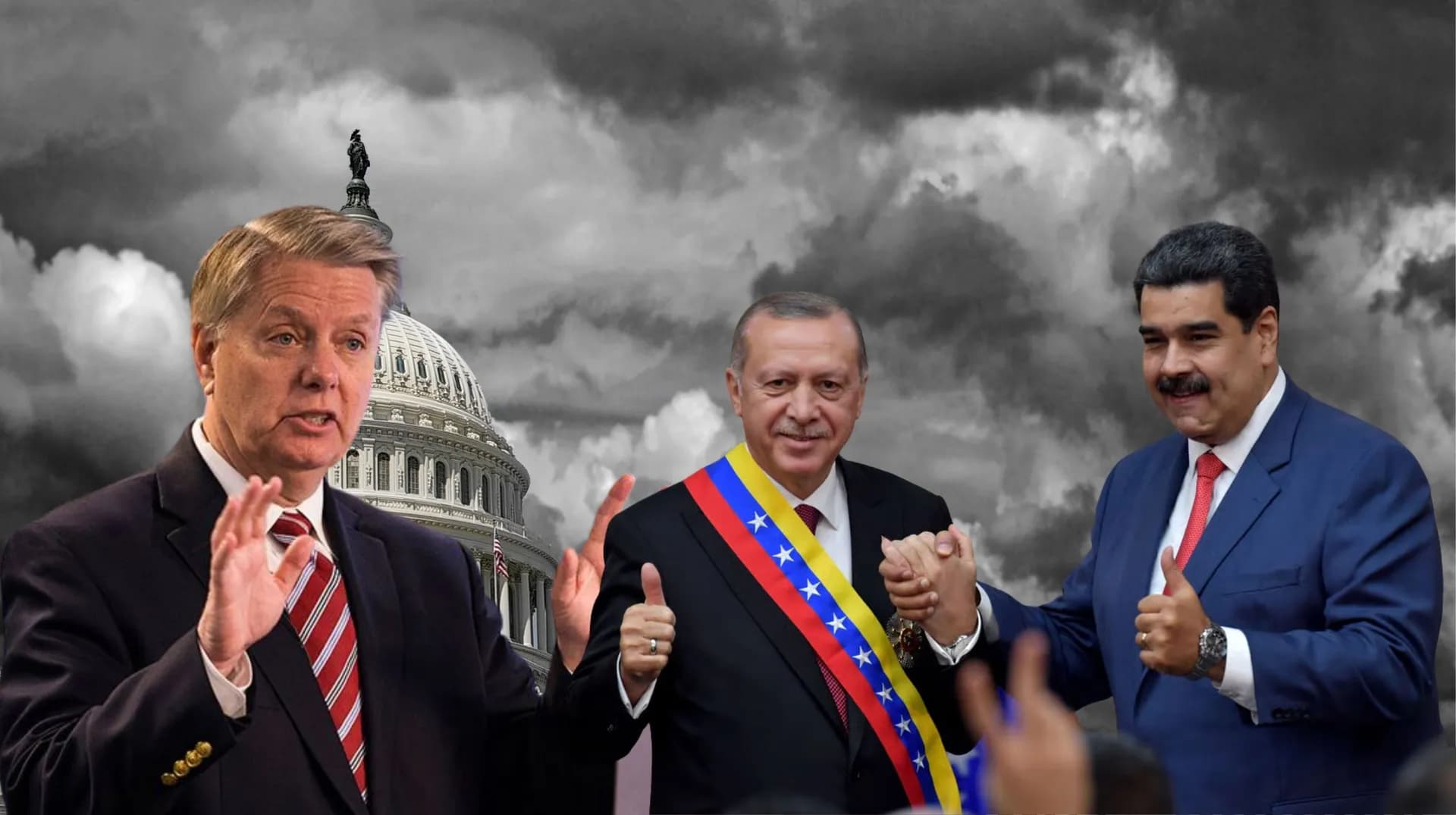
According to reporting by The New York Times, U.S. President Donald Trump sent a clear message to Maduro in late December: relinquish power and leave for Türkiye. Citing American and Venezuelan sources, the report says Maduro was promised the possibility of a “comfortable and secure life” abroad if he agreed to step aside. Maduro, however, declined the proposal.
The details published by the New York Times sent shockwaves through diplomatic circles, suggesting that the option of Türkiye was not a theoretical idea but a concrete exit strategy placed on the table at the highest level.
2.Lindsey Graham: “He Could Be in Türkiye Today”
The Turkish angle was further underscored by Republican Senator Lindsey Graham, who was traveling with Trump aboard Air Force One. Referring to the New York Times report, Graham stated that Maduro could have avoided his current fate.
“Maduro could be in Türkiye right now, but instead he’s in New York,” Graham said. “Trump gave him a way out. He chose to refuse, and now he’s in prison. Maduro has only himself to blame.” The remarks highlighted how tangible the Türkiye option allegedly was.
3.Washington Post: Türkiye Seen as a “Safe Haven”
While Ankara has issued no official comment, earlier reporting by The Washington Post indicates that the Türkiye scenario had been discussed well before Maduro’s transfer. In late November, anonymous sources told the paper that Washington was seriously considering Türkiye as a destination in a potential exile arrangement.
That same report suggested a possible “exile deal” could have included assurances that Maduro—who carries a $50 million U.S. bounty—would not be extradited to the United States. A source described as close to the White House was quoted as saying: “Türkiye is a perfect place for him. He trusts Erdoğan, and Erdoğan has good relations with Trump.”
Researchers echoed this assessment. Lisel Hintz of Johns Hopkins University told the Washington Post that Türkiye would not want to miss the opportunity to strengthen its role in U.S. foreign policy calculations. She argued that hosting Maduro could have given Ankara additional leverage in sensitive dossiers such as the F-35 issue.
Conclusion
Taken together, these revelations point to a broader reality: Türkiye is no longer viewed solely as a regional actor but as a key geopolitical hub in crises stretching from Latin America to Washington. President Recep Tayyip Erdoğan has previously referred to Maduro as “my brother,” a political closeness frequently highlighted in the U.S. press.
Even though the Türkiye option was ultimately rejected, the fact that it was discussed so openly underscores how central Ankara has become in global crisis planning. Maduro may be in New York today, but the prominence of the Türkiye scenario sends a clear message: Türkiye’s role in global power balances has grown too significant to ignore.
EUReflect News
Site Administrator
Follow EUReflect
See more of our reporting on Google
Mark EUReflect as a preferred source and our stories are ranked higher for you in Top Stories, Discover and Google News — and carry a “preferred” badge when they are cited in AI results.
Add EUReflect as a preferred source