Hormuz Corridor Offers a Diplomatic Opening
The proposed corridor would be jointly managed by Iran and Oman, with technical talks to follow on traffic management and mine clearance.
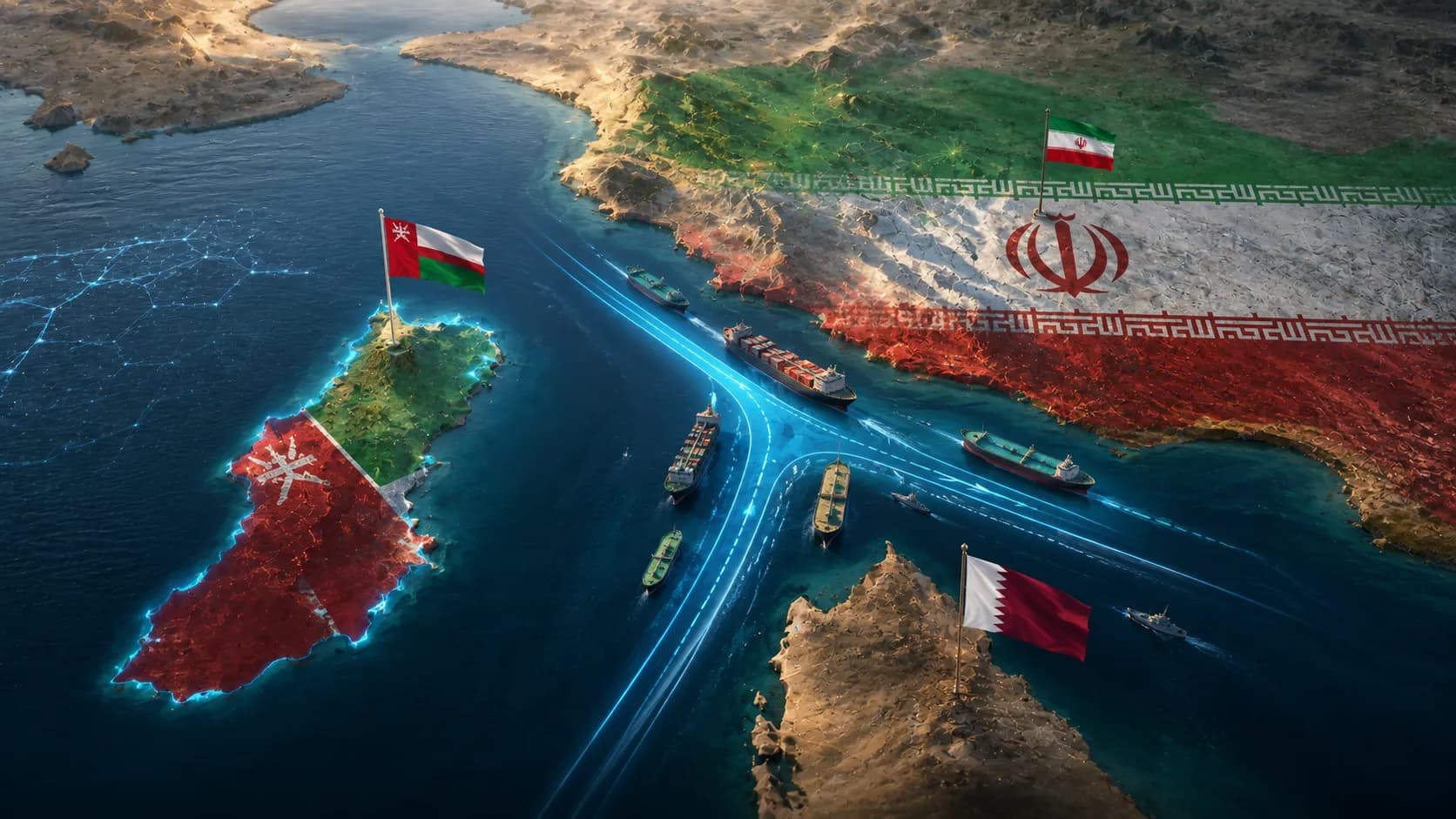
The Strait of Hormuz is once again at the center of Middle Eastern diplomacy as Qatar intensifies mediation efforts to restore maritime traffic through one of the world's most important energy corridors.
The initiative currently under discussion is technically an Iran-Oman proposal rather than a Qatari proposal. Tehran and Muscat have developed a phased framework for a temporary joint navigational corridor through Hormuz, while Qatar has publicly backed the plan and is using its diplomatic channels with Iran to push for de-escalation and freedom of navigation.
Qatari Prime Minister and Foreign Minister Sheikh Mohammed bin Abdulrahman Al-Thani is due in Tehran on August 27 as Doha attempts to restart broader diplomacy between Iran and the United States.
The stakes extend far beyond the Gulf. Before the war, roughly one-fifth of global oil supplies passed through Hormuz. Current flows have fallen dramatically, turning the strait into both an economic pressure point and a bargaining instrument.
Iran and Oman Propose a Temporary Corridor
The immediate proposal emerged from talks between Iranian Foreign Minister Abbas Araghchi and Omani Foreign Minister Badr Albusaidi in Tehran on August 25.
Their framework includes two important measures.
First, Iran and Oman would establish a temporary joint navigational corridor through the Strait of Hormuz. Second, the countries would cooperate on clearing mines from the waterway.
Technical negotiations would then continue toward a permanent corridor, including arrangements for traffic management, information sharing and maritime-security services.
This makes the initiative more ambitious than simply allowing several tankers to pass.
If implemented, it could eventually create a new institutional mechanism for managing navigation through Hormuz.
Qatar Moves Into the Mediation Role
Qatar's importance comes from its unusual diplomatic position.
Doha is a close security partner of the United States, but it also maintains working relations with Tehran. It previously helped mediate the June ceasefire and has continued acting as a communication channel between the two sides.
Qatar has now explicitly endorsed the Iran-Oman maritime initiative.
During separate discussions with Iranian and Omani officials, Sheikh Mohammed emphasized Qatar's support for a solution guaranteeing freedom of maritime navigation and creating conditions for a broader regional agreement.
His Tehran visit therefore goes beyond the technical question of shipping.
Qatar wants to connect reopening Hormuz with a broader effort to reduce U.S.-Iran tensions.
Qatar Has a Direct Economic Interest
Doha is not acting only as a diplomatic mediator.
Qatar itself has an enormous economic interest in restoring normal navigation.
Its economy is heavily dependent on liquefied natural gas exports from the North Field, which Qatar shares geologically with Iran. LNG tankers leaving Qatar must pass through the Strait of Hormuz to reach global markets.
The prolonged disruption has consequently hit Qatar particularly hard. Reuters reported this week that Qatari LNG exports have fallen dramatically during the crisis, with the economic damage running into tens of billions of dollars.
For Doha, reopening Hormuz therefore combines national economic security with regional diplomacy.
Iran Sees Hormuz as Strategic Leverage
Iran approaches the problem differently.
Geography gives Tehran extraordinary influence over the northern side of the strait. Since the conflict began, Iran has increasingly used this position as leverage in negotiations with Washington.
Iranian officials have connected the reopening of Hormuz with wider demands involving sanctions, restrictions on Iranian ports and the terms of the ceasefire.
The Revolutionary Guards claimed this week that Iran and Oman had reached understandings over management of the waterway and revenues associated with it. A senior Iranian source subsequently cautioned that the agreement had not yet been finalized and that negotiations were continuing.
This distinction is important.
The corridor is currently a diplomatic framework, not a fully operational settlement.
Washington Is the Missing Part of the Agreement
Even if Iran and Oman reach a technical agreement, that alone may not restore normal shipping.
The United States remains central to the equation.
Washington has shifted toward stronger economic pressure on Tehran while reducing direct military operations in recent weeks. Iran, meanwhile, continues to connect maritime normalization with American concessions.
Energy analysts have consequently warned that an Iran-Oman agreement by itself may be insufficient.
ING Economics argues that meaningful normalization of oil flows would probably require changes to the U.S. blockade of Iranian ports and sanctions policy as well.
The Hormuz problem therefore has three different layers:
Iran and Oman must agree on navigation. Qatar and other mediators must reduce regional tensions. Washington and Tehran must resolve the larger political confrontation.
Without progress at all three levels, a maritime corridor may remain fragile.
Markets Are Already Reacting
Even the possibility of progress has affected energy markets.
Brent crude fell to around $86.77 per barrel on August 27, while U.S. West Texas Intermediate declined to approximately $81.10 as traders responded to expectations that Qatar's mediation and Iran-Oman negotiations could improve shipping conditions.
But actual maritime traffic remains far below normal.
Only five commodity vessels passed through Hormuz on Tuesday, compared with a recent ten-day average of 15.
More importantly, Reuters reports that oil flows through the strait have fallen from roughly 20 million barrels per day before the war to around 5 million barrels per day.
The gap illustrates why even limited diplomatic progress has immediate global consequences.
Hormuz Is No Longer Just a Shipping Route
The emerging corridor proposal reveals how the strategic meaning of Hormuz has changed.
For Iran, it is leverage.
For Oman, it is a shared maritime-security problem.
For Qatar, it is both an economic lifeline and an opportunity for diplomatic mediation.
For Washington, it is connected to pressure on Tehran.
For Asian and European economies, it is ultimately an energy-security issue.
The temporary corridor could therefore become more than a technical shipping arrangement.
If Qatar succeeds in connecting the Iran-Oman framework with wider U.S.-Iran diplomacy, Hormuz could shift from being one of the principal instruments of the conflict to becoming the mechanism through which de-escalation begins.
But the reverse is equally possible.
Until a broader political settlement is reached, the Strait of Hormuz will remain both the Gulf's most important economic artery and one of its most powerful geopolitical pressure points.
Ahmet Balakan
Contributing writer at EUReflect.
Follow EUReflect
See more of our reporting on Google
Mark EUReflect as a preferred source and our stories are ranked higher for you in Top Stories, Discover and Google News — and carry a “preferred” badge when they are cited in AI results.
Add EUReflect as a preferred source