How the U.S.-Iran War Exposes NATO’s Terminal Crisis
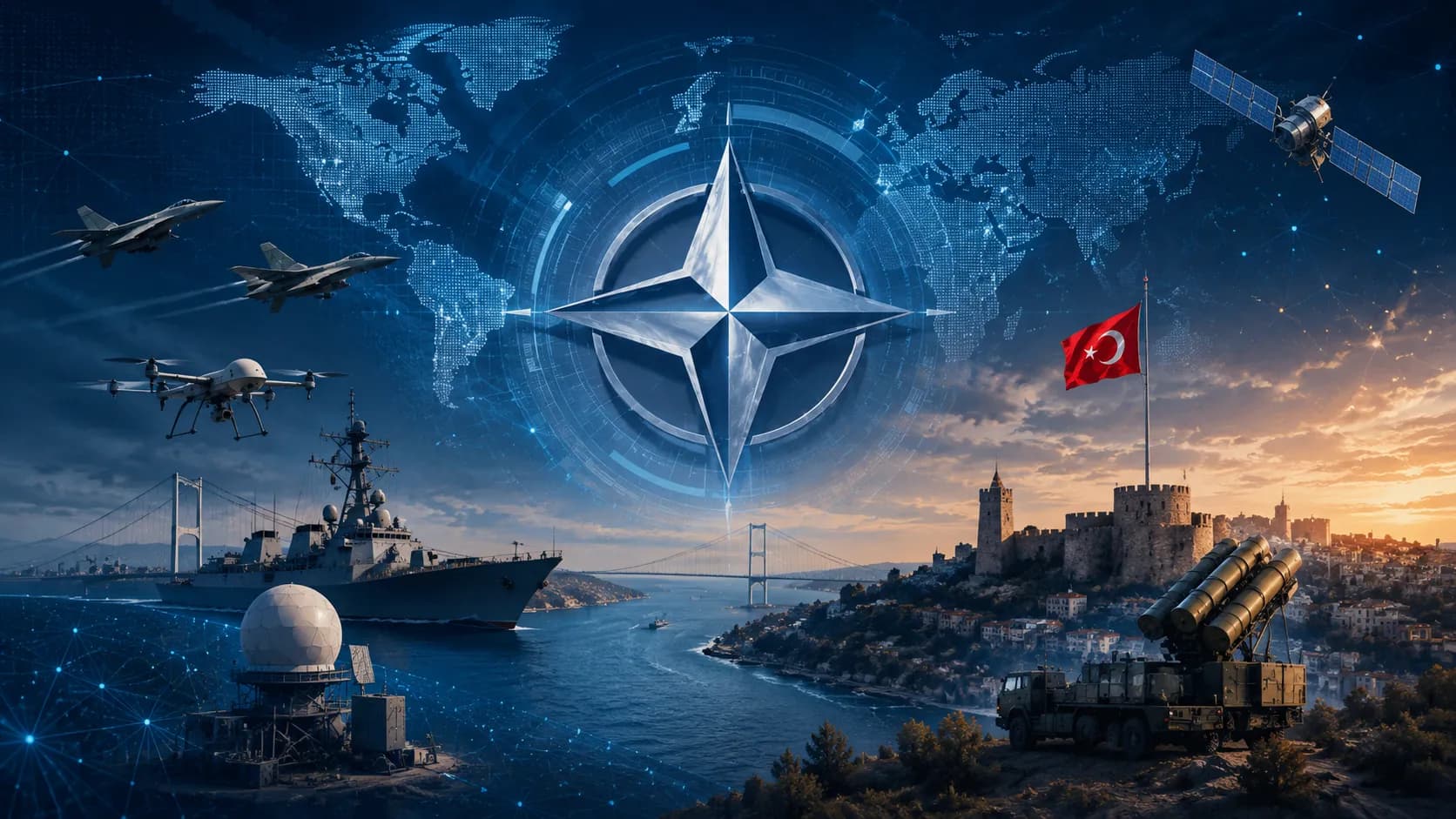
The U.S.-Iran war exposed deep fractures within NATO. European states refused to fully support Washington, intensifying a crisis of trust inside the alliance. U.S. pressure and Europe’s push for strategic autonomy are turning NATO into a weaker organization that exists more on paper than in practice.
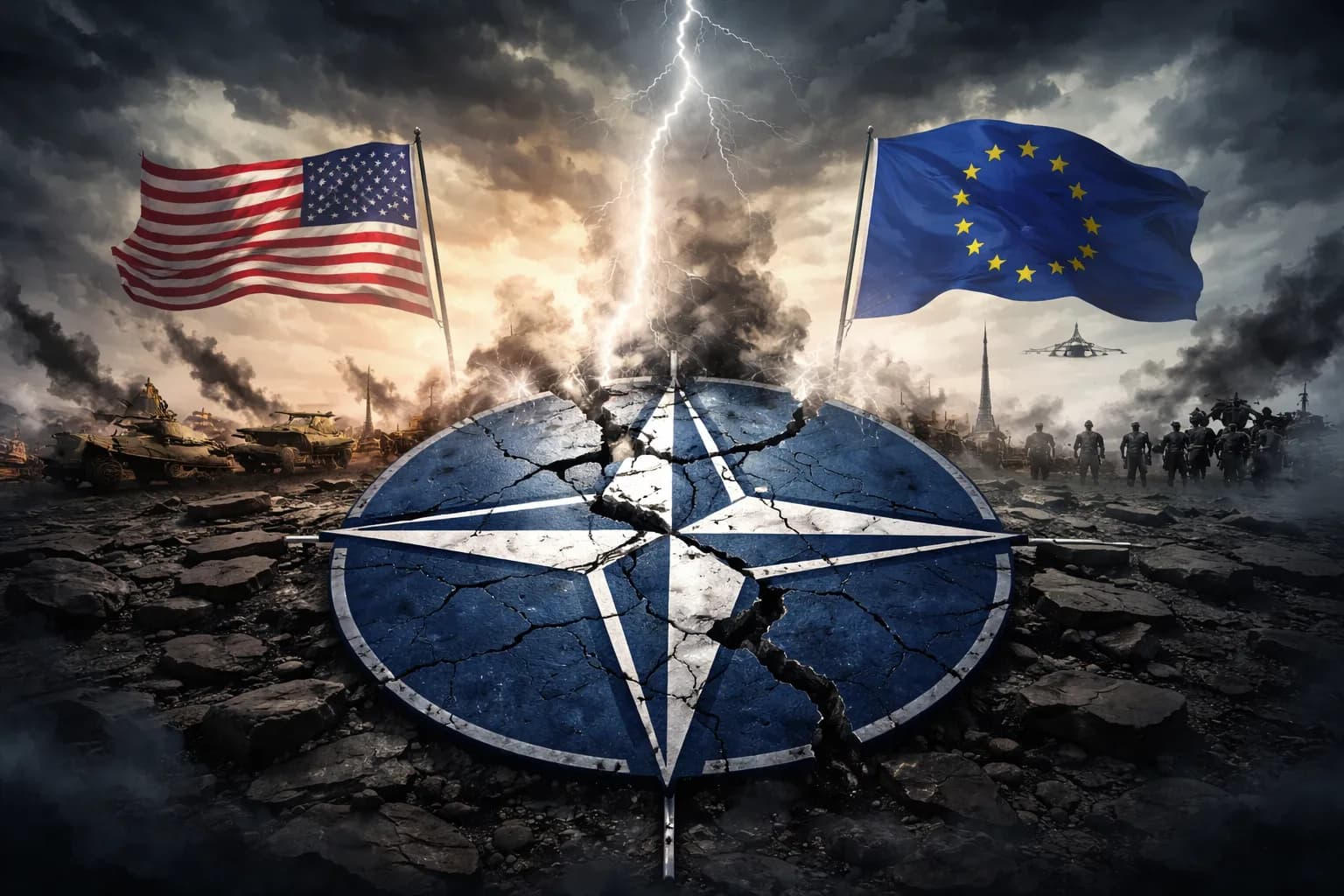
The recent military confrontation between the United States and Iran has not merely tested the NATO alliance. It has brutally exposed its deepest structural contradictions, leaving many to question whether the transatlantic partnership can survive this latest rupture. While official statements from Brussels continue to invoke the spirit of collective defense under Article 5, the reality on the ground tells a far more troubling story. When Washington launched its sustained campaign against Iranian targets, it expected its European allies to fall in line, providing logistical support, naval assets, and political cover. Instead, key NATO members, Germany, France, Spain, and Italy, refused to join the operation, with some explicitly denying the U.S. access to their airbases.
The White House’s response was swift and punitive, with President Trump publicly deriding NATO as a “paper tiger” and reportedly preparing to relocate thousands of American troops from “unhelpful” nations like Germany to more pliant allies such as Poland and Romania. This episode lays bare a fundamental truth that alliance leaders have long sought to obscure: NATO’s credibility rests almost entirely on American military power, but that power is no longer willing to be taken for granted.
Critically, the war with Iran has accelerated a dangerous redefinition of the alliance from a collective security pact into a transactional arrangement dictated by Washington’s immediate strategic whims. The Trump administration’s demand that European allies join a war that most Europeans viewed as unnecessary and provocative was never a genuine request for assistance. It was a loyalty test, and one designed to be failed. By framing European reluctance as betrayal, the U.S. has effectively signaled that future NATO cooperation will be conditional on absolute alignment with American foreign policy, regardless of its wisdom or legality under international law.
This is a profound departure from the post-Cold War understanding of NATO as a forum for consensus-building. Worse still, the administration’s threat to bar low-spending nations from alliance decision-making, or to abandon them entirely in a future crisis, undermines the very principle of mutual defense. If smaller or less hawkish members cannot count on American support when they choose not to endorse a U.S.-led war, then Article 5 becomes a hollow promise, and the alliance dissolves into a series of ad hoc coalitions of the willing.
From a strategic perspective, the Iran war represents a catastrophic miscalculation that has weakened NATO at the very moment when it faces a resurgent Russia and growing instability in the Middle East. By focusing alliance resources and political energy on a conflict that most European capitals opposed, the U.S. has drained attention away from the more immediate threat on Europe’s eastern flank. Russia has wasted no time exploiting this rift, with Moscow already probing Baltic airspace and increasing disinformation campaigns aimed at widening the U.S.-European divide.
Moreover, Iran’s retaliatory strikes against NATO-linked targets, including a drone attack on an Italian military vehicle in Iraq, demonstrate how a conflict launched unilaterally by Washington can rapidly entangle allied forces without their consent. European officials privately acknowledge that their militaries lack the intelligence, logistics, and command structures to operate independently of the United States; yet they also recognize that blindly following Washington into every future conflict is politically unsustainable. This double bind leaves NATO in a state of paralysis, unable to act collectively but also unable to afford a clean break.
Ultimately, the lasting damage of the U.S.-Iran war may be psychological rather than operational. Trust, once broken at the highest levels of alliance leadership, is extraordinarily difficult to restore. When a U.S. president openly questions why American soldiers should die to defend allies who “weren’t there for us,” he is not merely expressing frustration. He is reshaping the assumptions upon which European security has rested for three generations. European leaders, for their part, have responded by accelerating plans for “strategic autonomy,” including a push for a joint EU rapid-reaction force and increased defense spending. But these efforts, however sincere, remain years away from viability.
In the interim, NATO staggers forward as a zombie alliance, formally intact, legally operational, but hollowed out by mutual suspicion and divergent interests. The war with Iran did not create these fractures, but it has forced them into plain sight. And unless both sides of the Atlantic can honestly confront the question of what they truly owe one another, the next crisis may well deliver the final blow.
Hence, NATO will continue to exist on paper, but it will act more like a loose collection of independent countries than a united military alliance. The United States will likely only defend allies that fully support its foreign policy, while European nations will slowly build their own defense systemswithout relying on Washington. Trust between the U.S. and Europe has been badly damaged, and unless both sides honestly rebuild what they owe each other, NATO will eventually collapse when the next big crisis hits.
Uroosa Khan
Contributing writer at EUReflect.
Follow EUReflect
See more of our reporting on Google
Mark EUReflect as a preferred source and our stories are ranked higher for you in Top Stories, Discover and Google News — and carry a “preferred” badge when they are cited in AI results.
Add EUReflect as a preferred source