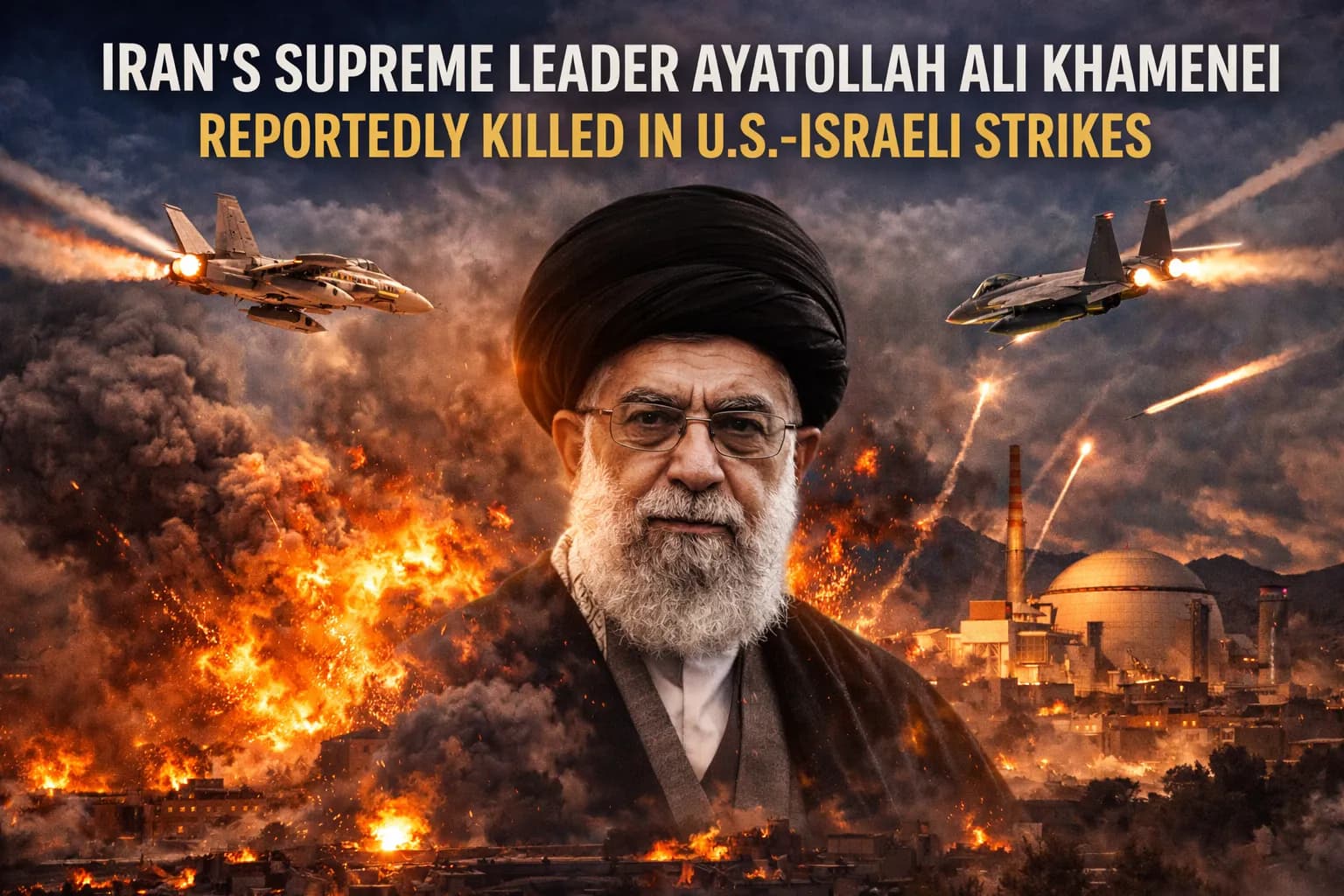
Iran’s Supreme Leader Ayatollah Ali Khamenei Reportedly Killed in U.S.–Israeli Strikes
Dateline: Tehran, Feb. 28, 2026. Iran’s Supreme Leader, Ayatollah Ali Khamenei, has reportedly been killed following a major military offensive against Iran executed by the United States and Israel, according to statements from senior Israeli officials and confirmation by Iranian state media. President Donald Trump publicly acknowledged the death on social media, describing it as a pivotal moment in the joint campaign. The reported death marks the first time in more than three decades that the Islamic Republic has lost its highest authority, a development that could have profound implications for regional stability and for Iran’s internal political order.
Conflicting initial reports and confirmation
Israeli leaders, including Prime Minister Benjamin Netanyahu, initially indicated “growing signs” that Khamenei had been killed during the aerial assault on Tehran and other strategic locations. A senior Israeli official later told international media that Khamenei’s body had been located following the strikes.
Iranian state media subsequently confirmed the death, announcing a period of national mourning. Iranian authorities described Khamenei as having died amid the ongoing attacks, and the government declared a 40‑day mourning period.
Details of the military operation
The strikes, carried out on Feb. 28, involved coordinated bombardments from U.S. and Israeli aircraft and military assets targeting military infrastructure, nuclear‑linked facilities and senior leadership compounds. According to officials, the operation was part of a broader campaign aimed at degrading Iran’s strategic capabilities and dismantling elements of its leadership apparatus.
President Trump characterized the offensive as necessary to address what his administration views as longstanding threats posed by Iranian military and proxy forces. He also reiterated calls for Iranians to “take over your government” following the campaign’s conclusion.
Political and regional repercussions
Khamenei, 86, had held supreme authority since succeeding Ayatollah Ruhollah Khomeini in 1989. As the highest-ranking figure in Iran’s political, religious and military hierarchy, he oversaw foreign policy, national security and the Islamic Republic’s ideological direction for more than three decades.
His death creates an unprecedented leadership vacuum in Iran, with the constitution assigning the task of selecting a successor to the Assembly of Experts — a clerical body whose role has historically been tightly controlled by the regime. Analysts warn that the absence of a clear successor could fuel internal instability and provoke factional struggle within Iran’s political establishment.
International responses and risk of escalation
Global leaders have responded with a mix of concern and calls for restraint, as the prospect of wider conflict looms. Regional powers including France and Oman have urged de‑escalation and diplomatic engagement. Monitoring agencies report heightened alerts across the Middle East, with markets and governments closely tracking developments.
Iranian authorities have signalled potential retaliatory measures against U.S. and Israeli interests, raising fears of a broader regional confrontation
Olha Pashchenko
Contributing writer at EUReflect.
Follow EUReflect
See more of our reporting on Google
Mark EUReflect as a preferred source and our stories are ranked higher for you in Top Stories, Discover and Google News — and carry a “preferred” badge when they are cited in AI results.
Add EUReflect as a preferred source