Japan Sheds Its Pacifist Past
Tokyo Opens Global Arms Market in Historic Shift Under Sanae Takaichi
Overview
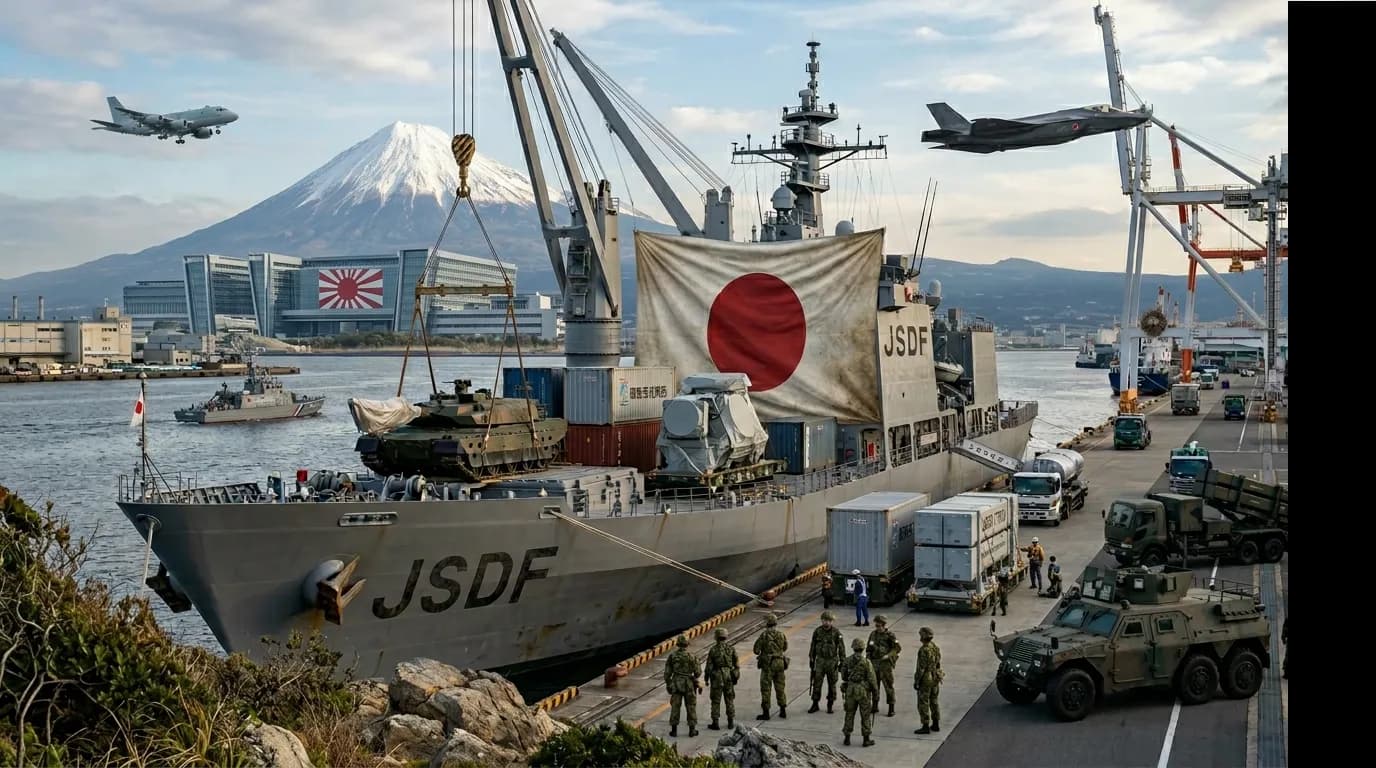
On April 21, the cabinet of Japanese Prime Minister Sanae Takaichi approved the country's most significant overhaul of defence export rules in decades, effectively lifting the long standing ban on the sale of lethal weapons abroad. The revision scraps the five export categories that previously restricted Japanese military transfers to rescue, transport, warning, surveillance, and minesweeping equipment. From now on, warships, missiles, fighter aircraft, and other advanced systems may be sold overseas, with ministers and officials assessing the merits of each proposed sale individually. "No single country can now protect its own peace and security alone, and partner countries that support each other in terms of defence equipment are necessary," Takaichi said in a post on X.
The policy change follows just three days after Japan and Australia signed contracts in Melbourne for the first three of eleven upgraded Mogami-class stealth frigates, a deal worth around 10 billion Australian dollars (roughly 6.5 billion US dollars). The agreement, formalised on April 18 aboard the JS Kumano between Japan's Defence Minister Koizumi Shinjiro and Australian Deputy Prime Minister Richard Marles, represents Japan's first ever warship export contract. Mitsubishi Heavy Industries will build the first three vessels in Nagasaki Prefecture, with the remaining eight to be constructed at the Henderson Defence Precinct in Western Australia by the Australian firm Austal. The first frigate is scheduled for delivery in 2029. Shares of Mitsubishi Heavy Industries jumped nearly four percent on the news.
Context
Japan's pacifist posture has defined its postwar identity. Article 9 of the 1947 constitution, drafted during the American occupation, renounced war as a sovereign right. Arms export restrictions introduced in 1967 and codified in 1976 limited military transfers to non lethal equipment. That framework began to soften under Prime Minister Shinzo Abe, who in 2014 relaxed the rules and reinterpreted Article 9 to permit the Self Defense Forces to more actively support allies. The current reform goes significantly further, permitting in principle the export of weapons with lethal capabilities.
Takaichi insists the shift doesn't amount to rearmament. "There is absolutely no change in our commitment to upholding the path and fundamental principles we have followed as a peace loving nation for over 80 years since the war," she said. Japan will retain three core export principles, committing to strict screening, controls on third country transfers, and a ban on sales to countries involved in active conflict, though exceptions may be made where national security is deemed to require them.
The strategic logic is shaped by two forces. First, Tokyo is confronting what it views as an increasingly assertive China, particularly around the islands of the East China Sea near Taiwan, as well as missile threats from North Korea. Japan has steadily increased defence spending to two percent of GDP and is co developing a next generation fighter jet with Britain and Italy for deployment in the mid 2030s. Second, the wars in Ukraine and the Middle East have strained United States weapons production, while President Donald Trump's transactional approach to long standing alliances has pushed both European and Asian partners to diversify their supply. Countries including Australia, New Zealand, the Philippines, Indonesia, and Poland have expressed interest in Japanese systems.
The reaction from Beijing was swift. Chinese Foreign Ministry spokesman Guo Jiakun said the international community would "remain highly vigilant" and "firmly resist Japan's reckless new style militarisation." Inside Japan, demonstrators gathered outside the National Diet Building on April 19, carrying placards reading "No War" in defence of Article 9. For Tokyo, the balance between industrial opportunity and historical memory is now firmly on the agenda.
Dmytro Melnyk
Contributing writer at EUReflect.
Follow EUReflect
See more of our reporting on Google
Mark EUReflect as a preferred source and our stories are ranked higher for you in Top Stories, Discover and Google News — and carry a “preferred” badge when they are cited in AI results.
Add EUReflect as a preferred source