Kyrgyzstan: The Epic of Manas
Kyrgyzstan’s Cultural Power: The Epic of Manas Expert Derya Soysal, Dr. Medihanur Argalı
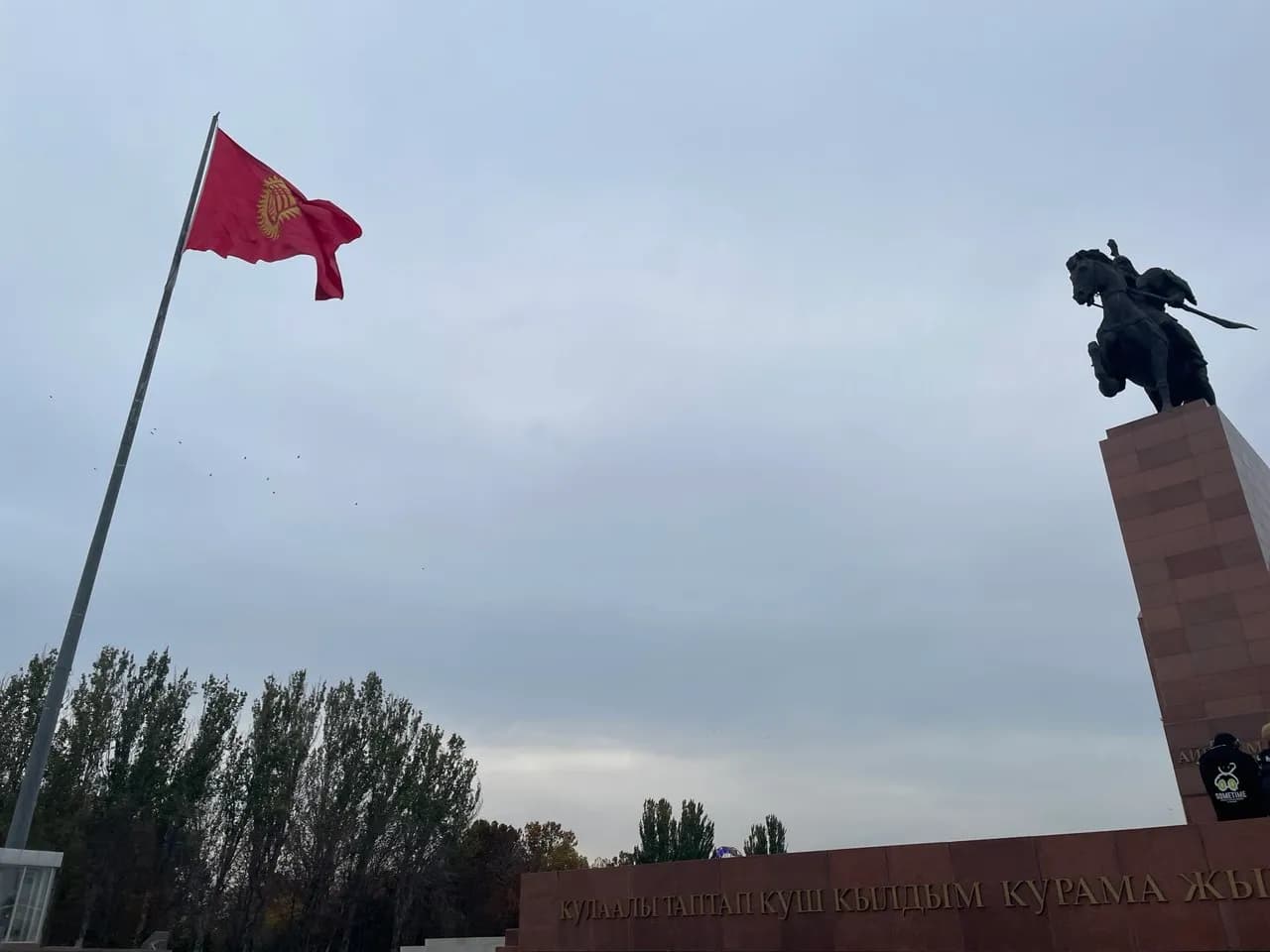
“Days passed, years passed. Although the Kyrgyz in Altai were caught between the Kalmyks and the Manchus, they revived once again. They found their Turkic kin and established connections. Their wealth increased, forty families became seventy, they formed an army, waved their crescent-marked flag, and frightened their enemies.”
The mythological epics of Turkic peoples are well known. The most famous among them is Manas, a significant symbol in Kyrgyz history and one of the oldest Turkic epics. Although the exact time of Manas’s life is unknown, it is believed he lived between the 8th and 11th centuries. This hero undoubtedly carries deep traces of Turkic mythology and steppe culture (Bars, 2019).
The Kyrgyz have a strong oral tradition. However, this epic differs from other Turkic epics such as Creation, Origin, Migration, Ergenekon, Shu, and Oghuz Khan, and surpasses the Finnish Kalevala, the German Nibelungenlied, the Indian Ramayana, and the Greek Iliad and Odyssey in terms of the number of verses. In fact, the Epic of Manas, belonging to the Kyrgyz, is the longest epic in the world with 400,000 verses (Akyüz, 2010).
The oldest source mentioning the Epic of Manas is Mecmûu’t-tevârîh, written by Seyfeddin Molla in the 16th century, where Manas is introduced as a historical figure and soldier (Islamansikopedisi.org). Van der Heide (2008) writes that the Epic of Manas holds vital importance in Kyrgyzstan today. Everyone in Kyrgyzstan knows Manas, and the character is prominent across all media. In other words, Manas is the Kyrgyz Odyssey. Reichl (2001) notes that the epic is not widely known outside Kyrgyz society: “Manas, like Homer’s epics, is an epic in the Hegelian sense: it poetically expresses the ideals, aspirations, morals, traditions, habits, and worldview of an entire people.”
The Epic of Manas tells the story of the Kyrgyz people’s struggle against their oppressors. According to legend, Manas was the first to unite the Kyrgyz tribes and give them land. He responded strongly to enemy forces and secured control of his region through brave attacks (Bruley, 2021). His struggle was continued by his son Semetey and grandson Seytek (Bruley, 2019).
The first scholar to introduce the epic to the academic world was Kazakh scientist Chokan Valikhanov. A descendant of Genghis Khan, this Kazakh prince compiled a version of the epic during his 1856 trip to Kyrgyzstan, translated it into Russian, and published it in 1861 in the journal of the Russian Geographical Society under the title The Funeral of Köketey Khan.
As the longest epic in the world, Manas contains valuable insights not only into Kyrgyz life but also into the beliefs and daily lives of the Turkic world. Valikhanov, who published one of the first editions, successfully conveyed the importance of Manas as a single epic encompassing the entirety of Kyrgyz folk literature. “This work, called the Kyrgyz Iliad, contains almost every kind of information about the Kyrgyz lifestyle, customs and traditions, morals and religious beliefs, geography, medical knowledge, and relations with other nations” (İnan, 1987).
Later, W. Radloff compiled and transcribed parts of Manas during his trips to Kyrgyzstan in 1862, 1864, and 1869, publishing them in Volume V of his book Proben der Volkslitteratur der Türkischen Stämme (St. Petersburg, 1885) in Kyrgyz-Russian-German.
To date, thirteen versions of the Epic of Manas have been compiled, most of which have been published, while some remain in manuscript form. Kazakh writer Mukhtar Auezov, who published significant works on the epic, worked on it for thirty years starting in 1930 and uncovered many variants circulating among the people.
In addition to Kyrgyz, Kazakh, and Uzbek researchers, many Turkish scholars such as Abdülkadir İnan, Emine Gürsoy-Naskali, Naciye Yıldız, and Tuncer Gülensoy have studied the epic. This is due not only to its importance in Kyrgyz literature and history but also to its significance for Turks, Kazakhs, and other Turkic groups.
In 1995, the Epic of Manas was highlighted on the international cultural stage during the millennium celebrations. Its prestige fluctuated over the years and eventually disappeared from the political scene between 2005 and 2010 (Bruley, 2019).
The first section of the epic, titled Manas, recounts the birth of the Kyrgyz hero Manas, his emergence as a powerful figure, his fame in battles among the Kyrgyz, his victories against the Kalmyks, the unification of the Kyrgyz under one flag, and the liberation of his province from enemy occupation. Thus, it is clear that Manas played a key role in shaping Kyrgyz identity and history.
Understanding who Manas Khan is becomes essential. According to the epic, Manas is the son of Yakub (Cakıp) Khan, son of Kara Khan, and his wife Çıyırdı, daughter of Haydar Khan. His name means “intelligent, wise” (Gülensoy, pp. 16–19). The prophet Khidr protects Manas, who begins speaking from the cradle. Manas grows rapidly into a brave young man and drives the Chinese eastward from Kashgar.
The Kyrgyz epic trilogy—Manas, Semetey, and Seytek—tells the story of scattered tribes uniting under one nation. This trilogy represents the historical memory of the Kyrgyz people and has survived thanks to a community of storytellers of all ages and genders.
Research suggests that the Epic of Manas began to take shape during the wars between the Kyrgyz and the Uighur Turks and Chinese around 840 in the Yenisei and Minusinsk steppes, and later during the 16th–17th century conflicts between the Kyrgyz and Buddhist Kalmyk Mongols, and between the Chinese and Muslim Turkic tribes of Central Asia. Therefore, it can be said that this epic plays a significant role in Kyrgyz history (Islamansikopedisi.org) (Kallimci, 2013).
The Epic of Manas is a vibrant and original epic, rich in ancient Turkic national characteristics and interwoven with unique expressions of the Kyrgyz language. It includes folklore, traditions, beliefs, customs, ceremonies, steppe life, and the ethnography of the Kyrgyz (clothing, nomadic tent life, animal husbandry, camel and horse gear, kitchen utensils, food culture, etc.), proverbs, and invaluable elements for the history of the Turkic language. It is also an onomastic treasure trove, containing names of people, clans, tribes, communities, and various animals.
Some romantic heroes mentioned in the epic—such as Abeke, Abilay, Açık, Ağış, Acıbay, Ak-Erkeç (female), Akılay/Nakılay (female), Ak-Kıyaz, Akpay-Mamet—have lives and characteristics resembling those in other Turkic epics like Oghuz Khan, Dede Korkut, and Köroğlu (Islamansikopedisi.org).
Van der Heide (2008) emphasizes the importance of the discovery of Manas for Western scholars. It is not only a legacy of oral tradition but also notable for its supernatural dimension, including the spirits of Manas (arbak). The epic also pays special attention to female warriors. Yılmaz (1999) writes that women hold an important place in the Epic of Manas, with many examples of female heroes playing central roles. Akyüz (2010) shows that the epic includes female heroes, including Manas’s wife Kanikey. The female ALP warrior does not give up the fight and, if necessary, protects men from enemy attacks. In the section titled Kanikey Saves Manas from Death, Kanikey rescues Manas from captivity by the Kalmyks: “She gathered her braids and tied them on her head, wore Manas’s weapons and armor, mounted Akkula… Kanikey fought like a lion…”
Kanikey was wounded, yet she managed to bring Manas back, ensured his safety, and began healing him (İnan, 1992, p. 43). This passage highlights Kanikey’s brave struggle against the enemy, her horseback riding, her refusal to retreat despite her injuries, and her rescue of Manas from death. It reflects the importance given to women in the epic and their place in society. In short, female warriors in the epic are presented as Saikal, and there is also mention of female war advisors.
Reichl (2001) writes that the Epic of Manas holds a significant place in Turkic language literature:
“This ‘Turkic world’, stretching over a distance of more than eight thousand kilometers from Yakutia in northeastern Siberia to the Turks of the Balkan Peninsula, offers a wide variety of cultures, religions, and social structures.”
Reichl (2001) adds: “Manas fulfills the prophecies spoken at his birth; he succeeds in defeating enemies both within and outside his tribe.”
Like other heroes of epic tales, Manas possesses an impressive stature and supernatural power; even in his cradle, he declares his intention to fight against infidels. Today, the epic holds such a vital place in Kyrgyz culture that artists known as Manaschis narrate the epic by reciting it, playing the komuz (a traditional Kyrgyz instrument), and singing songs that bring the characters’ dialogues to life. The uninterrupted narration of the trilogy can last up to thirteen hours. These performances are held at public events ranging from village festivals to national celebrations and cultural festivals.
Epic storytellers also provide spiritual and emotional support to local communities and individuals during social events, conflicts, or disasters. They consider the trilogy a personal responsibility. The trilogy helps young people understand their history, culture, natural environment, and other peoples of the world, while also instilling a sense of identity. As part of formal education, it promotes ideas of tolerance and multiculturalism. Knowledge is passed down orally from master to apprentice through informal education.
The richness and depth of this epic make it a vital part of Kyrgyz culture and a globally recognized cultural heritage.
This turbulent period also gave rise to a new form of reading called river reading, which is conducted annually and regularly over several days. It aims to bring together most of the Manaschis (bards specialized in reciting Manas) in the country at every opportunity, popularizing the epic under a traditional format and reaching a wider audience (Bruley, 2019).
In conclusion, the Legend of Manas is considered the foundation of Kyrgyz culture. Beyond being a heroic epic, it is a significant work that reflects the social life, beliefs, and language of the Kyrgyz. Today, Manas is a hero visible throughout Kyrgyzstan. Bishkek’s Turkish-Kyrgyz University and its airport bear his name, and a statue of him stands in the capital.
Kyrgyz poets have enriched their style by drawing on widespread beliefs such as ancestor worship. In modern Kyrgyz poetry, Manas appears both as the leader of the Kyrgyz people and as a spiritual guide. These poems suggest that the values embodied by Manas could evolve into a new ideology in contemporary Kyrgyzstan after the socialist period. The epic plays a crucial role in shaping Kyrgyz identity.
Nation-building in Kyrgyzstan is largely based on Manas, but the Epic of Manas is important not only for Kyrgyzstan but for the entire Turkic world. It is one of the unifying forces of the Turkic world and holds significance for cultural interaction between Turkey and Kyrgyzstan.
With the support of many scholars from Turkey and Kyrgyzstan, a prestigious three-volume book totaling 3,700 pages was translated. The text was published simultaneously in Turkish and Kyrgyz. Additionally, on August 9, 2017, the Manas Monument was inaugurated in Istanbul’s Sütlüce Park.
In 2022, a project was launched in Bursa, the cultural capital of the Turkic world, to promote the globally renowned Epic of Manas. Famous Manaschis from Kyrgyzstan, Kazakhstan, and Turkey participated in the event. The epic has contributed not only to Turkey-Kyrgyzstan relations but also to Azerbaijan-Kyrgyzstan cultural ties. In 2023, the Epic of Manas was translated into Azerbaijani Turkish. The book’s publication was carried out in cooperation with the Kyrgyz Embassy in Azerbaijan to further promote Turkic culture worldwide (Turkic.world.ru).
Sources:
Akyüz, Ç. (2010). MANAS DESTANI’NDA ALP KADIN TİPİ. Mukaddime, 1(1), 169-180.
Bars, M. E. (2019). MANAS DESTANI’NDA KAHRAMAN TASVİRLERİ. International Journal Of Language Academy, 2(2), 31-40.
Bruley, J. (2019). L’épopée De Manas: Étude Historique, Patrimoniale Et Ethnographique (Doctoral Dissertation, Université De Lille (2018-2021)).
Bruley, J. (2021) Essaı Sur Une Geographıe Evolutıve Dans L’epopee Kırghıze De Manas Essay On An Evolutıve Geography In The Kyrgyz Epıc Manas. Índıce/Indıce/Table De Matıères/Index, 30.
Gülensoy, T. (2002). Manas Destanı: Türkiye Türkçesiyle. Akçağ Yayınları.
İnan, A. (1987) Makaleler Ve İncelemeler, Ankara: C.I.
İnan, A. (1992). Manas Destanı, İstanbul: MEB.
Kallimci, İ. T. (2013). Modern Kırgız Şiirinde Manas Ve Manas Destanı. Muğla Üniversitesi Sosyal Bilimler Enstitüsü Dergisi, (27), 89-104.
MANAS DESTANI – TDV İslâm Ansiklopedisi (İslamansiklopedisi.Org.Tr)
Reichl, K. (2001). I. Bref Aperçu De L’épopée Orale Turque En Asie Centrale. Études Mongoles Et Sibériennes, Centrasiatiques Et Tibétaines, (32), 9-37.
TDBB (Türk Dünyası Belediyeler Birliği), Https://Www.Tdbb.Org.Tr/?P=9974&Lang=Ru
Van Der Heide, N. (2008). Spirited Performance: The Manas Epic And Society İn Kyrgyzstan (Vol. 3). Rozenberg Publishers.
Yilmaz, M. (1999). Manas Destanının Epik Kurallara Göre İncelenmesi.
Издана Книга “Эпос Манас И Тюркская Эпическая Традиция” На Азербайджанском И Кыргызском Языках, Https://Turkic.World/Ru/Articles/Turkic_States/69031
Derya Soysal
Contributing writer at EUReflect.
Follow EUReflect
See more of our reporting on Google
Mark EUReflect as a preferred source and our stories are ranked higher for you in Top Stories, Discover and Google News — and carry a “preferred” badge when they are cited in AI results.
Add EUReflect as a preferred source