NATO and EU Diplomacy Enters a Critical Phase as Allies Address Security and Economic Challenges
Transatlantic diplomacy entered a delicate phase this week as the United States and its European allies moved simultaneously to reassure one another on collective security while confronting renewed tests to the international rules-based order. Political messaging from Washington and Brussels underscored continuity in NATO commitments, even as broader geopolitical and economic pressures sharpened debates over burden-sharing, strategic autonomy, and the defense of democratic values beyond Europe’s borders.
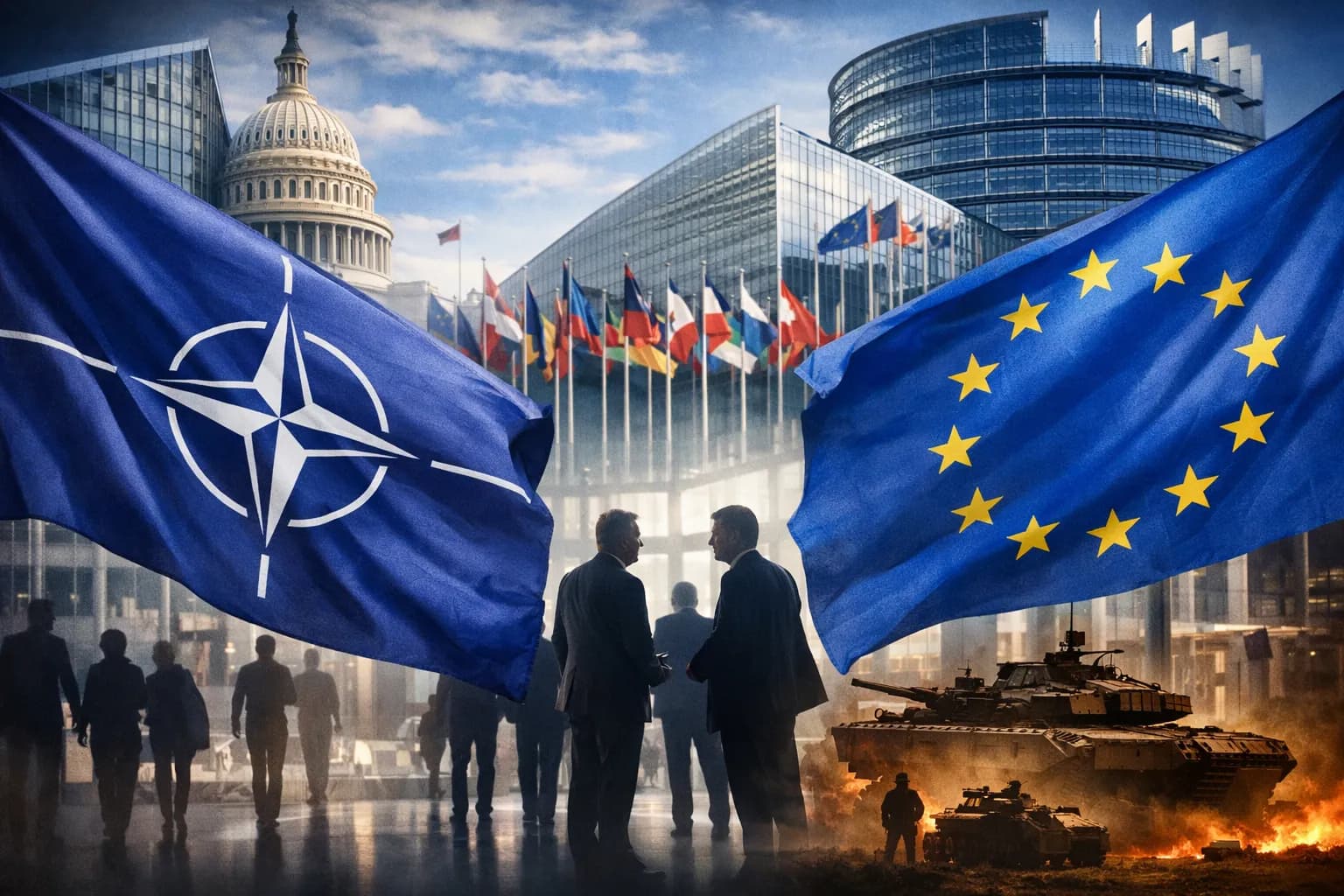
Senior U.S. officials used recent public engagements with European counterparts to reaffirm Washington’s adherence to Article 5 and to NATO’s central role in Euro-Atlantic security. The message was calibrated to address lingering concerns in several European capitals regarding long-term U.S. engagement, particularly as defense spending, industrial capacity, and military readiness remain uneven across the Alliance. For European governments, reassurance alone is no longer sufficient; there is growing insistence that credibility must be matched by sustained investment and clearer strategic coordination.
Within the European Union, these discussions intersect with an ongoing push to strengthen defense-industrial cooperation and reduce critical dependencies. The economic dimension of security has become increasingly explicit, with policymakers framing industrial resilience, supply-chain security, and technological sovereignty as integral to collective defense. This approach reflects a broader convergence between economic and security policy, blurring lines that once separated trade, competition, and strategic planning.
Against this backdrop, the EU and several Western partners issued coordinated condemnations following the heavy sentencing of Hong Kong pro-democracy media figure Jimmy Lai. European officials characterized the case as emblematic of a deteriorating environment for civil liberties and press freedom, raising concerns about compliance with international commitments. While responses stopped short of immediate punitive measures, the episode has reinforced calls within the EU for a more principled and coherent external human-rights policy, particularly in relations with China.
The diplomatic implications extend beyond values rhetoric. Several EU member states are weighing how to balance economic engagement with political risk, especially in sectors where European companies remain deeply exposed. The Lai case has renewed parliamentary and civil-society pressure for stricter due-diligence standards and a reassessment of economic ties that may carry reputational or legal consequences.
Taken together, these developments illustrate the increasingly complex environment confronting transatlantic diplomacy. NATO cohesion, economic competitiveness, and the defense of democratic norms are no longer parallel tracks but interconnected challenges. As global power competition intensifies, European and U.S. policymakers appear aligned on fundamentals, yet divided on methods and pace.
For Europe, the strategic question is whether reaffirmed alliances will translate into structural capacity and political unity. For the United States, credibility rests on consistency—both in security guarantees and in support for the norms it promotes. The coming months are likely to test whether shared declarations can be converted into durable policy at a time when diplomacy, politics, and economics are inseparably linked.
Olha Pashchenko
Contributing writer at EUReflect.
Follow EUReflect
See more of our reporting on Google
Mark EUReflect as a preferred source and our stories are ranked higher for you in Top Stories, Discover and Google News — and carry a “preferred” badge when they are cited in AI results.
Add EUReflect as a preferred source