No More Limits: The End of the Last US-Russia Nuclear Treaty
For the first time in over 50 years, the United States and Russia are no longer bound by a formal, verifiable nuclear arms control treaty. The New START agreement stands for Strategic Arms Reduction Treaty , which limited the two countries strategic nuclear arsenals. This treaty helped keep the Cold War style arms race in check but has now expired. With that brake removed, questions are mounting about how Washington and Moscow will manage their nuclear forces.
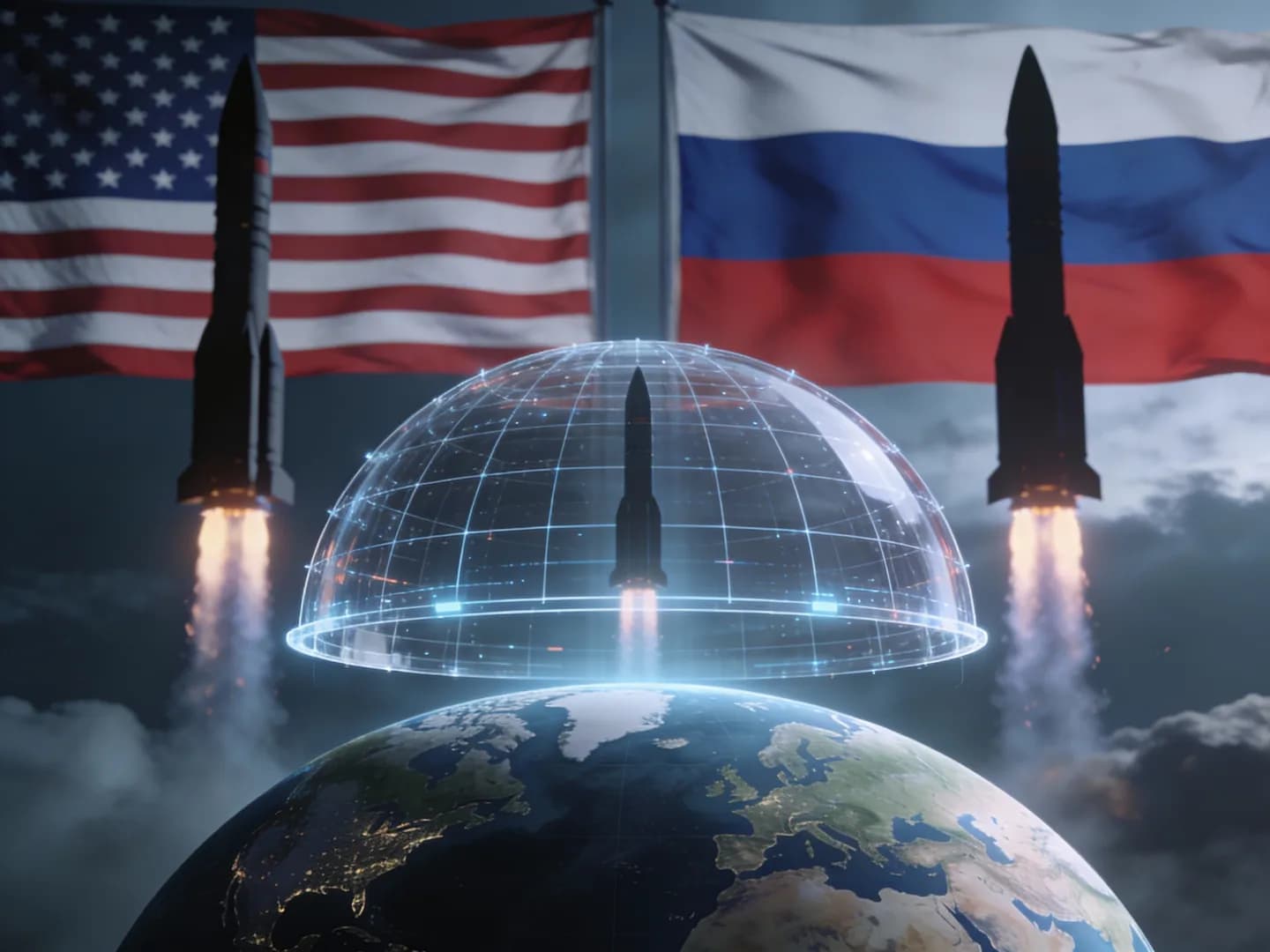
This shift weakens global security by removing the last formal constraints on the world’s largest nuclear arsenals. At the same time, Europe must adapt quickly by strengthening its own nuclear strategy.
This article looks at the situation through four key questions:
1. What is this nuclear‑arms treaty about?
2. Why has no new treaty been signed?
3. What does the future hold for nuclear arms?
4. How will Europe respond?
1. What is this nuclear‑arms treaty about?
The treaty in question is New START, the last remaining nuclear‑arms‑control agreement between the United States and Russia. It was signed on the 8th of April 2010. However, on the 5th February 2026, the New START treaty will come to an end. From tomorrow onward, it will no longer place any legally binding limits on the strategic nuclear arsenals of the United States and Russia.
Under the treaty, each side must keep its deployed strategic nuclear warheads at or below 1,550. It must also limit its deployed launchers such as intercontinental ballistic missiles & heavy bombers to 700 or fewer. In addition, the total number of delivery systems must stay at or below 800.
The treaty also included on‑site inspections and regular data exchanges, so that both Washington and Moscow could monitor each other’s forces and verify compliance. This transparency helped reduce the risk of miscalculation and gave both sides a clearer picture of the other’s capabilities. With the expiration of New START, the world enters a new era in which the United States and Russia are no longer bound by a mutual, verifiable ceiling on their strategic nuclear arsenals. For the first time in over 50 years, the two largest nuclear powers face no formal limits on how many nuclear warheads they can maintain.
2. Why has no new treaty been signed?
Relations between the United States and Russia have deteriorated sharply, especially after the war in Ukraine. This catalysator has made it extremely difficult to negotiate a successor to New START. The Russian Federation suspended its participation in the treaty in 2023. In particular, arguing that the United States was trying to weaken Russia strategically and that on‑site inspections were no longer acceptable. In practice, Russia still stayed within the warhead limits, but the inspection and verification mechanisms were effectively frozen. In addition, a Russian official stated that Russia signalled that it remained open to negotiations. On the contrary the United States made its position clear by not engaging in talks. In the specific words of Russian diplomat Sergei Ryabkov : “No answer is also an answer” which made the stance clear of the US for the Russian Federation.
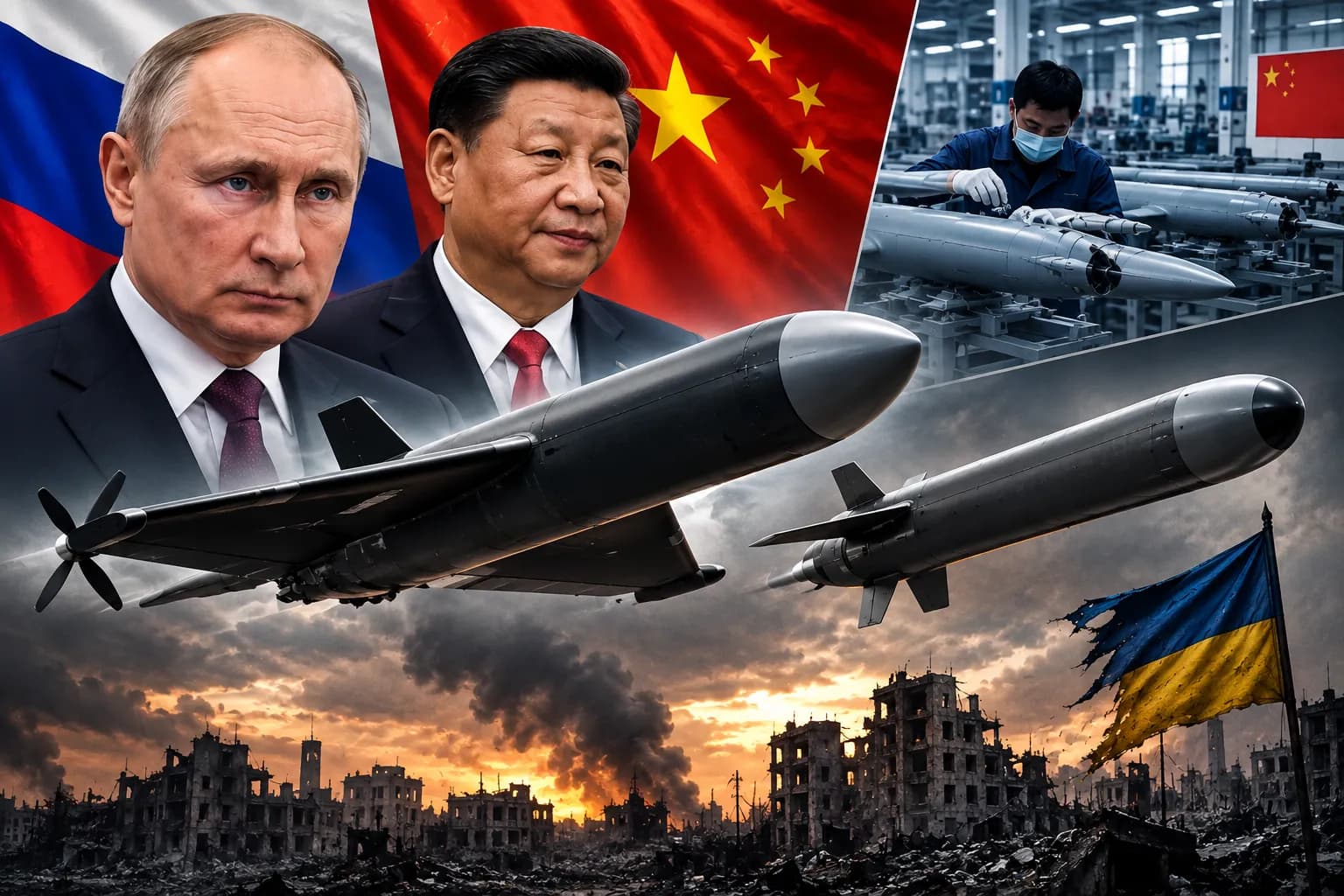
At the same time, U.S. officials, including president Donald Trump, have pushed for a future deal to include China. The United States wants to turn the bilateral New START treaty into a trilateral treaty that includes China. Washington argues that Beijing must accept the same kind of limits on its nuclear arsenal as those placed on the United States and Russia. China, however, rejects this idea. The People's Republic of China has made clear that it does not want to join the New START treaty or any similar nuclear‑arms‑control agreement. Beijing insists that its nuclear arsenal remains far smaller than those of the United States and Russia and argues that it should not be forced into limits that apply mainly to the two largest nuclear powers.
3. What does the future hold for nuclear arms?
Without New START, there is no longer a measurable ceiling on the size of the U.S. and Russian strategic nuclear warheads. However, Russia is unlikely to suddenly start building large numbers of additional nuclear warheads. The question is whether Moscow can actually afford a full‑scale arms race, especially since there is already limited economic support for the war in Ukraine. At the same time, if the United States expands its nuclear arsenal, Russia is expected to respond with similar countermeasures.
Both countries will more likely focus on innovative capabilities and invest in stronger defensive systems. An example of this is the conceptual “Golden Dome” a missile‑defence shield promoted by Donald Trump. On the contrary, Russia will prioritize hypersonic missiles. Examples of this are: Avangard & Kinzhal. In this case to rely on smaller & more effective weapons rather than simply expanding the size of its nuclear arsenal.
To conclude, there is an important nuance to keep in mind: neither country is expected to suddenly start a full‑scale nuclear arms race. Both the United States and Russia are likely to move cautiously. In this context weighing military ambitions against economic constraints and the risks of escalation.
4. How will Europe respond?
In Europe, the end of New START has increased uncertainty about transatlantic security and the credibility of U.S. nuclear guarantees. In specific the Greenland affair has already called into question American security guarantees within NATO. As a result, Europe feels increasingly compelled to develop its own nuclear‑strategy/autonomy.
France is the only EU member with an independent nuclear arsenal of around 290 warheads. It has repeatedly suggested that it could extend its “nuclear umbrella” to other European partners, especially as Russia’s posture grows more aggressive. At the same time, increasing uncertainty about U.S. politics has made this idea more appealing to other EU Member States.
At this moment several options within the European Union are being discussed. Below there is a list of the possibilities:
· One scenario is that France would broaden its security guarantees. In this case other European countries will be contributing financially or politically to France’ nuclear arsenal while France keeps operational control.
· A second option is a European‑style “nuclear sharing” model, where French warheads would be carried on aircrafts from other EU states. This system is similar to the current U.S. arrangement with countries such as Belgium, Germany, Italy, the Netherlands, and Turkey.
· A third, more radical possibility is a fully EU‑owned nuclear arsenal. However, that would be legally complex and very expensive. In addition, it would likely clash with existing international commitments such as the Non‑Proliferation Treaty (NPT).
In the end, the European Union should focus on building its own nuclear strategy. When it comes to defence, countries can ultimately rely only on themselves and not on the promises of others.
İbrahimjan Abdimutalipjan
Contributing writer at EUReflect.
Follow EUReflect
See more of our reporting on Google
Mark EUReflect as a preferred source and our stories are ranked higher for you in Top Stories, Discover and Google News — and carry a “preferred” badge when they are cited in AI results.
Add EUReflect as a preferred source