Smartphone Ban at School in Belgium
Belgium bans smartphones in schools as AI cheating scandals like the ChatGPT exam case spark debate on technology, integrity, and the future of education.
A Competition Tainted by the Shadow of AI
“Cheating is unacceptable,” declared Zuhal Demir, Flemish Minister of Education, after suspicions of ChatGPT use during the entrance exam for medical studies. Several candidates are believed to have relied on generative AI to solve test questions, prompting an internal investigation.
This incident raises a burning question: how can exam integrity be safeguarded in a world where AI tools are only a few clicks away?
Back to School 2025: Belgium Without Smartphones in Hand
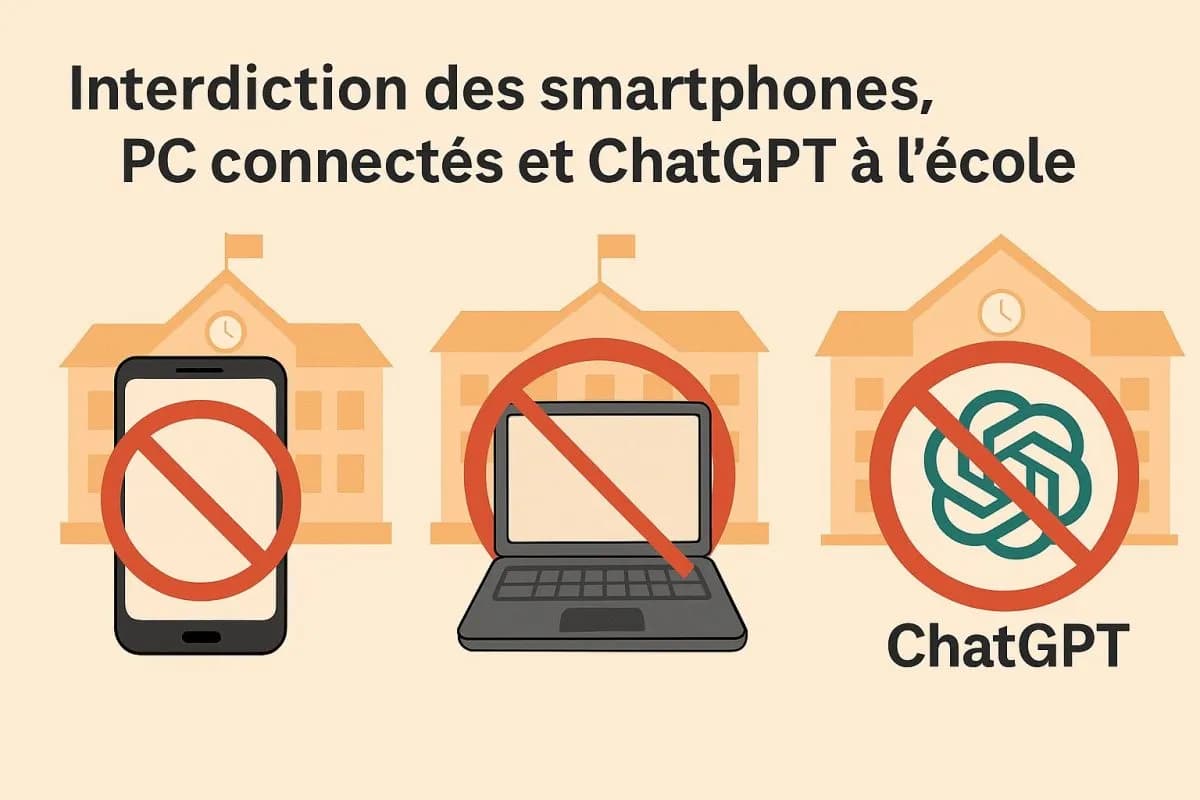
From the 2025-2026 school year onward, all recreational use of smartphones, tablets, and smartwatches will be banned in Belgian schools — from kindergarten to secondary level, covering Wallonia, Brussels, Flanders, and the German-speaking Community.
Exceptions: pedagogical use under teacher supervision, medical reasons, or urgent family matters.
Some schools go even further: sealed pouches are already in use to confiscate phones at the start of the day, with devices only returned at dismissal.
The Rules in Belgium
• Wallonia-Brussels Federation: complete ban during classes, breaks, lunch hours, and school outings.
• German-speaking Community: ban effective from 2025-2026.
• Flanders: phased application — full ban in 1st and 2nd year secondary, limited to class time in 3rd year.
An International Trend
Belgium is aligning with a global movement to limit screens at school.
• France: pioneer, banning phones for under-15s since 2018.
• Netherlands: schools like Calvijn College report improved concentration and reduced cyberbullying.
• Brazil: national ban passed in late 2024 for students aged 4 to 17.
• Canada: Ontario and Alberta provinces introduced strict bans in 2024-2025.
• Italy: Rome pushes for an EU-wide ban, at least until age 14.
Studies and Recommendations
• UNESCO warns that a single notification can distract a student for 20 minutes.
• OECD, more cautious, warns against overly rigid bans and calls for combining digital literacy, family involvement, and pedagogical guidance.
⸻
⚖️ Pedagogy vs. Authority
Supporters of the ban highlight better focus, reduced social tensions, and stronger protection against cyberbullying.
Opponents denounce a “simplistic solution” that fails to address the root causes of digital dependency, noting that smartphones can also serve as valuable educational tools when properly supervised.
Connected PCs: Threat or Opportunity?
The ChatGPT controversy raises another sensitive question: should connected computers be banned in classrooms?
Pros:
• Real-time research and deeper understanding of lessons.
• Inclusion of students with learning difficulties or disabilities.
Cons:
• Massive distractions (social media, videos).
• Several universities discourage, or even prohibit, unsupervised internet use.
• Striking example: a school in West Virginia’s National Radio Quiet Zone banned Wi-Fi, which severely hampered learning until partial access was restored.
Verdict: not a total ban, but strict supervision through content filters and monitoring software.
ChatGPT and Exams: Is Cheating Inevitable?
Massive Use
• By 2025, nearly 90% of U.S. university students admitted to using AI for coursework (Axios).
• In Scotland, AI-related plagiarism cases doubled in one year (The Times).
Imperfect Detection
• Tools like Turnitin and GPTZero generate too many false positives, sometimes unfairly punishing students.
Proposed Solutions
• Return of oral exams (viva voce) in Australia (Adelaide Now).
• Handwritten in-class essays introduced in New York (New York Post).
• More “cheat-proof” exam designs, according to Reid Hoffman (LinkedIn).
Unexpected Impact
A 2024 study showed students who heavily relied on AI scored on average 6.7 points lower out of 100 than those who used it sparingly or not at all.
Synthesis: Supervision, Pedagogy, and Responsibility
• 🚫 Computers should not be banned, but tightly supervised.
• ⚠️ ChatGPT poses a real risk to exam integrity, but cheating is not inevitable.
• ✅ Solutions: oral exams, supervised assignments, new evaluation methods, and AI literacy.
Conclusion
Between the smartphone ban and the looming threat of widespread AI-driven cheating, schools face a historic dilemma: learning with technology, without becoming enslaved to it.
Belgium, with its 2025 decree and the scandal surrounding the medical entrance exam, is emerging as a European laboratory for the educational challenges of the digital age.
Kadir Duran
Contributing writer at EUReflect.
Follow EUReflect
See more of our reporting on Google
Mark EUReflect as a preferred source and our stories are ranked higher for you in Top Stories, Discover and Google News — and carry a “preferred” badge when they are cited in AI results.
Add EUReflect as a preferred source