Surrealism Meets Diplomacy: Celebrating 160 Years of Japan–Belgium Diplomatic Relations
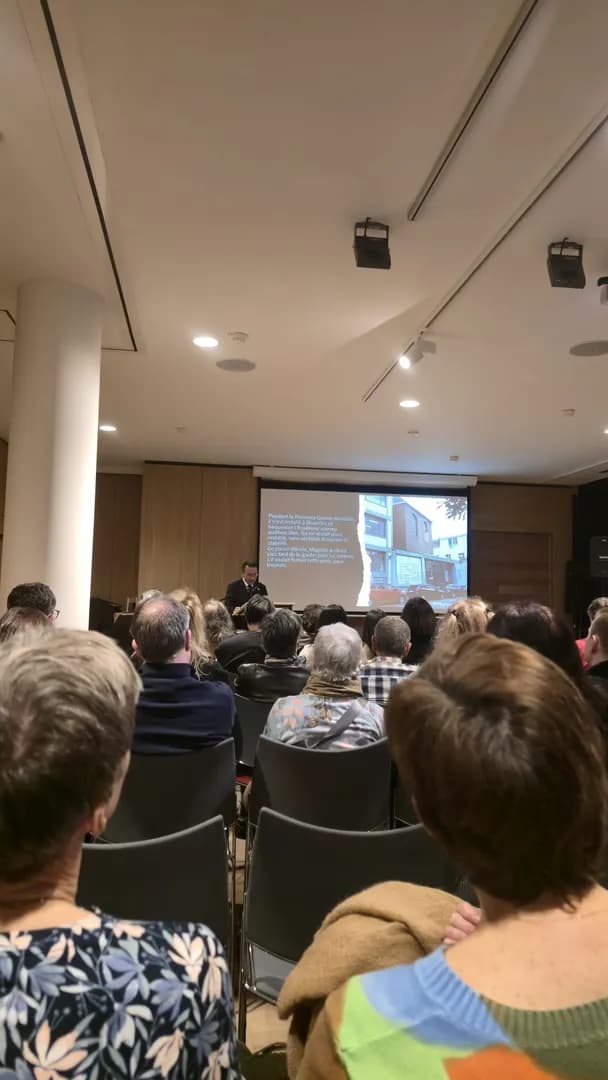
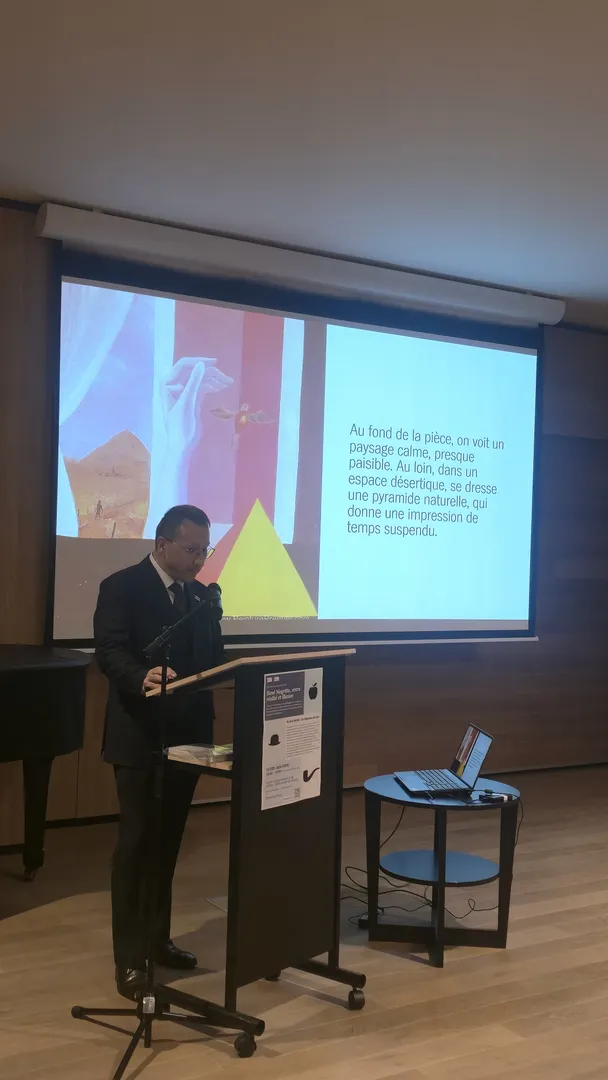
EUREFLECT had the honour to attend the Japanese cultural evening: “René Magritte, entre réalité et illusion” in Brussels on 13th of February 2026. The Japanese art historian Koji Mori gave profound insights about the surrealist universe of René Magritte. Delivered in French, his lecture connected art history with cultural diplomacy, underlining how Magritte’s imagery has found an enduring echo in Japan’s museums, exhibitions and public imagination. This event took place in the context of 160 years of diplomatic friendship between Belgium and Japan.
Roots of Friendship: Royals and Treaties Since 1866
Hosted as part of the official programme marking the 160th anniversary of friendship between Japan and Belgium, the event formed an integral element of this jubilee year. It took place shortly after both governments formally launched the 2026 celebrations.
The 160‑year anniversary recalls a relationship that has steadily deepened since the 1866 Treaty of Amity, Commerce and Navigation. Since 1886 the classic amity and trade agreement evolved into a strategic friendship spanning industry, innovation and culture. Today some 250 Japanese companies operate in Belgium, illustrating how economic ties complement the high‑level political trust repeatedly emphasised by both governments.
In addition, Royal diplomacy has been a constant thread in this story, with reciprocal visits by members of the Belgian and Japanese royal families symbolising continuity and mutual respect. For 2026, Tokyo and Brussels have announced a rich calendar of commemorative activities. These activities will promote the people-to-people exchanges. Automatically, transforming formal cultural diplomacy between Japan & Belgium into a long-lasting friendship
In this setting, keynote speaker Koji Mori, an art historian active in European & Japanese cultural projects , delivered an lecture to focus on the Belgian surrealist artist René Magritte. He delivered his lecture in French to an audience of diplomats, cultural professionals and art lovers. In this talk, he framed Magritte not only as a central figure of Belgian modern art but also as a bridge artist whose work circulates intensively in Japanese museums and exhibitions.
Cultural Diplomacy: Surrealism as a Bridge
To start with, Koji Mori is known in cultural circles as an art historian dedicated to building bridges between Japanese and European art scenes. In addition, he serves as chairman of the Japan‑Europe Palace Art Association with a specific focus on European painting.
For the 160‑year celebration, Mori approached René Magritte as a case study of Belgian–Japanese cultural diplomacy. Magritte’s precise visual language and playful questioning of reality have long appealed to Japanese viewers, sparking multiple retrospectives and large-scale exhibitions.
René Magritte (1898–1967), was a pioneering Belgian surrealist painter. He redefined reality by featuring ordinary items such as pipes, apples, and hats in bizarre & provoking contexts. He disobeyed conventional artistic rules, using masterpieces like The Treachery of Images with its famous caption "This is not a pipe". In particular, to make audiences confront the distinction between pictures, language, and real things. He anchored Brussels' surrealist movement, leaving a lasting mark on surrealism, conceptual works, and worldwide visual trends.
Moreover, Koji Mori emphasized that René Magritte holds strong popularity in Japan, evidenced by the René Magritte Retrospective exhibition in Japan (2015). This prestigious exhibition took place in Tokyo's National Art Center and Kyoto Municipal Museum of Art, which drew over 130 works with the support from Belgium's Royal Museums of Fine Arts.
Furthermore, several Japanese institutions house his paintings. Examples of this are:
· "La Robe de l'Aventure,1926 ” ; "Le Colloque sentimental II, 1947 ” in the Kawamura Memorial DIC Museum of Art
· "The Line of Life, 1936 ” ; "The Forerunner,1938 ” in the Pola Museum of Art
· "The Resumption,1965 ” in the Tokyo Fuji Art Museum
Mori’s lecture underscored this sustained presence by tracing Magritte’s works across Japanese museum collections. Institutions such as the Tokyo Fuji Art Museum hold key canvases, including “The Resumption, 1965 ”, which has travelled extensively within Japan in exhibitions. These tours have brought Magritte’s imagery to audiences from Tokyo and Nagoya to Niigata and Kumamoto, embedding his floating apples, shrouded figures into Japan’s visual landscape.
Beyond listing titles and dates, Mori offered interpretative keys to Magritte’s oeuvres, reading iconic motifs as invitations to question habits of seeing rather than as puzzles to be solved. An example of one of his iconic paintings is the “ The Treachery of Images, 1929 ”. René Magritte's iconic painting, features a photorealistic drawing of a tobacco pipe together with his famous quote: “Ceci n'est pas une pipe” ore in English: "This is not a pipe ”. Magritte deliberately disrupts our instinct to equate a vivid image with the actual object, stressing that the canvas offers only a flat representation. This clever paradox probes the divide separating visual signs, words, and tangible reality, urging viewers to question how language and pictures mislead us into false equivalences.
By anchoring his analysis in concrete works that have circulated through Japanese museums, he highlighted how cultural diplomacy is built over decades through exhibitions, catalogues and critical people-to-people debate.
Cultural Symbiosis: two nations flock together into the future
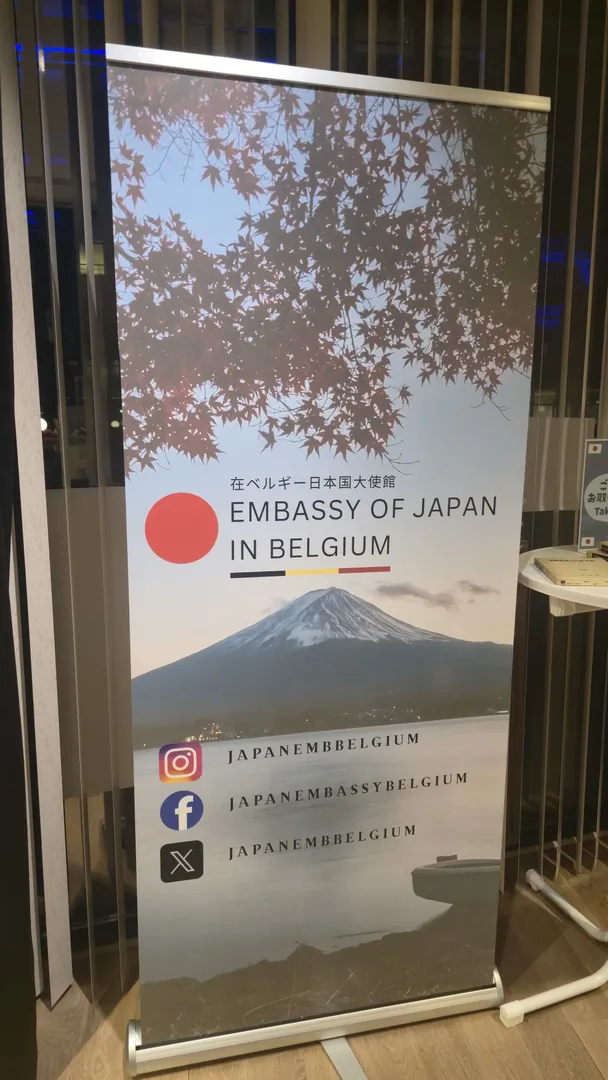
This event took place at the Japan Information and Cultural Center (JICC). Which plays a central role in this diplomatic ecosystem, serving as a hub for Japanese cultural events. In addition, it serves also as a meeting point and bridge between Belgian & Japanese people. The event beautifully illustrated the cultural symbiosis between Belgium and Japan, a testament to the enduring dialogue between art, history, and diplomacy that continues to unite both nations.
The 160‑year celebrations are thus more than a commemoration of a treaty signed in 1866. They are an opportunity to honour the long lasting friendship and sustain this continuing process into the future.
To conclude, the Japanese proverb “Rui wa tomo o yobu” meaning “birds of a feather flock together”, perfectly captures the shared diplomatic trajectory of the two nations. These two nations continue to flock together toward a vibrant future of diplomatic harmony.
İbrahimjan Abdimutalipjan
Contributing writer at EUReflect.
Follow EUReflect
See more of our reporting on Google
Mark EUReflect as a preferred source and our stories are ranked higher for you in Top Stories, Discover and Google News — and carry a “preferred” badge when they are cited in AI results.
Add EUReflect as a preferred source