Taiwan Warning: Xi’s Stern Message
At the Beijing US–China summit, Xi Jinping issued a strong warning on Taiwan, stating that missteps could lead to conflict. Donald Trump praised Xi and signaled a desire to ease tensions. The meeting took place under the shadow of economic and geopolitical rivalries.
Introduction
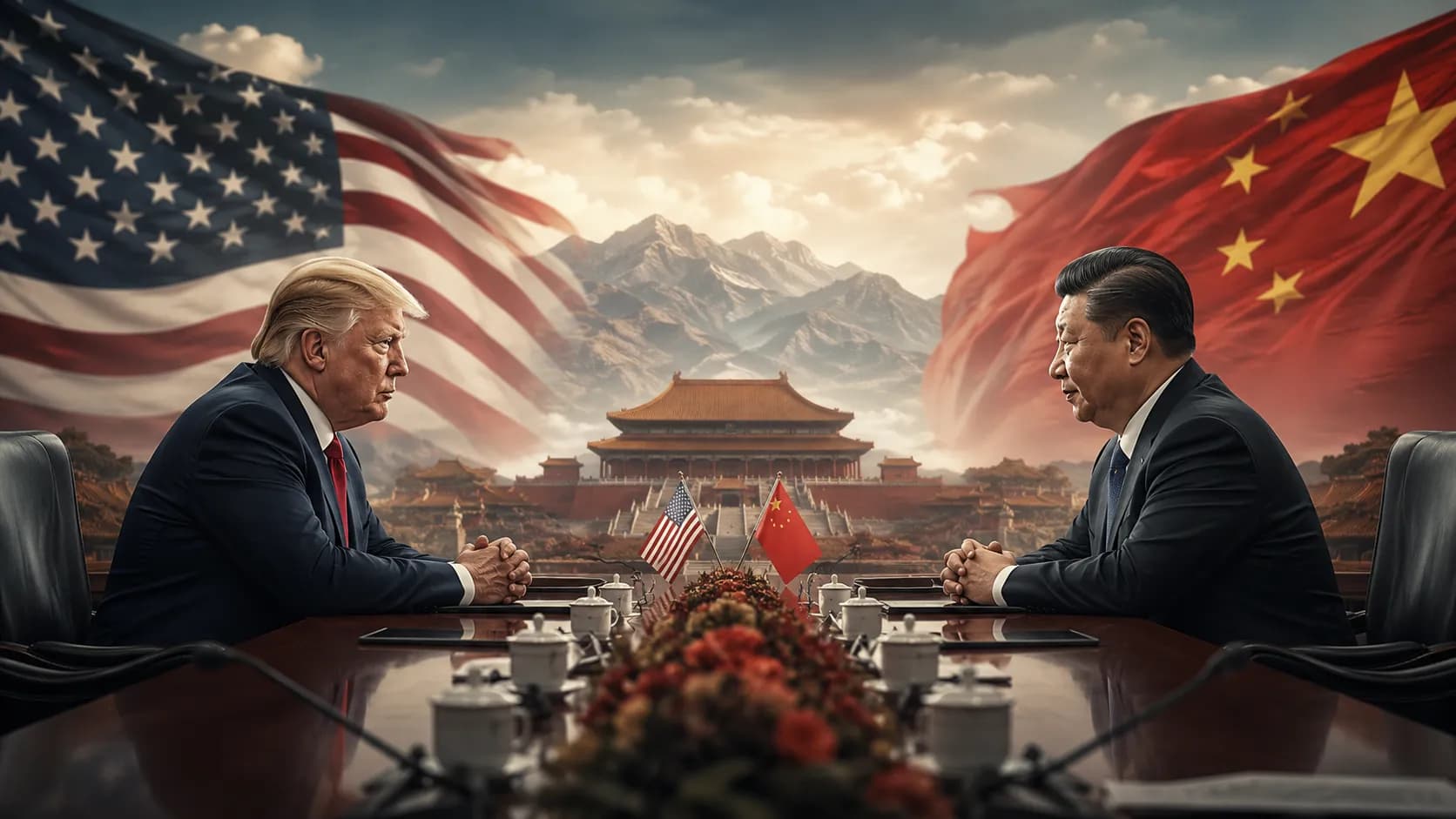
The Beijing summit between the United States and China emerged as a critical turning point in the already complex and fragile relationship between the world’s two leading powers. In a high-stakes diplomatic environment, Chinese President Xi Jinping and U.S. President Donald Trump met to discuss a wide range of strategic issues. However, the Taiwan question dominated the agenda, underscoring once again how regional disputes can escalate into global risks. Xi Jinping issued a clear warning that any miscalculation or misstep regarding Taiwan could push the two countries toward direct “conflict.” In contrast, Trump adopted a more conciliatory tone, praising Xi and signaling a willingness to open a new chapter in bilateral relations.
1. Taiwan Issue and Strategic Tensions
The most sensitive and consequential topic of the summit was Taiwan. Xi Jinping emphasized that Taiwan remains “the most important issue” for China and described it as a core national interest that cannot be compromised. He warned that mishandling this issue could lead to a “highly dangerous situation” in China–U.S. relations, with implications far beyond the bilateral sphere.
From Beijing’s perspective, Taiwan is considered an integral part of China’s territory under the “One China” principle. On the other hand, the United States continues to maintain unofficial relations with Taiwan and provides it with defensive support, which Beijing views as a direct challenge to its sovereignty claims. This fundamental disagreement has long been one of the most persistent sources of friction between Washington and Beijing.
The summit highlighted how Taiwan is not merely a regional dispute but a potential flashpoint that could reshape Indo-Pacific security dynamics. Any escalation in this area could affect global supply chains, military alliances, and the broader balance of power in Asia.
2. Diplomatic Tone and Leadership Messaging
Another striking feature of the Beijing meeting was the contrast in diplomatic language used by the two leaders. President Donald Trump addressed Xi Jinping in notably warm terms, referring to him as a “great leader” and a “friend.” He also extended an invitation for Xi to visit the White House in September, a move widely interpreted as an attempt to ease tensions and reopen channels for cooperation.
In contrast, the Chinese side maintained a more cautious and strategically calibrated tone. Xi Jinping emphasized that China and the United States should not be viewed as adversaries, but rather as partners capable of managing differences through dialogue. He reiterated that competition between major powers does not have to lead to confrontation, and that cooperation remains essential for global stability.
This divergence in tone reflects deeper structural differences in how both countries perceive their roles in the international system. While the United States often frames the relationship through competition and negotiation, China emphasizes long-term stability, sovereignty, and strategic patience.
3. Economic and Geopolitical Background
Beyond political rhetoric, the summit was also shaped by broader economic and geopolitical considerations. President Trump reportedly entered the talks under significant domestic pressure, particularly due to ongoing tensions in the Middle East, including conflicts involving Iran. In this context, engagement with China was seen as an opportunity to secure economic advantages and demonstrate foreign policy leadership.
For China, the summit represented an opportunity to reinforce its position as a central player in global trade and to expand its influence in the Asia-Pacific region. Beijing continues to pursue technological advancement, supply chain resilience, and stronger regional partnerships as part of its long-term strategic vision.
At a global level, the meeting underscored the intensifying competition between two systems of economic and political governance. Issues such as tariffs, technology transfer, semiconductor supply chains, and military positioning in the Indo-Pacific remain deeply interconnected with the broader strategic rivalry.
4. Strategic Risks and Global Implications
The Beijing summit ultimately revealed a dual reality: cooperation and confrontation exist simultaneously within the U.S.–China relationship. While both sides expressed interest in avoiding direct conflict, the underlying structural tensions remain unresolved.
The Taiwan issue continues to stand at the center of this fragile balance. Even minor misunderstandings or policy shifts could trigger broader consequences, potentially involving regional allies and international institutions. The risk is not limited to bilateral relations but extends to global economic stability and security architecture.
Moreover, the contrast between diplomatic friendliness and strategic caution suggests that both sides are attempting to manage competition without escalating it into open confrontation. However, such a balance is inherently unstable and requires continuous communication and careful policy coordination.
Conclusion
The Beijing summit between Xi Jinping and Donald Trump demonstrated both the possibility of dialogue and the persistence of deep strategic divisions. While the leaders exchanged conciliatory messages and expressed a willingness to improve relations, fundamental disagreements—especially regarding Taiwan—remain unresolved.
The meeting highlighted a central paradox of modern international politics: two superpowers deeply interconnected through trade and global governance mechanisms, yet increasingly divided by strategic distrust and competing visions of world order. As a result, even small diplomatic miscalculations carry the potential to generate significant global consequences.
In this context, the summit can be seen not as a resolution of tensions, but as a temporary stabilization of a highly volatile relationship—one that will continue to shape global politics in the years ahead.
EUReflect News
Site Administrator
Follow EUReflect
See more of our reporting on Google
Mark EUReflect as a preferred source and our stories are ranked higher for you in Top Stories, Discover and Google News — and carry a “preferred” badge when they are cited in AI results.
Add EUReflect as a preferred source