Tazy: The Grace of the Steppe
A photo exhibition at the Kazakh Embassy in Brussels brings the ancient steppe sighthound, one of Kazakhstan's seven national treasures
Overview
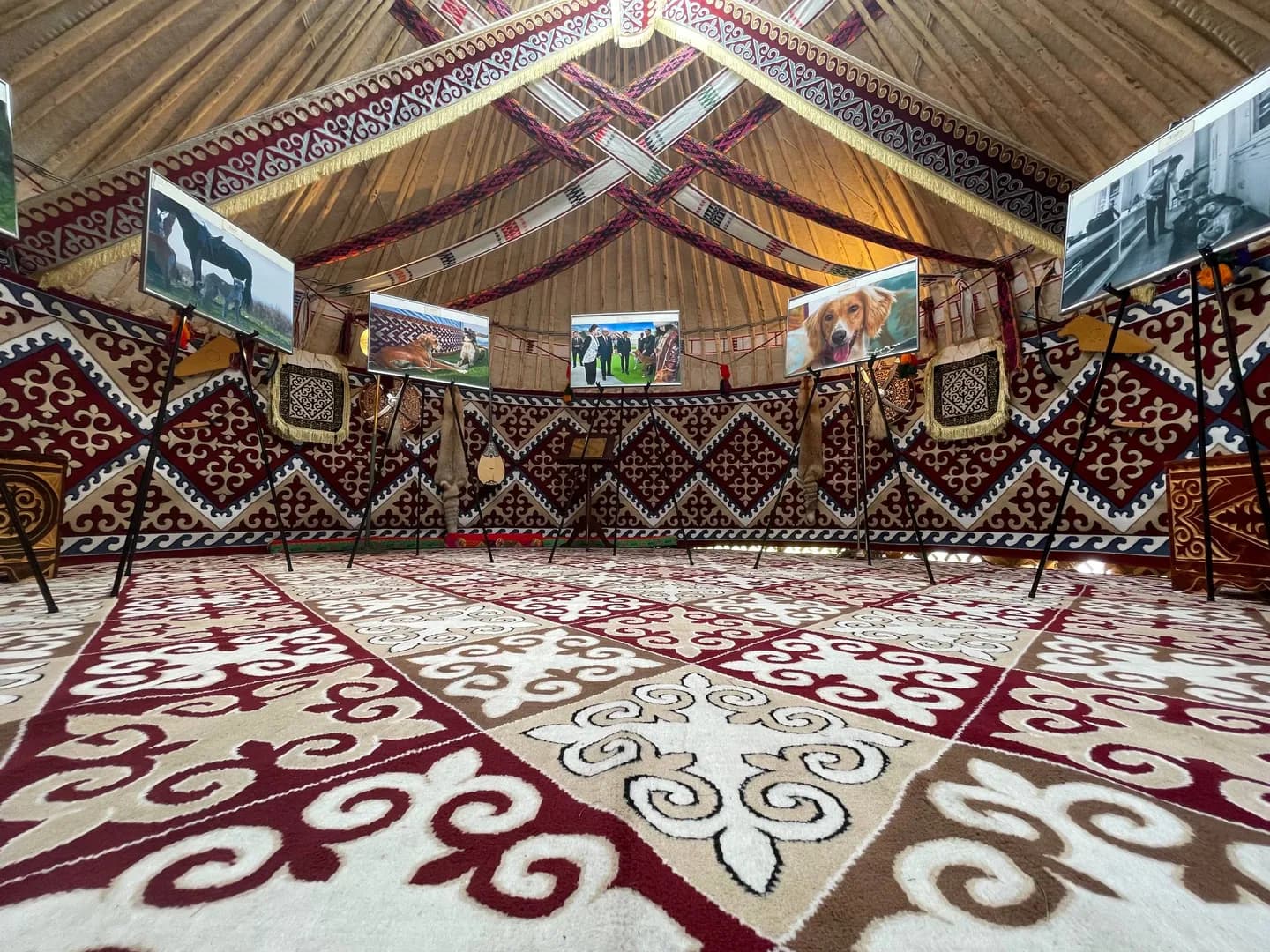
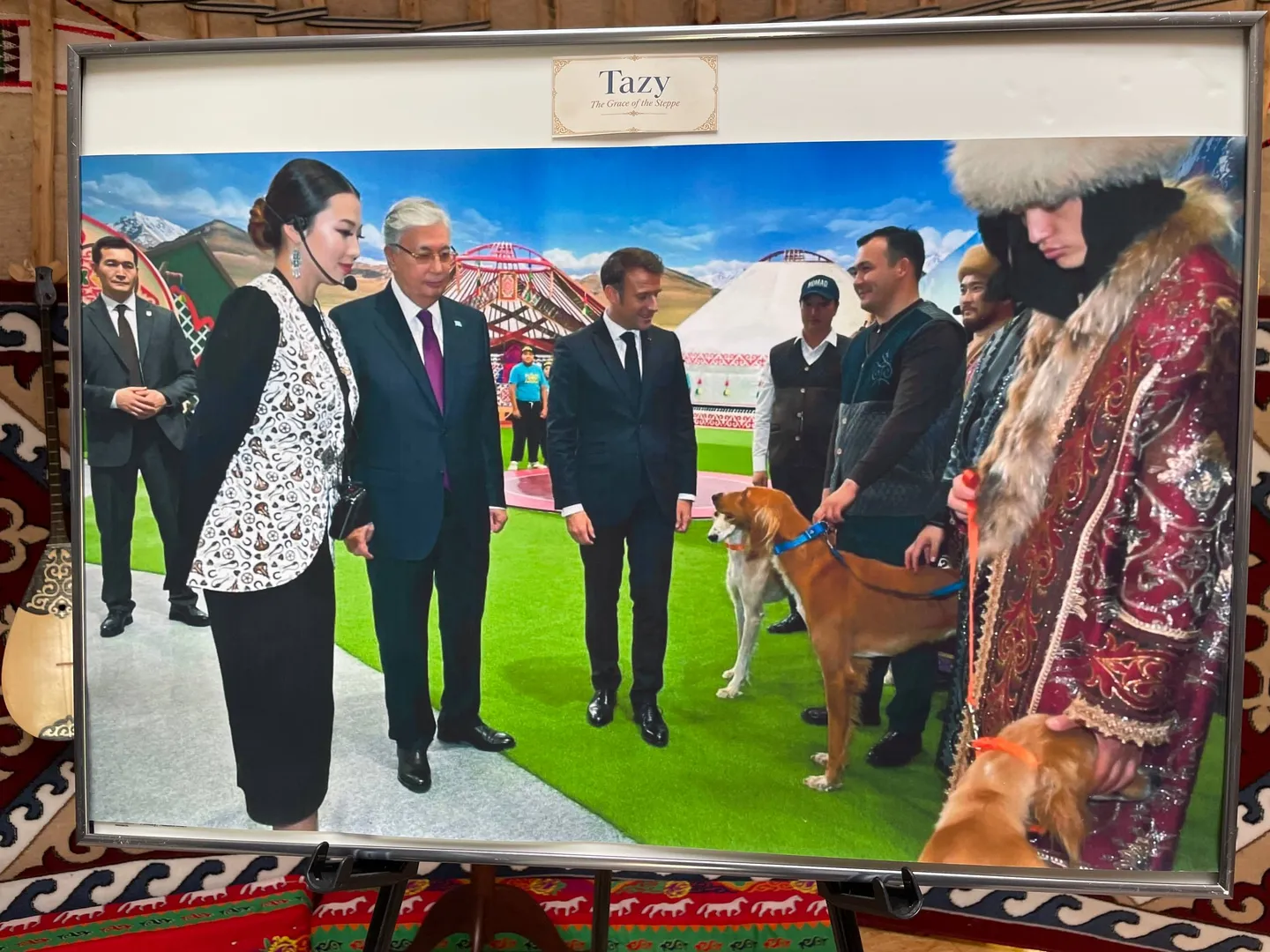
On Wednesday, 2 September, the Embassy of the Republic of Kazakhstan in Belgium hosted the opening of "Tazy: The Grace of the Steppe," a photo exhibition by Kazakh photographer Abzal Dosyman. The event took place in the Embassy in Brussels, where a traditional Kazakh yurt was set up to hold the exhibition. Photographs of the Tazy, the Kazakh sighthound, were displayed both outside on easels and inside the yurt, whose interior was decorated with patterned carpets, felt hangings and traditional ornaments.
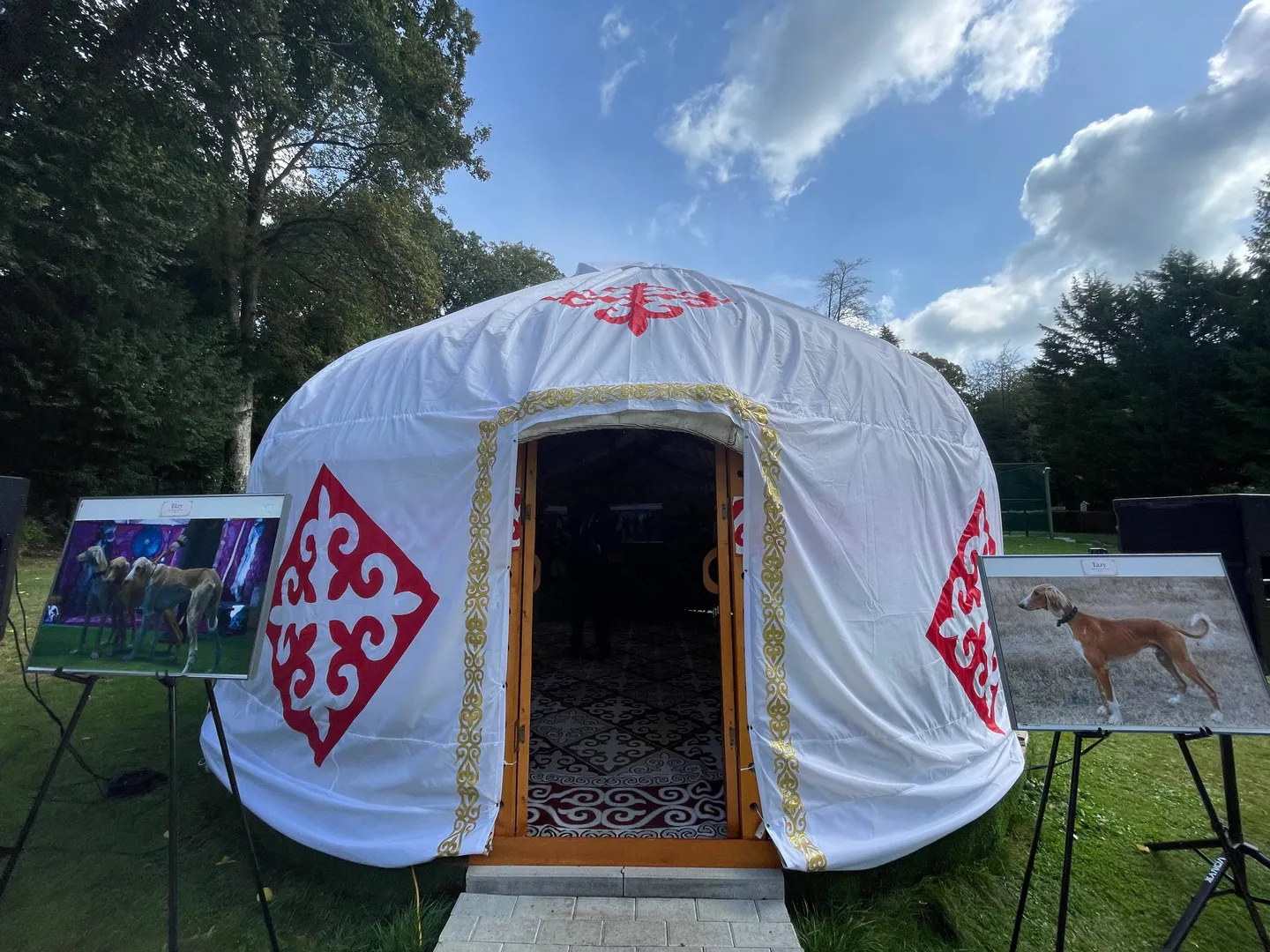
The Tazy itself is one of the oldest dog breeds in the world, with a history on the steppe stretching back thousands of years. It is a sighthound, slender and long-legged, built for speed and endurance across open country, and it belongs to the same wider family as the Arabian Saluki, from which it is believed to descend. Over generations, the demands of nomadic life and the harsh climate of the steppe shaped it into a distinct breed, tougher and more resilient than its desert ancestor. Today the Tazy is recognised as one of Kazakhstan's national treasures and is protected by state programmes, though urbanisation and the loss of old pedigrees have left the breed facing real challenges.

The ceremony was held in two parts. It began with opening remarks, followed by time for guests to view the photographs, and ended with a reception where visitors could enjoy traditional Kazakh food. The exhibition drew members of the diplomatic community in Brussels along with other invited guests, who gathered in front of the yurt for the official opening.
The Photographer's Story
For Abzal Dosyman, every image in the exhibition carries its own history and grew out of a particular moment of inspiration, but the deeper source is the same throughout. "The overall inspiration is of course love for animals, and especially for the dogs, among which I grew up," he explained. Dosyman grew up in the steppe, where his family kept Tazy dogs. They were working animals, used to protect his grandfather's cattle from wolves.
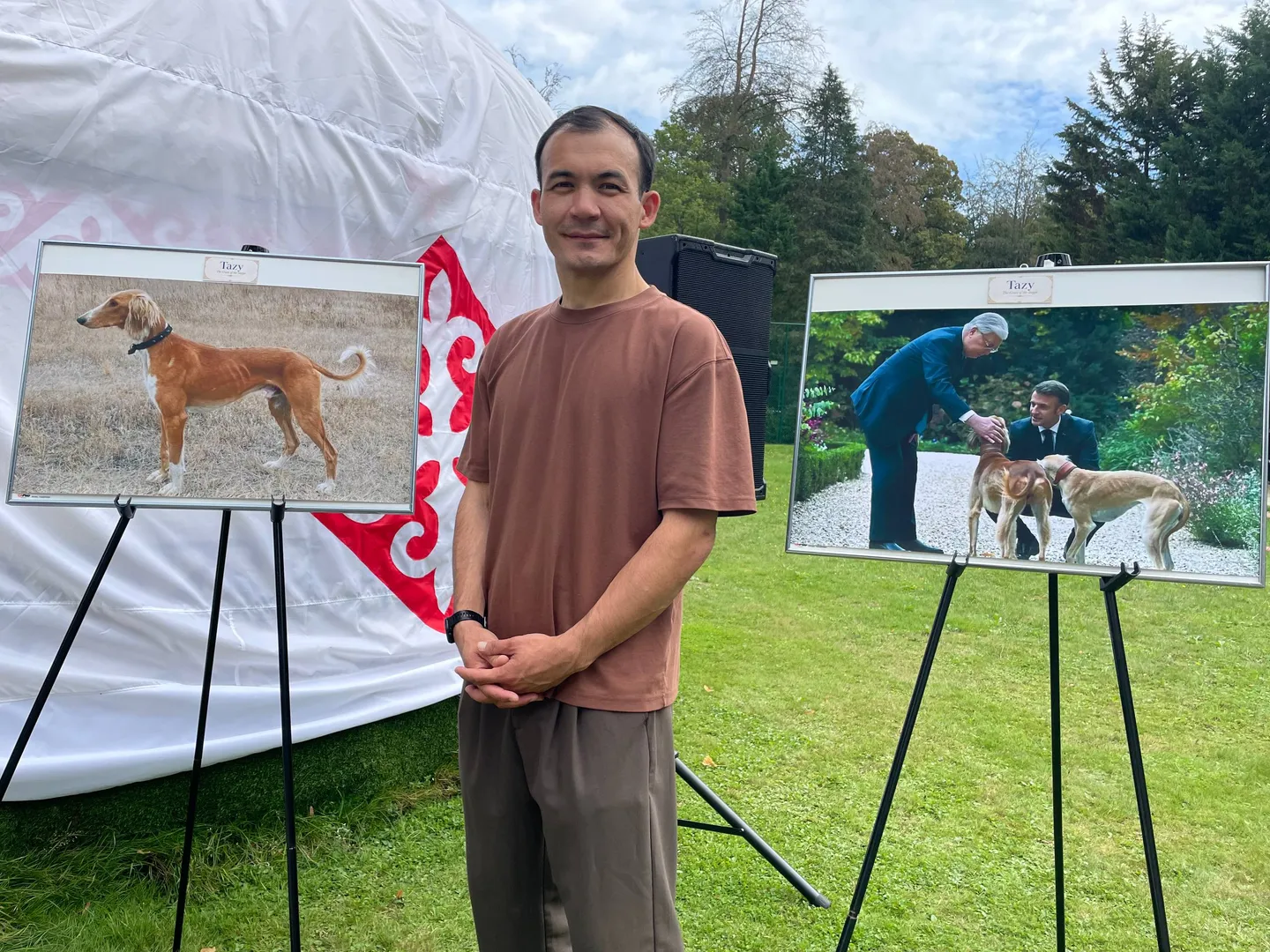
He was open about the traditional methods once used to prepare the dogs for that task, while making clear they belonged to another era. "When these dogs were born, my grandfather placed the puppies under a wolf skin, and for about ten days he did not feed them. Then, when he hunted a wolf, he gave them wolf meat," Dosyman said. "I know that in our present reality this can sound frightening, but it was a different time, different from now." His account reflected a wider truth about the breed, whose history is tied closely to survival on the open steppe.
A Symbol of Kazakh Heritage
Representatives of the Embassy underlined what the Tazy means for the country. They described the breed as a great source of pride for Kazakh culture, and said that sharing these photographs through the exhibition helps present Kazakhstan in many different aspects, from its history and traditions to its way of life. The Tazy is one of the oldest dog breeds in the world and is recognised today as one of Kazakhstan's national treasures. It descends from the ancient Saluki and was long valued by nomads not only as a hunter but as a trusted companion, at times even given a place inside the yurt.
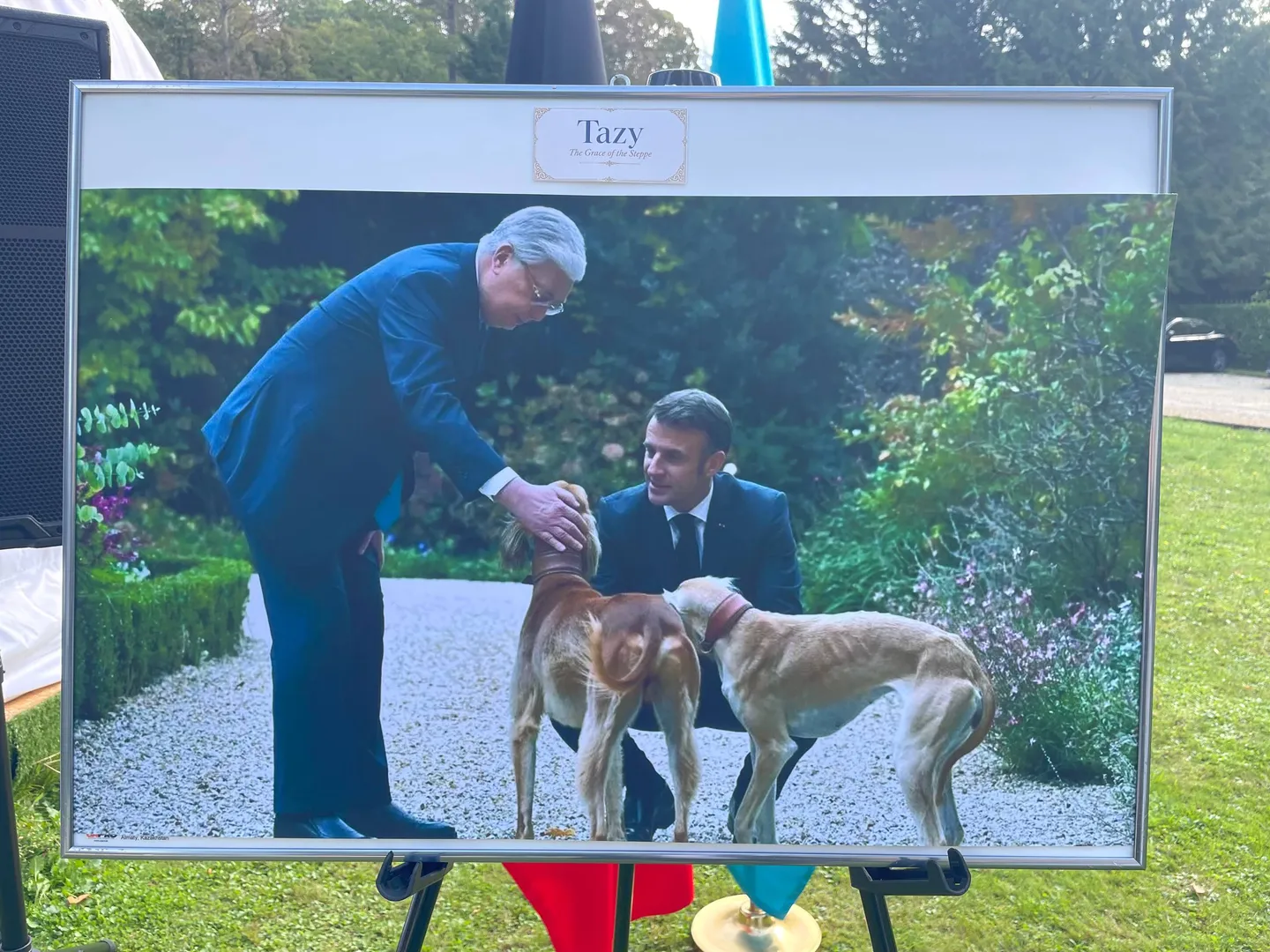
Among the images on display was a photograph of French President Emmanuel Macron with a Tazy dog. The picture refers to a well-known chapter in the breed's recent story. After Macron admired the Tazy during his visit to Kazakhstan in November 2023, President Kassym-Jomart Tokayev gifted him two puppies, later named Jules and Jeanne, who now live at the Élysée Palace. The photograph placed the exhibition's theme in a contemporary diplomatic context, showing how the Tazy has become a quiet ambassador for Kazakhstan abroad.
By bringing these images to Brussels, and by framing them within a real yurt and a shared meal, the Embassy offered its guests more than a set of photographs. It presented a living piece of Kazakh heritage, elegant and deeply rooted in the steppe, to people in the heart of Europe.
Related Topics
Dmytro Melnyk
Contributing writer at EUReflect.
Follow EUReflect
See more of our reporting on Google
Mark EUReflect as a preferred source and our stories are ranked higher for you in Top Stories, Discover and Google News — and carry a “preferred” badge when they are cited in AI results.
Add EUReflect as a preferred source