The Ankara Summit and Europe's Strategic Awakening
NATO's Ankara Summit highlights Europe's shift toward stronger defence capabilities and strategic autonomy. Amid the Russia-Ukraine war, tensions with Russia and uncertainty over US policy, Europe faces a difficult choice between militarization and preserving its post-war cooperative legacy.
The Ankara Summit and Europe's Strategic Awakening
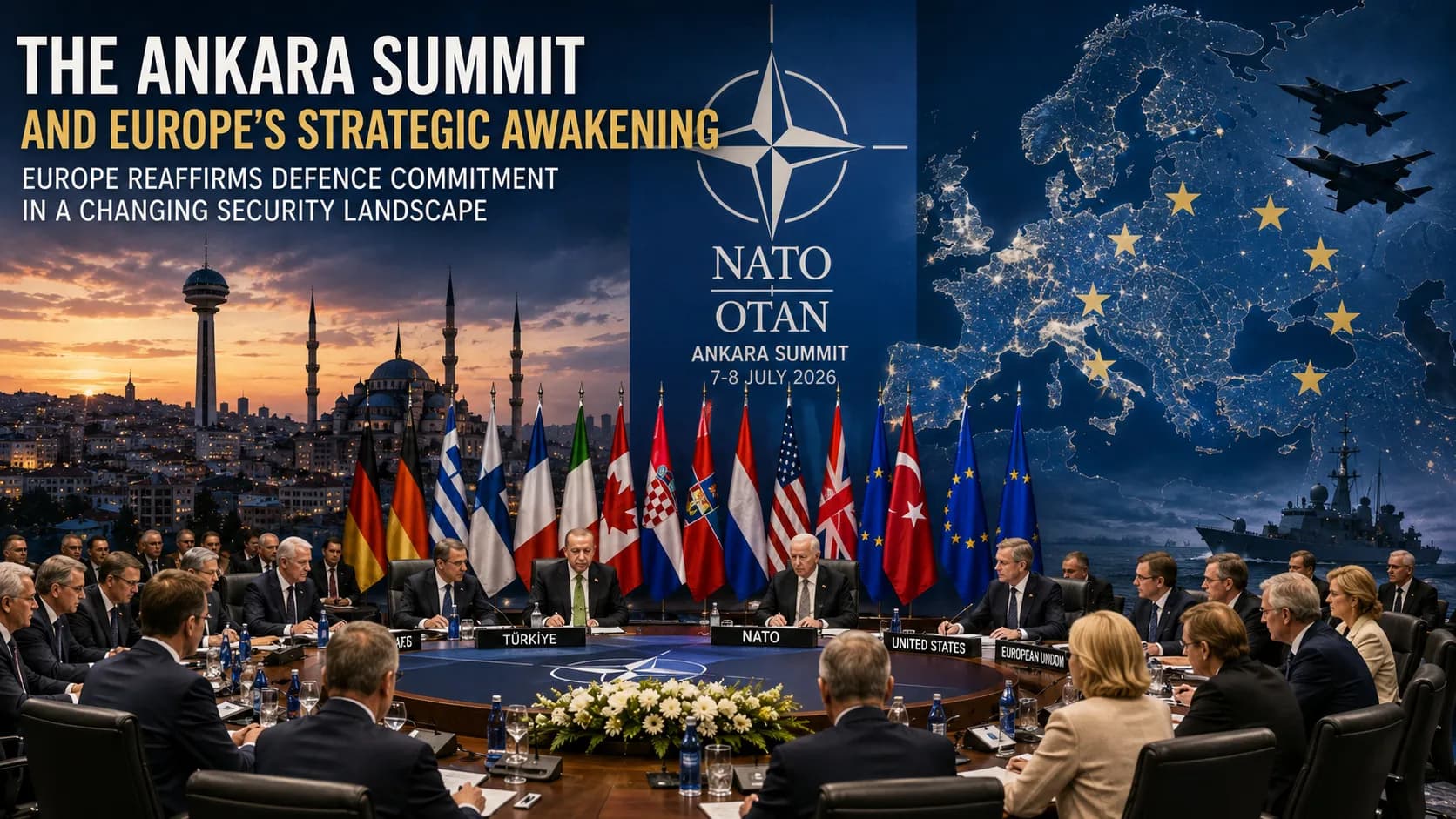
In the 40th NATO Summit held in Ankara, Turkiye on July 7-8, leaders of all 32 member states together with representatives of the EU reaffirmed their commitment to Article 5 amid an evolving security landscape. Increasing defense spending up to 5 percent of GDP (by 2035), expanding military industrial base and advancing weapon modernization were the pressing issues on the agenda. An amount of 70 billion Euros was pledged to Ukraine under NATO’s military equipment program to project Europe’s unwavering support. While calling for greater ‘European burden-sharing’, President Trump expressed his disappointment over non participation of NATO allies in the US war with Iran. Simultaneously reservations over Trump’s policies (seizure of Venezuelan President Maduro, acquisition of Greenland) have been expressed by European leadership on numerous occasions. Recently the French President criticized US for breaking free from international rules and attributes Trump’s predatory actions as “new colonialism and imperialism”.
With the NATO’s Summit, Europe reiterated its commitment towards a more assertive regional security posture. Since the catastrophes of world war 2nd, Continent of Europe had determined its fate from being a battleground of empires to a model of peace, welfare and interdependence. With the formulation of the European Coal and Steel Community ECSC, drivers of the region Germany and France agreed to cooperate in economic prospects that eventually spilled over into the affairs of higher politics. Building over a 76 years legacy of gradual integration, Europe has pursued tenets of liberal intergovernmentalism while promoting human rights, cooperation and societal welfare. By embracing ‘de weaponization policies’ and upholding democratic values and international norms, European states have built a substantive soft power and a normative influence. This framework of mutual cooperation produced lasting dividends for the region as, since WW2 European states have avoided confrontation against each other.
Anyhow contemporary developments are likely to steer Europe to draw lines from its past. Russia-Ukraine war and Trump administration’s policies have overshadowed inspirations of the EU, bringing NATO back to the forefront of Europe’s strategic agenda. In the current geopolitical climate, where international law and governing bodies like the UN are increasingly under strain, Europe could fall prey to the transition from its soft image towards attaining a militarized regional posture. To counter Russia, NATO’s pursuit towards military modernization and stretched defence capacities have reintroduced concepts of security dilemma and Balance of Power in Europe. Beside raising finances for defense, Europe remains cautious of investing in emerging warfare technologies like UAVs, autonomous systems etc for upcoming conflicts. Beside cementing its transatlantic alliance, European NATO allies are developing indigenous defense capabilities and innovations to reduce their reliance on the US.
Trump’s transactional policies and predatory approach have considerably intensified geopolitical tensions. President Trump’s repeated critique over the NATO’s defense budget and signaling of military assets withdrawal (fighter jets, warships, strategic bombers etc) have heightened Europe’s security concerns vis-a-vis Russia. Moreover Trump’s imperialist ambitions regarding Greenland and operations in Venezuela have alarmed EU states i.e. Denmark and Spain to enhance Europe’s defense autonomy and self-reliance. Trump’s adventurism and efforts to draw European partners into wider Gulf conflict is another risk towards Europe’s longstanding prosperity. Citing Axios, soon after Trump’s scheduled meeting with Netanyaho and Zelenski this week, an expected conference is to be held in UK where defense ministers and senior diplomats from Europe will participate. After the UK, US is seeking to bring more European allies to side its operation in the Strait of Hormuz. Recently, Ukraine’s drone attack over the Iranian commercial vessel and subsequent statements from Russia and Iran have raised risk for a new conflict theatre in the Caspian sea. In case of Iranian retaliation, the situation would deteriorate further and if US succeeds in drawing Europe into the conflict zone, then the crisis could escalate into a broader regional war.
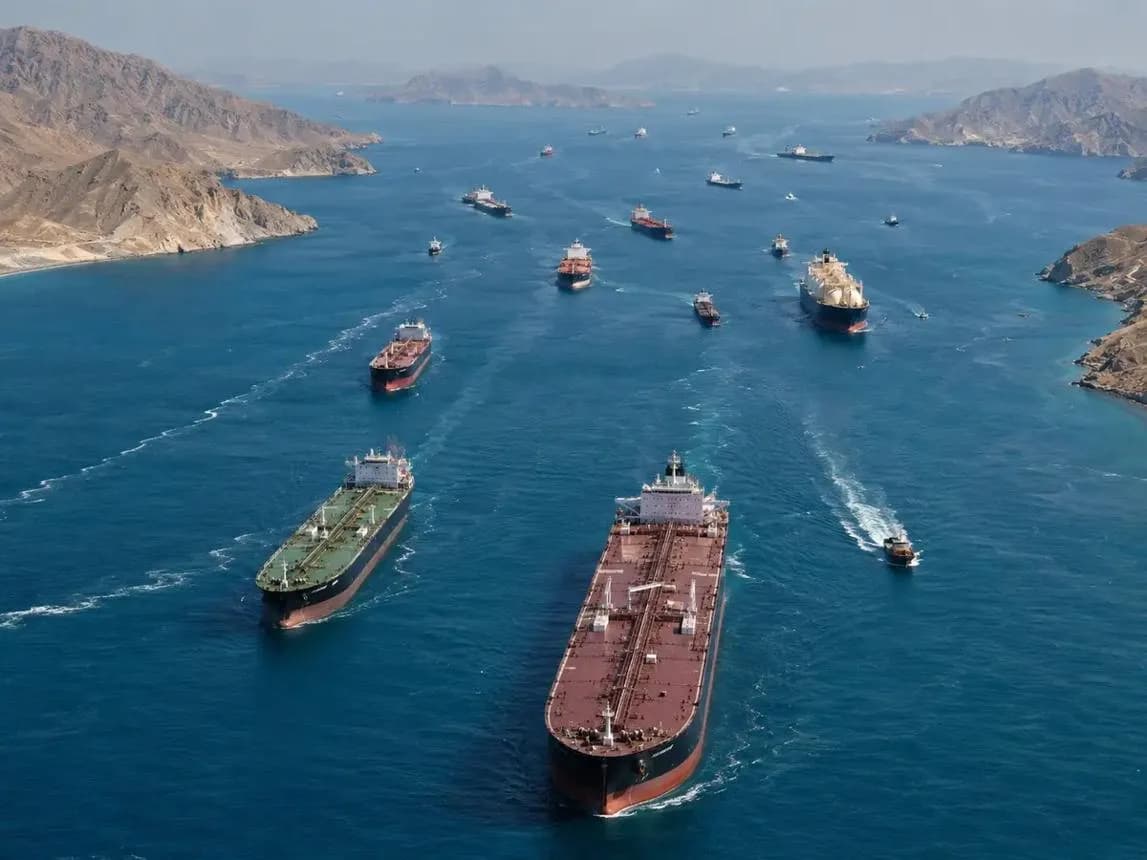
In the context of this transition, EU-Russia strained relations and breakdown of diplomatic channels have proved as critical catalysts. Collapse of treaties like CFE, ABM, Open skies and New Start etc have shattered regional arms control frameworks and prolonged mutual mistrust. Initiatives like EU-Russia Summits, NATO-Russia Council, etc have largely become stalled. Energy projects including Russia-EU gas pipeline (Nord-Stream) augmenting regional cohesion and interdependence get sabotaged since the start of Ukraine war. These developments have amplified the hostility of relations between Russia and Europe. Over that recent Gulf crises and precedents of naval dominance, disruption of SLOCs and global maritime routes further compel Europe to revisit its posture to safeguard its economic and strategic interests.
The Ankara Summit and Europe's Strategic Awakening
To constrain Europe’s probable transition towards re militarization, at the outset there is a pressing need for opting conflict resolution mechanisms between Russia and Europe. Negotiating platforms like Euro Atlantic Partnership Council (EAPC) and Organization for Security and Cooperation in Europe (OSCE) could serve for restoring mutual trust, fostering confidence building and dispute settlements. Secondly Europe should remain an active third pole in the evolving global order, balancing its relations with East and the West. Pursuing strategic restraint and maintaining independent foreign policy towards global hotspots is essential to preserve Europe’s post-war legacy. On the constructive side, Europe could play its role in mitigating US-Iran hostility as it had done in the mediation of JCPOA via its E3 channel. Anyhow world is already on the verge of a major transformation where international norms, human rights and territorial integrity have become increasingly vulnerable and power politics is once again determining states behaviour, coercing peaceful actors like Europe to reconsider its path.
Khawaja TouQeer Ahmed
IR Scholar and Research Intern at the Strategic Vision Institute, SVI.
Follow EUReflect
See more of our reporting on Google
Mark EUReflect as a preferred source and our stories are ranked higher for you in Top Stories, Discover and Google News — and carry a “preferred” badge when they are cited in AI results.
Add EUReflect as a preferred source