The Celestial Swan: Madina Bazarkhan’s Exhibition in Bruges
A new exhibition at Storry's House of Design weaves Kazakh mythology, watercolour and personal memory into a meditation on cultural inheritance, marking the public opening of a new cultural space in Bruges and one of the first solo shows of contemporary Kazakh art in Belgium.
Overview
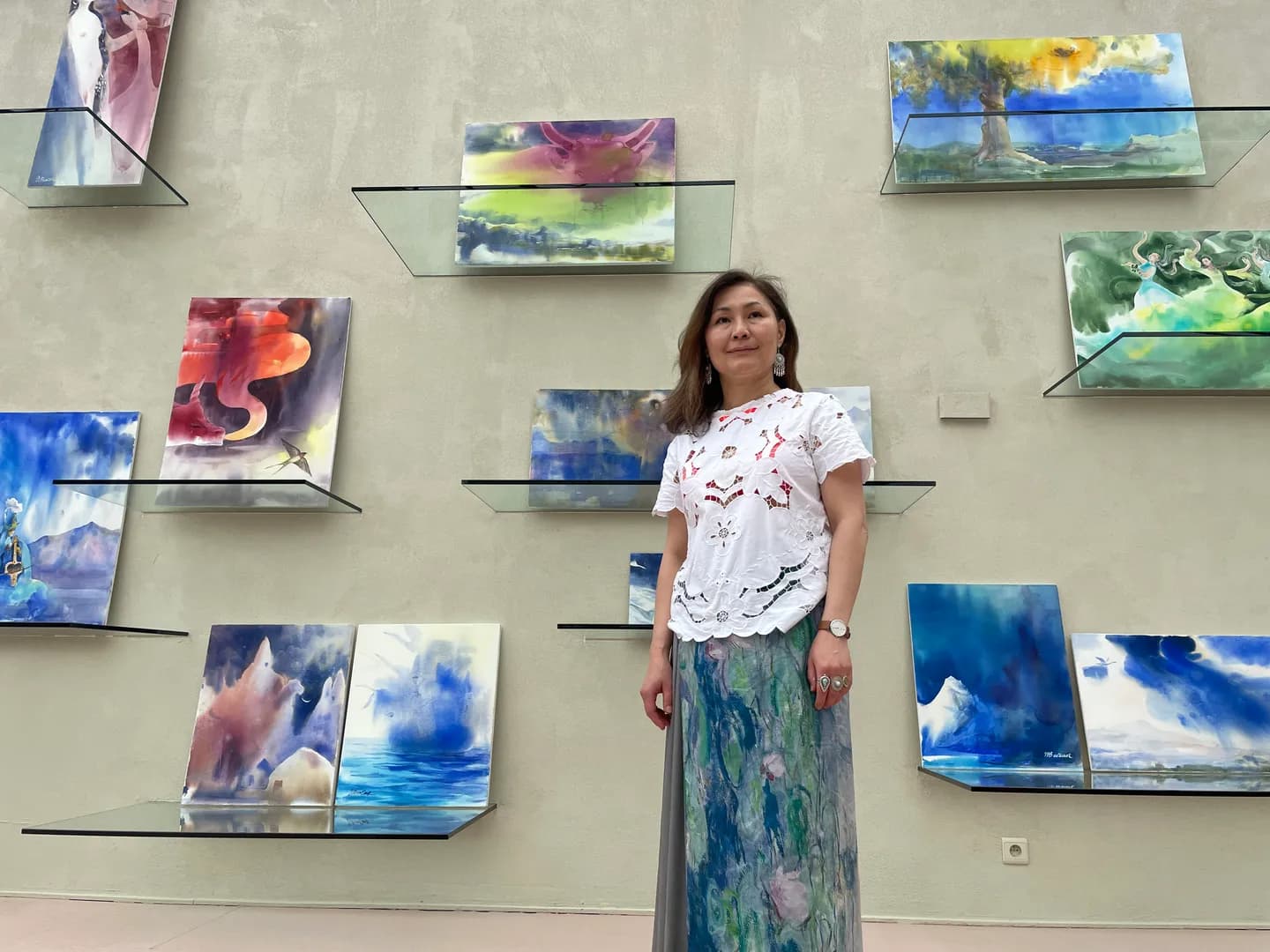
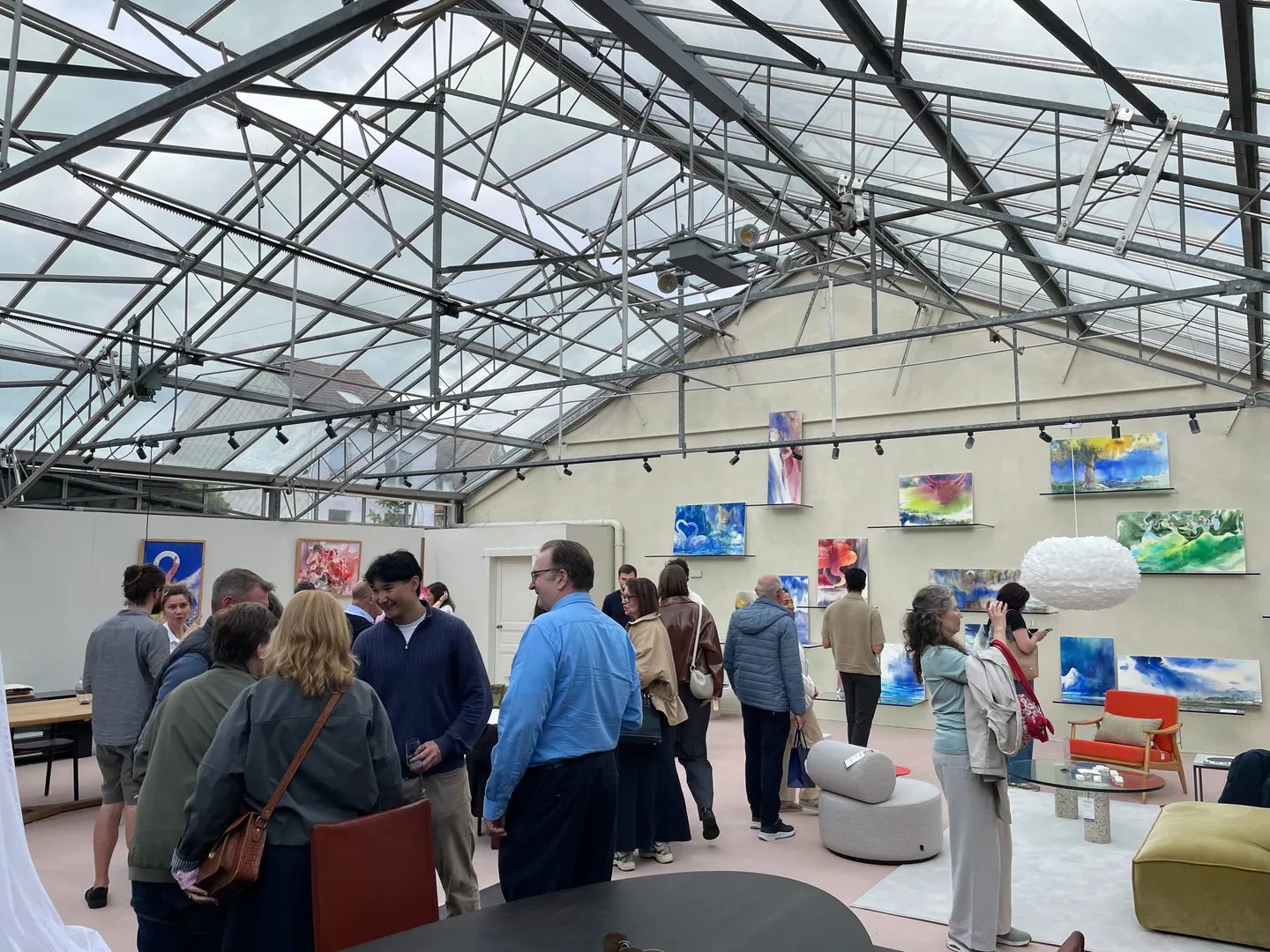
On Friday, 5 June, Storry's House of Design in the Belgian city of Bruges hosted the opening of "The Celestial Swan Woman: A Eurasian Journey," a solo exhibition by Kazakh artist Madina Bazarkhan. The show brings together contemporary watercolour painting, mythological narratives from Central Asia and an original installation dedicated to Kazakh cultural heritage. The venue is a newly opened cultural space combining contemporary design, art and interior architecture, and Bazarkhan's project is the first exhibition to launch its public programme.
The Image of Aqqu
At the heart of the exhibition is the figure of Aqqu, the swan, drawn from the earliest layers of Kazakh thought. In the artist's own description, the swan in this tradition is not simply a bird, but an ancestress and a cosmogonic being who moves between the upper world and the earth, between the sacred and the everyday, between origin and memory. "She was born from water and heaven at the same time," reads one passage from the exhibition's accompanying text.
Bazarkhan approaches the image of Aqqu not as the illustration of an ancient story, but as a trace of cultural memory. "The image comes to me through personal experience, emotional states and inner associations," she has explained. "I see it as a meeting point between the collective and the individual, between what is inherited and what is lived in the present." Her central question is how myth continues to exist after the rupture of tradition. Even when stripped of its original context, she argues, myth does not disappear. It survives in personal and collective experience, through images, memory and inner feeling.
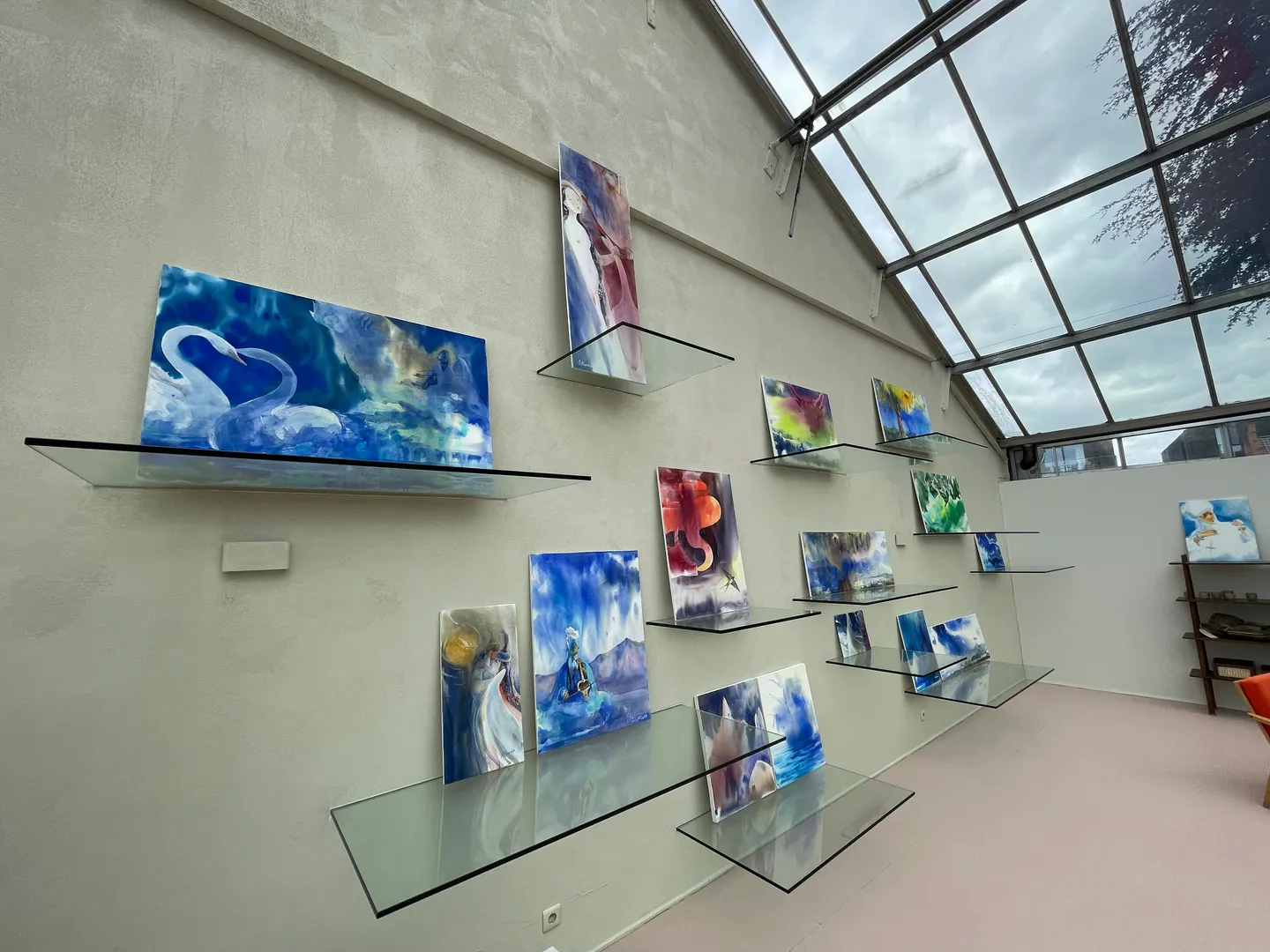
Watercolour is her chosen language for this exploration. Its fluidity, she says, allows her to avoid fixing an image too firmly, and instead to observe how it appears and disappears. Like a memory or a dream, the form stays mobile and open to interpretation. After historical breaks, she suggests, myth may no longer be retrievable in its original shape, but the connection to it can persist through symbols that continue to live inside us and that from time to time remind us of their presence.
A New Cultural Space in Bruges
For Storry's House of Design, the exhibition marks more than an opening night. The venue, led by interior architect and founder Orry Marinx, is built around the idea that interiors should tell stories and that art is essential to that work. Marinx said Bazarkhan's project was a meaningful choice for the inaugural show. "Illustration and visual storytelling have always been close to me," he said. "In Madina's work there is both the language of contemporary art and the poetry of book illustration. That is why I wanted to present her work as the first exhibition of our space."
Why It Matters for Kazakh Culture
For Kazakh audiences inside the country and across the diaspora, exhibitions of this kind carry particular weight. Kazakh visual culture spent much of the twentieth century shaped by Soviet aesthetic frameworks, and the post-independence generation has been gradually reclaiming pre-Soviet and pre-Russian narratives, including those drawn from Turkic and Central Asian mythology. The figure of the swan, the steppe and the sky belong to a symbolic vocabulary that long predates modern borders, and bringing that vocabulary into a Western European gallery space contributes to the slow process of repositioning Kazakh art on the international cultural map.
Bruges, with its medieval centre and concentrated network of galleries, sits at a distance from the usual hubs of Central Asian cultural promotion in Brussels. The choice of city is itself a quiet statement: the conversation about Kazakh identity, memory and inheritance does not need to remain confined to capitals or to political occasions. It can begin in a design studio in Bruges, around a series of watercolours of a woman who is also a bird, and a bird, who is also an ancestor.
Dmytro Melnyk
Contributing writer at EUReflect.
Follow EUReflect
See more of our reporting on Google
Mark EUReflect as a preferred source and our stories are ranked higher for you in Top Stories, Discover and Google News — and carry a “preferred” badge when they are cited in AI results.
Add EUReflect as a preferred source