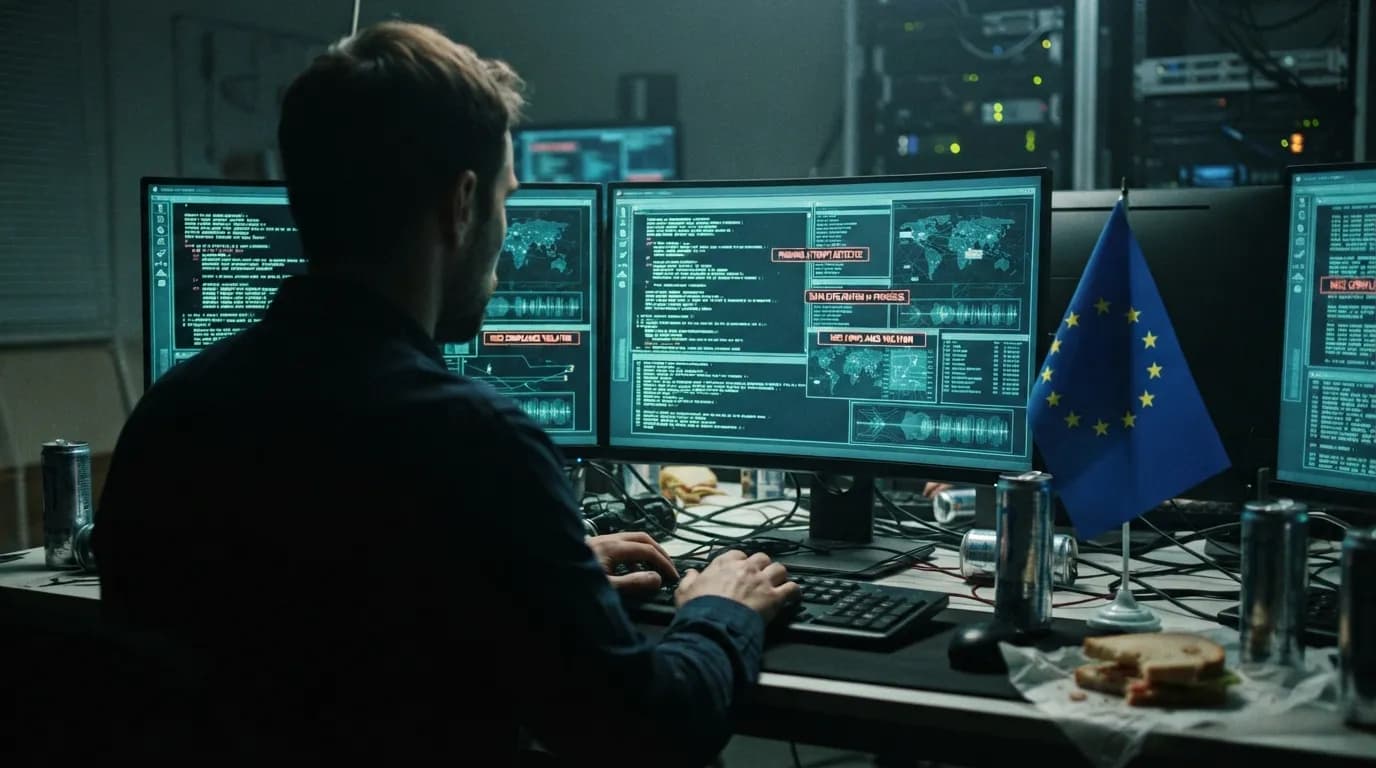
The Cyber Arms Race
As cyberattacks increasingly target critical infrastructure, governments are adopting Zero Trust models and AI-driven defenses to protect not just computers but the physical systems they control.
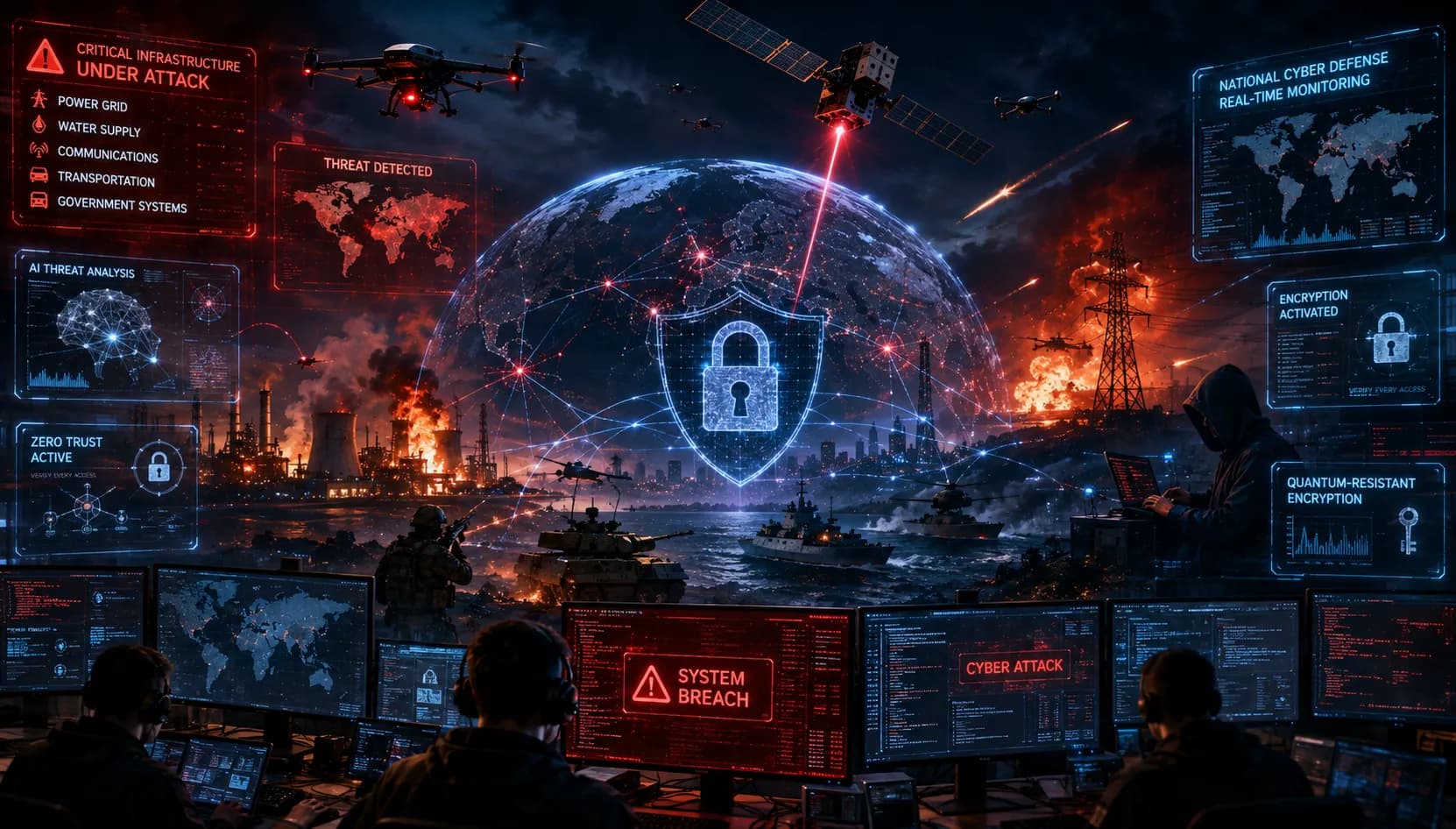
Cybersecurity has moved from the technical departments of governments to the center of national security. In 2026, the United States, European countries and NATO members are strengthening digital defenses as attacks increasingly target electricity grids, water systems, telecommunications, government networks and industrial infrastructure.
The urgency became particularly visible in August. U.S. authorities warned that industrial control devices used in water, energy and manufacturing facilities were being actively targeted by hackers. On August 23, reports also emerged that an Iran-linked cyberattack had forced a small British power facility offline for four days.
The emerging lesson is straightforward: countries are no longer preparing only to protect computers. They are preparing to protect the physical infrastructure controlled by those computers.
Zero Trust Replaces the Old Digital Wall
One of the most important changes is the spread of the Zero Trust security model.
Traditional cybersecurity often assumed that users and devices operating inside an organization's network could be trusted. Zero Trust reverses that principle: users, devices and applications must continuously prove that they are authorized.
The United States has been pushing federal agencies toward Zero Trust architectures alongside stronger authentication, encryption and cloud security. NATO's 2026 Alliance Digital Strategy goes further, calling for Zero Trust principles to be embedded across its digital infrastructure.
This reflects a fundamental change in thinking. Governments increasingly assume that an attacker may eventually penetrate part of a network. The objective is therefore to prevent one compromised account or computer from opening the door to an entire national system.
Critical Infrastructure Becomes the Priority
Electricity and water networks are now among the most closely protected targets.
On August 19, U.S. authorities issued a joint warning about vulnerabilities involving Siemens S7-series programmable logic controllers. These devices can control real-world industrial processes in facilities such as water plants, factories and energy infrastructure.
This is why cybersecurity agencies increasingly work directly with energy companies, telecommunications operators and industrial manufacturers.
The European Union is following a similar approach through the NIS2 framework. ENISA's May 2026 assessment found improving cybersecurity maturity across critical EU sectors, although differences remain between industries.
Cyber defense is therefore becoming part of infrastructure policy rather than simply information technology policy.
AI Becomes Both Shield and Weapon
Artificial intelligence is creating another major transformation.
Defenders can use AI to analyze enormous quantities of network activity, search software for vulnerabilities and identify suspicious behavior much faster than human analysts alone.
A recent example involves satellite communications. An AI-assisted system called Argo has been used to identify software vulnerabilities and strengthen satellite-network security following lessons from the Russian cyberattack that disrupted thousands of satellite modems in Ukraine and Europe in 2022.
But attackers can use AI as well.
U.S. authorities warned this month that AI tools can reduce the time and expertise required to exploit some industrial-control vulnerabilities.
The AI race in cybersecurity is consequently becoming a competition between automation on both sides: machines searching for vulnerabilities and machines searching for the attackers exploiting them.
Governments and Companies Share Intelligence
Another important method is information sharing.
Cyberattacks frequently cross the traditional boundary between government and private industry because much of a country's critical digital infrastructure is operated by companies.
NATO announced strategic partnerships with Microsoft, Palo Alto Networks and ESET in May to strengthen information sharing, exchange expertise and improve resilience against cyber threats.
In August, NATO's Communications and Information Agency also expanded its Cybersecurity Dynamic Marketplace to more than 90 industry partners from over 22 NATO countries, creating a mechanism designed to bring cyber capabilities into Alliance operations more quickly.
The concept is increasingly similar to collective defense: an attack detected by one organization can provide intelligence that helps others prepare.
Cyber Armies Train Before the Attack
Countries are also treating cyber defense increasingly like conventional military readiness.
This means exercises.
Nearly 4,000 participants took part in the 2026 Locked Shields exercise organized by NATO's Cooperative Cyber Defence Centre of Excellence. Participants had to respond to simulated attacks against systems including power grids, 5G infrastructure, satellites and electronic voting systems.
Such exercises are important because a major cyber crisis would involve more than programmers.
Governments could need military units, intelligence agencies, telecommunications companies, electricity operators, banks and emergency authorities to respond simultaneously.
The objective is therefore not simply to stop an attack, but to keep a country functioning while the attack is underway.
Quantum Computing Creates the Next Encryption Race
Governments are simultaneously preparing for a threat that has not yet fully materialized.
Powerful future quantum computers could potentially undermine some of the cryptographic methods currently used to protect sensitive communications.
NATO's 2026 digital strategy therefore calls for accelerated adoption of post-quantum cryptography to protect information against future quantum-computing capabilities.
This creates an unusual security problem.
An adversary could potentially collect encrypted information today and preserve it until future technology becomes capable of decrypting it.
Countries handling military, intelligence or strategically sensitive information therefore cannot necessarily wait until powerful quantum computers arrive before upgrading their encryption.
Cyberattacks Become Instruments of State Power
Perhaps the most significant change is political.
Cyber operations are increasingly viewed as part of geopolitical competition alongside sanctions, intelligence operations and conventional military power.
NATO formally condemned what it described as persistent malicious Russian cyber activity in July, particularly operations targeting government organizations and critical infrastructure. The Alliance also stated that it had strengthened the integration of cyber capabilities into its operations and missions.
This means cybersecurity is gradually becoming inseparable from national defense.
A future international crisis may involve conventional forces moving toward borders while cyber operators simultaneously probe electricity networks, communications systems, satellites and government databases.
The Goal Is No Longer Perfect Protection
No country can realistically guarantee that every cyberattack will be stopped.
Modern governments operate millions of devices and depend on enormous networks of suppliers, cloud platforms, telecommunications systems and industrial equipment. A single vulnerability can provide attackers with an entry point.
National strategies are therefore increasingly built around resilience.
Zero Trust limits how far attackers can move. Multifactor authentication protects identities. Encryption protects information. Cybersecurity operations centers monitor networks. Threat intelligence warns other organizations. Exercises prepare governments for major incidents. Backup and redundant systems allow essential services to continue operating.
The strategic objective has changed from building an impenetrable digital wall to ensuring that even when an attacker gets through, the state continues to function.
In the new cyber arms race, that resilience may become as important to national security as tanks, aircraft and missiles.
Ahmet Balakan
Contributing writer at EUReflect.
Follow EUReflect
See more of our reporting on Google
Mark EUReflect as a preferred source and our stories are ranked higher for you in Top Stories, Discover and Google News — and carry a “preferred” badge when they are cited in AI results.
Add EUReflect as a preferred source