The Golden Man: The Tutankhamun of The Eurasian Steppe
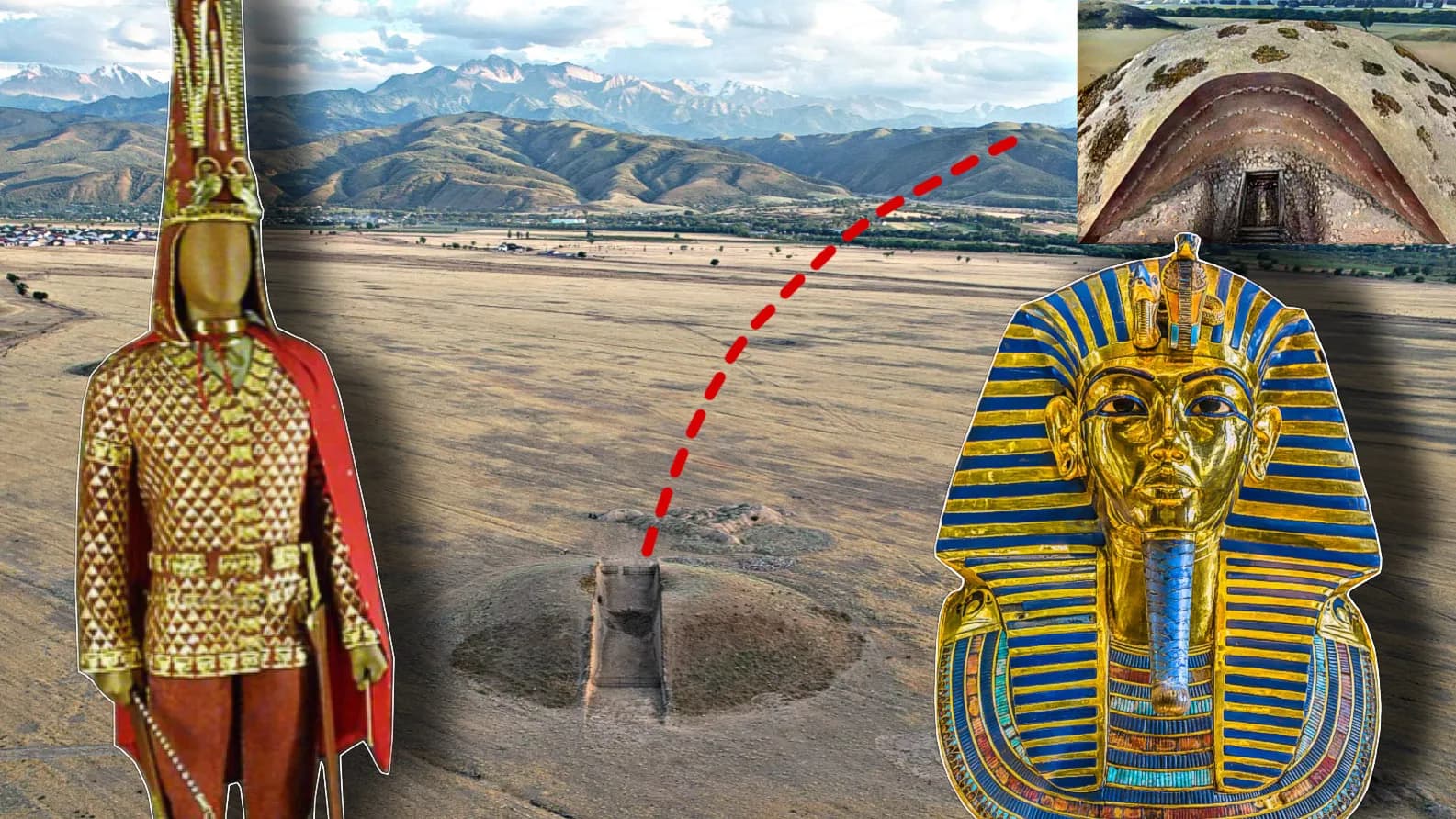
If you’ve ever encountered anything related to Kazakhstan — its currency, public monuments, history books, or national museums — chances are you’ve seen the iconic figure of the Golden Man. Dressed in a dazzling golden suit of armor and crowned with a tall, feathered headdress, this ancient warrior has become one of the country’s most recognizable symbols…
An Interview with Gulmira Mukhtarova, Director of the State Historical and Cultural Reserve-Museum “Issyk”
By Botakoz Unbayeva, exclusively for EUReflect.
If you’ve ever encountered anything related to Kazakhstan — its currency, public monuments, history books, or national museums — chances are you’ve seen the iconic figure of the Golden Man. Dressed in a dazzling golden suit of armor and crowned with a tall, feathered headdress, this ancient warrior has become one of the country’s most recognizable symbols…
Today, we are speaking with Gulmira Mukhtarova, Candidate of Historical Sciences and Director of the State Historical and Cultural Reserve-Museum “Issyk.” Our conversation centers around one of the most enigmatic archaeological discoveries of the 20th century — the Golden Man. Who was he? How was he discovered? And what is his significance for the national identity of the Kazakh people? We explore these questions in this exclusive interview.
— Ms. Gulmira, could you please tell us about the history of the Esik Museum-Reserve? How did it all begin?
— Hello! The State Historical and Cultural Museum-Reserve “Esik” was established in 2010. The reason for its creation was a world-class archaeological sensation — the discovery of the Golden Man in the city of Esik in 1970. This find became a landmark event not only for Kazakh archaeology but also for the cultural heritage of Kazakhstan as a whole.
— What makes this discovery so unique, and how was it made?
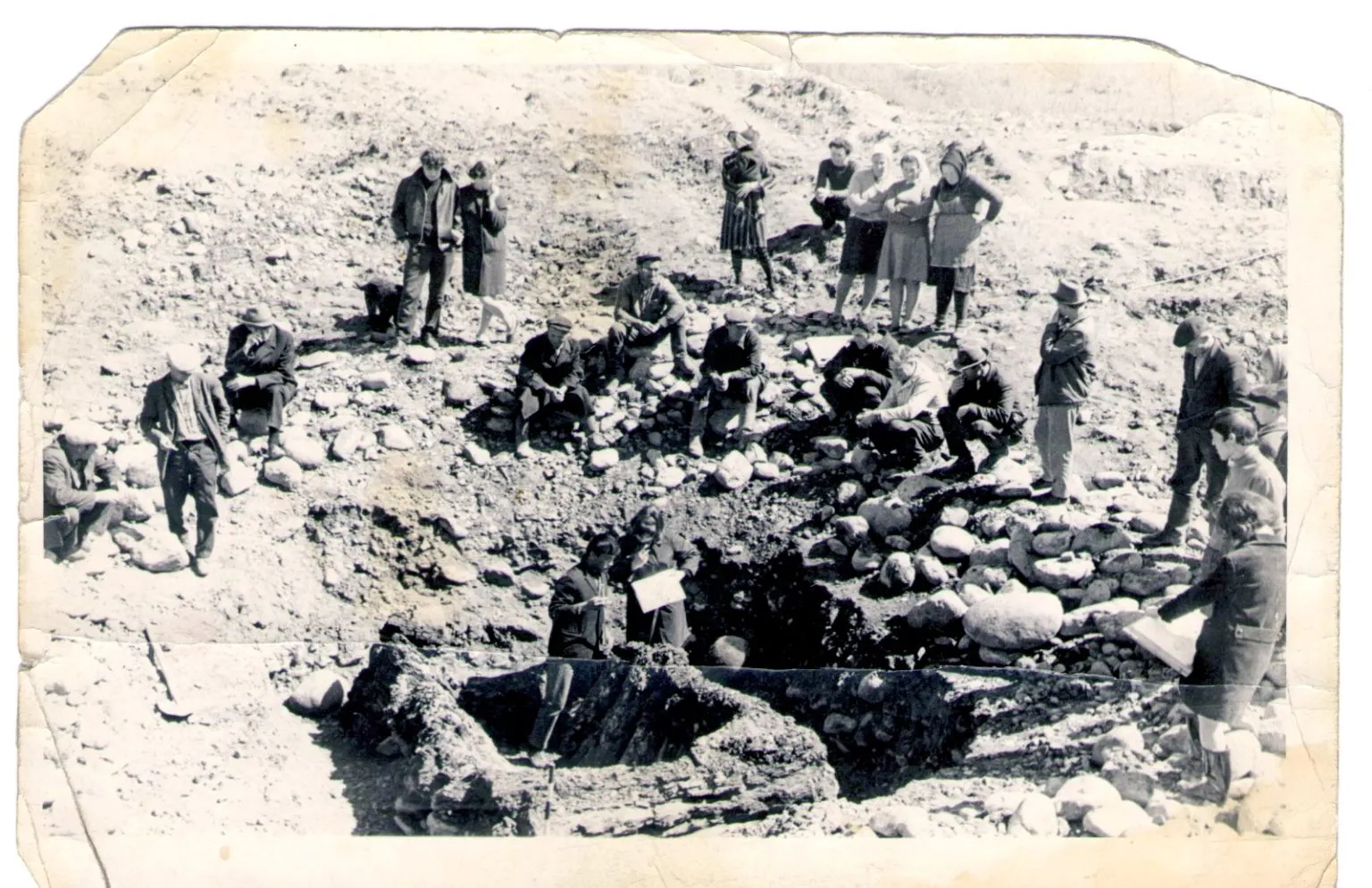
— We are speaking about a find that has no equal in terms of preservation. According to scholars, this is the only case since the discovery of Tutankhamun’s tomb where a burial site has remained almost completely intact. In the 1960s, a devastating mudflow struck the Esik area, damaging buildings and infrastructure. A new construction project was planned on the site of a destroyed bus depot, and in that zone there were three burial mounds. Archaeological excavations began in 1969. The first two mounds did not contain significant finds. But in the autumn of 1970, during the excavation of the third mound, the Golden Man was discovered.
— What exactly is this artifact?
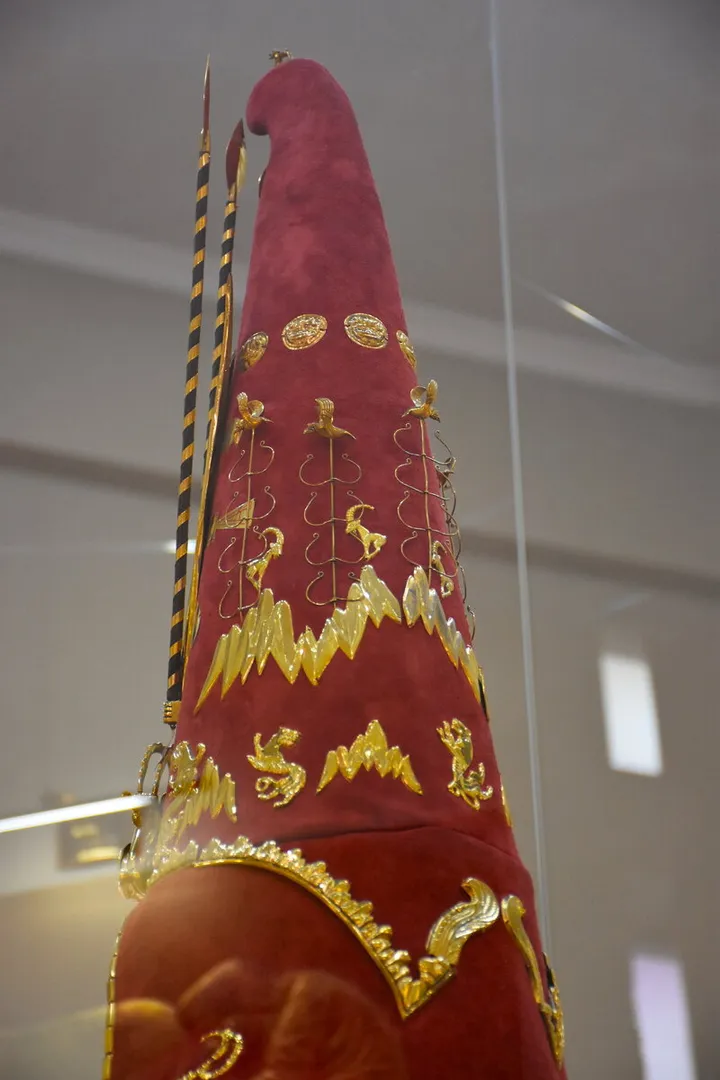
— It is the burial of a Saka-period youth, approximately 16–18 years old, who likely belonged to the nobility. He was buried facing west. Alongside him, archaeologists found more than 4,000 gold ornaments, 31 household items, and two ritual bowls. These artifacts demonstrate the high level of Saka jewelry craftsmanship and the social hierarchy of that era.
— How does this burial differ from other Saka mounds?
— The usual Saka tradition was to bury the deceased in the center of the mound. Here, however, the Golden Man was laid closer to the edge. One hypothesis suggests that his father had been buried in the center, but that grave was looted. It is possible that the Golden Man was deliberately buried on the side to protect him from grave robbers. Thanks to this unusual placement, the burial remained untouched and perfectly preserved.
— How did this discovery influence science and archaeology in Kazakhstan?
— The discovery of the Golden Man was a turning point for the development of archaeology in Kazakhstan. It drew international attention to the archaeological heritage of the region. Even during the Soviet era, there was a noticeable growth of interest in the history and culture of the peoples of Central Asia, including among Russian and Kazakh researchers.
— Could you tell us about the famous Esik inscription found on one of the bowls?
— The inscription consists of 26 characters. To this day, no parallels have been found. Scholars call it the “Issyk script,” similar to the “Orkhon-Yenisei script.” It remains undeciphered. There are about 30 proposed readings, but none has achieved consensus. It can be read in different directions: left to right, right to left, or top to bottom.
— What theories exist regarding the origin of this inscription?
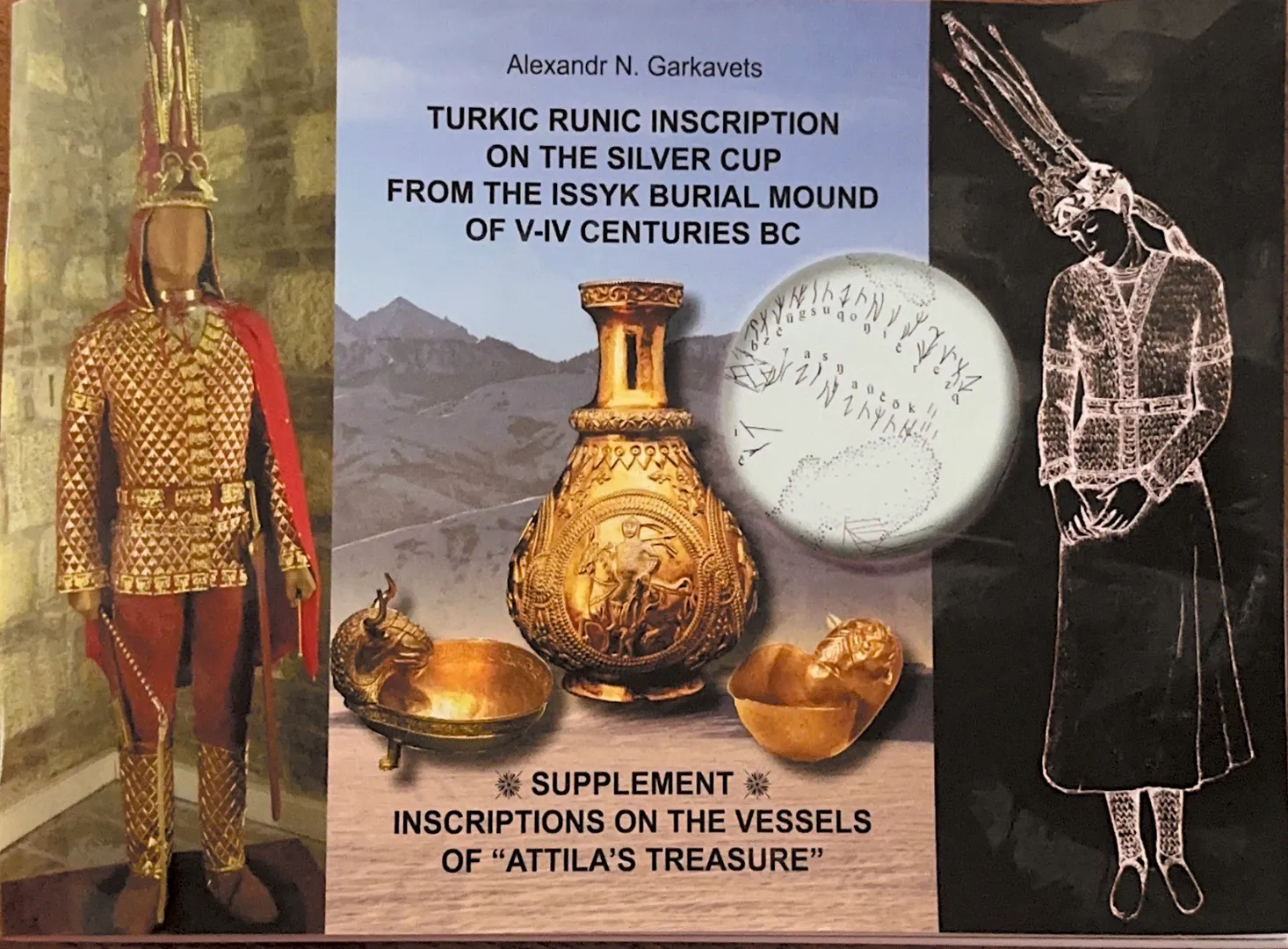
— Scholars are generally divided into two groups: some believe the inscription has Indo-Iranian origins, while others argue for Turkic or Proto-Turkic roots. An interesting hypothesis was suggested by Turkologist Alexander Garkavets. He proposed that the inscription could be translated as:
“Qïz-er, ičiŋ, oqu-sünügü čezib, köčü aŋsaġ”
and could have belonged to a young woman. In this interpretation, a theory arises that the Golden Man might in fact have been the Golden Woman.
— Are research projects related to the Golden Man still ongoing today?
— Yes, research continues to this day. Recently we published a scholarly collection titled The Secrets of the Golden Man, which includes interviews with members of the archaeological expeditions, archival documents, and the results of the latest research. The study of the artifact and the context of its discovery is being carried out on an interdisciplinary basis.
— What is the current scientific view on the origins of the Golden Man?
— Contemporary scientific data increasingly support the view that the Golden Man belonged to the early Turkic world. We understand that the region experienced complex processes of migration and cultural change, and there are arguments both for an Indo-Iranian and a Turkic identity. However, accumulated archaeological, linguistic, and cultural evidence is increasingly persuading researchers to favor the Turkic interpretation.
— Why is this discovery important for the national identity of Kazakhs today?
— We live in the 21st century, and today it is important not to rely only on myths. We now have the tools of scientific analysis. The story of the Golden Man helps us to understand our deep past, to see the roots of our culture, identity, and language. This is not merely an archaeological discovery — it is a symbol of continuity and pride in our past. The Golden Man remains not only an object of scientific interest but also a living symbol of Kazakh history, culture, and uniqueness. By unveiling his secrets, we learn not only about the past but also gain a deeper understanding of ourselves today.
Botakoz Unbayeva
Contributing writer at EUReflect.
Follow EUReflect
See more of our reporting on Google
Mark EUReflect as a preferred source and our stories are ranked higher for you in Top Stories, Discover and Google News — and carry a “preferred” badge when they are cited in AI results.
Add EUReflect as a preferred source