The instrument of Uzbekistan’s Afghan policy – Termez logistics hub
Termez has transformed from a defensive border town into the center of Uzbekistan’s pragmatic Afghanistan policy. Through logistics hubs, a free trade zone, railway projects, and education initiatives, the city has become a gateway for regional stability and connectivity.
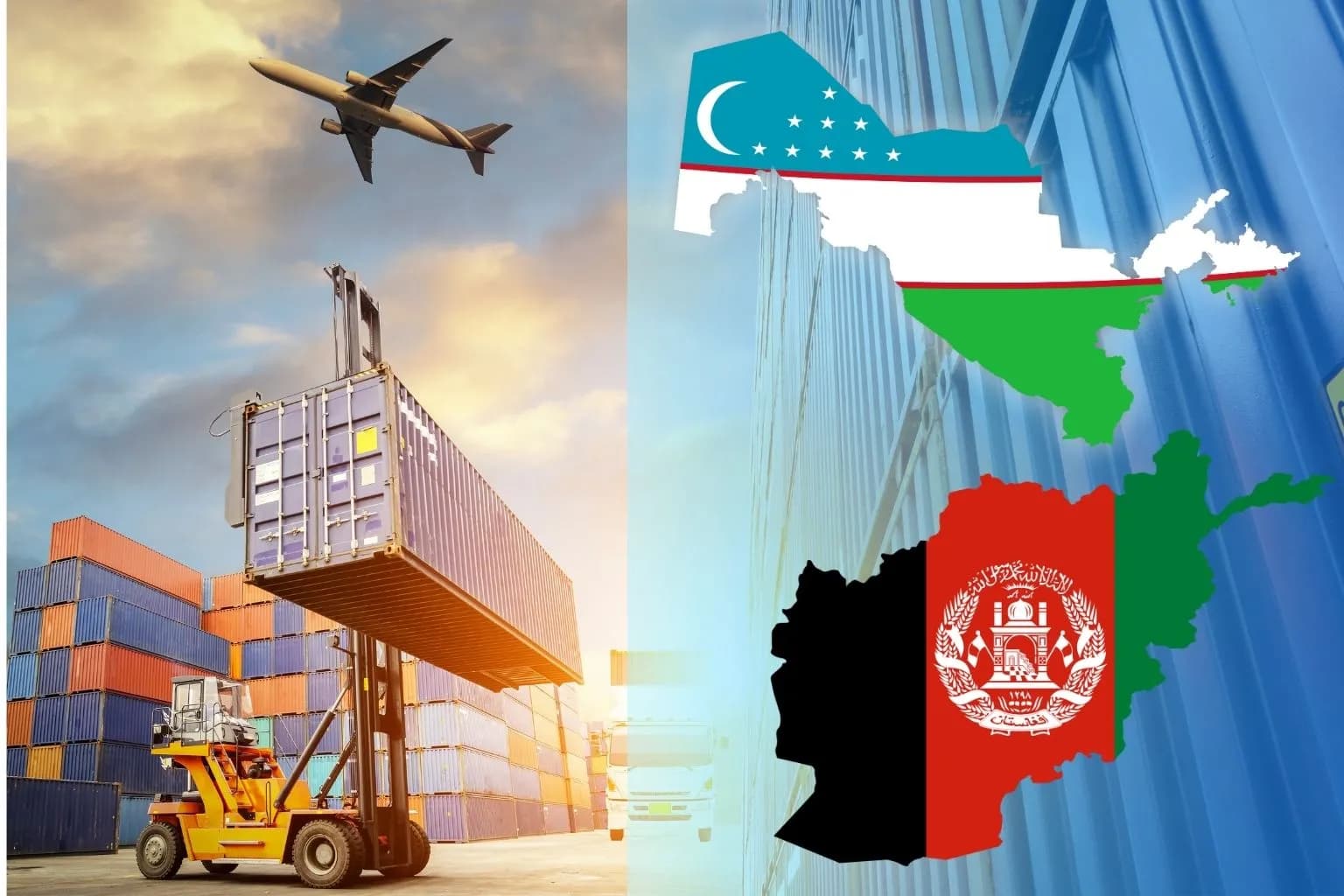
Termez is a city located in the dry landscape of southern Uzbekistan and separated from Afghanistan by the silt-heavy waters of the Amudarya river. Over the decades, this city was defined by what it kept out. It had functioned primarily as a fortress and blocked out regional conflicts. The Friendship Bridge (“Do’stlik ko’prigi”) is a bridge in Termez that connects Uzbekistan with Afghanistan via the Amudarya river. It was ironically named during the Soviet invasion and used to frequently shut down at the slightest hint of danger from the south. Since August 2021, Uzbekistan has moved away from its protectionist stance when it comes to Afghanistan or the further South Asian region. Rather than using Termez as a shield against instability, President Mirziyoyev’s administration has repurposed the city as a strategic hub for active foreign policy. The city of Termez, at this point, functions as a specialized geopolitical hub designed to maintain stability through pragmatic interaction. In fact, Uzbekistan’s pragmatic approach to Afghanistan is procured by the Termez Logistics Hub. This hubincludes the Cargo Centre, the International Trade Centre Termez (ITCT), and specialized humanitarian depots. All of them unilaterally serve as the practical engine of Uzbekistan’s realistic policy toward Afghanistan. This triad setting acts as a gateway for global humanitarian efforts and a foundational piece of Uzbekistan’s broader regional connectivity strategy(primarily between Central and South Asian regions).
The Humanitarian Gateway
The first aspect of the Termez instrument is its role in enhancing international legitimacy. Uzbekistan's foreign policy efforts resolved the international dilemma and facilitated humanitarian aid deliverywithout de jure recognizing the Islamic Emirate of Afghanistan. This is achieved by designating the Termez Cargo Centre as a hub for international organizations. In fact, in October 2021, the United Nations High Commissioner for Refugees (UNHCR) established a regional logistics hub within the center. And by 2025, Termez entered into the UNHCR global stockpile network and elevated its global status as a “safe harbor” when it comes to dealing with turbulent regions. On the whole, Uzbekistan assumed the role of “middleman” between the West and Afghanistan, specifically in trade and humanitarian relations. While Western nations withdrew their diplomatic presence from Kabul, they increased their logistical presence in Termez. Uzbekistan and its city of Termez proved its reliability and efficiency by handling tens of thousands of tons of incoming aid cargoes from WFP supplies. Furthermore, Termez Cargo Center was equipped witha 700kW solar photovoltaic power plant in 2024 (with the help of partners like UNHCR and LONGi Green Energy Technology Co., Ltd.) and improved the image of the hub as a sustainable center. In General, through Termez, Uzbekistan signals to the world that it is a responsible stakeholder in stabilizing the region.
The Airitom Free Zone
Another aspect of the city of Termez, besides legitimacy, is economic pragmatism. It is realized in the creation of the International Trade Center Termez (ITCT), more commonly known as the Airitom Free Zone. Tashkent acknowledges that Afghan poverty is a direct threat to Uzbek security. The “Mirziyoyev Doctrine” posits that security in Afghanistan is best achieved not through isolation, but only through economic integration. There was an uncertainty in making that happen due to the escalation of security risks. To prevail over that paradox, the Airitom Free Zone came into existence in late 2024 and it has been functioning as an “economic airlock”. The ITCTallows Afghan citizens to enter a designated free trade zone within Uzbekistan visa-free for up to 15 days. They can conduct business, access medical services and trade goods without ever technically entering the Uzbekistan mainland. Moreover, the zone accepts several currencies, which eases the difficulties with the Afghan banking sector. The results of this mechanism are astonishing. By the end of 2025, bilateral trade between Uzbekistan and Afghanistan surged to $1.8 billion. Since most of them are Uzbek products, Termez is essentially a funnel for pouring Uzbek industrial goods, energy, and food into the Afghan market.
From Landlocked to Land-Linked
The most high-stakes element of the Termez strategy is its position as the starting point for the Trans-Afghan Railway. Uzbekistan has an ambitious plan to reach global maritime markets by connecting to ports in South Asian countries (Gwadar, Karachi). However, for years, this project was dismissed as unachievabledue to security concerns. Currently, there has been several progresses in the realization, for instance, in February 2026, President Sh.Mirziyoyev approved the intergovernmental agreement on the feasibility study for the Termez – Naibabad – Logar – Kharlachi route.The principal idea is that geography can be monetized in these circumstances. If the Trans-Afghan corridor is successful, Termez city will transform into the “Rotterdam of Central Asia” that links the markets of Russia and Kazakhstan with the ports of Pakistan.
Education as a soft power
Finally, it is crucial to take into consideration the education factor as well. While smaller in scale than the logistics hubs, its symbolic weight is immense. As a matter of fact, a number of Educational Centres for Training Afghan Citizens in Termez (ECTAC) have been operating. The center under the auspices of the Uzbek government, has been included in UNDP projects and hosts hundreds of Afghan students. Thecenter will teach them the Uzbek language, business and skill development, which ultimately makes them culturally align with Uzbekistan. Tashkent uses this facility to actively attract Afghan youth, offering them tangible pathways to professional development.Ultimately, the center functions as a powerful engine for people-to-people diplomacy. Uzbekistan positions itself as a benign, supportive neighbor. Hence, at the time when Afghan students return home, they may appear as informal ambassadors of Uzbek-Afghan cooperation. Moreover, in 2024, there has been a high-level advocacy from Uzbekistan — Saida Mirziyoyeva, Head of the President Administration, contended the government’s intention to continue assisting Afghan women in vocational training. Indeed, since it was established, around a thousand people have completed their education in this facility.
Conclusion
Essentially, the evolution of Termez from a restricted border outpost into a busy center for trade shows exactly how Uzbekistan has changed its entire approach to the world. President Sh.Mirziyoyev has turned the Termez Logistics Hub into a functional toolfor his administration's realistic approach to Afghanistan. This pragmatic engagement led to 50% spike in trading volume. Furthermore, Uzbekistan uses this multifaceted approach to navigate regional complexities. Termez has transitioned from a “buffer”into the operational center of Uzbek foreign policy.Thus, it proves the point that connectivity is a more durable security guarantee than a closed border.
Firdavs Azimkulov
Associated Researcher at the Center for Progressive Reforms, with a specialization in South Asian affairs. He attended the University of World Economy and Diplomacy and has contributed to the field through five scholarly publications and various op-eds.
Firdavs Azimkulov
Contributing writer at EUReflect.
Follow EUReflect
See more of our reporting on Google
Mark EUReflect as a preferred source and our stories are ranked higher for you in Top Stories, Discover and Google News — and carry a “preferred” badge when they are cited in AI results.
Add EUReflect as a preferred source