Strait of Hormuz Traffic Drops as Security Concerns Weigh on Commercial Shipping
Shipping traffic through the Strait of Hormuz has fallen sharply amid continuing hostilities. Only eight vessels were tracked on Tuesday, far below normal levels, while activity through Bab al-Mandab increased as operators adjusted to growing regional security risks.
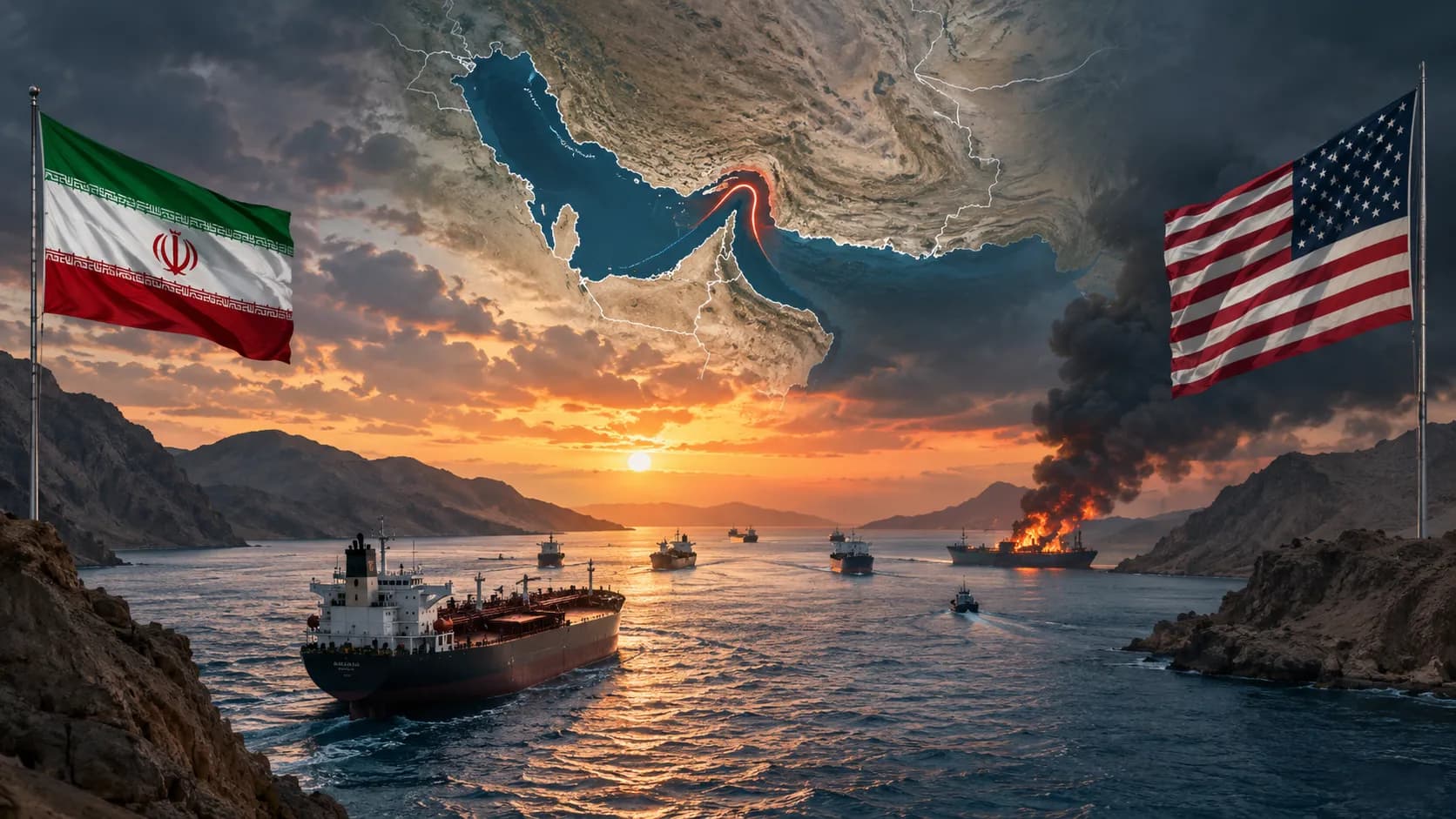
The Strait of Hormuz at a Breaking Point: Shipping Declines as Regional Hostilities Persist
The Strait of Hormuz is facing one of its sharpest declines in maritime traffic since the current regional conflict began. On Tuesday, only eight vessels were tracked crossing the strategic waterway, marking the lowest daily figure in one week and highlighting the growing reluctance of shipping operators to navigate the route amid continuing hostilities.
The decline comes as prospects for an end to the Iran war appear increasingly uncertain. Iran has stated that the Strait will remain closed unless Washington accepts its conditions, while separate attacks reported by the United States and Yemen's Iran-aligned Houthis have added further pressure to an already fragile regional security environment.
Shipping Traffic Falls to a New Low
Kpler data showed that Tuesday's total of eight tracked vessels was below the ten-day average of approximately 12 and represented the lowest daily figure since August 5. Of those eight vessels, only one, a coal carrier, exited the Strait, while the remaining seven were still making their way through the waterway.
All seven vessels entering the Strait used the Iranian route. Separate data from LSEG recorded 11 transits on Tuesday, compared with 14 on the previous day.
The figures underline the scale of the disruption. Before Iran closed the waterway following the US-Israeli attacks that began on February 28, approximately 130 to 140 ships normally passed through the Strait each day. The contrast between normal traffic levels and current activity demonstrates how significantly the conflict has altered one of the world's most important maritime corridors.
Hostilities Continue to Weigh on Navigation
The reduction in shipping traffic is taking place against a broader deterioration in regional security. The United States and Yemen's Iran-aligned Houthis reported separate attacks, while diplomatic prospects for ending the Iran war appeared to weaken.
For shipping companies, the continuing hostilities increase uncertainty over both the safety and predictability of the route. Even when vessels are technically able to navigate the Strait, operators must consider the risks created by military activity and the possibility of further escalation.
Iran's position adds another layer of uncertainty. Tehran has said that the Strait will remain closed unless Washington accepts its conditions. This turns maritime access into part of the broader political confrontation between Iran and the United States.
The Red Sea Route Gains Importance
The decline in Hormuz traffic is also reflected in activity elsewhere. On Tuesday, 30 vessels crossed the Bab al-Mandab Strait at the southern end of the Red Sea, above its ten-day average of 25, according to Kpler data.
The increase does not mean that the Red Sea has replaced Hormuz as a normal alternative route. However, the figures indicate that maritime traffic patterns are being reshaped as operators respond to the risks surrounding the Gulf.
The movement of ships toward alternative routes demonstrates how geopolitical instability can influence commercial decisions far beyond the immediate conflict zone. Shipping companies are not only responding to current traffic conditions but also attempting to manage the risks associated with unpredictable military developments.
Hormuz as a Strategic Chokepoint
The significance of the Strait of Hormuz extends beyond the number of vessels crossing it each day. Its importance lies in its role as a strategic maritime passage connecting the Gulf with international shipping routes.
The dramatic reduction from the normal level of approximately 130 to 140 daily transits to only eight tracked vessels illustrates how quickly conflict can disrupt established patterns of global maritime commerce.
The current situation also shows that the security of a major waterway depends not only on physical access but on confidence. When shipping operators cannot reliably assess the security environment, traffic can decline even before a complete physical blockade is established.
A Wider Regional Security Problem
The developments around Hormuz cannot be separated from the wider regional conflict. The reported attacks by the United States and the Houthis demonstrate that instability extends across multiple maritime theatres.
The combination of reduced Hormuz traffic, continuing hostilities and increased activity around Bab al-Mandab points toward a broader transformation of regional shipping patterns. Instead of relying on a single established maritime corridor, operators are increasingly confronted with a fragmented security environment in which different routes carry different risks.
For governments and energy-dependent economies, this creates an additional strategic challenge. Maritime security is becoming increasingly intertwined with military developments and diplomatic negotiations.
The Cost of Prolonged Uncertainty
The most immediate consequence of the decline in shipping traffic is uncertainty. A temporary reduction can potentially be reversed if hostilities ease and confidence returns. A prolonged disruption, however, could produce deeper changes in shipping behavior and regional economic calculations.
The current figures should therefore be viewed not simply as a measure of vessel movements but as an indicator of market and security confidence. The further traffic falls from its normal level, the more difficult it becomes to treat the disruption as a short-term interruption.
At the same time, the higher number of vessels using the Bab al-Mandab route suggests that maritime operators continue to seek ways to maintain international trade despite the instability. The regional shipping network is adapting, but its future configuration remains uncertain.
The Strait's Future Depends on the Conflict
The future of maritime traffic through Hormuz ultimately depends on the wider political and military trajectory of the Iran war. If diplomatic efforts succeed and hostilities decline, shipping operators could gradually return to the route. If the confrontation continues, the current low levels of traffic could become a more persistent feature of regional commerce.
Iran's insistence that the Strait will remain closed unless Washington accepts its conditions further links the waterway's future to the political negotiations between the two sides.
For now, the numbers tell a clear story. A waterway that once handled roughly 130 to 140 vessels a day is seeing only a fraction of that traffic. At the same time, maritime activity around Bab al-Mandab is showing signs of adjustment.
The Strait of Hormuz has therefore become more than a shipping route. It is now a visible measure of the depth of the regional crisis. As long as hostilities continue and diplomatic prospects remain uncertain, the decline in maritime traffic will remain one of the clearest indicators of how profoundly the conflict is reshaping the region's economic and strategic landscape.
Ipek Tuncer
M.A. in International Relations
Follow EUReflect
See more of our reporting on Google
Mark EUReflect as a preferred source and our stories are ranked higher for you in Top Stories, Discover and Google News — and carry a “preferred” badge when they are cited in AI results.
Add EUReflect as a preferred source