The Unfulfilled Promises of Donald Trump’s Foreign Policy
Trump’s foreign policy was driven by TV-style big promises and quick fixes. He failed to produce lasting results in Ukraine, Gaza, and Iran because he treated diplomacy as personal pressure and announcements rather than structured, institutional negotiation processes.
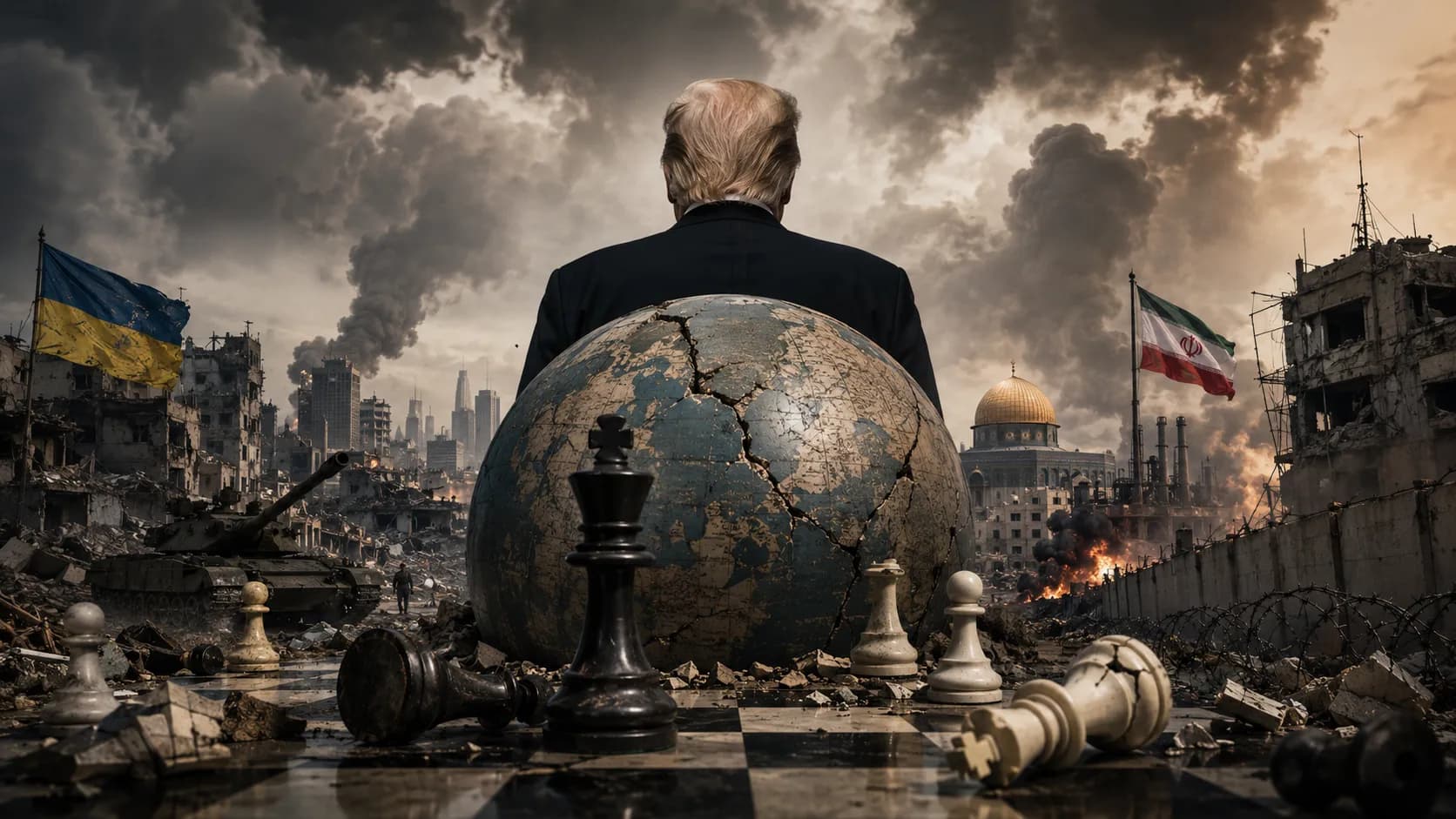
What I want to emphasize at the outset is the central issue I observe .Donald Trump approached international diplomacy the way he approached reality television: big promises, dramatic announcements, and a complete disregard for what happens after the cameras turn off. The fundamental stupidity and I use that word deliberately was not that he wanted peace. The stupidity was believing that complex, decades old conflicts could be solved with personality, pressure, and press releases.
Trump seemed to operate under a delusion that if he declared something loudly enough and attached his name to it, reality would rearrange itself accordingly. "I'll end the war in Ukraine in 24 hours." "I'll solve the Middle East." "I'll make the perfect deal with Iran." These were not strategies. They were fantasies dressed up as foreign policy. And when reality refused to cooperate as it always does the result was not peace but paralysis: ambitious frameworks that went nowhere, negotiation designs that led to dead ends, and conflicts that simply continued grinding forward.
Trump's approach to Ukraine was classic Trump: assert that he alone could fix it, imply that both sides were equally unreasonable, and suggest that a quick deal was just a phone call away. The logic was fundamentally flawed from the start. He believed he could pressure Ukraine into territorial concessions while simultaneously convincing Putin to stop as if Russia's strategic ambitions were a matter of personal negotiation rather than imperial calculation.
What actually happened? The war continued. Russian forces remained entrenched. Ukrainian resistance hardened. And Trump's "rapid settlement" framework collapsed under the weight of reality. You cannot negotiate a durable peace when you refuse to understand what each side actually wants. Putin wants control; Ukraine wants survival. Those are not positions you split down the middle. Trump never seemed to grasp this basic truth. His diplomacy created headlines, not ceasefires.
Now let me address what many commentators dance around but needs to be said clearly: the Abraham Accords were never going to produce lasting regional peace as long as Israel's provocations and military brutality against Palestinians continued. This is not anti-Israel analysis; it is simply observable reality. The Abraham Accords normalized relations between Israel and several Arab nations. That was something. But Trump and his team presented it as the foundation of a new Middle East as if the Palestinian question could be managed, contained, or ignored. They were wrong. And the reason they were wrong is that normalization without justice is a house built on sand.
Every time Israeli forces bomb Gaza and I am writing this with the images of destroyed buildings and dead children still fresh every time settlements expand on occupied land, every time Palestinian homes are demolished and families displaced, the Abraham Accords lose credibility. Arab states can sign agreements in Washington, but their populations watch the news. They see the brutality. They see the provocations. And they do not forget.
Take the reported "Board of Peace" initiative for Gaza reconstruction. On paper, it sounded serious: billions in funding, international coordination, a post conflict vision. But here is the problem that Trump's team never solved: how do you rebuild Gaza while Israel maintains the ability to bomb it again? How do you create economic stability when the occupation continues? How do you secure investment when the political situation remains unresolved?
The initiative failed not because the funding was insufficient though it likely was but because there was no mechanism to address the underlying violence. Trump wanted the photo op of reconstruction without the hard work of confronting Israeli provocations. He wanted Arab money and Israeli cooperation without demanding that Israel stop the actions that made peace impossible. This is not diplomacy; it is delusion.
With Iran, the pattern repeated. Trump tore up the existing nuclear agreement an actual, functioning, internationally verified deal because it bore Obama's signature. Then he promised a "better deal." That deal never came. Instead, we got maximum pressure campaigns, escalating tensions in the Strait of Hormuz, and negotiations that started, stalled, started again, and stalled again. The stupidity here was strategic narcissism. Trump could not accept that the previous administration had achieved something real. So he destroyed it, assuming he could replace it with something flashier. But diplomacy is not a branding exercise. When you walk away from a working agreement without a viable alternative, you do not create leverage. You create chaos.
Ukraine, Gaza, Iran different conflicts, different regions, but the same underlying failure: Trump treated foreign policy as a series of announcements rather than a continuous process. He understood the value of a headline but never the necessity of institutional follow through. A real peace process requires boring things. It requires verification mechanisms, implementation timelines, dispute resolution procedures, and sustained diplomatic presence. It requires the willingness to engage with brutal details for years, not hours. It requires acknowledging uncomfortable truths about what each side has done including, in the Palestinian case, Israeli brutality and provocations that make trust impossible.
Trump's approach had none of this. His administration prioritized dramatic gestures over durable institutions. The result was a foreign policy that looked active but achieved little a "start but not finish" dynamic that left every conflict either ongoing or ready to reignite.
The critique is not that Trump caused these conflicts. Ukraine's invasion was Putin's choice. The Israeli Palestinian tragedy predates Trump by generations. Iran's nuclear ambitions emerged over decades. But Trump's particular failure was promising shortcuts where none existed. He sold the American people and the world a fantasy that difficult problems could be solved through force of personality alone. When that fantasy collapsed, as it always had to, the conflicts remained. Wars continued. People died. And Trump moved on to the next announcement, the next headline, the next unfinished promise.
This is not how peace is built. Peace is built through patient, unglamorous, sustained work the kind of work that never makes for a good television moment. Trump never understood that.And the world is paying the price.
Uroosa Khan
Contributing writer at EUReflect.
Follow EUReflect
See more of our reporting on Google
Mark EUReflect as a preferred source and our stories are ranked higher for you in Top Stories, Discover and Google News — and carry a “preferred” badge when they are cited in AI results.
Add EUReflect as a preferred source