Türkiye Presents Its First Intercontinental Ballistic Missile
With the unveiling of the Yildirimhan, Ankara signals it intends to be a sovereign military power, building on a decade of Bayraktar successes
Overview
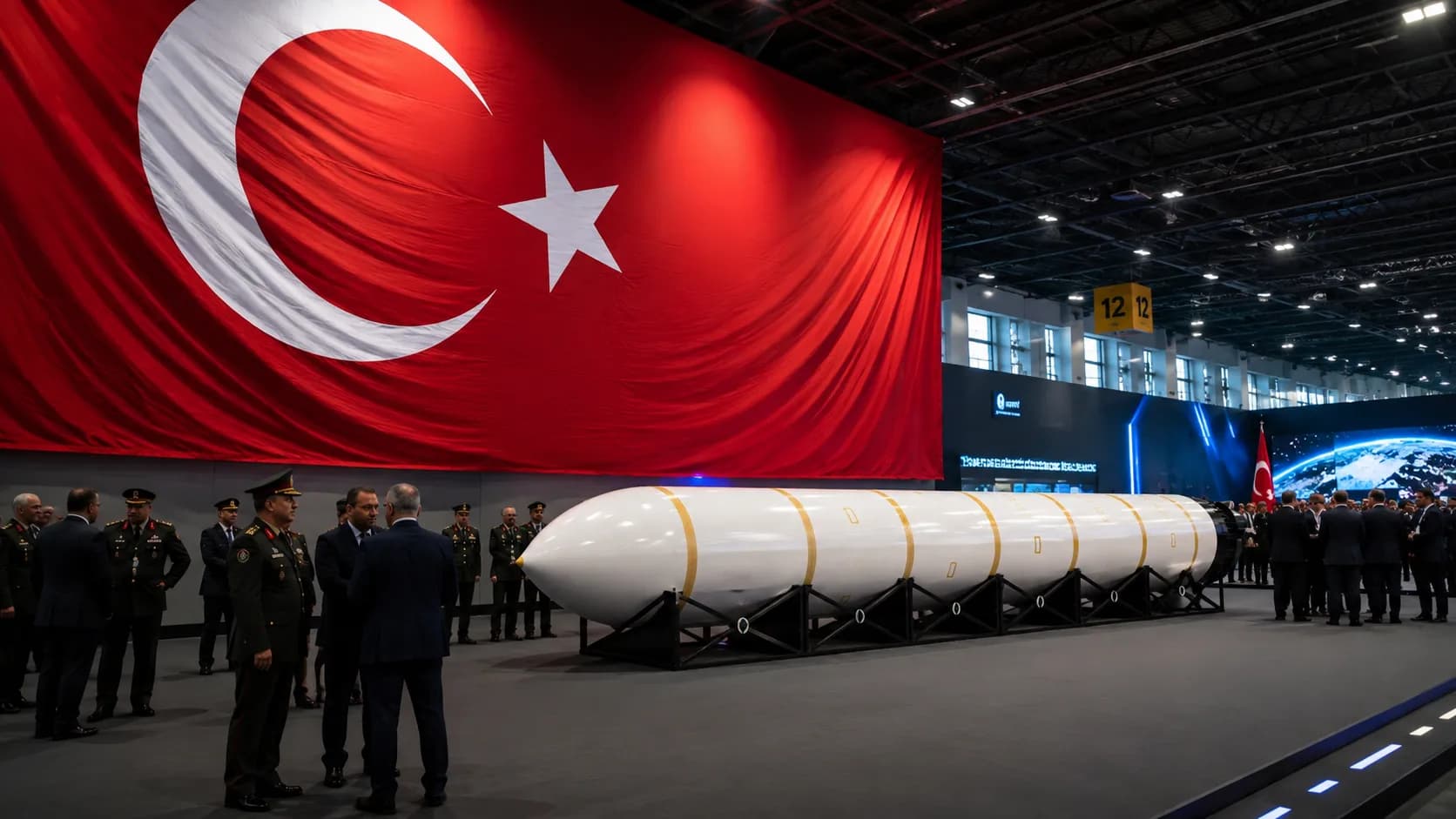
On Tuesday, 5 May, Türkiye unveiled a prototype of its first ever intercontinental ballistic missile at the SAHA 2026 International Defence and Aerospace Exhibition in Istanbul. Named Yildirimhan, which means lightning ruler or lord of thunder, the missile was developed by the Research and Development Centre of the Turkish Ministry of National Defence and represents a major step in the country's drive toward strategic autonomy. According to specifications released at the exhibition, the Yildirimhan has a range of 6,000 kilometres, can carry a payload of up to 3,000 kilograms, and is reported to fly at speeds between Mach 9 and Mach 25. It is powered by four liquid fuel engines using nitrogen tetroxide as propellant.
The 6,000 kilometre range places the missile within the lower spectrum of intercontinental ballistic missile classification, defined by the Federation of American Scientists as systems exceeding 5,500 kilometres. Launched from eastern Türkiye, the Yildirimhan would in theory be capable of reaching most of Europe, Africa, and many parts of Asia, including even Beijing. Speaking at the unveiling, Defence Minister Yaşar Güler said: "Let no one have any doubt that, if necessary, we will use it without hesitation." Analysts have nonetheless cautioned that what was unveiled in Istanbul was a concept presented in mock up form. There have been no confirmed flight tests, and critical subsystems have not been publicly accounted for. The unveiling places Türkiye, at least notionally, in the small group of states that have demonstrated the ability to develop such systems, alongside the United States, Russia, China, France, India, and North Korea.
Why Has Türkiye Developed the Yildirimhan?
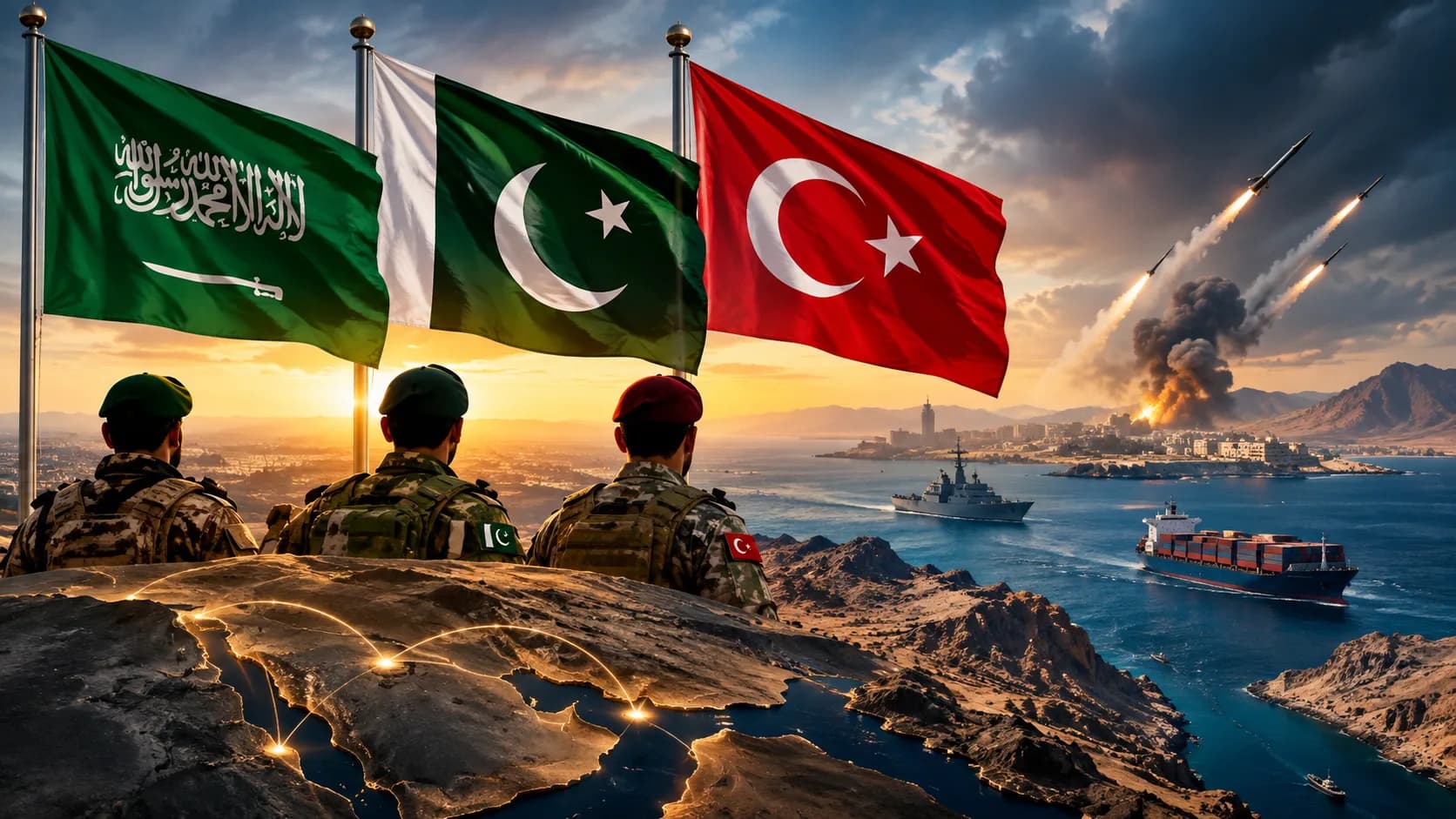
The presentation comes amid serious tensions in the Middle East. While a fragile ceasefire between the warring sides in the US-Israel war on Iran holds following six weeks of strikes, a naval battle is playing out in the Gulf as Tehran continues to block the Strait of Hormuz and Washington enforces a naval blockade of Iranian ports. Meanwhile, Israel continues to violate ceasefires reached in Lebanon and the Gaza Strip. In March, when Iran was retaliating against the US-Israeli strikes by attacking American military assets and infrastructure in the Middle East, Ankara reported that NATO air defences shot down ballistic missiles fired toward Turkish territory on 4 and 9 March. Tehran denied firing any missiles at Türkiye and suggested Israel could be behind them as acts of sabotage. The episode crystallised a longstanding concern in the Turkish capital: that the country sits within range of multiple regional actors whose disputes can spill into Turkish airspace at any moment, and that NATO interception, however welcome, cannot substitute for sovereign deterrence.
A Defence Industry Built in Layers
The Yildirimhan sits at the top of a Turkish missile programme that has grown in stages. Türkiye's defence company ROKETSAN has developed a layered portfolio over the past decade, beginning with short range tactical rockets and progressing through the Tayfun family, the country's first indigenous short range ballistic missile, which entered service in 2023 with a range of around 800 kilometres. Last year ROKETSAN presented the Tayfun Block 4, a hypersonic ballistic missile measuring 10 metres in length, weighing 7.2 tons, and reaching speeds above Mach 5, with reported ranges of up to 1,000 kilometres. The medium range Cenk system, currently under development, is expected to extend reach to around 2,000 kilometres. Türkiye is also pursuing its 6.5 billion US dollar "Steel Dome" initiative, a layered air defence network modelled in concept on Israel's Iron Dome and intended to defend Turkish territory against aircraft, drones, and ballistic missile threats. President Recep Tayyip Erdoğan has said the Steel Dome system will ensure confidence in friends and fear in enemies.
A Sovereignty Project Decades in the Making
The drive toward indigenous capability has a longer history. For decades, Ankara depended on the United States and Western European suppliers for its most critical military systems, an arrangement that exposed the country to repeated political constraints. The 1974 American arms embargo on Türkiye following the Cyprus crisis is still cited by Turkish defence officials as a foundational lesson. More recently, in 2019, Türkiye was removed from the F-35 fighter programme over its purchase of Russian S- 400 air defence systems, a decision that accelerated the country's pivot toward home grown alternatives. The result has been what analysts describe as a sovereignty project, a sustained investment in domestic engineering aimed at reducing exposure to foreign export controls.
The geography itself reinforces the logic. Türkiye sits at the intersection of Europe, the Middle East, the Caucasus, and the eastern Mediterranean, sharing borders with Syria, Iraq, Iran, Armenia, Georgia, Bulgaria, and Greece. It manages the Bosphorus and Dardanelles straits, controls airspace through which Iranian missiles have transited toward Israel, and remains a NATO member of strategic weight on the alliance's southern flank. Burak Yildirim, an Istanbul based defence analyst, told Al Jazeera that the Yildirimhan announcement "is less about a specific threat and more about Türkiye declaring that it intends to be the kind of country that cannot be coerced by anyone, from anywhere." Özgür Ünlühisarcıklı of the German Marshall Fund noted that Türkiye is simultaneously meeting commitments made at The Hague NATO Summit, where allies agreed to raise defence spending toward 5 percent of GDP.
The Bayraktar Story and the Wars That Changed Defence
If the Yildirimhan is the symbol of Türkiye's strategic ambition in 2026, the Bayraktar TB2 drone has been the symbol of its industrial progress over the past decade. Manufactured by Baykar, the company led by Selçuk Bayraktar, the TB2 first proved itself in conflicts in Syria, Libya, and Nagorno-Karabakh, before becoming a defining weapon in the early phase of Russia's full scale invasion of Ukraine in 2022. Ukrainian forces used the TB2 with notable effect in the first weeks of the war, particularly in destroying Russian armoured columns advancing toward Kyiv, and the drone became the subject of folk songs, military memes, and global media attention. Baykar has since opened a production facility in Ukraine, and the more advanced Bayraktar Akıncı and TB3 platforms have followed, with the latter designed for operation from short runway amphibious carriers such as the Turkish flagship TCG Anadolu.
The wars in Ukraine and the Middle East have reshaped how Türkiye thinks about deterrence. Defence Minister Güler explicitly cited Russia's war on Ukraine and the US- Israel war on Iran as factors pushing the country toward sovereign capability. For a country positioned at one of the most contested region on the planet, the Yildirimhan is less a single weapon than a statement about the kind of power Ankara now believes it must be.
This article is based on information from Al Jazeera, Daily Sabah, Hürriyet Daily News, The Defence Blog, Warsight, and Defence Security Asia. All details have been independently rewritten in original language and presented following professional journalistic standards.
Dmytro Melnyk
Contributing writer at EUReflect.
Follow EUReflect
See more of our reporting on Google
Mark EUReflect as a preferred source and our stories are ranked higher for you in Top Stories, Discover and Google News — and carry a “preferred” badge when they are cited in AI results.
Add EUReflect as a preferred source