Trump’s Greenland Move and the Arctic Power Struggle
Donald Trump’s remarks on Greenland have reignited debate over the Arctic’s growing strategic importance. By signaling that Washington is considering multiple options, the U.S. has placed Greenland at the center of competition among the United States, Russia, and China. Potential scenarios range from diplomatic agreements and expanded military presence to indirect support for Greenlandic independence. While no immediate action is expected, the issue highlights the Arctic as a key arena of future geopolitical rivalry
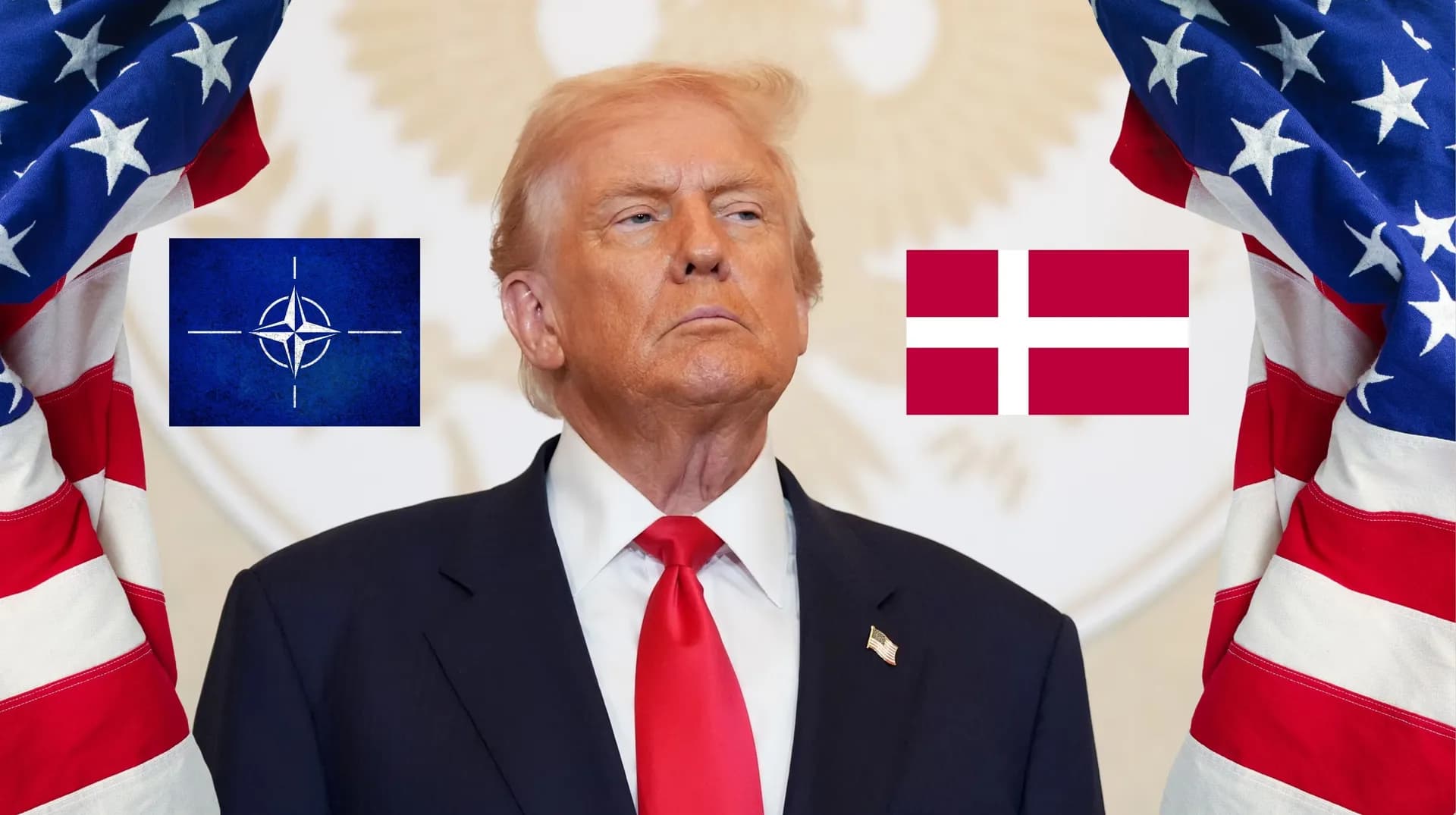
The recent statements by U.S. President Donald Trump regarding Greenland have brought not only a diplomatic debate but also the increasingly intense global competition in the Arctic back to the forefront. Washington’s explicit acknowledgment that it is considering “multiple options” has once again placed Greenland at the center of the strategic calculations of major powers. With its natural resources, geopolitical position, and military significance, the island is now being viewed not merely in the context of relations with Denmark, but as a critical element in the power struggle among the United States, Russia, and China.
1. Diplomatic Acquisition and Long-Term Agreement Scenario
According to Washington’s official narrative, diplomacy remains the preferred path. In this scenario, the United States would engage in direct negotiations with Denmark while also offering economic incentives to the Greenlandic administration. Infrastructure investments, energy projects, job creation, and security guarantees are among the core components of this package.
Here, the concept of “purchase” goes beyond its traditional meaning: long-term leasing arrangements, shared sovereignty frameworks, or hybrid models granting the U.S. special military and economic privileges are also being considered. Through this approach, Washington aims to avoid straining international law and to prevent an open crisis within NATO.
2. Strengthening Military Presence and De Facto Control Scenario
The second scenario does not involve outright annexation but envisions a significant expansion of the U.S. military footprint in Greenland. Increasing the capacity of Thule Air Base, deploying new radar and missile defense systems, and stationing units specialized in Arctic operations constitute the backbone of this plan.
While this option would provide Washington with de facto strategic control at a lower political cost, it is nevertheless perceived in European capitals as a form of “covert pressure,” sharpening sovereignty debates—particularly from Denmark’s perspective.
3. Supporting Greenlandic Independence and Building an ազդեց Sphere Scenario
The most complex and long-term scenario involves the United States indirectly supporting Greenland’s path toward independence from Denmark. Under this approach, Washington would seek to become the new state’s strongest partner by offering financial assistance, investment, and security guarantees to ensure economic viability.
In this model, Greenland would not formally become U.S. territory, but it would grow highly dependent on Washington in areas such as defense, foreign policy, and strategic infrastructure. According to experts, while this scenario may appear “cleaner” from the standpoint of international law, it also carries the risk of prolonged political instability in the region.
CONCLUSION
Even if no immediate concrete steps are taken, the U.S. move on Greenland underscores that the Arctic has firmly become a focal point of global power competition. The range of scenarios—spanning diplomatic bargaining, military deterrence, and indirect influence—demonstrates that Washington has little intention of stepping back from the region.
For Europe, the issue centers on sovereignty and alliance cohesion; for the people of Greenland, it is about the right to self-determination and avoiding entrapment between major powers. Which scenario ultimately prevails will depend not only on U.S. choices, but also on the actions of all actors seeking influence in the Arctic.
https://eurasiafocus.com/trump-relance-le-debat-sur-le-groenland/
EUReflect News
Site Administrator
Follow EUReflect
See more of our reporting on Google
Mark EUReflect as a preferred source and our stories are ranked higher for you in Top Stories, Discover and Google News — and carry a “preferred” badge when they are cited in AI results.
Add EUReflect as a preferred source