Unlike Israel, US and EU Reject Russian Military Presence in Syria
In the post–proxy conflict phase in Syria, military and diplomatic balances are being reshaped. Israel views the military presence of Türkiye as less predictable and considers Russia a more manageable actor. Moscow seeks to institutionalize its presence through a comprehensive military agreement with the new leadership in Damascus. The United States and European countries oppose this process, fearing that it would grant Russia additional geopolitical leverage. Türkiye aims to maintain its role on the ground based on border security and counterterrorism considerations.
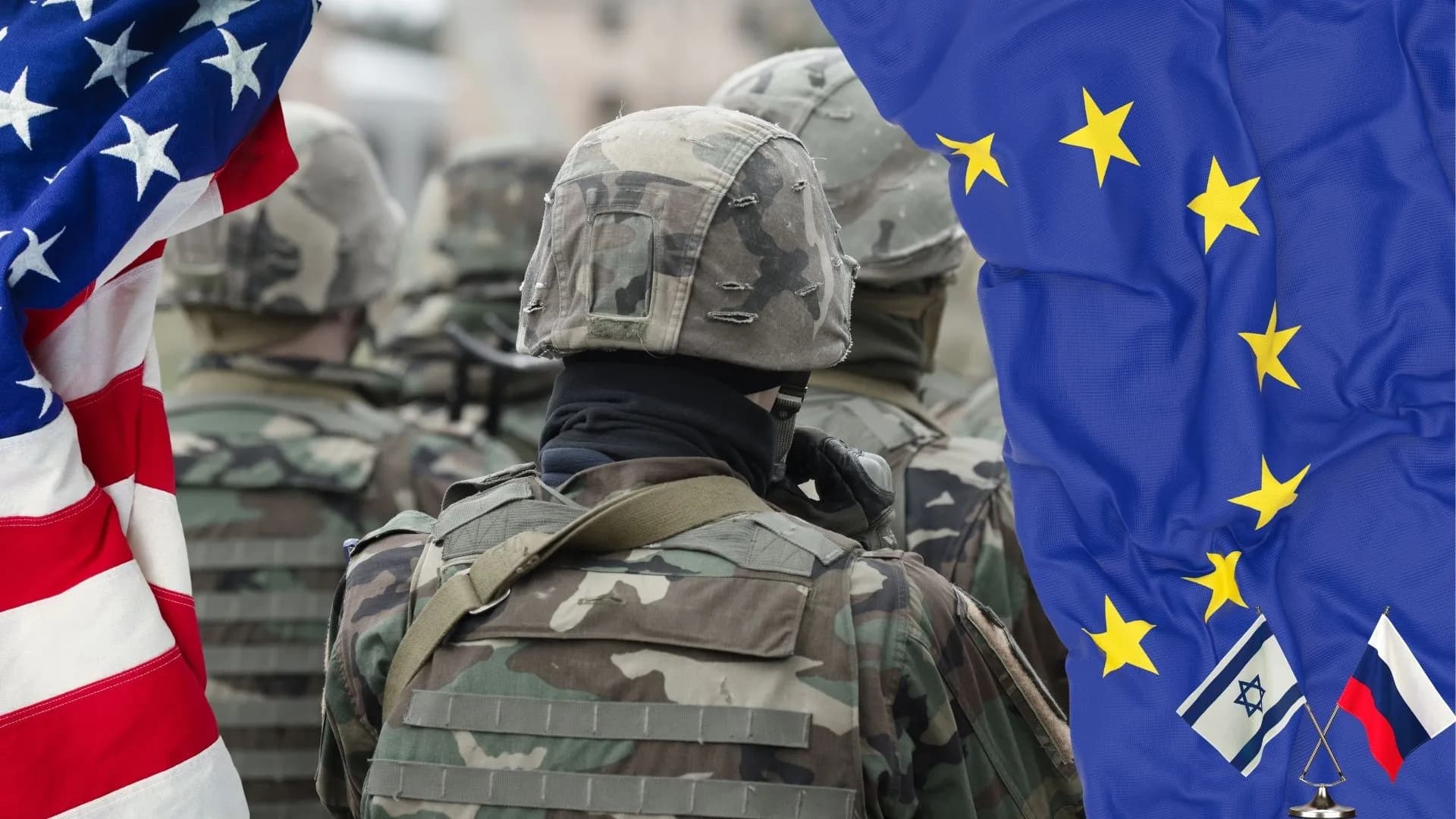
At a stage when the post–proxy conflict period in Syria is beginning to take shape, efforts to redefine the military and diplomatic balance on the ground have accelerated once again. Information reported by Turkish news agencies indicates that Israel prefers the presence of Russian troops in Syria rather than forces from Türkiye, while Russia seeks to establish the basis for a comprehensive military agreement with the new Syrian leadership. This emerging trend is expected to generate significant unease in Washington and European capitals.
From Israel’s perspective, the primary priority in the Syrian file is the establishment of a “predictable” and controllable military balance along its northern borders. Decision-makers in Tel Aviv assess that Türkiye’s expanding military capabilities in recent years, particularly in unmanned aerial systems and broader regional influence, have created a more dynamic configuration on the Syrian theater that is perceived as less predictable from an Israeli standpoint.
By contrast, Russia represents a familiar actor for Israel. Deconfliction mechanisms that have functioned for years between Moscow and Tel Aviv have largely enabled Israel to conduct air operations inside Syria. For this reason, Israel views the continuation or re-institutionalization of Russian military presence as a more manageable scenario compared to an expansion of military deployment by Türkiye.
Within Israeli security circles, the prevailing assessment can be summarized as follows: Russia remains an actor with whom dialogue is possible, whereas maintaining balance with Türkiye is considerably more complex.
On the Russian side, there is little willingness to relinquish influence in Syria. Due to the Ukraine war, relations between Moscow and the West have reached a breaking point, leading Russia to view Syria as one of the few arenas in the Middle East where it can preserve military and political presence.
In this context, Russia is reported to be preparing a new military agreement with the new leadership in Damascus that would address several key areas, including the preservation of the legal status of military bases, agreements on military advisory and training missions, coordination over airspace and defense systems, and long-term guarantees of military presence. The future of Russian bases in coastal regions is regarded in Moscow as a strategic red line.
Russia’s objective is to transform its military presence in Syria from a temporary intervention into a durable arrangement with legal and political permanence.
Türkiye, meanwhile, has established a de facto security architecture in northern Syria. The presence of the Turkish Armed Forces on the ground is considered indispensable by Ankara in terms of border security, counterterrorism operations, and the management of migration pressure.
This situation, however, is interpreted differently in Israel. Tel Aviv assesses that military presence by Türkiye may produce indirect effects extending beyond Syria into the Eastern Mediterranean and the Palestinian equation. Consequently, Israel favors Russia over Türkiye as a balancing actor on the Syrian theater.
Statements by President Recep Tayyip Erdoğan emphasizing that “Syria’s territorial integrity is also our red line” convey the message that Türkiye does not seek permanent occupation or the establishment of zones of influence. At the same time, these statements indirectly explain Israel’s strategic discomfort with military presence by Türkiye. Ankara positions itself as an actor attentive to political and social balance on the ground, rather than operating through military means alone.
The discourse of Foreign Minister Hakan Fidan provides a clearer diplomatic framework for this equation. Fidan has repeatedly argued that Syria should not be transformed into an arena of great-power competition and that treating the country as a “chessboard” deepens regional instability.
According to Fidan, sustainable stability in Syria can only be achieved through respect for sovereignty, the elimination of terrorist organizations, recognition of the legitimate security concerns of neighboring states, and the temporary and limited nature of foreign military presence. Within this framework, Fidan is known to approach Russia’s efforts to conclude a military agreement with the new Syrian leadership cautiously, warning that such arrangements risk pulling Syria back into the center of global great-power rivalry.
Washington and European capitals regard Russia’s renewed military, political, and diplomatic consolidation in Syria as a strategic threat. For Western policymakers, the issue extends beyond the question of troop presence in Syria to whether the post-Ukraine strategy of containing and constraining Russia is being eroded through the Middle East. As a result, the Syrian file is increasingly treated in Washington, Brussels, Paris, and Berlin as an extension of global power competition.
According to the United States and the European Union, Russia’s entrenchment in Syria carries the risk of weakening the political and psychological impact of sanctions imposed after the invasion of Ukraine. Moscow’s pursuit of military agreements through Damascus, reinforcement of its bases, and return to the status of an indispensable actor in the Middle East are viewed as a direct challenge to Western efforts to diplomatically isolate Russia.
Western strategists argue that Syria functions for Russia as more than a host of military bases. It serves as a multidimensional platform for power projection extending toward Africa, the Eastern Mediterranean, and the Gulf. The preservation of bases such as Tartus and Hmeimim provides the Russian navy and air forces with a permanent foothold in the Mediterranean, offering alternative geopolitical spaces to offset pressure on the Ukrainian front.
Another critical concern for the West relates to the security of NATO’s southern flank. A strengthened Russian military presence in Syria enhances Moscow’s position across a security belt linking the Eastern Mediterranean, the Aegean, the Black Sea, and the Middle East. This development complicates maritime and air security calculations, particularly for Türkiye, Greece, and Italy.
The United States and Europe also express concern that deeper Russian military engagement in Syria in coordination with Iran could generate dual pressure on NATO, requiring simultaneous crisis management in Eastern Europe and the Middle East.
Despite these concerns, Western policy instruments remain limited. There is little appetite for direct military engagement in Syria, while diplomatic pressure has proven insufficient to alter realities on the ground. The de facto balance emerging within the Türkiye–Israel–Russia triangle forms a structure resistant to unilateral influence from Washington and Brussels.
Türkiye’s military capabilities and geographical advantages, Israel’s security priorities, and Russia’s established bases collectively produce a situation that places the West in an observer position. As a result, despite vocal opposition to Russia’s presence in Syria, Western actors face difficulty translating objections into concrete countermeasures.
From the perspective of the new leadership in Damascus, the situation appears more pragmatic. Syria recognizes that ensuring security without Russian military support would be highly challenging, while simultaneously understanding that excessive reliance on Moscow could generate long-term political dependency and international isolation.
Accordingly, Damascus seeks to pursue a multi-actor balancing strategy that involves maintaining military and security ties with Russia, exploring controlled normalization with Türkiye, and avoiding complete disengagement from the United States and Europe.
This strategy, however, faces serious obstacles. Economic collapse, extensive destruction of infrastructure, energy and food crises, and security vacuums push the Syrian leadership toward short-term solutions.
At this juncture, Russia offers rapid military guarantees, regime security, and diplomatic protection rather than long-term reform agendas or conditional assistance packages. In contrast to the Western approach based on human rights, political transition, and reform requirements, Russia’s proposal is straightforward: cooperation in exchange for security.
In the short term, this makes Russia more attractive for Damascus, while in the long term it carries the risk of transforming Syria into a frontline of renewed great-power competition.
Within this equation, Israel’s preference remains critical. Tel Aviv’s inclination toward Russian military presence rather than forces from Türkiye indirectly strengthens Moscow’s position on the Syrian theater. For Israel, Russia continues to function as a predictable interlocutor due to long-standing deconfliction mechanisms.
Although this preference conflicts with Western anti-Russian reflexes, Israel’s national security priorities render the contradiction secondary.
The emerging picture indicates that the decisive question in Syria today concerns the distribution and depth of influence rather than post-conflict reconstruction alone. Israel’s preference for Russia, Moscow’s pursuit of military agreements with Damascus, and Western efforts to prevent this consolidation are once again transforming Syria into one of the central arenas of global geopolitical rivalry.
The Syrian theater has thus reverted to a critical chessboard where the interests of Damascus intersect with those of Ankara, Tel Aviv, Moscow, Washington, and Brussels. Each move on this board will shape the future of Syria as well as the broader balance of power in the Middle East.
EUReflect News
Site Administrator
Follow EUReflect
See more of our reporting on Google
Mark EUReflect as a preferred source and our stories are ranked higher for you in Top Stories, Discover and Google News — and carry a “preferred” badge when they are cited in AI results.
Add EUReflect as a preferred source