Water Resources in CA: Security, Geopolitics and Innovative Approaches
This article analyzes the environmental, economic, and geopolitical processes related to the use of water resources in Central Asia. It examines the transboundary nature of the Amu Darya and Syr Darya river basins, the ecological crisis of the Aral Sea, the Qoshtepa Canal project in Afghanistan, as well as regional conflicts associated with the Rogun and Kambarata hydropower plants. Additionally, the study considers the risks arising from climate change and the imbalance in water resource usage. The research also highlights the role of innovative technologies and international cooperation in improving water resource management.
INTRODUCTION
Although Central Asia is rich in natural resources, water resource managementhas emerged as one of the most complex environmental and political challenges of the present day. In particular, major river systems such as the Amu Darya and Syr Darya are of strategic importance for the economic development and ecological sustainability of the countries in the region. In recent years, climate change, population growth, inefficient water use, and disagreements in transboundary water management have significantly increased pressure on water resources. As a result, water security has become a crucial component of regional stability.
LITERATURE REVIEW
International scientific sources indicate that water resources may become one of the principal drivers of global geopolitical conflicts in the future (UN-Water, World Bank, FAO) (1). The Global Water Security reports emphasize that water scarcity can have a direct impact on interstate relations. Regional studies conducted by scholars such as M. Erdonov, M. Khushmatova, and A. Yunusov have demonstrated the necessity of regulating water resources through an integrated water resources management system (2). According to their findings, water policy should take into account not only economic factors but also environmental and social considerations.
RESEARCH METHODOLOGY
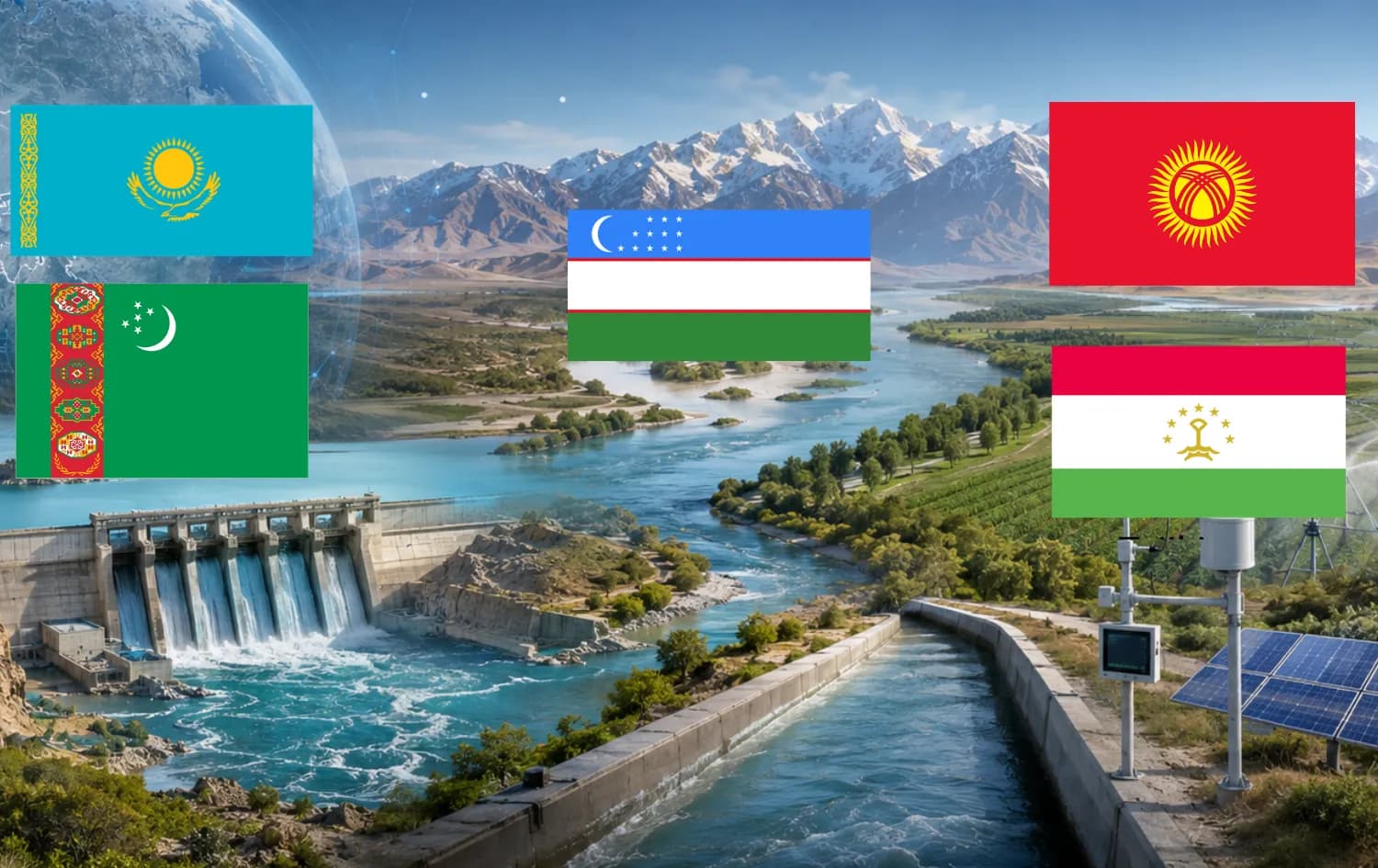
This study employs a comprehensive scientific approach to examine the challenges associated with the use of water resources in Central Asia. In particular, a systems analysis method was applied to investigate water resources as a unified system in which environmental, economic, and geopolitical factors are interconnected. This approach made it possible to identify not only individual aspects of water-related issues but also the interactions among them. A comparative geographical approach was used to analyze and compare the characteristics of water resource utilization among the countries of the region countries—Kazakhstan, Kyrgyzstan, Tajikistan, and Uzbekistan. This method enabled an assessment of the differences in water demand, available resources, and the efficiency of water use among these countries. As a result, regional disparities and their underlying causes were identified.
In addition, a political-ecological assessment method was employed to examine the impact of water resources on interstate relations. This approach facilitated an analysis of the relationship between competing interests over transboundary rivers, water policy, and environmental security. Particular attention was given to the Amu Darya and Syr Darya basins in order to highlight the geopolitical significance of water resources in the region. During the research process, special attention was paid to the analysis of secondary data. In particular, reports, statistical data, and analytical materials published by international organizations such as the World Bank, FAO, and UNECE were utilized. In addition, scientific articles, monographs, and analytical studies produced by regional research centers and scholars were thoroughly examined.
Furthermore, forecasting elements were incorporated into the study to assess the potential future impacts of climate change, demographic growth, and new hydraulic infrastructure projects, such as the Qoshtepa Canal. This approach not only ensured the scientific validity and reliability of the research findings but also provided a basis for developing practical recommendations.
RESULTS AND DISCUSSION
Transboundary Water Resources and Geopolitical Interdependence
Water resources in Central Asia are unevenly distributed across the region. While the primary sources of water originate in the upstream countries, the downstream countries mainly utilize these resources for economic purposes. This imbalance creates disparities in the distribution of benefits and interests among the states of the region.
Impact of the Qoshtepa Canal Project
The Qoshtepa Canal, currently under construction in Afghanistan, is designed to divert a portion of the Amu Darya’s flow in a different direction. This development may lead to a reduction in water availability in the Khorezm Region, the Republic of Karakalpakstan, Bukhara Region, Kashkadarya Region, and Surkhandarya Region of Uzbekistan. Consequently, irrigation systems in downstream areas may come under increased pressure, agricultural productivity may decline, and the negative impacts on ecological balance may intensify. Moreover, reduced river flow may affect the operation of reservoirs and hydraulic infrastructure, thereby decreasing the efficiency of existing water-management systems. As water scarcity becomes more severe in these areas, it may become necessary to reduce cultivated land or shift to crops that require less water.
Experts have also drawn attention to the potential consequences of this project. International organizations, particularly World Bank specialists, emphasize that water use in the Amu Darya Basin is already at a high level and that additional withdrawals could place significant pressure on the region’s water balance. Likewise, FAO experts note that under conditions of inefficient water use, large-scale irrigation projects of this kind may further increase water losses (3).
Regional scholars have expressed similar concerns. According to their assessments, if clear mechanisms for water allocation are not established, the project may increase the risk of transboundary disputes. At the same time, some experts focus not only on the potential negative consequences but also on possible management solutions, arguing that the introduction of modern water-saving technologies could help mitigate potential damages.
Furthermore, the reduction of water resources may lead to a range of socio-economic challenges, including declining incomes among populations dependent on agriculture, lower employment levels, and increased internal migration. From an environmental perspective, negative consequences may include the degradation of river deltas and natural ecosystems, as well as a decline in biodiversity.
According to forecasts, by 2040, competition over water resources is expected to become one of the major factors hindering stronger cooperation among Central Asian countries, many of which are projected to experience some of the highest levels of water stress in the world (4).
The Ecological Crisis of the Aral Sea
The shrinkage of the Aral Sea has primarily resulted from ineffective water management and irrigation policies. This process has caused environmental degradation throughout the region, including soil salinization and an increase in dust and salt storms.
Climate Change and Glacier Dynamics
Scientific observations indicate that glaciers in Central Asia are shrinking at an accelerating rate. This trend may lead to reduced river flows and increased instability in water supply systems in the future (5).
Analysis of Regional States
Kazakhstan: Water supply in Kazakhstan is highly dependent on transboundary rivers, making the country particularly vulnerable to the impacts of climate change. Fluctuations in the flow of the Irtysh, Ili, and Syr Darya rivers are increasing the risk of water scarcity, especially in the southern regions of the country. According to World Bank assessments, nearly half of Kazakhstan’s water resources originate from external sources, making the country highly sensitive to external factors (6). Kazakh scholars, including Auezov Zhanat, have noted that climate change is contributing to greater seasonal fluctuations in river flows. This situation requires new approaches to water management, particularly the improvement of water-saving practices and water redistribution mechanisms.
Kyrgyzstan: Although Kyrgyzstan possesses abundant water resources, inadequate infrastructure contributes to water shortages in certain areas. The country is one of the principal regions where water resources originate in Central Asia; however, the outdated condition of existing hydraulic infrastructure reduces overall efficiency. FAO experts have noted that water losses within Kyrgyzstan’s irrigation systems remain high (7). Furthermore, the Kyrgyz scholar Toktogul Kakchekeev argues that the imbalance between the interests of the energy sector and agriculture in the utilization of water resources constitutes one of the primary causes of the problem. This situation necessitates the implementation of coordinated policies at the regional level.
Uzbekistan: Uzbekistan is one of the countries most dependent on water resources in Central Asia, and demographic growth is further intensifying this pressure. The majority of water consumption in the country is associated with agriculture, placing a substantial burden on irrigation systems. According to World Bank data, water-use efficiency in Uzbekistan remains relatively low (8). According to the Uzbek scholar M. Erdonov, existing challenges can be mitigated through the adoption of an integrated approach to water management and the wider application of modern technologies. At the same time, population growth and urbanization continue to increase water demand, making water security an increasingly strategic issue for the country.
Legal Framework and International Mechanisms
The management of transboundary water resources is an important field of international law that regulates issues related to water use among states. One of the key legal instruments in this area is the Convention on the Protection and Use of Transboundary Watercourses and International Lakes (the Helsinki Convention), adopted in 1992. This convention establishes the principles of equitable and reasonable utilization of water resources, prevention of transboundary harm, and the strengthening of cooperation among states. Under the Convention, states undertake several obligations, including: avoiding significant harm to other states in the use of water resources, maintaining water quality and preventing pollution, establishing monitoring and information-exchange systems, and providing mutual notification and cooperation in emergency situations. The Convention also envisages the establishment of joint commissions and cooperative mechanisms for the shared management of water resources. This is particularly important in regions such as Central Asia, where transboundary water systems play a dominant role.
In addition, the United Nations Convention on the Law of the Non-Navigational Uses of International Watercourses, adopted in 1997, is another significant source of international water law (9). This document further develops the principles of “equitable and reasonable utilization” and “the obligation not to cause significant harm,” while providing a clearer definition of the rights and responsibilities of states.
According to experts, although these international legal instruments provide a solid legal foundation for water resource management, their effectiveness largely depends on the level of political will and practical cooperation among states. For example, UNECE specialists emphasize that successful transboundary water management requires not only legal norms but also effective institutional mechanisms and continuous platforms for dialogue and cooperation.
Innovative Solutions
The efficient use of water resources today can be achieved not only through traditional management methods but also through the widespread implementation of modern innovative technologies. This is particularly important in regions such as Central Asia, where water scarcity is becoming increasingly severe. In this context, digital and scientific approaches play a crucial role.
For instance, drip irrigation systems are considered one of the most effective methods of improving water-use efficiency. This technology delivers water directly to plant roots, thereby reducing evaporation and excessive water consumption. According to FAO data, drip irrigation can reduce water use by 30–50 percent compared to conventional irrigation methods (10).
In addition, smart irrigation management systems enable the real-time management of water resources. These systems automatically determine irrigation schedules based on soil moisture levels, weather conditions, and crop requirements. As a result, excessive water use is prevented, and agricultural productivity is enhanced.
In recent years, artificial intelligence (AI)-based monitoring systems have also been widely adopted. These technologies analyze large volumes of data and provide accurate forecasts regarding water consumption, climate change, and river flows. According to World Bank experts, the introduction of digital technologies reduces human-related errors in water management and improves the effectiveness of decision-making processes.
Satellite and sensor technologies also play a significant role. Through remote sensing, it is possible to monitor the condition of water resources, analyze irrigated areas, and identify water losses. Sensors continuously transmit data on water levels, pressure, and quality, enabling more efficient management of water infrastructure. Furthermore, Big Data analytics has become an important tool for the strategic planning of water resources. By integrating information from various sources, it is possible to identify trends in water consumption, forecast risks in advance, and make optimal management decisions.
According to experts, the implementation of innovative technologies contributes not only to water conservation but also to increased economic efficiency. However, this process requires infrastructure modernization, investment attraction, and the training of qualified specialists. Therefore, alongside the adoption of innovative approaches, governments should also undertake institutional reforms.
Conclusion
The issue of water resources in Central Asia has evolved into a complex system shaped by the interaction of environmental, economic, and geopolitical factors. The findings of this study demonstrate that water is not merely a natural resource but also one of the decisive factors influencing stability, security, and development among the countries of the region.
The research indicates that the primary cause of existing challenges is not necessarily water scarcity itself but rather the imbalance and lack of coordination in water management. Under current conditions, the available volume of water could meet the region’s major needs if managed properly and efficiently. From this perspective, water should be viewed not only within the framework of national interests but also as a shared regional asset. Equally important is the establishment of a climate of trust among states. Experience shows that even the most comprehensive international legal mechanisms cannot function effectively without political will and mutual trust. Therefore, the development of water diplomacy, the establishment of open information-sharing systems, and the expansion of joint projects should become priority areas of regional cooperation.
Moreover, the analysis suggests that innovative technologies are likely to play a decisive role in addressing future water scarcity challenges. In particular, the introduction of water-saving technologies in agriculture can contribute not only to resource conservation but also to greater economic efficiency. However, this process should not be limited solely to the adoption of new technologies; it must also involve improving public awareness and water-use culture, as well as modernizing management systems.
As climate change and demographic pressures continue to intensify, the issue of water security is becoming increasingly urgent. If effective measures are not implemented today, the problem may become even more severe in the future, potentially leading not only to environmental challenges but also to social and political conflicts.
Therefore, an integrated approach — one that balances environmental sustainability, economic interests, and social needs—remains the key prerequisite for regional stability. In conclusion, addressing the water resource challenges of Central Asia requires a comprehensive, long-term, and cooperation-based strategy. Only through such an approach can sustainable development and ecological security be ensured throughout the region.
REFERENCES
1. United Nations Water. World Water Development Report, 2023.
2. Erdonov, M., Khushmatova, D., & Yunusov, A. Integrated Water Resource Management, 2021.
3. FAO. Water Use Efficiency in Agriculture, 2021.
4. Ergasheva, M. O'. (2023). Markaziy Osiyo geosiyosatida suv muammolari.URL: https://cyberleninka.ru/article/n/markaziy-osiyo-geosiyosatida-suv-muammolari
5. ISTA. Climate and Glacier Studies, 2023.
6. World Bank. Kazakhstan Water Sector Review, 2020.
7. FAO. Irrigation Systems in Kyrgyzstan, 2020.
8. World Bank. Uzbekistan Water Management Report, 2021.
9.United Nations. Convention on the Law of the Non-Navigational Uses of International Watercourses, 1997.
10.FAO. Modern Irrigation Techniques Report, 2021.
Azamjon Iskandarovich Usmonov
Contributing writer at EUReflect.
Follow EUReflect
See more of our reporting on Google
Mark EUReflect as a preferred source and our stories are ranked higher for you in Top Stories, Discover and Google News — and carry a “preferred” badge when they are cited in AI results.
Add EUReflect as a preferred source