When the thirst for power plunges a commune into crisis
Mayor's costly re-election campaign leaves a commune facing a €60M financial abyss, depleted reserves, and mandatory regional tutelage. Opportunistic alliances masked a structural collapse.

“A mayor who sacrificed everything to cling to power… and ended up losing his commune. A campaign worthy of a presidential race, opportunistic alliances, endless parties, and unrealistic promises: the result, an empty treasury and an abyssal deficit.”
Saint-Josse-ten-Noode ( Brussels – Belgium ) : when the thirst for power plunges a commune into crisis
By Kadir Duran – Bruxelles Korner
The twilight of a fractured empire: a mayor (Emir Kir) who did everything to stay in power… and ultimately lost his commune.
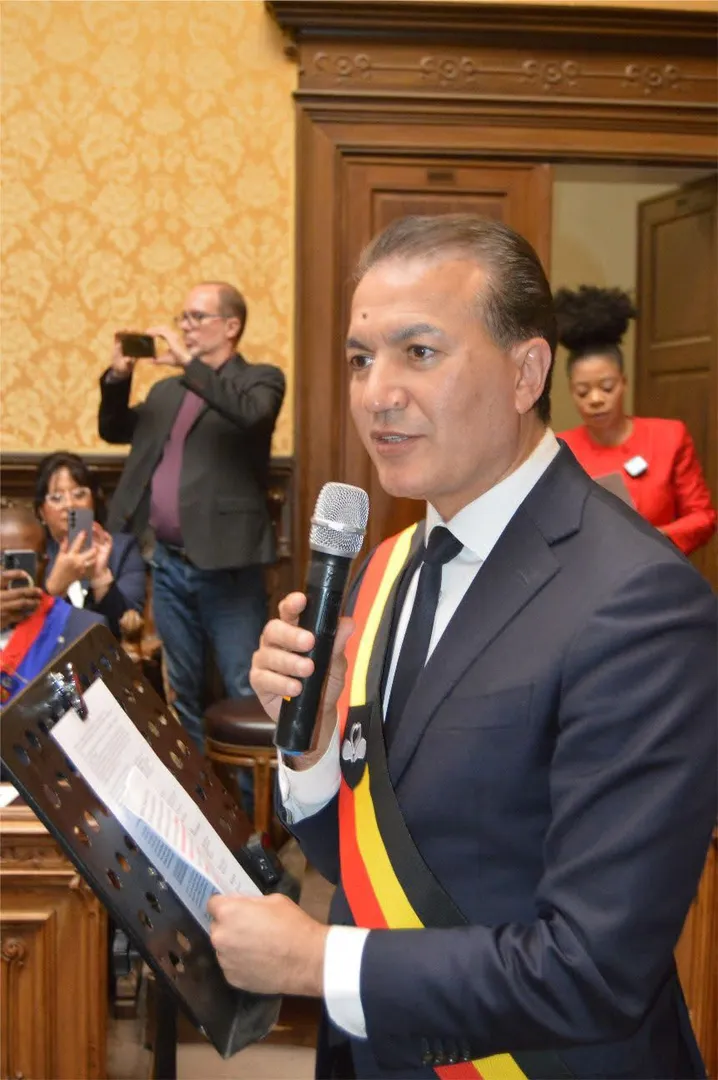
Electoral fraud, voters summoned back to the polls, former socialists rallying to his list, opportunistic alliances without ideology left, right, or center, it didn’t matter as long as he remained in office. The mayor gathered around him all the vote-catchers in a strategy where only one thing mattered: re-election, at any cost.
A power that came at a heavy price
A power that came at a heavy price
Very heavy. A campaign worthy of a presidential race: over a year of relentless mobilization, countless posters, endless neighborhood parties, mass hiring of staff, and promises of a dream world. But the reality proved starkly different: a communal treasury emptied and heavy expenditures with insufficient revenues to cover them.
Today, the talk is of a €10 million hole; other sources speak of €20 to €30 million. Where do we go from here? Why were the rotten eggs hidden in the cupboard? Was it out of fear of losing face—or the pride of clinging to the mayoral chair at any cost?
A permanent campaign with presidential overtones
A permanent campaign with presidential overtones
In Saint-Josse, power turned into obsession. For more than a year, the mayor and his team waged an unprecedented campaign: countless posters, neighborhood parties, extravagant promises, and electoral alliances of every color—left, right, and center. Ideological consistency mattered little: only re-election at any price.
Critics denounce a real drift: former opponents rallied onto the mayor’s list, massive use of public resources for electoral purposes, and a permanent communication strategy worthy of a presidential campaign. But behind this festive facade, the budgetary reality was merciless.
Accounts deep in the red
Accounts deep in the red
While officials recently boasted of a slight surplus for 2023, the accounts revealed a real deficit of €3.4 million. The financial reserves, once totaling €10 million under former mayor Jean Demannez, are now reduced to… €22,000.
Worse: for 2024, losses explode to over €13 million, and some experts now speak of a cumulative gap of €60 million to be filled.
Between debts owed to the CPAS (≈ €11 million), arrears with the police zone (≈ €12 million), and court-ordered damages (nearly €2 million), the situation borders on insolvency. For many, this is no longer a temporary crisis but a structural collapse.
Regional oversight now unavoidable
Regional oversight now unavoidable
Faced with this abyss, Saint-Josse had no choice but to turn to the Brussels Region. Through the Regional Fund for Refinancing Communal Treasuries, the commune received a financial lifeline. But the price is steep:
every expense must now be validated by a regional inspector,
the commune must present a credible, long-term recovery plan,
local governance will operate under close supervision, recalling the specter of regional tutelage not seen in twenty years.
Brussels Minister of Local Authorities Bernard Clerfayt made it clear: “This aid is not a blank check. The commune must restore its finances and present a credible plan.”
Opposition strikes back
Opposition strikes back
PS group leader Philippe Boikote and other opposition voices delivered a scathing indictment:
Broken promises: no public toilets in the North Quarter despite commitments.
Reckless spending: endless parties, excessive electoral communication.
Pharaonic projects: the Maison des Cultures, launched in 2014 at €4 million, already costs €17 million and remains unfinished.
Staff mismanagement: unpaid overtime for prevention teams.
Lack of transparency: hidden deficit, unilateral decisions, absence of long-term strategy.
Other scandals only deepen the malaise: repeated thefts at the communal swimming pool, insecurity linked to dangerous dogs, and local companies suspected of ties to organized crime.
Residents, the first victims
Residents, the first victims
To plug the deficit, the majority chose an unpopular route: raising parking fees (hours, flat rates, reminder charges). A measure taken “en stoemelings”—discreetly, but with heavy consequences hitting users directly without offering structural solutions.
At the same time, the closure of the communal recycling park, deemed too costly (€500,000 per year), deprives residents of an essential local service. The opposition denounces a “net loss for citizens” and the continuation of a policy of liquidating communal assets.
Heading toward municipal bankruptcy?
Heading toward municipal bankruptcy?
The risk of communal bankruptcy is now openly discussed. Of course, a commune cannot technically go bankrupt like a private company: the State or Region always steps in to guarantee public services. But the metaphor is telling: Saint-Josse has been living beyond its means for too long and is now paying the bill.
A democratic as much as financial issue
A democratic as much as financial issue
The Saint-Josse crisis is not only financial. It embodies a political drift where the obsession with power has eclipsed responsible governance.
Between permanent campaigning, overblown promises, and lavish spending, local leadership neglected the essentials: budgetary balance, transparency, and basic services.
Recovery will require painful measures: an external audit, drastic spending cuts, mobilization of new revenues, staff reorganization, and above all, rebuilding trust with residents.
Failing that, the commune risks settling permanently under regional tutelage—a de facto admission of political failure.
In conclusion, I call on the mayor and his team to take responsibility and resign, leaving room for the opposition. The latter would be better placed to implement the Brussels Region’s resolutions, operate under regional oversight, and carry out a genuine recovery plan to clear the commune’s debts.
Kadir Duran
Contributing writer at EUReflect.
Follow EUReflect
See more of our reporting on Google
Mark EUReflect as a preferred source and our stories are ranked higher for you in Top Stories, Discover and Google News — and carry a “preferred” badge when they are cited in AI results.
Add EUReflect as a preferred source