Why does Lithuania celebrate its freedom twice?
Lithuania celebrates two independence days: February 16 (1918 independence) and March 11 (1990 restoration from Soviet rule). These dates reflect historical continuity, national memory, and cultural pride, blending political history with traditions, unity, and a strong sense of identity.
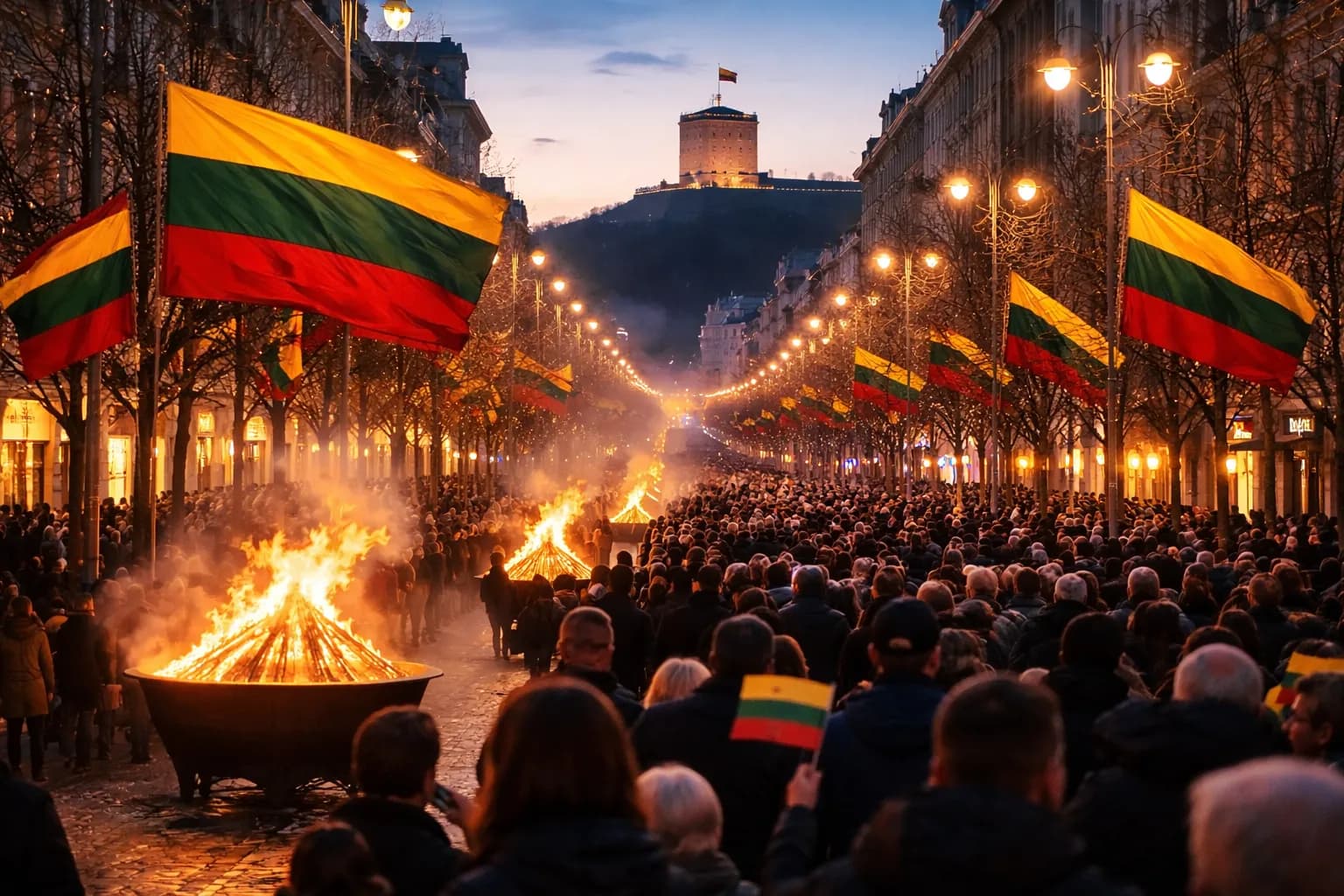
Lithuania is one of the rare countries in Europe that celebrates not just one, but two independence days. The dates of February 16 and March 11 are both deeply symbolic and reflect the country’s long journey toward freedom and sovereignty. Together, they represent historical continuity, national memory, and the pride of a people.
February 16 commemorates the Act of Independence of 1918, when Lithuania proclaimed itself a sovereign state after years of foreign domination. This event laid the legal and political foundations of the modern state. March 11, meanwhile, marks the restoration of independence in 1990, when the country broke away from the Soviet Union. For this reason, both dates are celebrated with equal importance in national life.
Celebrations at the heart of collective memory
These days are not simply historical reminders; they are lived as true moments of unity. In Vilnius, the capital, official ceremonies, parades, and public gatherings honor historical figures and the generations who helped defend the country’s freedom. National flags appear across streets and buildings, creating an atmosphere of remembrance and pride.
A powerful visual symbol accompanies these commemorations: the “Freedom Bonfires.” Bonfires are lit along Gediminas Avenue in Vilnius to honor those who defended the country’s independence. This tradition creates a moment that is both solemn and unifying, where light becomes a symbol of memory and resistance.
Through these traditions, Lithuanians express a deep attachment to their history and identity, shaped by perseverance and the desire to preserve their freedom.
Arich culture shaped by tradition and nature
Beyond its political history, Lithuania has an ancient and well-preserved culture. The country is marked by a strong connection to nature, with its forests and lakes influencing traditions and ways of life even today.
Lithuanian culture is passed on through folk music, dances, craftsmanship, and traditional celebrations. Some festivities, such as those linked to the summer solstice, bring communities together through songs, bonfires, and rituals inherited from centuries of history.
Major cultural events also play an important role in national life. The Song Festival (Dainų šventė), which brings together thousands of singers and dancers, is inscribed on UNESCO’s Intangible Cultural Heritage list. It represents a source of immense pride for Lithuanians and illustrates the strength of collective identity and the transmission of traditions across generations.
Apreserved cultural identity
Lithuania’s cultural heritage is also reflected in its arts and crafts. Traditional practices such as wood carving and cross-making show a deep connection between spirituality, history, and popular culture.
More broadly, Lithuanian society is often described as strongly attached to its roots, its language, and its traditions — essential elements in preserving national identity over time.
A countrylookingtoward the future
Today, Lithuania is a modern European state, active on the international stage. Yet despite its development and openness, February 16 and March 11 remain central to national consciousness.
These two independence days are more than historical commemorations: they symbolize the survival of a nation, its rebirth, and its ability to preserve its culture and identity despite the trials of history. They remind people of the path that has been traveled and embody, for many Lithuanians, the hope and continuity of a people proud of their past.
Enes Taskin
Contributing writer at EUReflect.
Follow EUReflect
See more of our reporting on Google
Mark EUReflect as a preferred source and our stories are ranked higher for you in Top Stories, Discover and Google News — and carry a “preferred” badge when they are cited in AI results.
Add EUReflect as a preferred source