Why Senegal Is Emerging as a Key Travel Destination in 2026
Golden beaches stretching into the Atlantic, music pulsing through the streets of Dakar, and a culture rooted in warmth and hospitality are quietly positioning Senegal as one of the most compelling travel destinations for 2026.
How to Get There and Move Around
Located in West Africa, Senegal is among the most accessible countries on the continent. The main international gateway is Blaise Diagne International Airport, situated approximately 45 kilometres from the capital, Dakar. The airport offers direct connections to major European cities such as Paris, Brussels, and Madrid, as well as regional hubs across Africa. Travellers from Europe can reach Dakar in roughly five to six hours, making it one of the most convenient African destinations to access.
Domestic transport infrastructure continues to improve. Highways connecting Dakar with cities such as Thiès and Saint-Louis have been modernized, while buses and shared taxis remain widely available and affordable. For greater comfort, private drivers and organized tours are easily arranged.
Compared to destinations like Morocco, where tourism infrastructure is highly developed but often crowded, Senegal offers a balance between accessibility and authenticity, allowing visitors to explore without overwhelming tourist pressure.
A Country Developing with Purpose
Senegal has emerged as one of West Africa’s most stable and forward-looking nations. Government priorities include sustainable development, infrastructure modernization, and tourism growth. The agricultural sector is also gaining increasing international relevance, contributing to exports and strengthening the country’s position in global supply chains.
Environmental sustainability is becoming central to national development strategies. Efforts include coastline protection, the expansion of eco-tourism, and greater involvement of local communities in decision-making processes. These initiatives position Senegal as a destination that is not only developing, but doing so responsibly.
Culture, Religion, and Everyday Life
Senegalese culture is vibrant and deeply rooted in tradition. The country is predominantly Muslim, with Sufi brotherhoods playing a significant role in social and spiritual life. At the same time, Senegal is widely recognized for its religious tolerance, where different faiths coexist peacefully.
French is the official language, while Wolof is spoken by the majority of the population. Expressions such as “Jërëjëf” (thank you) reflect everyday communication and cultural openness. Music is a defining element of national identity, blending traditional rhythms with modern influences.
Football remains central to national pride. Senegal’s victory in the Africa Cup of Nations in 2022 marked a historic achievement and continues to symbolize unity across the country.
A Culinary Journey Through Senegal
Senegalese cuisine is widely regarded as one of the richest in West Africa, shaped by centuries of trade, migration, and cultural exchange.
At its core is thieboudienne (also known as ceebu jën), the national dish. It typically combines fish, rice, and a variety of vegetables cooked in a spiced tomato base. Traditionally served from a shared platter, the meal reflects teranga—the Wolof concept of hospitality that defines Senegalese social life.
Another signature dish is yassa, originating from the Casamance region. Prepared with marinated chicken or fish, it is known for its balance of citrus acidity and caramelized onion sweetness.
Other notable dishes include:
mafé (peanut-based stew with meat)
domoda (groundnut stew variation)
soup kandia (okra-based dish)
dibi (grilled meat served with onion sauce)
Staples such as rice and millet form the foundation of most meals, complemented by ingredients like ginger, chili, and peanuts.
The Best Places to Visit in Senegal
Senegal offers a diverse range of destinations suited to different travel preferences.
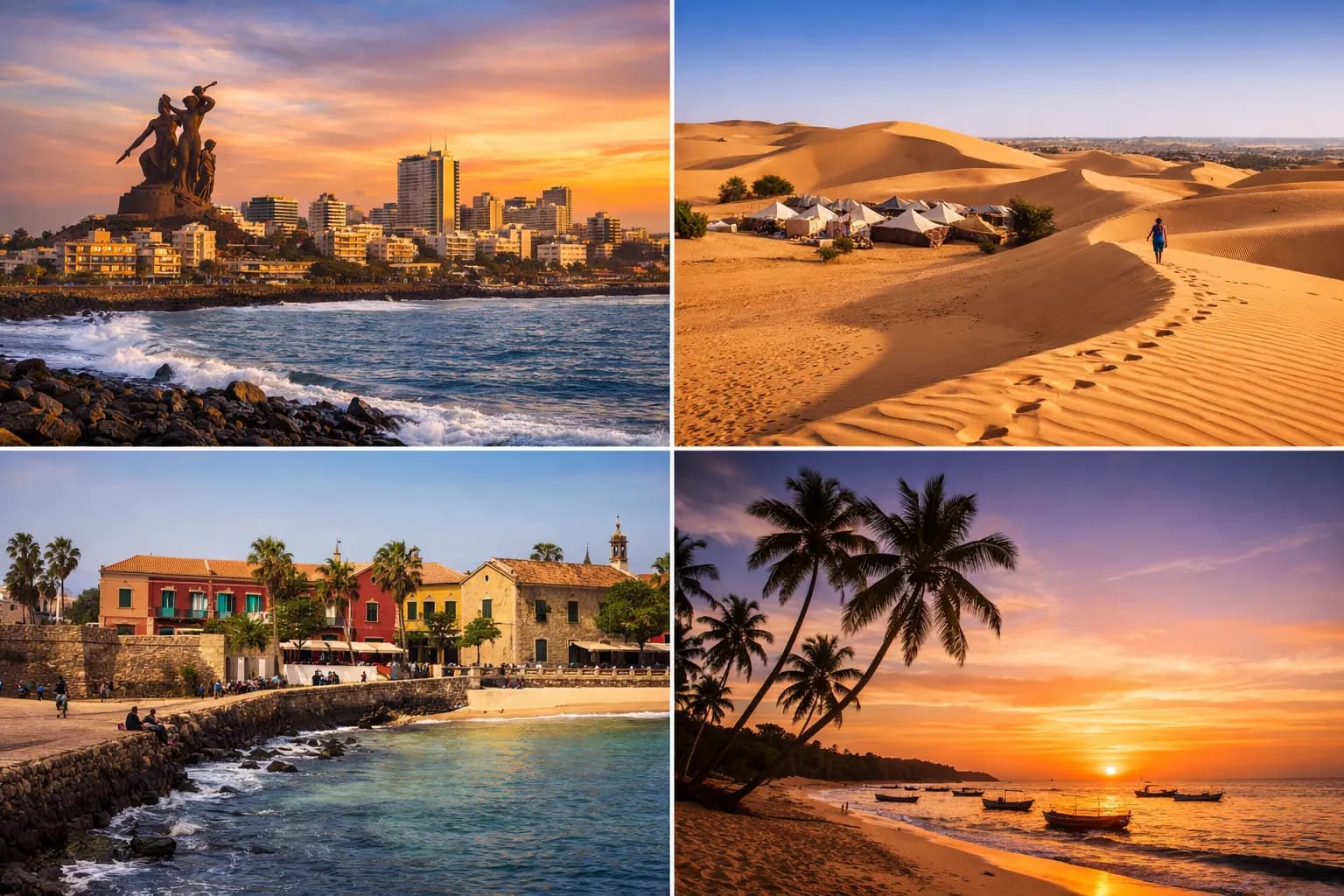
Gorée Island, located off the coast of Dakar, is a UNESCO World Heritage Site known for its historical significance linked to the transatlantic slave trade. Visitors can explore preserved colonial architecture and museums that document this past.
The Lompoul Desert provides a contrasting landscape of golden dunes and tranquility. It offers a desert experience without the need for extensive travel, with opportunities to stay in traditional tented camps.
Dakar itself is a dynamic cultural hub, featuring art galleries, markets, and music venues. Landmarks such as the African Renaissance Monument reflect national identity, while districts like Medina provide insight into everyday urban life.
For nature enthusiasts, Niokolo-Koba National Park is home to diverse wildlife, including elephants and antelope. Coastal areas such as Saly and Cap Skirring offer scenic beaches that are generally less crowded than those in North Africa.
Why Senegal Stands Out Today
Senegal distinguishes itself through a combination of cultural authenticity, political stability, and deeply embedded traditions of hospitality. Visitors are often drawn not only by landscapes and historical sites, but by the human connections formed during their stay.
Daily life remains open and communal, allowing travellers to engage directly with local communities and traditions. The concept of teranga—hospitality—shapes social interaction and contributes to a travel experience that feels personal rather than transactional.
While destinations such as Morocco, Egypt, South Africa, and Nigeria are well established in global tourism, Senegal offers a different proposition. Its relatively lower level of commercialization enables a more intimate and less crowded experience, aligning with current travel trends that prioritize cultural immersion and sustainability.
References (Reformatted)
Saladino, D. (2026). BBC News
Collett, R. (2023). Travel Tramp
ADE Africa. Senegal Travel Guide
Responsible Travel. Senegal Holidays
Lonely Planet. Senegal Guide
Condé Nast Traveler. Dakar Feature
Various YouTube travel creators
Dmytro Melnyk
Contributing writer at EUReflect.
Follow EUReflect
See more of our reporting on Google
Mark EUReflect as a preferred source and our stories are ranked higher for you in Top Stories, Discover and Google News — and carry a “preferred” badge when they are cited in AI results.
Add EUReflect as a preferred source