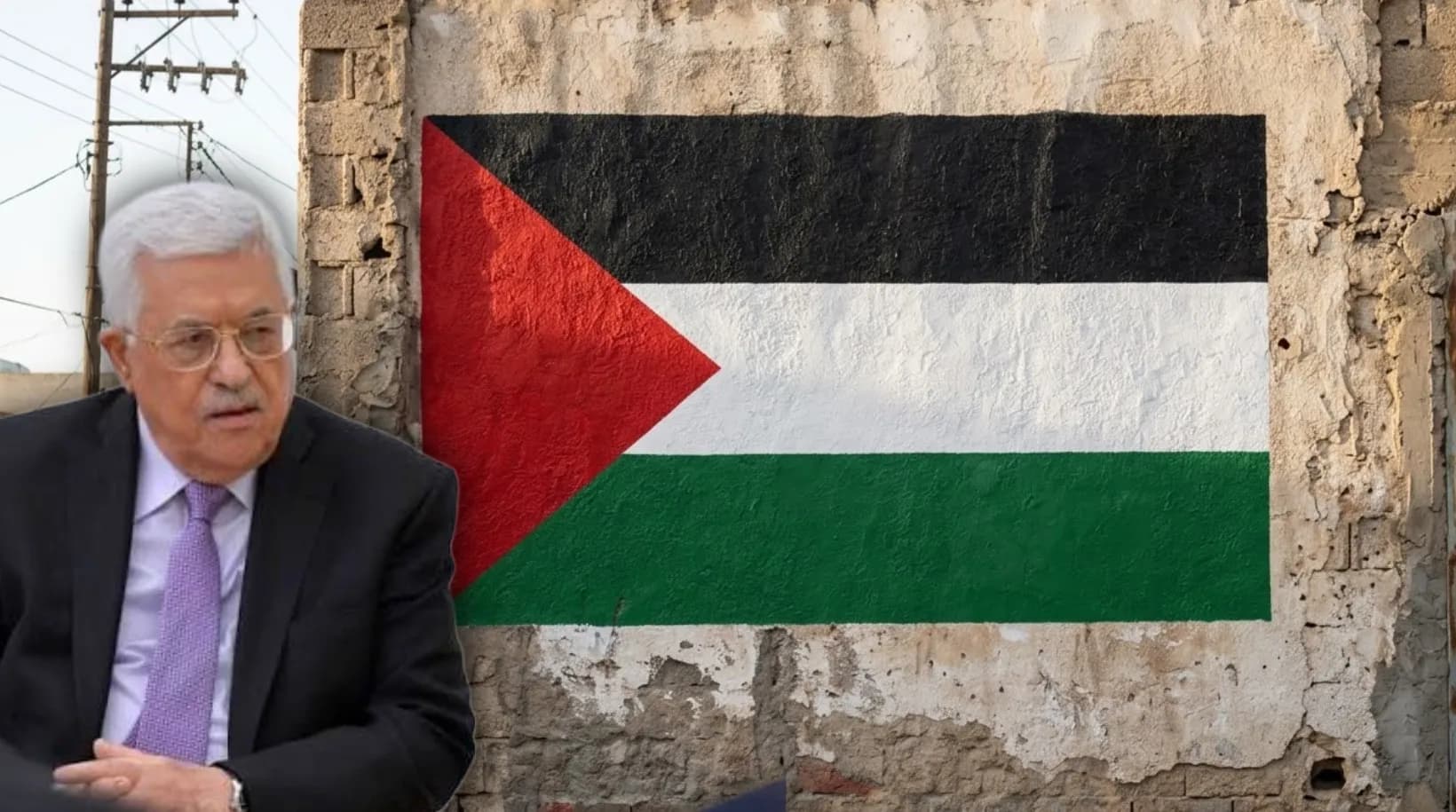
Why the US-Iran Talks in Islamabad Failed?
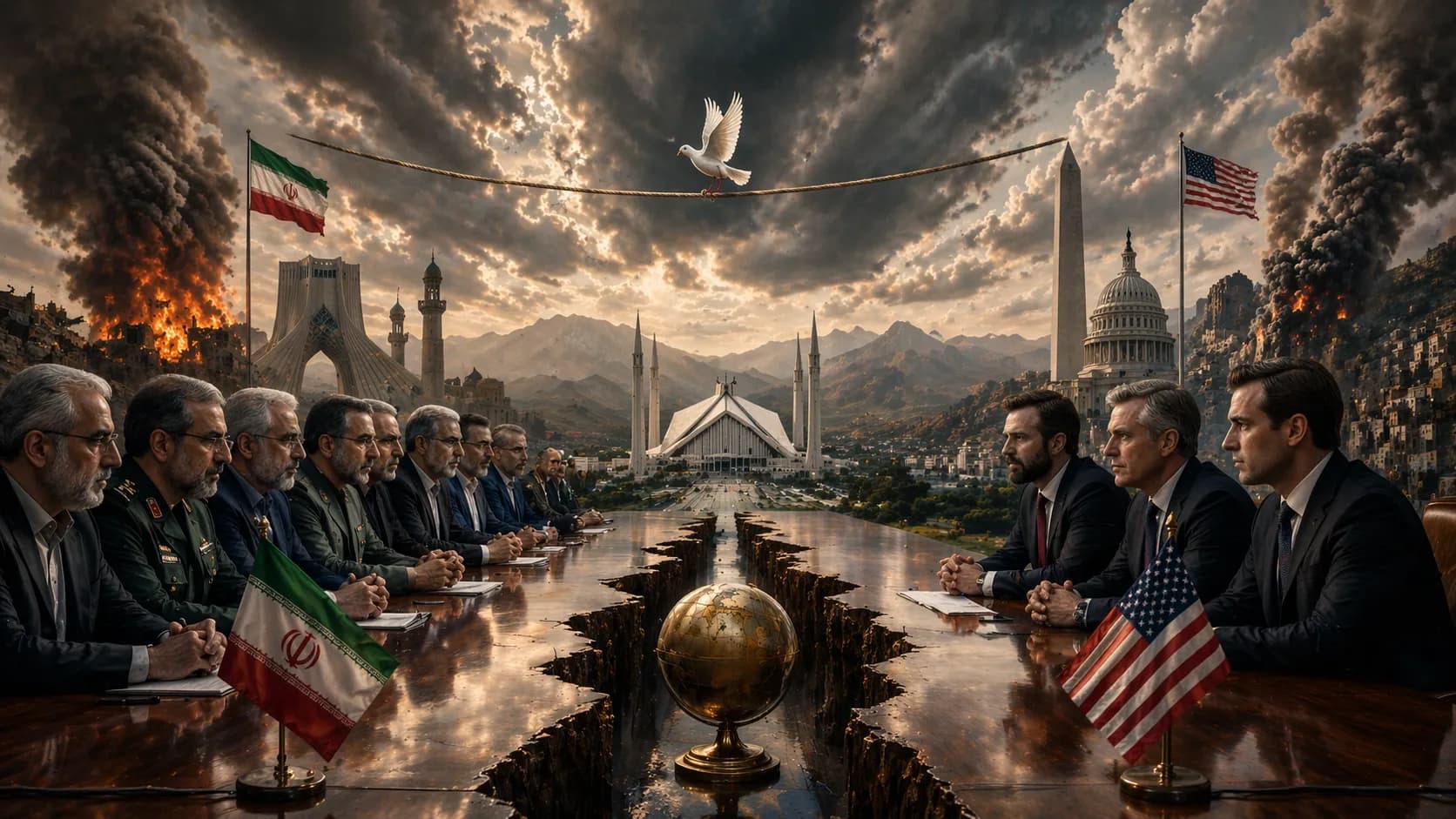
The peace talks between the United States and Iran took place in Islamabad on April 11 and 12, 2026, with Pakistan's Prime Minister Shehbaz Sharif mediating for twenty-one hours. In the end, no agreement was reached.
The two delegations were very different in size and style. Iran sent a large team of about seventy people, including Parliament Speaker Mohammad Bagher Ghalibaf, Foreign Minister Abbas Araghchi, military advisors, economic experts, and the governor of Iran's central bank. Iran came ready to discuss every small detail. The United States sent only three people. They were Vice President JD Vance, Special Envoy Steve Witkoff, and former senior advisor Jared Kushner. Both Witkoff and Kushner are known to have strong ties to Israel. The US team was very small and high-level, and this mismatch made negotiations difficult from the start.
The talks failed because the United States and Iran wanted very different things. The biggest gap was over Iran's nuclear program. The United States demanded that Iran completely stop all uranium enrichment and destroy its nuclear facilities, saying this was necessary to prevent Iran from building a nuclear bomb. Iran refused, arguing that it has the right to enrich uranium for peaceful purposes such as producing electricity and medical isotopes. This was the number one obstacle. Another major gap was over Lebanon. Iran insisted that any deal must include a halt to Israeli military attacks on Lebanon, because Iran supports Hezbollah in Lebanon and sees that fighting as part of the same conflict.
The United States said the talks were only between the US and Iran and refused to include a third country like Israel in the agreement. A third gap concerned sanctions and reparations. Iran demanded that all US sanctions be removed immediately and also asked for war reparations because of the February 28 attack that killed Iran's Supreme Leader. The United States was not willing to agree to full sanctions removal without first seeing major changes in Iran's behavior, and it rejected the idea of reparations.
The situation was made worse by the role of Israel. On the same day the talks began in Islamabad, Israel launched a very large attack on Lebanon, killing hundreds of people. From Iran's point of view, this attack proved that Israel did not want peace. Iran believed that the United States, with two pro-Israel delegates on its team, could not or would not stop Israel. This destroyed whatever trust remained between the two sides. Even if the United States wanted a deal, its ally Israel was actively fighting against Iran's interests, and the timing of the attack made compromise nearly impossible for Iran.
Looking at the facts without taking sides, the failure happened for three main reasons. First, the two sides started from positions that were too far apart. The United States wanted zero nuclear enrichment, while Iran wanted full sanctions relief and a Lebanon ceasefire. Neither side was ready to give up its main demand. Second, the delegations were not well matched. Iran brought experts to talk about details, while the United States brought only three political leaders, which made real negotiation difficult. Third, the timing was terrible because the war in Lebanon was still going on, and Israel's attacks made it impossible for Iran to compromise.
Therefore, the international community and the two sides should focus on small, practical steps that reduce the chance of a wider war. These recommendations are not idealistic. They are based on what might actually be possible in the coming weeks.
First, the two sides should agree on a humanitarian hotline. Right now, there is no direct communication between Washington and Tehran. This is dangerous because a small mistake, such as a naval confrontation in the Persian Gulf, could trigger full-scale war. A neutral country like Oman or Qatar could set up a secure telephone line between US military commanders and Iranian Revolutionary Guard commanders. This hotline would not solve any political issues. It would only be used to prevent accidents and de-escalate misunderstandings. This is a realistic first step because both sides have an interest in avoiding an all-out war.
Second, instead of negotiating a Lebanon ceasefire as part of the US-Iran deal, the two sides should agree to a limited, unofficial "quiet understanding" about Lebanon. This would not be a signed agreement. It would be a back-channel understanding, with no public announcement. This kind of informal arrangement has worked before in past conflicts between the US and Iran, such as the 2015 nuclear deal's implementation. It is realistic because neither side wants a full regional war.
Third, on the nuclear issue, the United States should abandon the demand for "zero enrichment" because Iran will never accept it. Instead, the US should propose a temporary freeze. For example, Iran would stop enriching uranium above three point six seven percent, which is the level needed for civilian power plants. In return, the US would allow Iran to export a small amount of its existing low-enriched uranium to Russia, reducing Iran's stockpile without forcing it to dismantle its facilities. This is realistic because it does not ask Iran to give up its nuclear program entirely. It only asks for a pause and a reduction. Many nuclear experts believe this kind of "freeze for freeze" is the only workable short-term solution.
Fourth, the United States must change its delegation if there are future talks. Sending Jared Kushner and Steve Witkoff, both known as pro-Israel figures, was a diplomatic disaster. Any future US team should include career diplomats and technical experts who have no personal ties to Israel. For example, the US could send the Under Secretary of State for Political Affairs and a retired general who is respected in the Middle East. This is realistic because the Biden administration or any future US government has many neutral career officials who are not connected to Israel. The current team was a political choice, not a necessity.
Fifth, the issue of war reparations is a non-starter. Iran will keep demanding them, but the United States will never agree. Instead, the US could offer a different form of compensation, such as supporting an international fund to rebuild hospitals and schools in Iran that were damaged in the February 28 attack.
Sixth, and most importantly, both sides need to accept that a comprehensive deal is impossible right now. The goal should not be peace. The goal should be crisis management. That means focusing on three things: preventing a direct US-Iran military clash, keeping oil flowing through the Strait of Hormuz at a reduced level, and avoiding a humanitarian catastrophe in Lebanon and Iran. If these three goals can be achieved over the next six months, then perhaps a broader negotiation can begin. But anyone who promises a quick peace deal is not being realistic.
Hence,the failure in Islamabad was not the end. But the path forward must be humble and practical. No grand bargains. No trust-building exercises that require trust that does not exist. Instead, back-channel hotlines, informal understandings, technical freezes, neutral mediators, and a focus on preventing disaster.
Uroosa Khan
Contributing writer at EUReflect.
Follow EUReflect
See more of our reporting on Google
Mark EUReflect as a preferred source and our stories are ranked higher for you in Top Stories, Discover and Google News — and carry a “preferred” badge when they are cited in AI results.
Add EUReflect as a preferred source