U.S. Launches Overnight Operation in Venezuela, Trump Claims Maduro Captured
The United States carried out a military operation in Venezuela overnight, triggering explosions in Caracas and other regions and leading to the alleged capture of President Nicolás Maduro and his wife Cilia Flores, according to statements by U.S. President Donald Trump.
Introduction
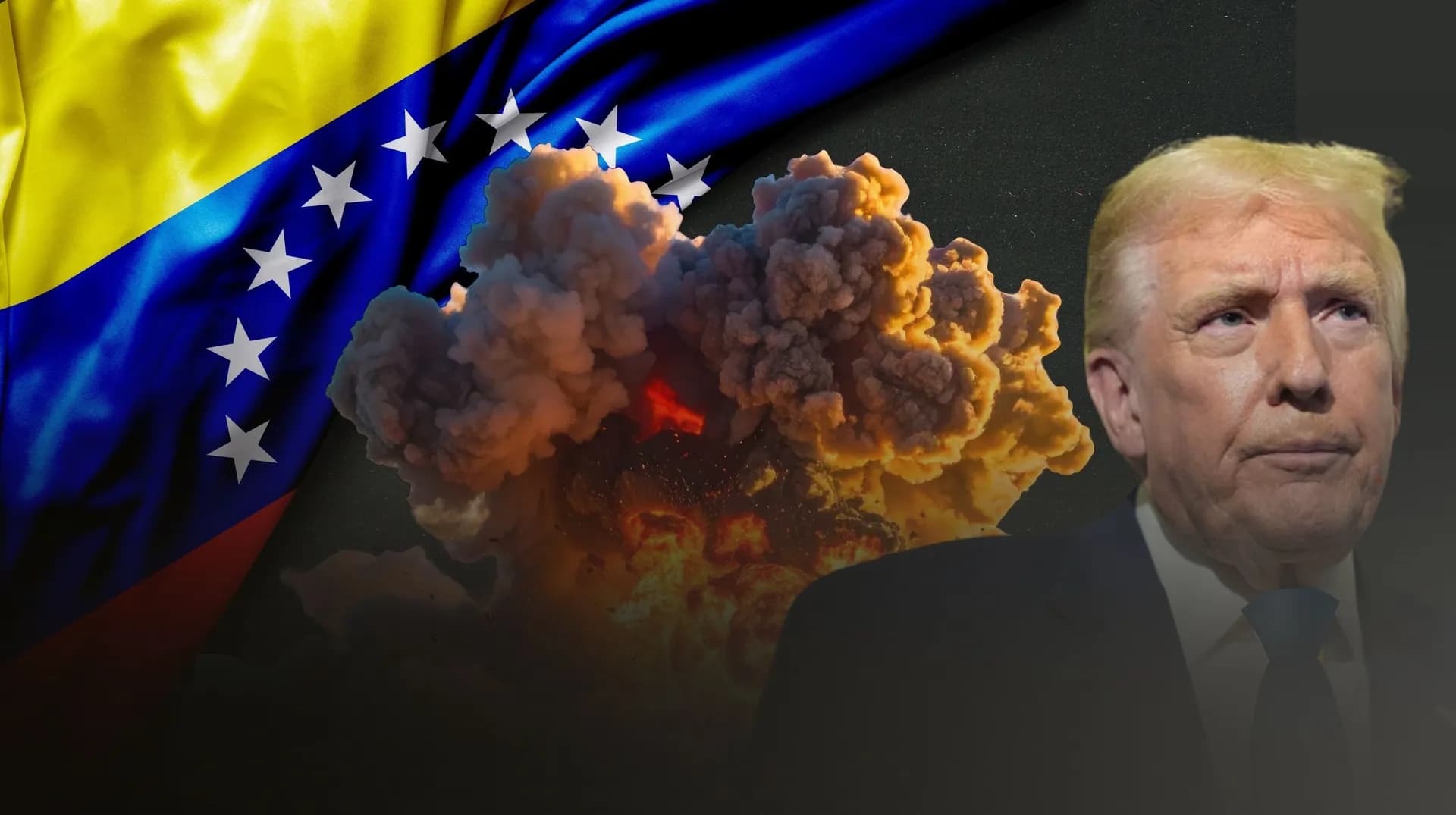
In the early hours of January 3, a series of powerful explosions and intense air activity over Venezuela’s capital, Caracas, triggered one of the most dramatic political and security crises the country has faced in recent years. What initially appeared to be a sudden military incident quickly escalated into an international confrontation following extraordinary statements from Washington, including claims that Venezuela’s president had been captured and removed from the country. As conflicting narratives emerged from Caracas and the United States, the events rapidly drew global attention and raised serious questions about sovereignty, international law, and regional stability.
Explosions and Military Activity in Caracas
Shortly after 02:00 local time, residents across multiple districts of Caracas reported loud and sustained explosions accompanied by low-flying aircraft and helicopters. International news agencies, citing eyewitness accounts, described military-style aircraft circling the capital while several neighborhoods experienced electricity outages. Social media footage showed flashes of explosions, helicopters hovering over the city, and large crowds gathering in the streets amid confusion and fear.
According to reporting by The New York Times, detonations were heard near the Fuerte Tiuna military complex, one of the most strategically important sites in the country, housing senior military leadership and key government institutions. Explosions were also reported near the Generalissimo Francisco de Miranda air base, commonly known as La Carlota. Additional footage showed flames at the Cuartel de la Montaña, the military museum that contains the mausoleum of former president Hugo Chávez, giving the incident powerful symbolic significance.
Reports later indicated that explosions were not limited to the capital. Local media and international outlets stated that blasts were also heard in other regions, including the coastal state of La Guaira. While the intensity of the explosions reportedly diminished after several hours, witnesses confirmed that aircraft continued to operate over Caracas well into the morning. At the time of reporting, Venezuelan authorities had not released any official casualty figures.
U.S. Claims and Legal Actions Against the Venezuelan Leadership
The crisis deepened when Donald Trump publicly claimed that Venezuelan President Nicolás Maduro and his wife, Cilia Flores, had been seized and taken out of Venezuela. These claims were not confirmed by Venezuelan officials, who denied any such development. Earlier reports from Venezuelan media had suggested that Maduro had signed a decree declaring a nationwide state of emergency.
According to sources cited by CBS News, the alleged operation was carried out by the elite U.S. special forces unit Delta Force. Media outlets noted that a similar scenario had been discussed in earlier U.S. policy debates and previously outlined by The New York Times in late 2025.
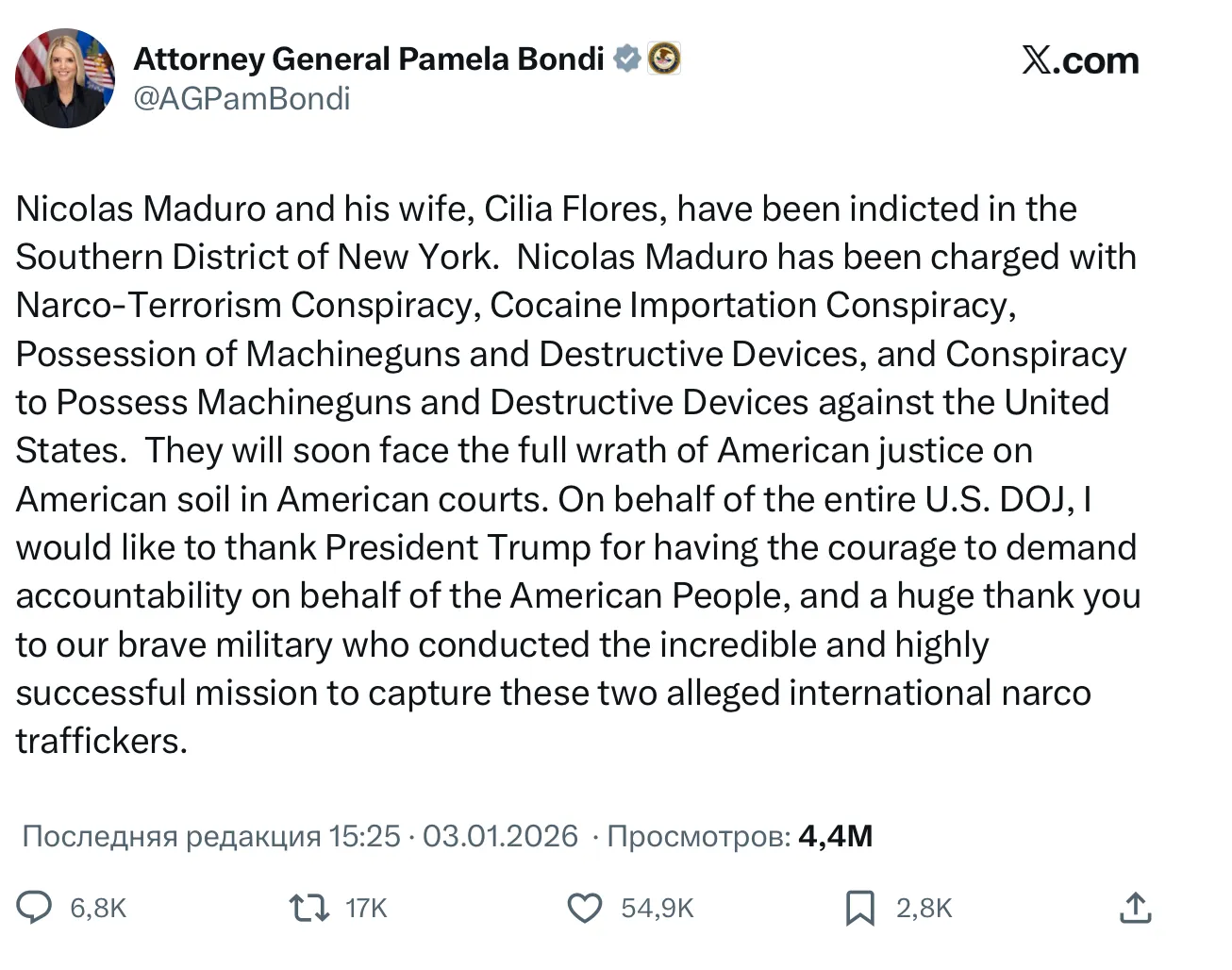
The legal dimension of the confrontation became clearer when U.S. Attorney General Pam Bondi announced that Maduro and Flores had been indicted in the Southern District of New York. The charges reportedly include narco-terrorism conspiracy, conspiracy to import cocaine into the United States, possession of machine guns and destructive devices, and conspiracy to use such weapons against the United States. Bondi stated that the accused would “soon face American justice,” explicitly thanking Trump and the U.S. military for their roles in the operation.
Venezuela’s Response and International Reactions
In Caracas, the government swiftly denounced the events as a foreign invasion. Venezuelan officials accused Washington of attempting to seize the country’s strategic resources and dismantle its political independence. A statement from the information ministry claimed that U.S. strikes had targeted both civilian and military sites in Caracas as well as in the states of Miranda, Aragua, and La Guaira.
Defense Minister Vladimir Padrino López released a video message accusing the United States of attacking civilian neighborhoods and vowed that Venezuela would resist what he described as foreign aggression. The government confirmed the declaration of a state of emergency, granting authorities extraordinary powers over mobilization, civil liberties, and the media.
Vice President Delcy Rodríguez addressed the nation on state television, demanding that Trump provide proof that Maduro and Flores were alive. She emphasized that under Venezuela’s constitution, presidential powers would temporarily transfer to her if the president were incapacitated or absent. Reports from The Wall Street Journal indicated that Rodríguez had been moved to a secure location.
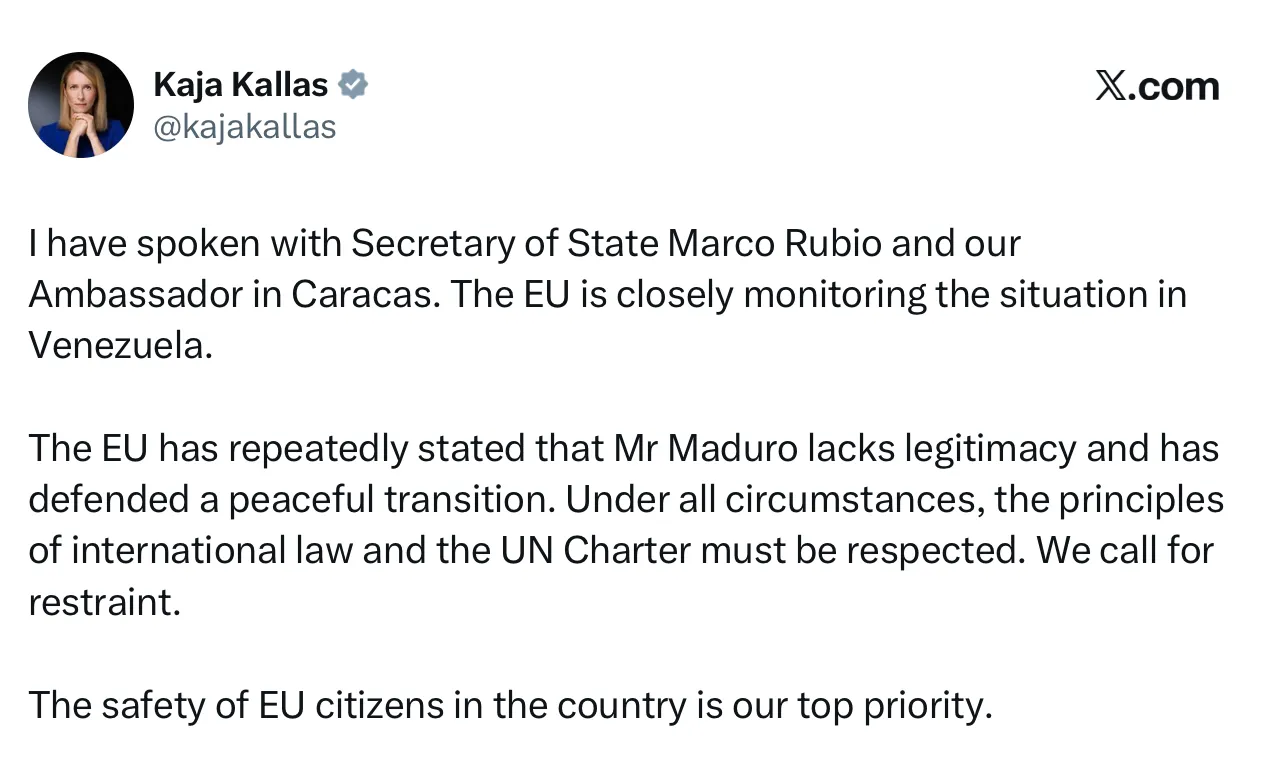
International reactions followed quickly. The European Union, through statements by European Commission President Kaja Kallas, called for restraint and stressed that international law and the United Nations Charter must be respected under all circumstances. EU officials also emphasized that the safety of European citizens in Venezuela remained a top priority as the situation continued to unfold.
Conclusion
The explosions in Caracas and the unprecedented claims made by the United States mark a critical turning point in Venezuela’s long-running political crisis. What began as a night of detonations and military flights rapidly evolved into a confrontation encompassing military force, criminal indictments, and sharp diplomatic escalation. With competing narratives from Washington and Caracas, and growing concern among international actors, the coming days will be decisive. Official confirmations, verifiable evidence, and international mediation efforts will play a crucial role in determining whether the crisis de-escalates—or spirals into a broader regional and global conflict.
Botakoz Unbayeva
Contributing writer at EUReflect.
Follow EUReflect
See more of our reporting on Google
Mark EUReflect as a preferred source and our stories are ranked higher for you in Top Stories, Discover and Google News — and carry a “preferred” badge when they are cited in AI results.
Add EUReflect as a preferred source