$14 Billion Critical Defense Package for Taiwan
The U.S. arms package for Taiwan is proceeding as planned. However, China’s response, the war in the Middle East, and the U.S. redistribution of military resources directly affect the power balance in the Taiwan Strait and regional security.
Introduction
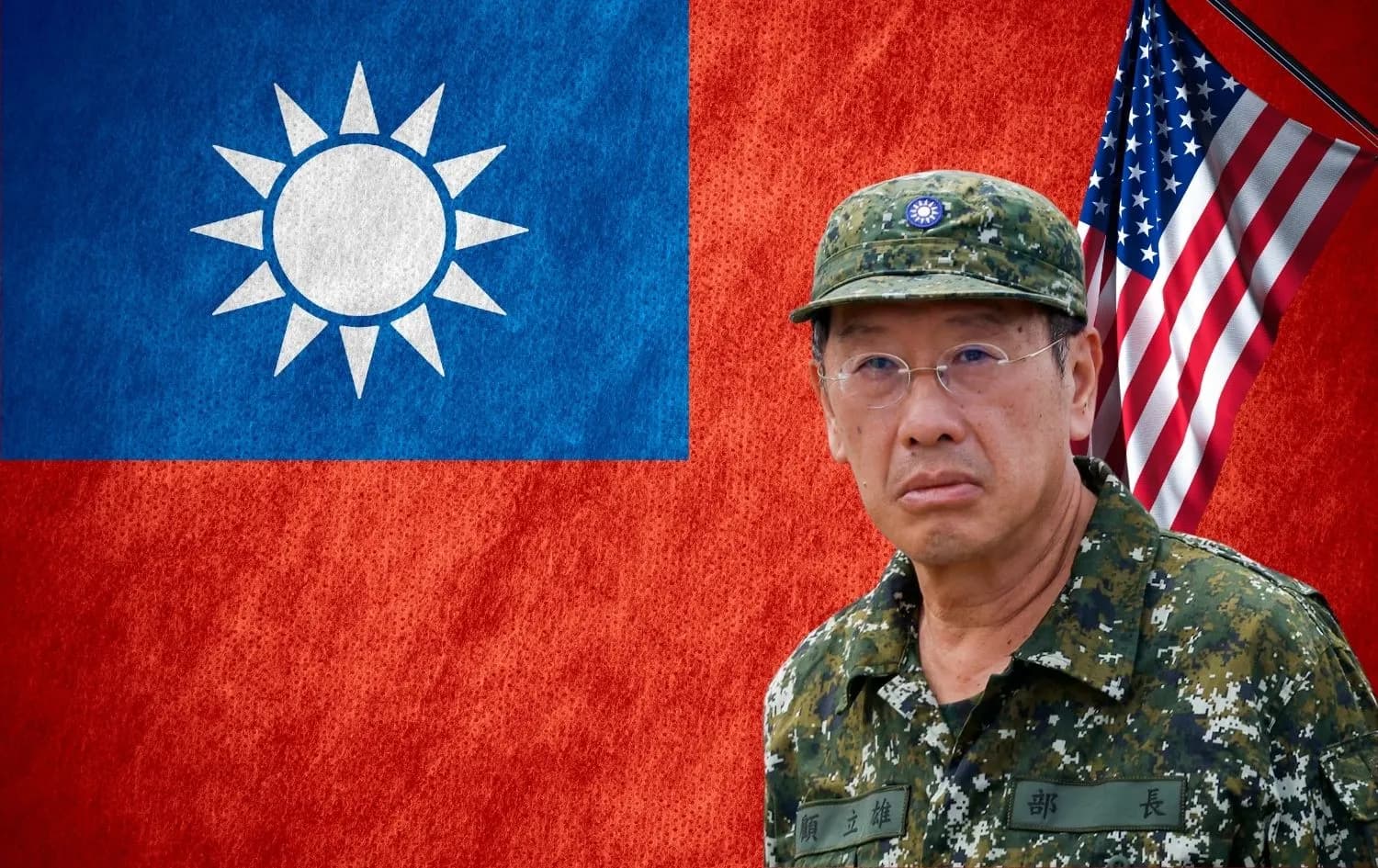
Recent statements by Wellington Koo (Taiwan Defence Minister) indicate that the United States’ internal review process for a second major arms package to Taiwan is progressing according to schedule. This prospective package—reportedly valued at approximately $14 billion and expected to include advanced interceptor missile systems—emerges at a time of intensifying geopolitical volatility. The convergence of U.S.–China strategic competition, heightened tensions in the Middle East, and evolving global force postures has transformed Taiwan into a focal node within the broader architecture of international security.
This report examines the continuity of U.S.–Taiwan defense cooperation, the structural constraints imposed by China’s strategic posture, and the implications of shifting U.S. military priorities for regional deterrence and stability.
1. Continuity of U.S. Arms Transfers and Strategic Signaling
The anticipated arms package reflects a sustained U.S. commitment to enhancing Taiwan’s asymmetric defense capabilities. Despite the absence of formal diplomatic recognition, the United States maintains a robust security relationship with Taiwan under its domestic legal framework, enabling continued arms transfers and defense coordination.
Donald Trump is expected to review and potentially approve the package, which would follow a previously announced $11 billion arms sale. Together, these transfers represent not merely transactional military exchanges but strategic signals aimed at reinforcing deterrence against potential coercive actions in the Taiwan Strait.
A critical component of this evolving defense architecture is the scheduled delivery of 102 PAC-3 air defense missiles produced by Lockheed Martin. These systems significantly enhance Taiwan’s layered missile defense capabilities, particularly against short- and medium-range ballistic threats. From a military-technical perspective, such deployments contribute to increasing the cost of potential aggression, thereby aligning with deterrence-by-denial doctrines.
Moreover, Taiwan’s defense establishment has emphasized close institutional coordination with U.S. counterparts, suggesting a high degree of interoperability and strategic alignment. This cooperation extends beyond hardware transfers to encompass intelligence-sharing, operational planning, and contingency preparedness.
2. China’s Strategic Response and the Limits of Deterrence Stability
China’s position on Taiwan remains rooted in its long-standing claim over the island, framing any external military support as a violation of its sovereignty. Xi Jinping has reiterated the necessity of handling arms sales to Taiwan with “prudence,” signaling both diplomatic اعتراض and implicit deterrent messaging.
From a strategic studies perspective, China’s response can be interpreted through the lens of escalation control and gray-zone tactics. Rather than immediate direct confrontation, Beijing has historically employed a combination of military signaling, economic leverage, and diplomatic pressure to counterbalance U.S. actions.
However, the intensification of U.S.–Taiwan defense ties introduces new complexities into this equilibrium. On one hand, enhanced Taiwanese capabilities may strengthen deterrence by raising the operational risks for China. On the other hand, such developments may incentivize Beijing to accelerate its own military modernization or adopt more assertive postures in the Taiwan Strait.
Additionally, the interplay between economic diplomacy and security policy cannot be overlooked. The Trump administration’s efforts to secure favorable trade arrangements with China have generated analytical debates regarding potential trade-offs between economic concessions and security commitments. While no explicit policy shift has been confirmed, the perception of strategic ambiguity itself can influence regional threat assessments and alliance behavior.
3. Middle East Contingencies and the Redistribution of U.S. Military Resources
The ongoing conflict involving Iran has introduced a critical variable into the Indo-Pacific security equation. The reallocation of U.S. military assets toward the Middle East raises questions regarding force availability, logistical sustainability, and response readiness in East Asia.
For Taiwan and other regional actors, this shift underscores the importance of assessing U.S. extended deterrence credibility under conditions of multi-theater engagement. The rapid consumption of advanced munitions and the strain on supply chains during high-intensity conflict scenarios may constrain the United States’ ability to sustain simultaneous commitments across geographically dispersed theaters.
President Trump’s decision to delay a planned visit to China further illustrates how crisis-driven reprioritization can disrupt diplomatic timelines and strategic signaling. While such delays may appear procedural, they can carry substantive implications for negotiation dynamics, alliance reassurance, and adversarial perception.
Taiwanese defense officials have refrained from direct commentary on U.S. deployments, yet they have emphasized continuous monitoring of military indicators across both the Taiwan Strait and mainland China. This approach reflects a broader strategic culture centered on vigilance, early warning, and adaptive response planning.
Conclusion
The evolving trajectory of U.S.–Taiwan defense relations demonstrates a pattern of strategic continuity amid an increasingly complex and contested international environment. While current indicators suggest that arms transfers will proceed as planned, the broader context—characterized by great power competition, regional conflicts, and shifting military priorities—introduces significant uncertainty into long-term projections.
China’s calibrated yet persistent opposition, coupled with the United States’ global security commitments, creates a dynamic in which deterrence stability remains inherently fragile. Taiwan, positioned at the intersection of these competing forces, will continue to serve as a critical barometer of U.S. credibility and Chinese strategic intent.
In this context, the sustainability of deterrence in the Taiwan Strait will depend not only on material capabilities but also on policy coherence, alliance coordination, and the management of escalation risks across multiple theaters of conflict.
Zhansaya Nurlanovna
Contributing writer at EUReflect.
Follow EUReflect
See more of our reporting on Google
Mark EUReflect as a preferred source and our stories are ranked higher for you in Top Stories, Discover and Google News — and carry a “preferred” badge when they are cited in AI results.
Add EUReflect as a preferred source