A Centennial Move by the United States in the South Caucasus: The 100-Year Lease Proposal for the Zangezur Corridor
The US has proposed a significant geopolitical solution for the disputed Zangezur Corridor (32 km), suggesting a neutral American logistics company manage the route for 100 years. The corridor is vital for the Middle Corridor (Central Asia to Europe via Türkiye), potentially weakening Russian and Iranian transit influence. The proposal aims to resolve the sovereignty conflict between Armenia and Azerbaijan by providing an impartial third-party security and cargo oversight, driving broader diplomatic realignment in the South Caucasus.
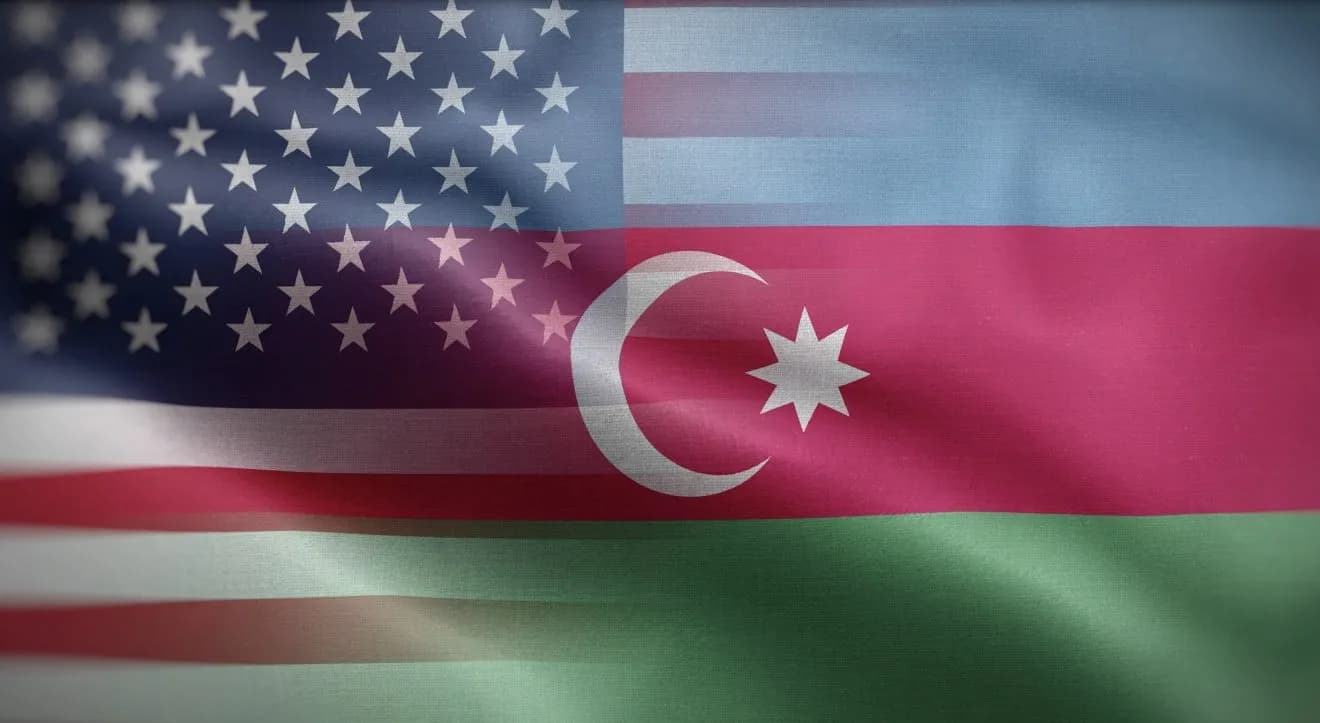
The United States has put forward a noteworthy proposal regarding the Zangezur Corridor, a focal point of ongoing transportation and sovereignty disputes in the South Caucasus. U.S. Ambassador to Türkiye, Tom Barrack, has suggested that the 32-kilometer route, whose resolution has remained elusive for years between Azerbaijan and Armenia, be managed for a century by a neutral American logistics company. This initiative is not merely a technical arrangement to facilitate transit between the two nations, but rather constitutes a geopolitical maneuver with the potential to reshape regional strategic alignments.[1]
The corridor’s significance transcends bilateral interests, as it represents a vital segment of the Middle Corridor, a transcontinental initiative linking Central Asia to Europe via Türkiye. The operationalization of the Zangezur route would weaken Russia’s monopoly over the Northern Corridor, reduce dependency on Iran’s southern transit pathways, and significantly enhance Türkiye’s physical and economic connectivity with Central Asia.
From the Armenian perspective, even the nomenclature “Zangezur Corridor” remains highly contentious, perceived as a challenge to its territorial integrity and sovereignty over the Syunik Province. While Armenia voices concerns over the corridor’s geopolitical implications, Azerbaijan emphasizes the lack of guaranteed unimpeded access and, in response, supports the idea of a neutral administrative structure. In this context, the U.S. proposal seeks to defuse tensions by transferring cargo and security oversight to an impartial third party.
According to an analysis published by the Carnegie Endowment, Washington’s proposal appears inspired by prior European Union initiatives aimed at fostering technical de-escalation. However, Armenia’s insistence on applying the same monitoring framework to the Nakhchivan side has been met with resistance from Baku, citing sovereignty sensitivities.[2]
This development holds implications beyond the immediate Armenia-Azerbaijan peace process. It may influence Türkiye-Armenia normalization efforts, the future of transregional trade corridors across Central Asia, Iran’s role as a key transit country, and Russia’s enduring strategic posture in the region. Moreover, the corridor aligns with China’s Belt and Road Initiative and has the potential to serve as a strategic alternative to traditional maritime trade routes such as the Suez Canal.
Recent diplomatic engagements between Ankara and Yerevan, most notably the visit of Armenian Prime Minister Nikol Pashinyan to Türkiye, underscore that the Zangezur Corridor is no longer a mere transportation project. It has evolved into a symbol of broader diplomatic realignment and strategic recalibration in the region.
In this emerging geopolitical configuration centered on Zangezur, the positions adopted by Russia, Iran, Türkiye, and Central Asian states will play a decisive role not only in shaping trans-Eurasian connectivity but also in redefining the contours of regional security and economic architecture.
References
[1] Tom Barrack: “ABD, Zengezur Koridoru’nu 100 Yıllığına Kiralamak İstiyor” https://www.sde.org.tr/amerika/tom-barrack-abd-zengezur-koridoru-nu-100-yilligina-kiralamak-istiyor-haberi-59252
[2] US Offers to Manage Armenian Segment of Zangezur Corridor, https://caspiannews.com/news-detail/us-offers-to-manage-armenian-segment-of-zangezur-corridor-2025-7-18-0/
Botakoz Unbayeva
Contributing writer at EUReflect.
Follow EUReflect
See more of our reporting on Google
Mark EUReflect as a preferred source and our stories are ranked higher for you in Top Stories, Discover and Google News — and carry a “preferred” badge when they are cited in AI results.
Add EUReflect as a preferred source