A Multipolar World Takes Shape
UN chief warns that military and economic might no longer guarantees political outcomes, citing Ukraine and Iran as examples of superpower limits.
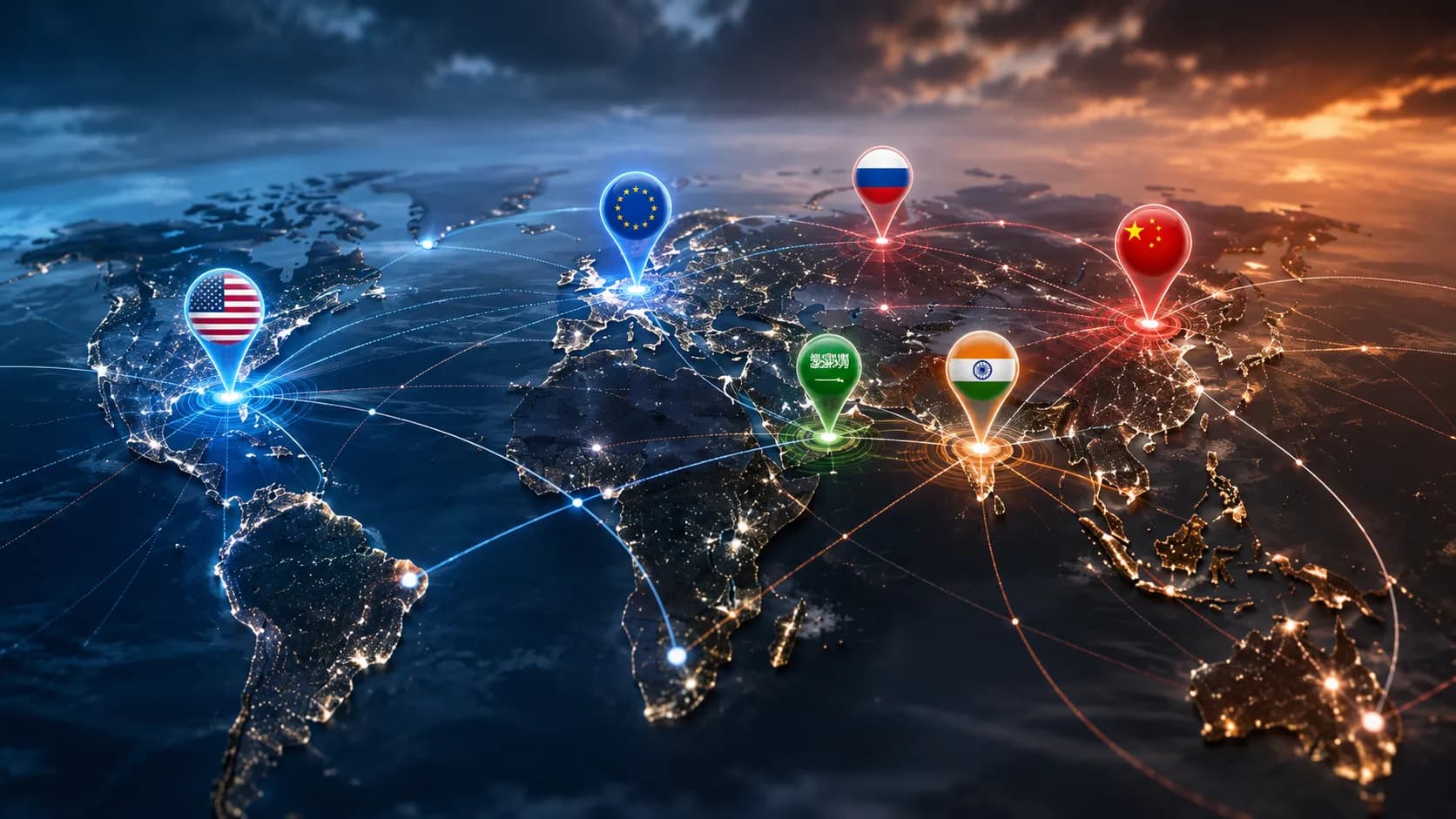
The international system is moving deeper into a multipolar era as American dominance faces new constraints, China expands its influence, Russia challenges the existing security architecture and emerging powers increasingly pursue independent foreign policies.
But multipolarity is not automatically producing greater balance.
Instead, the world is simultaneously becoming more multipolar and more polarized, creating an international environment in which several centers of power coexist while geopolitical divisions become increasingly difficult to manage.
Superpowers Are Reaching Their Limits
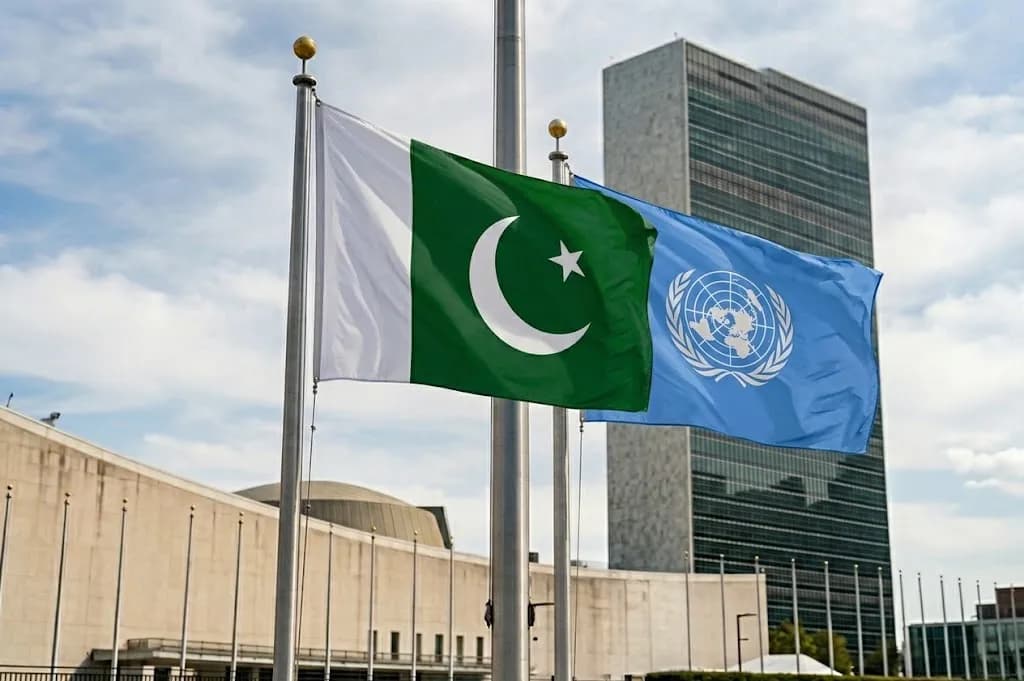
One of the clearest assessments of this transformation came this week from UN Secretary-General António Guterres.
Guterres argued that recent conflicts have demonstrated the limits of even the world's most powerful states. He pointed to Russia's prolonged war in Ukraine and the confrontation between the United States and Iran as examples showing that military and economic superiority no longer guarantees the ability to impose political outcomes.
He warned that declining U.S. dominance and the emergence of additional centers of power are creating a genuinely multipolar international system. Without stronger mechanisms for cooperation, however, such a system could resemble the unstable balance of powers that existed before the First World War.
This distinction is increasingly important: multipolarity distributes power, but it does not necessarily distribute stability.
China and India Show a Different Model
The emerging order cannot simply be described as a new Cold War between the United States and China.
India demonstrates why.
New Delhi cooperates with Washington while simultaneously participating in BRICS, maintaining strategic relations with Russia and protecting its own room for maneuver.
China and India held another round of high-level border talks in Beijing on August 25. Despite their long-running territorial dispute, both sides agreed to continue dialogue and work toward a mutually acceptable settlement. Chinese Foreign Minister Wang Yi described China-India relations as having global and strategic significance.
The development reflects one of the defining characteristics of multipolarity: countries can compete in one area while cooperating in another.
BRICS Represents the Rise of the Global South
The expansion and growing political importance of BRICS provides another indication of the redistribution of international power.
The 2026 BRICS Summit in New Delhi is expected to focus on global governance reform, economic cooperation, trade, investment and the representation of developing economies in international institutions.
South Africa has explicitly described strategic autonomy and multipolarity as important themes within the bloc, while also acknowledging the challenge of maintaining consensus among an increasingly diverse membership.
BRICS therefore should not necessarily be understood as a unified anti-Western alliance. Its members have different security relationships, economic priorities and geopolitical interests.
Its significance lies partly in something broader: major developing countries increasingly want greater influence over the rules governing the international system.
Middle Powers Are Gaining Space
Multipolarity is also increasing the importance of countries that are neither superpowers nor dependent members of a single geopolitical bloc.
India, Türkiye, Saudi Arabia, Brazil, Indonesia, the UAE and other middle powers increasingly maintain relationships with several competing centers simultaneously.
The same trend can be seen economically.
Mercosur is accelerating negotiations with Canada, Japan, the UAE, India and Vietnam as South American states seek to diversify their international partnerships amid U.S.-China competition and wider geopolitical instability.
Rather than choosing one camp permanently, many governments are pursuing strategic flexibility.
The Global Economy Is Fragmenting
The political transformation is increasingly visible in economics.
Tariffs, sanctions, investment controls, industrial subsidies and supply-chain security policies are dividing parts of the global economy along geopolitical lines.
The World Economic Forum estimates that geoeconomic fragmentation is already costing the global economy between $213 billion and $307 billion annually. Importantly, fragmentation is spreading beyond direct geopolitical competitors and increasingly affecting relations between traditionally aligned economies.
UN Trade and Development has similarly warned that geopolitical competition, supply-chain security, digital trade and new economic arrangements are reshaping the multilateral trading system.
The emerging world may therefore have several political poles but also increasingly separate technological, financial and commercial networks.
Multipolarity Without Multilateralism
This may ultimately become the central geopolitical problem of the coming decade.
The World Economic Forum's Global Risks Report 2026 describes the danger as “multipolarity without multilateralism”: more centers of power combined with weaker international institutions and declining agreement over common rules.
The United Nations Security Council already illustrates the problem. Divisions among major powers have repeatedly restricted its ability to respond effectively to major conflicts, while geopolitical crises are simultaneously affecting shipping routes, food systems and international trade.
The world is therefore not simply moving from American unipolarity toward another clearly defined order.
It is moving toward something more complicated.
Washington remains extraordinarily powerful. Beijing is becoming more influential. Russia remains a major military actor. India is rising. Europe is searching for greater strategic autonomy, while middle powers and the Global South are demanding greater influence.
The defining question may no longer be whether the world will become multipolar.
It already is becoming multipolar. The real question is whether these competing poles can build a system capable of preventing multipolarity from turning into permanent polarization.
Ahmet Balakan
Contributing writer at EUReflect.
Follow EUReflect
See more of our reporting on Google
Mark EUReflect as a preferred source and our stories are ranked higher for you in Top Stories, Discover and Google News — and carry a “preferred” badge when they are cited in AI results.
Add EUReflect as a preferred source