Another Step Toward an Alliance in Central Asia?
Uzbekistan and Kyrgyzstan signed a Treaty on Allied Relations during President Shavkat Mirziyoyev’s state visit, strengthening long-term cooperation. The agreement focuses on trade, transport, energy, and regional connectivity, with the goal of expanding bilateral trade to $3 billion.
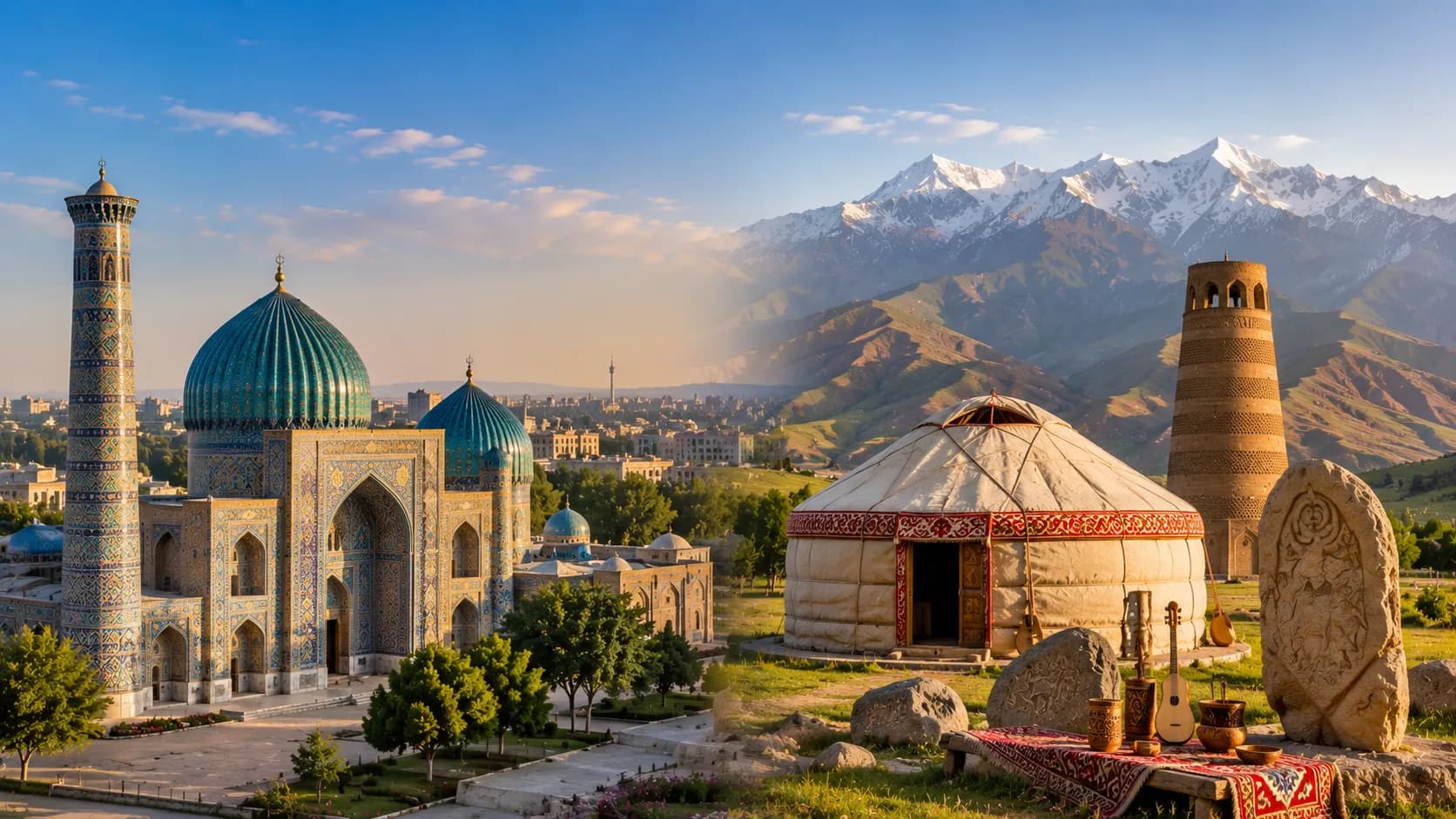
President Shavkat Mirziyoyev’s state visit to Kyrgyzstan may mark the beginning of a new stage in Uzbekistan–Kyrgyzstan relations. The summit’s principal outcome was the signing of the Treaty on Allied Relations, which is intended to place bilateral cooperation on a more systematic and long-term foundation.
Strong economic fundamentals are essential for any allied relationship. In recent years, bilateral trade has grown steadily, reaching $1.2 billion in 2025, reflecting a positive trend. The two countries have now set an ambitious target of increasing this figure to $3 billion. Achieving this goal will require the implementation of new joint projects in industry, energy, agriculture, and other key sectors.
The transport sector could become a major driver of deeper cooperation. The China–Kyrgyzstan–Uzbekistan railway is expected to significantly expand regional trade and transit opportunities. In the water and energy sector, the parties also reached agreements on the efficient management of transboundary water resources and reaffirmed their commitment to continuing cooperation on the Kambarata Hydropower Plant project.
Overall, the summit once again confirmed the steady progress of Uzbekistan–Kyrgyzstan relations. The agreements signed demonstrate both countries’ readiness to strengthen economic ties, improve transport connectivity, and expand practical cooperation across the region.
The Treaty on Allied Relations, signed in Cholpon-Ata, is likely to reinvigorate discussions about a new stage of interstate cooperation in Central Asia. If the current trend of growing mutual trust and economic interdependence continues, it is entirely possible that even deeper forms of regional cooperation will emerge in the future.
Mukhtor Nazirov, Expert on Central Asian Affairs and International Politics (PhD, Associate Professor)
Mukhtor Nazirov
PhD, Associate Professor
Follow EUReflect
See more of our reporting on Google
Mark EUReflect as a preferred source and our stories are ranked higher for you in Top Stories, Discover and Google News — and carry a “preferred” badge when they are cited in AI results.
Add EUReflect as a preferred source