Business Diplomat: Three Gains from Protocol
This interview was conducted with **Hojiakbar Mavlyanov**, one of Kyrgyzstan’s young and dynamic members of parliament. A politician with experience in international affairs and a strong understanding of diplomatic protocol, Mavlyanov has represented Kyrgyzstan on numerous international platforms. Alongside his political career, he also brings experience in business and strategic advisory work, allowing him to approach contemporary issues from the interconnected perspectives of politics, diplomacy and the private sector. In this interview, Mavlyanov shares his views on diplomacy, political leadership and business, offering insight into the role of a new generation of Kyrgyz representatives in an evolving international environment.
Introduction
In an international meeting, even the best-prepared presentation can be overshadowed by a wrong form of address or an out-of-place gesture. Diplomatic protocol is the most reliable tool a businessperson has against such risks. In this part of its interview series, Business Diplomat presents an assessment that sums up, in a single sentence, three practical gains protocol knowledge brings to businesses.
Three advantages, one sentence
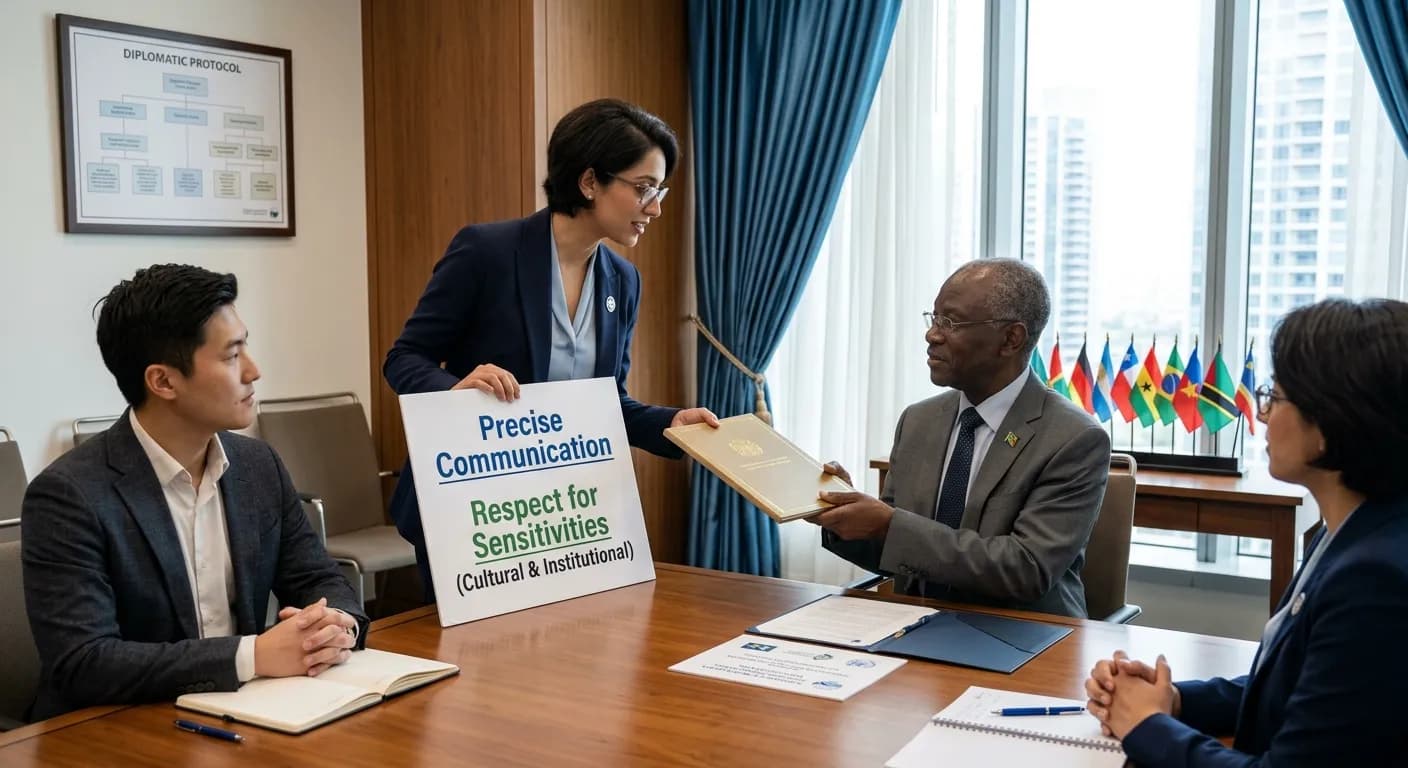
"Diplomatic protocol knowledge provides businesses with various practical advantages: it reduces the risk of misunderstanding, facilitates effective negotiations and strengthens reputation in the business world; because a businessperson who knows diplomatic protocol communicates correctly in different cultural and institutional environments and so respects sensitivities, manages the negotiation process more soundly, and creates a professional and trustworthy impression in the eyes of the other party."
Business Diplomat commentary
The sentence has two halves joined by the word "because". The first half lists three results; the second gives the reason for each. This structure does not leave the benefit of protocol as a claim; it also shows the mechanism.
It reduces the risk of misunderstanding. The first gain is a matter of risk management. In different cultural and institutional settings, the same word or act carries different meanings. A direct "no" counts as clarity in one setting and rudeness in another. A businessperson who knows protocol frames the message in a way the other side will understand and respects sensitivities. The distance between intention and perception shrinks. The cost of misunderstanding is often invisible but real: delayed replies, cooling relationships and losses whose cause is never learned.
It facilitates effective negotiations. The second gain concerns the negotiation process itself. The success of a negotiation depends not only on the content of the offer but on how the process is managed: who should be at the table, in what order the issues are taken, when to press and when to pause. This is what "manages the negotiation process more soundly" means. Parties who lose no time on procedural problems can give their energy to the real subject, finding the common interest.
It strengthens reputation. The third gain is the longest-lasting. Reputation is not won in a single meeting; it is the sum of the impressions left in every contact. The text uses two adjectives together: professional and trustworthy. Professionalism signals how the work is done; trustworthiness signals that promises will be kept. A businessperson with command of protocol gives the other side the feeling that "working with this person is easy and safe". Business circles are small, and that impression reaches the next meeting before the person does.
The three gains feed each other. The order is not accidental. When misunderstandings fall, negotiation moves more easily. Well-managed negotiations leave a good impression. A strong reputation means the next meeting begins with trust already in place between the parties. Protocol knowledge thus becomes a form of capital that renews itself with every contact.
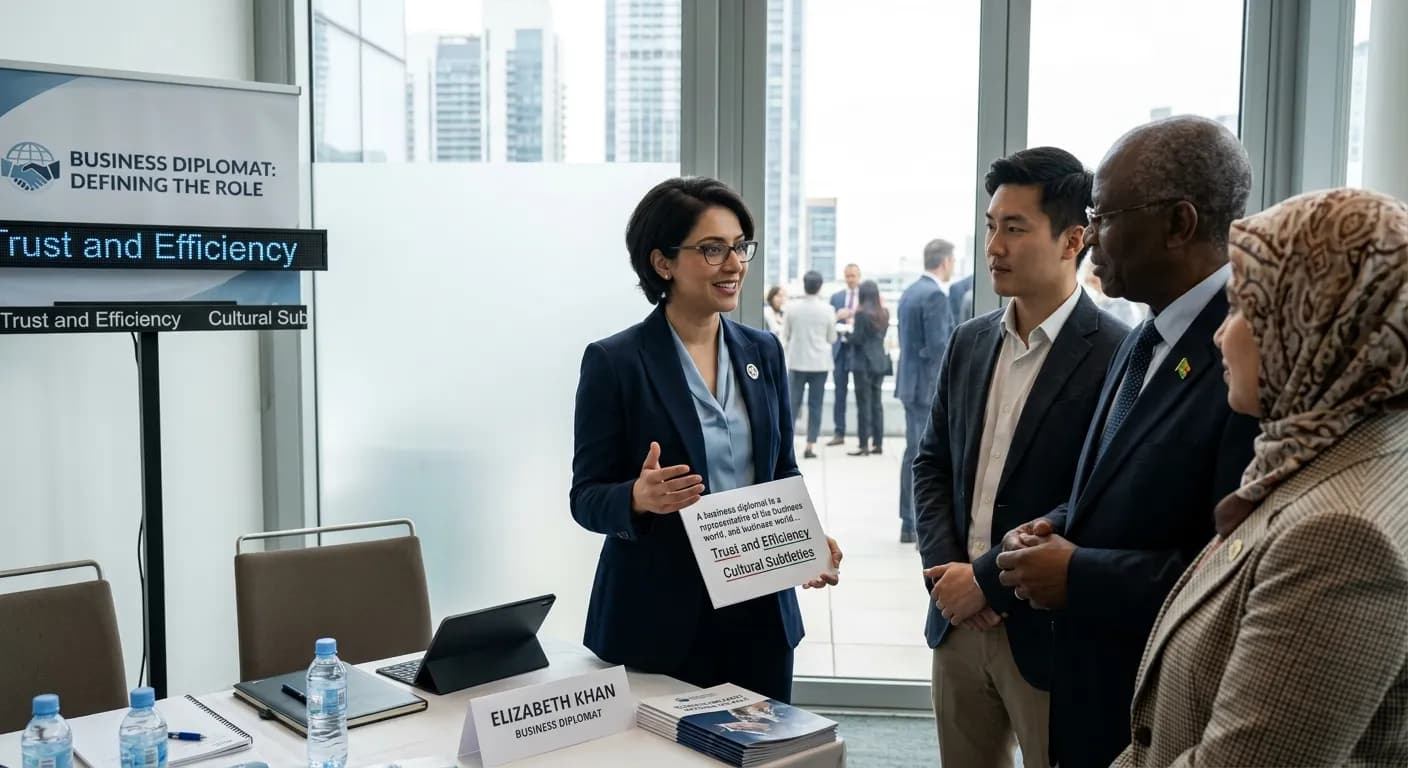
The role of Business Diplomat. The platform's mission is to give young people experience, bring a diplomatic order to the business world, and benefit states by revitalising the economy. The three gains listed in the text are what "diplomatic order" means in concrete terms for business. Business Diplomat aims to make protocol knowledge something not only large companies and experienced executives can draw on, but also young professionals and businesses entering new markets.
Conclusion
Diplomatic protocol knowledge brings businesses three concrete gains: fewer misunderstandings, more effective negotiation and a stronger reputation. Their common source is a businessperson who can communicate correctly in different environments and respects sensitivities. Business Diplomat aims to spread this competence and to position protocol as a skill that gives a competitive advantage in the business world.
Botakoz Unbayeva
Contributing writer at EUReflect.
Follow EUReflect
See more of our reporting on Google
Mark EUReflect as a preferred source and our stories are ranked higher for you in Top Stories, Discover and Google News — and carry a “preferred” badge when they are cited in AI results.
Add EUReflect as a preferred source