Can Islamabad 2.0 Deliver Peace?
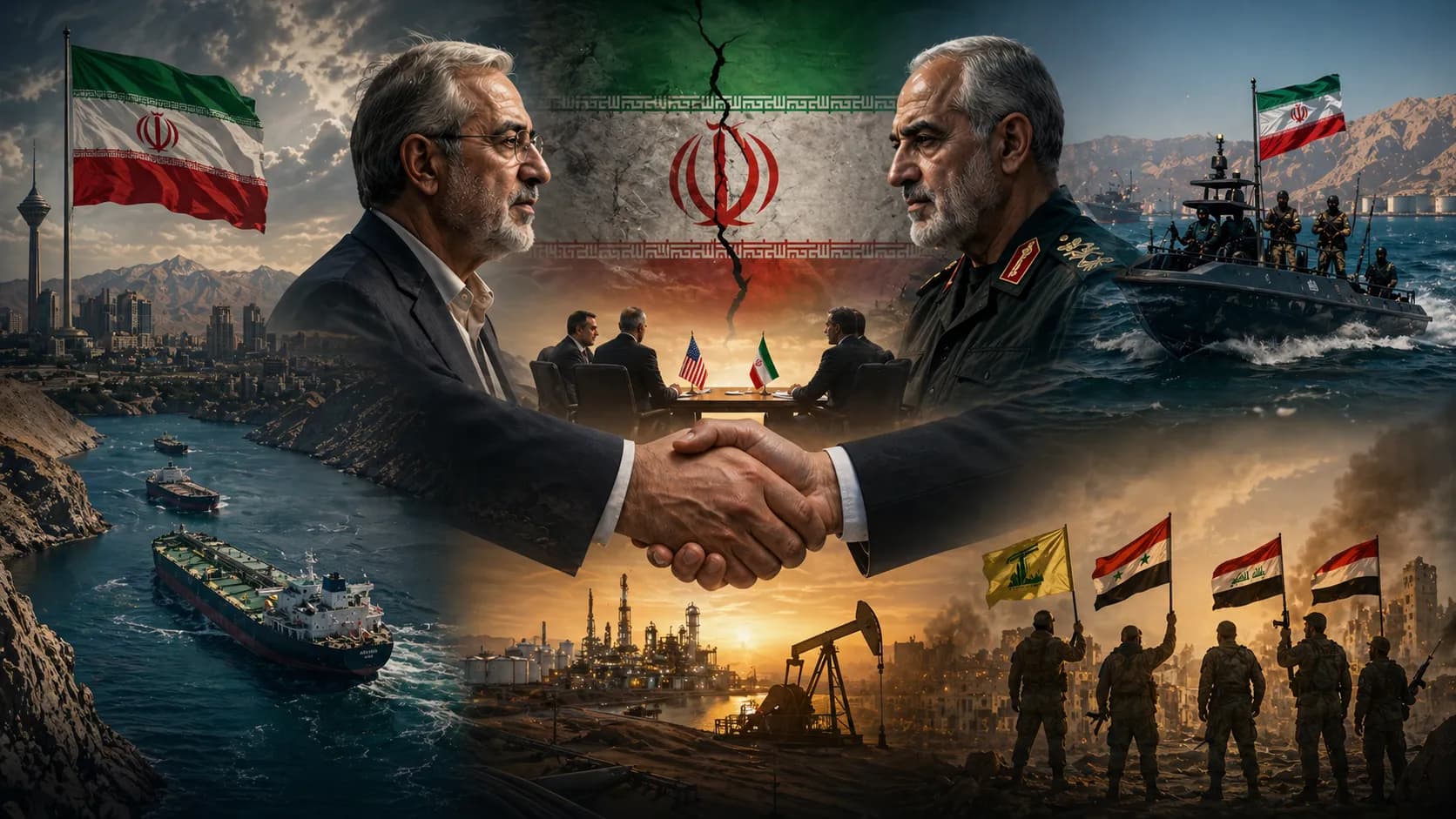
Iran is sending confusing signals to the world. One day its diplomats talk about peace. The next day its navy stops a ship in the Strait of Hormuz. This is not a mistake. This is the result of a power struggle happening insidethe country.
Iran is split into two groups that do not trust each other. The first group is the civilian leadership. This includes the president and the foreign minister. They want to reduce tensions with America. They want sanctions removed so their economy can recover. They know that Iran's oil cannot be sold freely right now.
The second group is the IRGC, the powerful military commanders. They do not want a deal. They believe giving up nuclear work is a betrayal. They also make a lot of money from the current situation. Sanctions and isolation allow them to control smuggling and black markets. If Iran opens up to theworld, their power will shrink.
Because these two groups are fighting each other, Iran cannot keep a single promise. One hand signs a diplomatic paper. The other hand seizes a ship. This is not confusion. This is a country at war with itself.
Pakistan has stepped forward to host the talks between the United States and Iran. Islamabad wants to become an important security partner for the Middle East. It is building stronger ties with Saudi Arabia and Qatar. It also wants to move away from always thinking about India.
Hosting these talks is a sign of Pakistan's growing diplomatic influence. By providing a neutral ground for negotiations, Pakistan hopes to bring both sides to the table. This effort reflects Pakistan's desire to promote stability in the region. Whether the talks succeed depends on Iran and the United States, but Pakistan deserves credit for trying.
If sanctions are removed, Iran could sell four million barrels of oil every day. That much oil would lower global prices. Gulf countries like Saudi Arabia and the UAE would lose a lot of revenue. At the same time, Iran would get back nearly one hundred billion dollars in frozen assets. Its banks would reconnect to the world. International companies would return.
This is the Gulf's nightmare. If the deal fails, the Gulf faces a nuclear Iran and constant fighting in the strait. If the deal succeeds, the Gulf faces a rich and powerful Iran that competes for business and influence. Either way, the Gulf loses.
Some people believe Iran wants a nuclear bomb to become strong. But the truth is Iran already has three powerful tools that give it enormous influence.First, the Strait of Hormuz. Nearly one‑fifth of the world's oil passes through this narrow waterway. Iran can threaten or block this strait at any time, causing global prices to spike. That is a weapon in itself.Second, oil. Even under sanctions, Iran has shown it can disrupt the global energy market. If sanctions are lifted, Iranian oil alone could reshape the entire economy of the Middle East.
Third, Iran's network of proxies,groups in Lebanon, Syria, Iraq, and Yemen. These armed allies give Iran the ability to strike back or create chaos far beyond its borders. With these three tools, Iran can already pressure its enemies, protect its interests, and dominate regional discussions. A nuclear bomb would bring only more sanctions, more enemies, and more danger. Iran does not need the bomb. It has already won the game of influence through geography, energy, and allies.
However, Iran already holds the keys to regional power through its geography, oil, and alliances. A peaceful future without nuclear weapons is not only possible, it is already within reach. Ourgenerations needs a peace over confrontations.
Uroosa Khan
Contributing writer at EUReflect.
Follow EUReflect
See more of our reporting on Google
Mark EUReflect as a preferred source and our stories are ranked higher for you in Top Stories, Discover and Google News — and carry a “preferred” badge when they are cited in AI results.
Add EUReflect as a preferred source