China’s Energy Supremacy: The Hidden Weapon in the AI Race
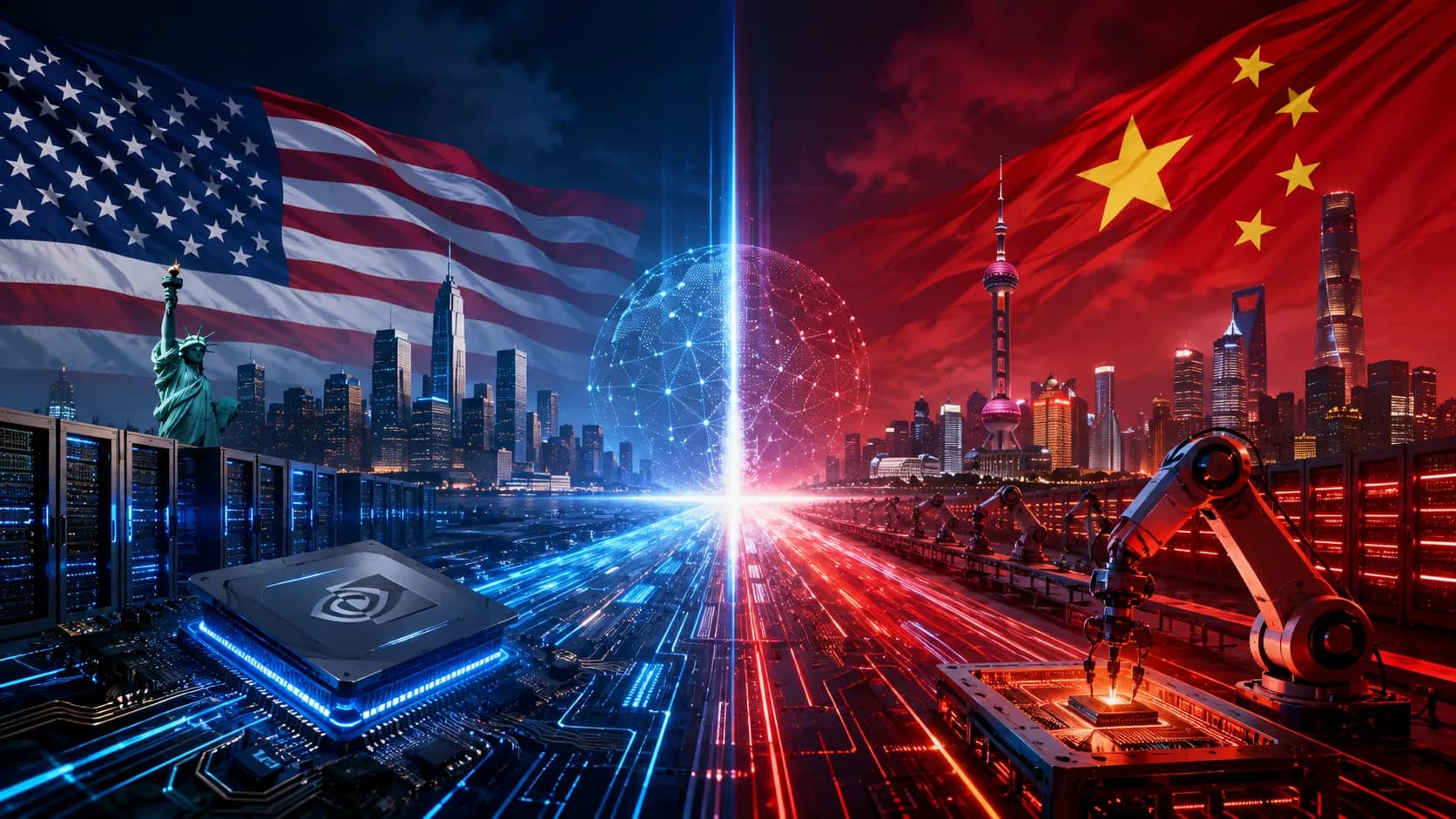
In the AI race between the US and China, the decisive factor is no longer only chip technology but also energy capacity. China gains an advantage through cheap and large-scale electricity production, while the US faces energy infrastructure bottlenecks. However, China also struggles with chip and infrastructure integration challenges.
Introduction
Artificial intelligence (AI) has emerged as the most critical arena of technological competition in the twenty-first century, transcending the boundaries of software development to encompass a multidimensional struggle over energy, infrastructure, geopolitics, and industrial policy. While much of the public discourse surrounding the US-China rivalry has centered on semiconductor manufacturing, algorithmic innovation, and software capabilities, experts and industry analysts increasingly argue that the defining factor in this competition is becoming access to electricity — specifically, cheap, abundant, and reliable electric power (Power, 2026).
The data centers used to train and operate AI models consume staggering amounts of energy. A typical data center requires electricity equivalent to that consumed by 100,000 households, while next-generation "hyperscale" facilities push this figure considerably higher (IEA, 2026). This reality has directly linked the question of energy production capacity and cost to that of global AI leadership. China currently generates more than twice as much electricity as the United States, a gap expected to widen further over the coming decade, and is simultaneously pursuing an aggressive renewable energy expansion program (BloombergNEF, 2026). The United States, despite its superior chip capacity and deep algorithmic expertise, faces severe bottlenecks in data center construction due to the constraints of its energy infrastructure (Wood Mackenzie, 2026).
This paper examines the energy-based dimensions of this competition across three analytical frameworks: the strategic advantages that China's energy infrastructure offers for AI deployment; the energy pressures and infrastructural vulnerabilities facing the United States; and the structural limitations that constrain China's current advantages. The study aims to provide a comprehensive assessment of the geopolitical, economic, and technical factors that directly shape this rivalry.
1. China's Energy Infrastructure: A Strategic Foundation for AI
China's energy advantage in the AI sector is composed of several mutually reinforcing components, the most fundamental of which is its electricity generation capacity on a global scale. China currently produces more than twice as much electricity as the United States, and according to projections by BloombergNEF (2026), it will add more than six times as much new electricity capacity as the US by 2030. A substantial portion of this growth will be derived from renewable sources such as solar and wind; in 2025 alone, China increased its installed wind and solar capacity by more than 430 gigawatts, a figure representing approximately fifty percent of new global installations during that period (IRENA, 2026; NEA, 2026).
This energy dominance extends beyond sheer production volume; it is reinforced by China's capacity to manage energy resources strategically across geography. Under the state initiative known as "East Data, West Computing", the Chinese government has concentrated the construction of data centers in sparsely populated western regions of the country that are nevertheless rich in wind and solar resources (NDRC, 2022). The comparatively low electricity prices in these regions significantly reduce data center operating costs. Earlier this year, authorities announced the commencement of operations at the country's first "large-scale" renewable-powered data center in the Ningxia region. Supported by a 500-megawatt wind and solar project, this facility represents a tangible product of China's strategy to physically integrate energy generation with computational power (Power, 2026).
Researchers examining this integration model argue that it will prove decisive in the global AI competition. According to Xiong (2026), "in the long run, the country that can provide cheap, stable, low-carbon electricity will have a major advantage" in the AI sector. China's leadership in solar energy, wind power, and ultra-high-voltage transmission technology makes this advantage particularly pronounced for data centers in remote regions. Construction speed also represents a critical point of differentiation: Huawei's modular data centers can be assembled in as little as six months, whereas equivalent facilities in the United States may take years to complete (Power, 2026). This indicates that China is transforming not only its energy supply but also its infrastructure construction capacity into strategic instruments in the AI race.
2. America's Energy Bottleneck: The Shadow Over Chip Supremacy
The United States maintains its position as the undisputed global leader in chip manufacturing and design within the AI competition. According to data from Stanford University's AI Index (2026), the US had an estimated 5,427 data centers in 2025, giving it the largest data center footprint in the world. Technology giants such as Amazon, Microsoft, Meta, and Alphabet are projected by Morgan Stanley (2026) to invest $320 billion in data center infrastructure in 2026 alone, a figure that underscores the sector's growth momentum.
Nevertheless, this strong positioning is becoming increasingly precarious due to structural constraints within America's energy infrastructure. Wood Mackenzie (2026) noted earlier this year that the limitations of the US energy grid have become the most critical obstacle to data center growth. Technical constraints are compounded by growing community opposition; between May 2024 and June 2025, at least 36 data center projects were blocked or stalled across the United States due to local resistance (Power, 2026). Communities have mounted increasingly vigorous opposition to large data facilities over concerns regarding electricity demand, thermal pollution, and the consumption of local resources.
Prominent figures in the sector, including Tesla's Elon Musk, Nvidia's Jensen Huang, and OpenAI's Sam Altman, have brought the issue squarely into public debate. Musk (2026) summarized the threat posed by energy shortfalls to sectoral growth, stating that "the limiting factor for AI deployment is fundamentally electrical power." Howard Yu (2026), Director of the IMD Global Center for Digital Business Transformation, characterizes the AI competition as "an electricity problem as much as a chip problem," arguing that the winners of this cycle will be those who control "the silicon, the power contracts, and the cooling water — in that order." Given that data centers accounted for forty-five percent of global electricity consumption attributed to such facilities in 2023, the United States faces an inevitable reckoning: without rapidly scaling the energy infrastructure to meet this demand, its technological superiority risks becoming functionally ineffective (IEA, 2025; Goldman Sachs, 2026).
3. The Limits of China's Energy Advantage: Fragmentation, Quality, and Utilization
The picture is not one-sided. China's strategic advantage in the energy domain is significantly constrained by a series of structural challenges, foremost among which is the geographic fragmentation of its power grid. According to Hove (2026), China's power system is organized and dispatched predominantly at the provincial level, with transmission capacity remaining limited. Although the central government has called for the development of regional wholesale electricity markets and more granular trading mechanisms, the implementation of these reforms continues to proceed slowly. The mismatch between renewable energy resources concentrated in the west and the population and industrial density of the east renders energy distribution technically and economically challenging (Xiong, 2026).
Rapid construction timelines have also introduced quality concerns. Researcher Kyle Chan (2026) of Princeton University highlights that one of the greatest challenges in China's data center deployment is the construction of heterogeneous chip clusters that integrate different hardware systems operating in parallel. Restricted access to Nvidia chips due to US export controls has compelled Chinese companies to integrate domestically produced chips with divergent specifications. This has given rise to build quality problems in certain data centers — particularly those where construction has been accelerated (Power, 2026). Capacity utilization also remains a pressing concern: Beijing's own estimates place data center utilization rates between twenty and thirty percent, and even SMIC's senior leadership has cautioned that the occupancy rate of new capacity remains below fifty percent (SMIC, 2026; Synergy Research Group, 2026).
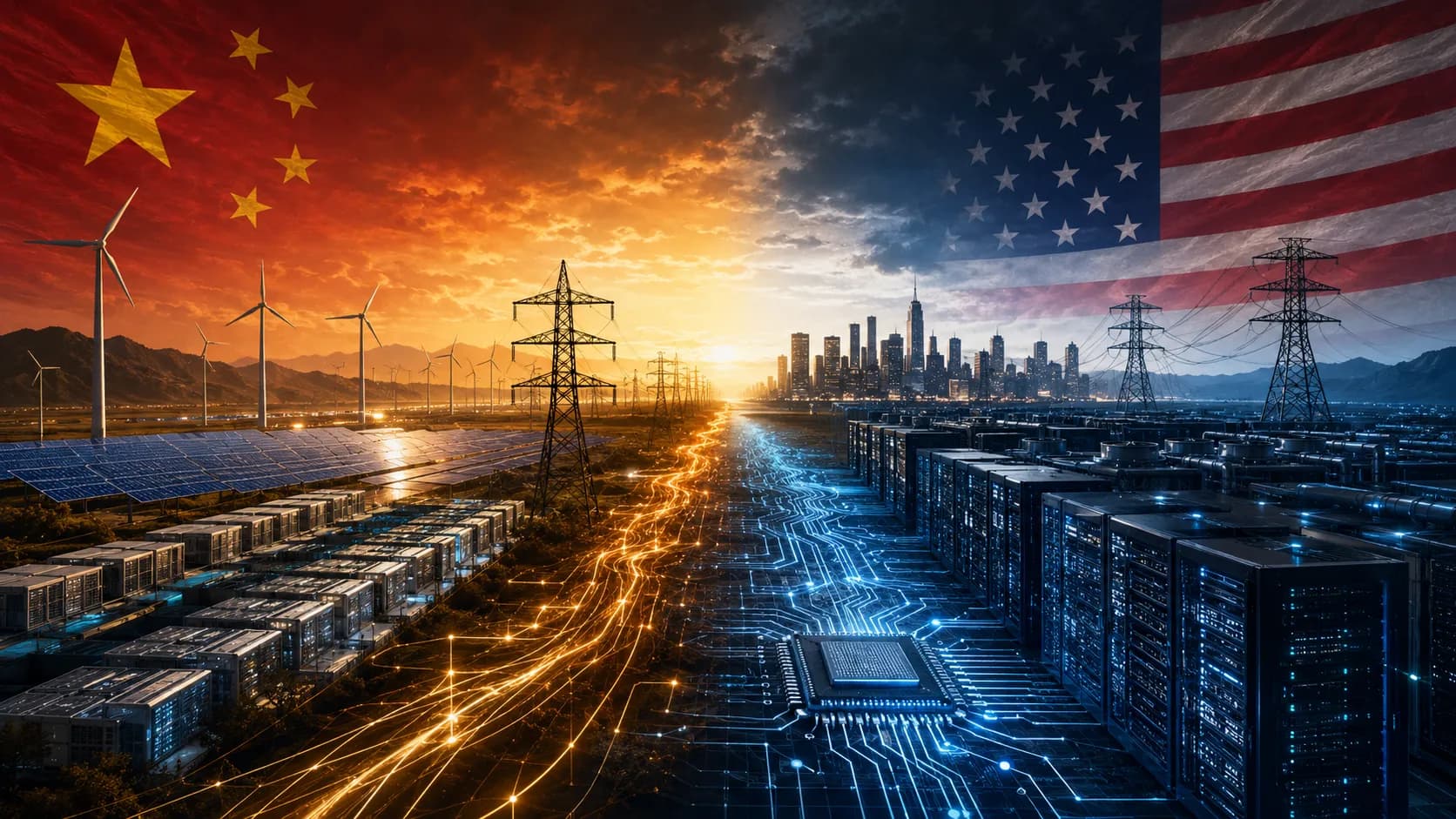
Some areas in China's remote western regions are themselves grappling with energy supply difficulties, prompting authorities to impose restrictions on new data center projects. Taken together, these factors reveal that what initially appeared to be a seamless strategic alignment under the "East Data, West Computing" initiative in fact entails complex logistical and infrastructural challenges. In light of all these considerations, the most concise framing of this competition remains the following: the US has the chips but lacks the power, while China has the power but lacks the chips (McKinsey Global Institute, 2026).
Conclusion
The AI competition between the United States and China presents an unusually complex picture from the perspectives of technology policy, energy planning, and strategic calculation. The United States' established superiority in chip technology and algorithmic infrastructure constitutes its strongest asset; however, this asset cannot serve as a sufficient guarantee without the infrastructure capacity to meet exponentially growing energy demand (U.S. Department of Energy, 2026). China's volumetric dominance in energy production, its accelerated renewable energy expansion, and its strategy of directing data centers toward regions abundant in renewable resources together constitute a credible AI infrastructure advantage (BloombergNEF, 2026; IRENA, 2026). Yet grid fragmentation, underutilized capacity, and hardware integration difficulties significantly curtail this advantage (Hove, 2026; Chan, 2026).
The decisive factor in long-term competition will, in all likelihood, not be any single technology or energy source, but rather the degree to which these elements can be integrated with one another. The country that succeeds in combining cheap and abundant energy with advanced chip technology, an efficient grid infrastructure, and high-quality data center operational capacity will secure a defining competitive advantage in AI leadership (Goldman Sachs, 2026; Yu, 2026). In this respect, both countries possess complementary weaknesses: the United States is striving to close the energy gap, while China is working to close the chip gap. The ultimate outcome will be the product not of a purely technological contest, but of a prolonged, multidimensional rivalry in which geopolitical resolve, energy policy, and industrial strategy are deeply intertwined (McKinsey Global Institute, 2026; Power, 2026).
References
BloombergNEF. (2026). New Energy Outlook 2026. https://about.bnef.com/new-energy-outlook/
Chan, K. (2026). China's Heterogeneous Chip Clusters: Integration Challenges in AI Infrastructure. Princeton SPIA. https://spia.princeton.edu/research/working-papers
Goldman Sachs Global Investment Research. (2026). AI's Power Problem: Electricity Demand and the Infrastructure Gap. https://www.goldmansachs.com/insights/pages/ai-power-demand/
Hove, A. (2026). China's Power System Fragmentation and AI Deployment Risks. Paulson Institute. https://www.paulsoninstitute.org/research/energy/
International Energy Agency (IEA). (2025). Electricity 2025: Analysis and Forecast to 2027. https://www.iea.org/reports/electricity-2025
International Energy Agency (IEA). (2026). Data Centres and Data Transmission Networks. https://www.iea.org/reports/data-centres-and-data-transmission-networks
International Renewable Energy Agency (IRENA). (2026). Renewable Capacity Statistics 2026. https://www.irena.org/Publications/2026/Mar/Renewable-capacity-statistics-2026
McKinsey Global Institute. (2026). The Next Frontier of AI: Energy, Infrastructure and Global Competition. https://www.mckinsey.com/mgi/our-research/artificial-intelligence
Morgan Stanley Research. (2026). Hyperscaler Capital Expenditure Forecast: Data Centres and AI Infrastructure 2026–2030. https://www.morganstanley.com/ideas/ai-data-center-energy-outlook
Musk, E. (2026, January). Energy as the Binding Constraint for AI Deployment [Speech]. World Economic Forum 56th Annual Meeting, Davos. https://www.weforum.org/events/world-economic-forum-annual-meeting-2026
National Development and Reform Commission (NDRC). (2022). East Data, West Computing Initiative: Implementation Guidelines. https://en.ndrc.gov.cn/policies/
National Energy Administration (NEA). (2026). China's Wind and Solar Capacity Additions 2025: Annual Statistical Report. http://www.nea.gov.cn/en/
Power, J. (2026, May 28). China's secret weapon in AI race with US? Lots of cheap energy. Al Jazeera. https://www.aljazeera.com/economy/2026/5/28/chinas-secret-weapon-in-ai-race-with-us-lots-of-cheap-energy
Semiconductor Manufacturing International Corporation (SMIC). (2026). Annual Report 2025. https://www.smics.com/en/site/company_ir
Stanford University Human-Centered Artificial Intelligence. (2026). AI Index Report 2026. https://aiindex.stanford.edu/report/
Synergy Research Group. (2026). Global Data Centre Market Report Q1 2026. https://www.srgresearch.com/data-center/
U.S. Department of Energy. (2026). United States Electricity System and AI Infrastructure: Challenges and Opportunities. https://www.energy.gov/oe/office-electricity
Wood Mackenzie. (2026). US Power Grid Constraints and Data Centre Growth. https://www.woodmac.com/reports/power-markets/
Xiong, W. (2026). Ultra-high voltage transmission and renewable energy integration in western China data centre clusters. Energy Policy, 189, 113–127. https://www.sciencedirect.com/journal/energy-policy
Yu, H. (2026). The Power Imperative: Energy, Silicon and the Future of AI Leadership. IMD Global Center for Digital Business Transformation. https://www.imd.org/research-knowledge/digital/
Zhansaya Nurlanovna
Contributing writer at EUReflect.
Follow EUReflect
See more of our reporting on Google
Mark EUReflect as a preferred source and our stories are ranked higher for you in Top Stories, Discover and Google News — and carry a “preferred” badge when they are cited in AI results.
Add EUReflect as a preferred source