CIA Chief’s Moscow Visit Signals a New Channel
The visit marks the first public confirmation of direct US-Russia intelligence contacts since the start of the Ukraine war, offering a potential backchannel for de-escalation.
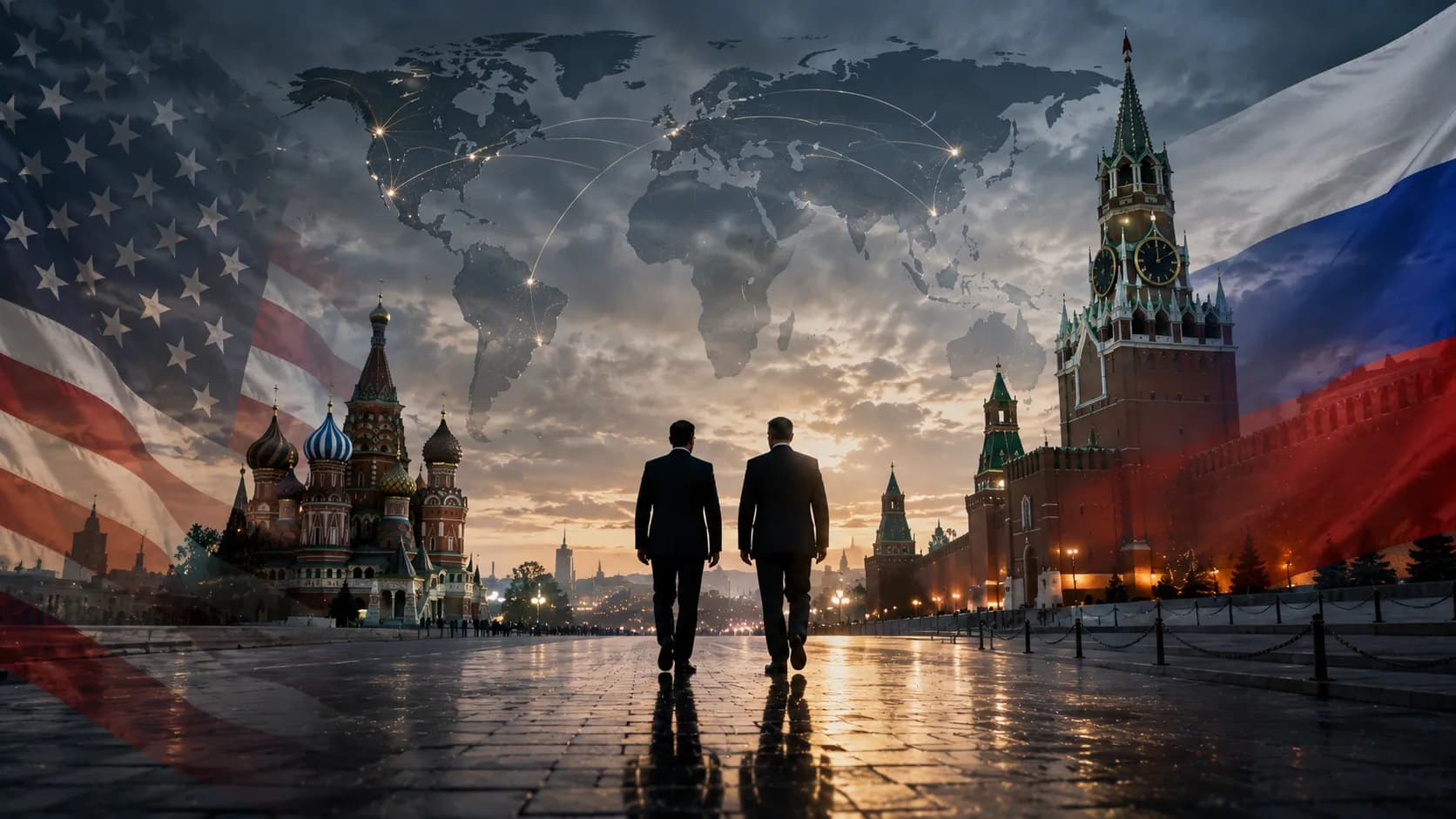
CIA Director John Ratcliffe’s unexpected visit to Moscow has opened a rare direct channel between the United States and Russia at a time when relations remain dominated by the war in Ukraine, military tensions and uncertainty over future negotiations.
Ratcliffe arrived in Moscow on August 25. Kremlin spokesman Dmitry Peskov subsequently confirmed that contacts between Russian and American intelligence services had taken place but stressed that Ratcliffe did not meet Russian President Vladimir Putin.
The limited information released about the discussions has made the visit particularly significant. Intelligence contacts between Washington and Moscow can serve a different function from conventional diplomacy: maintaining communication when political relations are too strained for normal channels to operate effectively.
Intelligence Channels Return
According to the Kremlin, the purpose of Ratcliffe’s trip was communication between the two countries’ intelligence services.
Peskov did not provide details about the substance of those contacts. Russian officials also rejected reports suggesting that a meeting between Ratcliffe and Putin had been planned.
The secrecy surrounding the discussions is unsurprising.
Intelligence diplomacy can allow adversaries to exchange warnings, clarify military intentions and discuss sensitive security questions without immediately turning those contacts into formal political negotiations.
For Washington and Moscow, such a channel has particular importance because both countries remain nuclear powers directly involved in the broader European security confrontation.
Ukraine Is the Background
Although neither side has publicly disclosed a detailed agenda, the Ukraine war inevitably forms the strategic background to the visit.
U.S. President Donald Trump commented on Ratcliffe’s trip on August 27, describing it as relatively routine while expressing hope that something useful could emerge from the contact.
Trump also rejected speculation that Ratcliffe had traveled to Moscow specifically to test Russian intentions toward NATO and again emphasized Washington’s efforts to bring the Ukraine war to an end.
This makes the visit important even if it does not immediately produce a diplomatic breakthrough.
The existence of a direct intelligence channel can reduce the risk that military developments are misunderstood by either side.
A Different Form of Diplomacy
Traditional diplomacy between Russia and the United States remains extremely difficult.
The two countries disagree over Ukraine, NATO, sanctions, European security and the future military balance on the continent.
Intelligence communication operates differently.
Its purpose does not necessarily require political agreement. Instead, intelligence officials can communicate about threats even when their governments remain strategic competitors.
During periods of intense confrontation, these unofficial or semi-official channels can become particularly valuable.
Washington and Moscow maintained similar mechanisms during parts of the Cold War precisely because nuclear powers cannot afford complete strategic isolation from one another.
Moscow Also Has an Interest in Dialogue
Russia has reasons to preserve these channels.
Moscow wants direct access to American decision-makers while simultaneously demonstrating that Western efforts to isolate Russia have not eliminated communication with Washington.
For the Kremlin, intelligence contacts can also provide a mechanism for transmitting messages without making political concessions publicly.
For Washington, the calculation is different but complementary.
Maintaining communication can provide better understanding of Russian intentions and reduce the possibility that an unexpected military development produces uncontrolled escalation.
This does not mean relations are normalizing.
It means both sides recognize that strategic competition requires communication as well as deterrence.
Not a Reset — But a Signal
Ratcliffe’s Moscow visit should therefore not be interpreted as evidence of a new U.S.-Russia partnership.
There has been no announced political settlement over Ukraine, and major disagreements between Washington and Moscow remain unresolved.
But the visit is still significant.
A CIA director traveling to Moscow represents a high-level security contact at a moment when relations between the two nuclear powers remain deeply unstable.
The most important outcome may consequently be the channel itself.
Washington and Moscow remain adversaries on many strategic questions, but Ratcliffe’s visit suggests that both sides still see value in keeping a direct line open when the costs of misunderstanding could be exceptionally high.
Ahmet Balakan
Contributing writer at EUReflect.
Follow EUReflect
See more of our reporting on Google
Mark EUReflect as a preferred source and our stories are ranked higher for you in Top Stories, Discover and Google News — and carry a “preferred” badge when they are cited in AI results.
Add EUReflect as a preferred source