Europe Prepares for the Worst
The SAFE programme provides up to €150 billion in loans for joint defence purchases, with over €90 billion already secured.
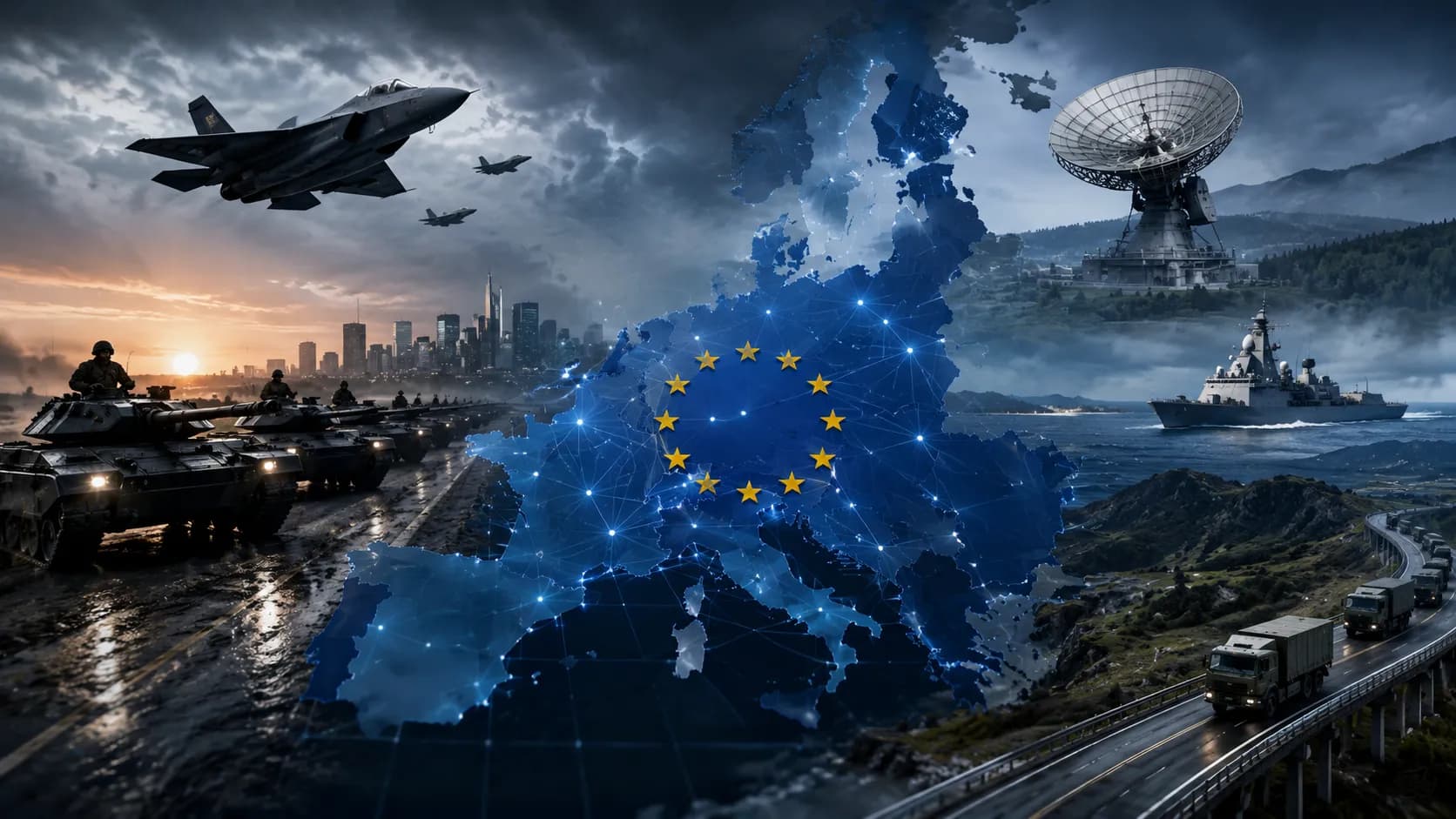
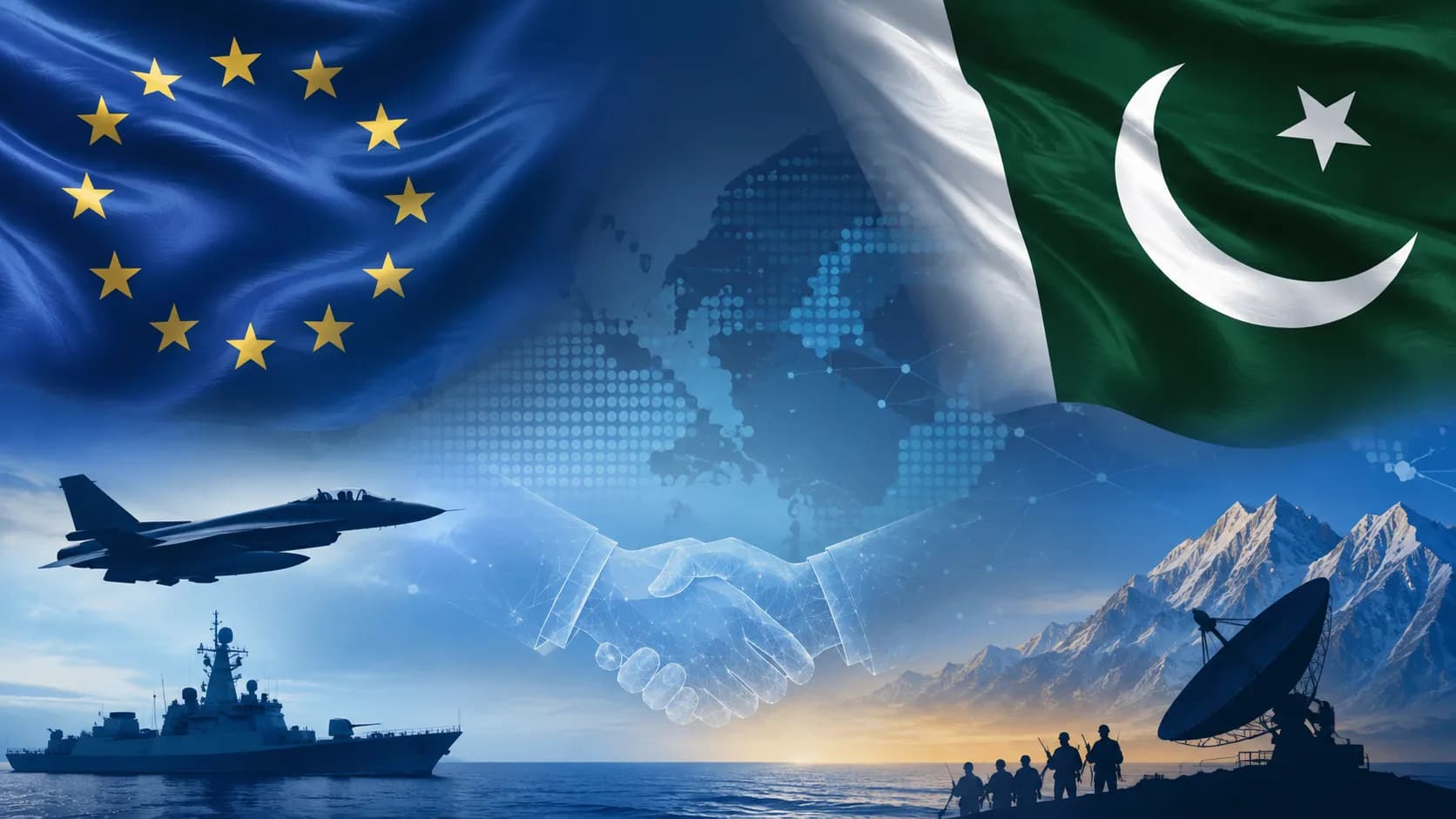
The European Union is not officially preparing for a "Third World War." But its defence policies increasingly show that Brussels is preparing for something Europe spent decades believing was unlikely: a large-scale military confrontation affecting EU territory.
Russia's continuing war against Ukraine, repeated hybrid attacks, drone incidents, pressure on critical infrastructure and uncertainty surrounding the future scale of the American military presence in Europe have fundamentally changed the continent's security calculations.
The EU's response is increasingly visible.
Defence spending is rising. Joint weapons procurement is expanding. Drone and missile defences are being developed. Military transport corridors are being redesigned. Strategic stockpiles are receiving greater attention, while European defence industries are being pushed to produce weapons faster.
The central objective now has a date:
Europe wants to be substantially more prepared for a major military contingency by 2030.
Readiness 2030 Changes the EU
The most important framework is the EU's Defence Readiness 2030 strategy.
The European Commission's roadmap identifies four flagship projects: Eastern Flank Watch, the European Drone Defence Initiative, the European Air Shield and the European Space Shield.
These initiatives address different layers of a possible future conflict.
Eastern Flank Watch focuses on Europe's most exposed territories.
The Drone Defence Initiative responds to the rapidly growing importance of unmanned systems.
The European Air Shield aims to strengthen protection against aerial threats.
The Space Shield addresses Europe's dependence on satellites for communications, navigation, intelligence and military operations.
This is significantly different from the EU's traditional security role.
For decades, European integration was primarily associated with trade, regulation, diplomacy and economic cooperation.
The EU is now increasingly involved in creating the financial and industrial foundations necessary for military power.
€150 Billion for Faster Rearmament
Money is one of the clearest indicators of this transformation.
The EU's Security Action for Europe programme, known as SAFE, provides up to €150 billion in loans for member states to accelerate defence investment.
SAFE particularly encourages countries to purchase equipment together rather than maintaining fragmented national procurement systems.
Priority areas include ammunition, missiles, air defence and ground combat systems.
The wider ReArm Europe/Readiness 2030 framework is intended to enable more than €800 billion in additional defence investment.
Implementation has already started.
Estonia received its first €351.6 million SAFE payment in August, while the European Commission said on August 27 that more than €90 billion had already been secured under the instrument and initial disbursements were underway.
Italy has also formally requested €8 billion from SAFE, demonstrating that the programme is expanding beyond the countries directly bordering Russia.
Europe Is Building Against Drones
The war in Ukraine has demonstrated that relatively inexpensive drones can threaten military bases, energy facilities, airports, logistics networks and civilian infrastructure.
Europe is responding accordingly.
On August 28, Baltic Sea countries announced plans for a joint drone-defence task force designed to allow faster information sharing and responses to hybrid threats.
The initiative follows repeated incidents involving critical infrastructure in the Baltic region.
Germany has also been on heightened alert after a drone carrying explosives was discovered earlier this month at Leipzig/Halle Airport, an important military logistics hub.
German officials have not publicly attributed the incident to a foreign government.
The significance goes beyond individual drones.
Europe increasingly assumes that any future conflict could begin below the threshold of conventional warfare — with cyberattacks, sabotage, drones, disinformation and attacks on infrastructure.
The Eastern Flank Is Becoming Europe’s Front Line
Geography is also reshaping European defence.
Countries stretching from Finland and the Baltic states through Poland and Romania to the Black Sea have become central to EU and NATO military planning.
The European Council has described Russia's war against Ukraine as an existential challenge for the Union and called for accelerated protection of Europe's land, air and maritime borders.
It has particularly emphasized air defence, counter-drone capabilities and the Eastern Flank Watch initiative.
Northern European cooperation is simultaneously becoming deeper.
On August 28, Sweden announced that Gripen fighter jets and corvette warships would help protect and monitor Finnish territory through at least the end of 2026.
Finland shares approximately 1,340 kilometres of border with Russia.
The deployment demonstrates how European countries are increasingly integrating military capabilities before a crisis occurs rather than waiting for one to begin.
The Black Sea Is Another Strategic Zone
Europe's southeastern flank is also receiving greater attention.
Bulgaria, Romania and Türkiye already cooperate in the Black Sea on mine countermeasures.
Bulgaria has now approved the acquisition of seven minehunter vessels from Belgium and the Netherlands as the regional mission expands toward protecting critical infrastructure and maritime routes.
The Black Sea has become strategically important not only because of Ukraine and Russia but because it connects European security with Türkiye, the Caucasus, energy routes and global grain exports.
A wider European war would therefore not have a single front.
The Baltic, Black Sea, Arctic, Mediterranean, cyberspace and space could all become strategically connected.
Europe Wants to Move Armies Faster
One of Europe's less visible weaknesses is logistics.
Having tanks, missiles and troops is not enough if they cannot move rapidly across national borders.
Different railway standards, bridges unable to support heavy military vehicles, national permits, customs procedures and infrastructure bottlenecks can slow military deployments.
The EU is therefore developing a new military mobility framework.
The plan would introduce faster authorization procedures, upgrade dual-use roads, ports, railways and bridges and create a European Military Mobility Enhanced Response System for emergencies.
A proposed military mobility solidarity pool would also allow countries to share transportation capacity.
In practical terms, Europe is preparing its civilian infrastructure to function more effectively during a military crisis.
Stockpiles Are Returning
Another lesson from Ukraine concerns ammunition.
Modern high-intensity warfare consumes enormous quantities of artillery shells, missiles, drones, spare parts and other equipment.
Europe's Defence White Paper consequently identifies strategic stockpiles as an essential component of readiness.
The EU wants sufficient reserves combined with industrial capacity capable of replacing weapons and ammunition rapidly during a prolonged conflict.
This represents a major change from the post-Cold War model.
European militaries spent decades optimizing for smaller expeditionary operations.
They are increasingly preparing again for the possibility of sustained warfare between technologically advanced states.
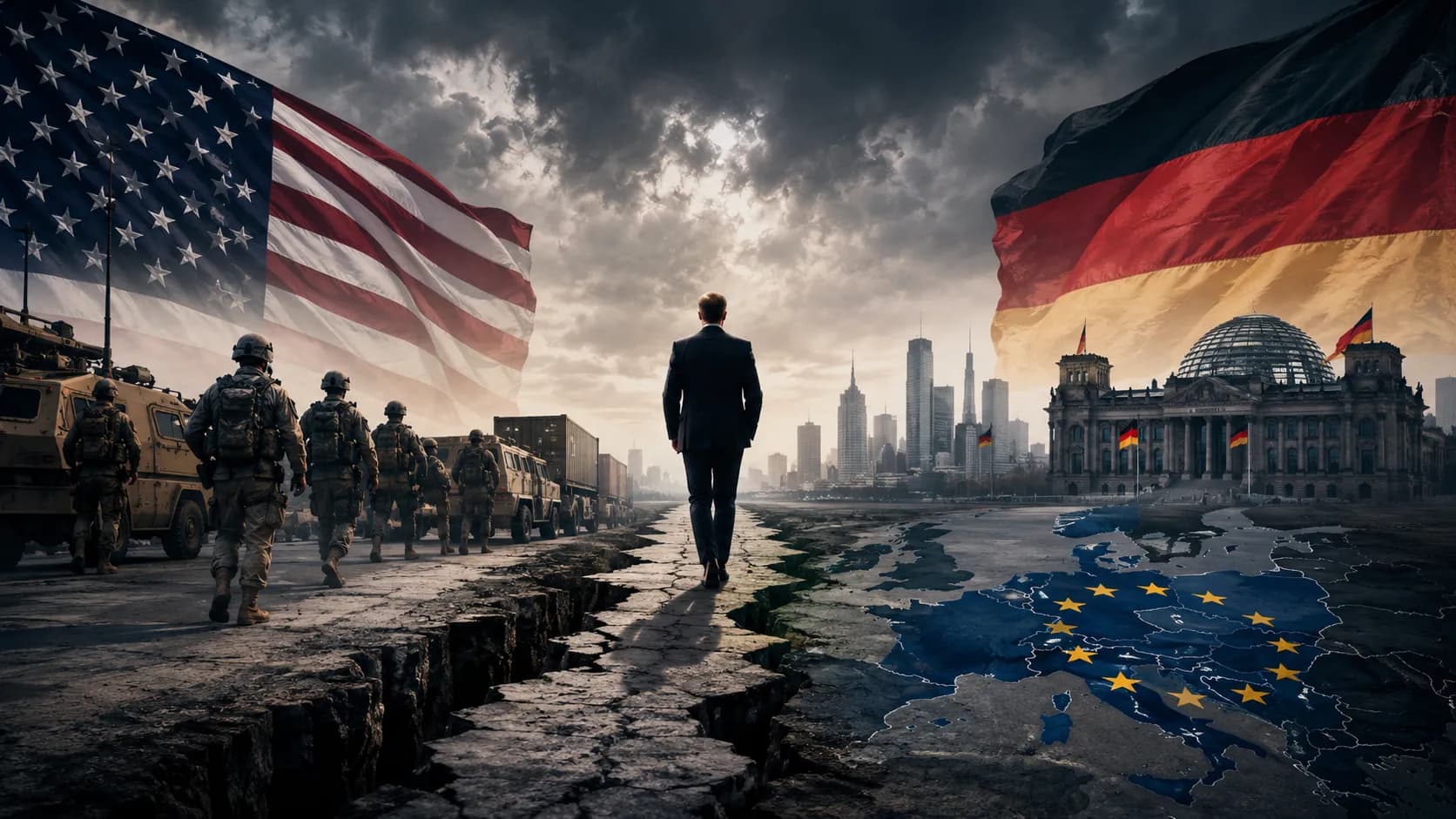
America Is the Biggest Strategic Uncertainty
The United States remains indispensable to European security.
But Washington itself is now pushing Europe to assume more responsibility.
On August 27, US Under Secretary of Defense for Policy Elbridge Colby told NATO ambassadors in Brussels that Washington wants a transition toward a more European-led conventional defence of the continent.
The Pentagon is simultaneously conducting a six-month review of US military deployments in Europe.
Approximately 80,000 American troops are currently stationed on the continent.
The review does not automatically mean a major American withdrawal.
But it reinforces the European conclusion that the continent must become capable of carrying a much larger share of its own defence burden.
NATO Remains Essential
This distinction is important.
The EU is not attempting to replace NATO.
European leaders continue to describe NATO as the foundation of collective defence for its members.
Instead, the emerging strategy attempts to strengthen the European component of NATO.
The United States would remain essential, particularly for nuclear deterrence, intelligence, strategic logistics and high-end military capabilities.
But Europe would provide more conventional forces, weapons production, infrastructure and financing.
The result could eventually be a NATO in which Europe is considerably less militarily dependent on Washington.
Is Europe Preparing for World War III?
Not literally.
There is no EU policy document announcing preparations for a Third World War, and describing every defence investment in those terms would exaggerate the current situation.
But Europe is preparing for scenarios that would previously have been considered extreme.
The Commission's own Defence White Paper explicitly refers to readiness for the "worst extreme military contingencies."
That distinction matters.
Brussels is attempting to make a major war less likely by convincing potential adversaries that Europe would be capable of responding to one.
The logic is deterrence.
A Europe with larger ammunition reserves, integrated air defence, drone protection, military mobility, stronger borders and a larger defence industry should theoretically be more difficult to attack.
Europe’s Security Model Is Being Rewritten
The transformation underway in 2026 is therefore larger than another increase in defence budgets.
Europe is rebuilding the infrastructure of military power.
Weapons production, drones, missile defence, strategic stockpiles, military transportation, space systems, critical infrastructure and defence financing are increasingly being connected into one continental security architecture.
The EU that emerged after the Cold War was designed primarily to manage peace.
The EU emerging from the Ukraine war is attempting to ensure that it can also survive a much more dangerous international system.
Whether Europe ever faces the extreme conflict for which it is preparing remains impossible to predict.
The objective of these policies is precisely to make sure that it never does.
Ahmet Balakan
Contributing writer at EUReflect.
Follow EUReflect
See more of our reporting on Google
Mark EUReflect as a preferred source and our stories are ranked higher for you in Top Stories, Discover and Google News — and carry a “preferred” badge when they are cited in AI results.
Add EUReflect as a preferred source