Europe’s Migration Crisis Deepens
The new EU Pact on Migration and Asylum, in force since June, has failed to ease tensions, with Italy and Germany clashing over responsibility for asylum seekers and NGO rescue vessels.
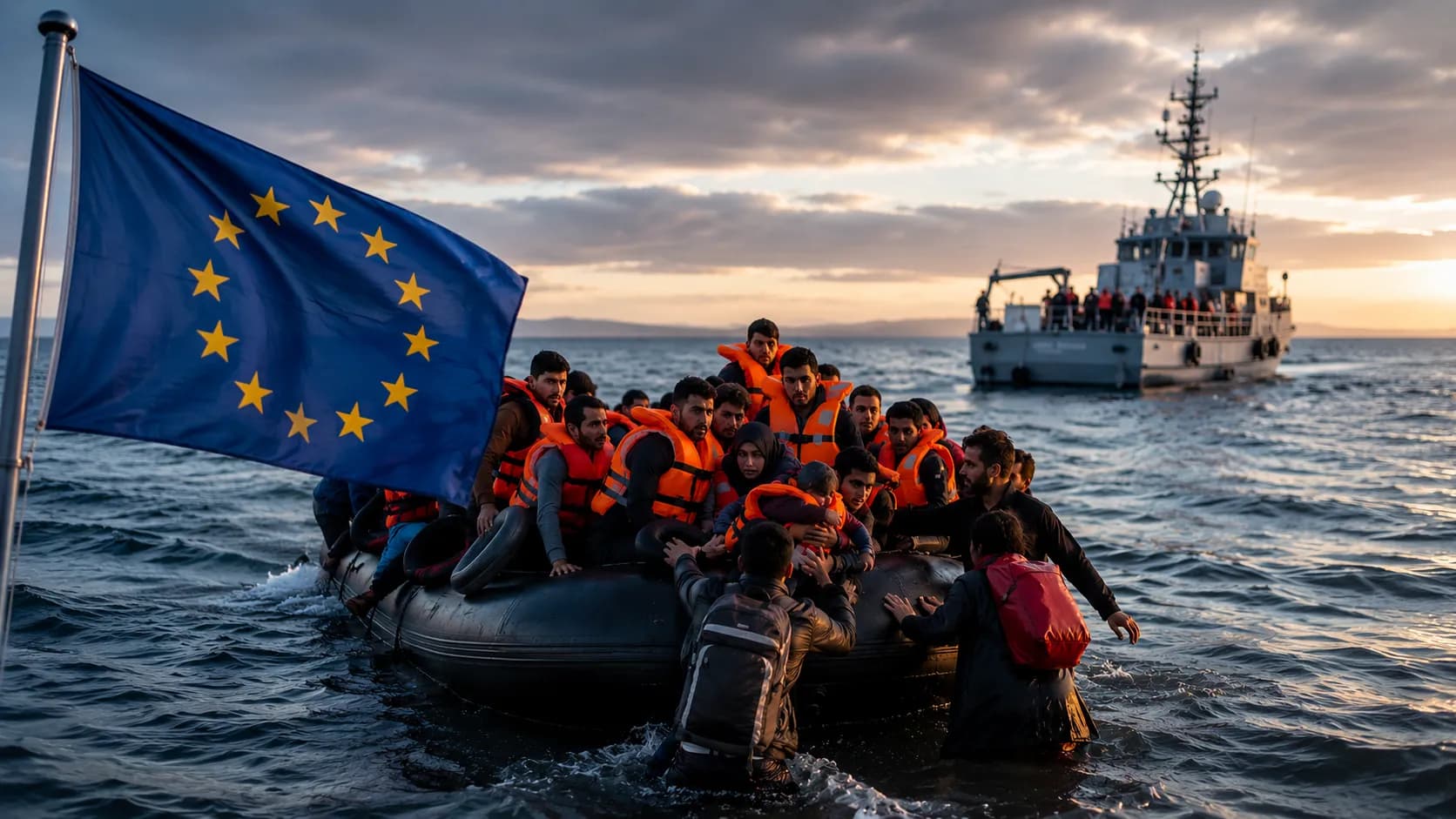
Europe’s long-running migration challenge has entered a new and increasingly contentious phase in the summer of 2026. The European Union’s new Pact on Migration and Asylum became applicable on June 12, introducing a common framework for border procedures, asylum processing, returns and burden-sharing among member states.
Yet the new system has not ended political disagreements. Instead, tensions over who should take responsibility for migrants arriving in Europe are becoming more visible, particularly among frontline states such as Italy, Greece and Spain and destination countries such as Germany.
Italy and Germany Clash Over Responsibility
One of the most prominent disputes involves Rome and Berlin.
Germany wants some asylum seekers who first entered the EU through Italy and later travelled to Germany to be returned to Italy. Rome, meanwhile, has raised objections over migrants rescued in the Mediterranean by German-linked non-governmental organizations and subsequently brought to Italian ports.
Italian Interior Minister Matteo Piantedosi has even raised the possibility of seeking compensation from Germany over migrants brought ashore by German NGOs.
According to figures cited by Italian authorities, private rescue vessels brought around 42,300 people to Italy between the beginning of Giorgia Meloni’s government in October 2022 and August 13, 2026. Around 22,500 were reportedly transported by German NGOs.
The dispute reflects a broader question that has troubled the European migration system for years: Should responsibility primarily fall on the country where an asylum seeker first enters the EU, the country where they ultimately settle, or the European Union collectively?
The Mediterranean Remains Deadly
While European governments debate responsibility, the humanitarian cost of migration remains high.
Data from the International Organization for Migration indicate that more than 51,000 migrants and refugees have reached Europe so far in 2026, while more than 1,800 people have died or gone missing along migration routes.
The Central Mediterranean remains particularly dangerous. Migrants departing from Libya and Tunisia often attempt to reach Europe aboard overcrowded and unseaworthy vessels, keeping search-and-rescue operations at the center of political and humanitarian disputes.
This creates an uncomfortable reality for Europe: even when irregular arrivals decline, the risks faced by those attempting the journey remain severe.
Pressure Builds in Greece
Greece is facing its own pressures.
On August 23, clashes broke out between migrants and police at the Sintiki migrant detention facility in northern Greece. According to the Associated Press, 35 migrants escaped after cutting through a perimeter fence, with roughly half later apprehended.
Five migrants were hospitalized following the disturbances.
Around 450 asylum seekers were reportedly being held at the facility while awaiting decisions on their applications. The incident once again highlighted the pressure facing reception and detention facilities along the EU’s external borders.
Europe Remains Divided
The deeper problem is that European governments continue to approach migration from different political perspectives.
Italy under Prime Minister Giorgia Meloni has emphasized stronger external border controls, faster returns and agreements with countries outside the European Union aimed at reducing irregular migration.
Germany has placed greater emphasis on ensuring that European responsibility rules are actually enforced, particularly when asylum seekers move from their country of first entry to another EU member state.
Spain faces its own challenges through migration routes from North and West Africa, while Greece remains one of the principal gateways along the EU’s southeastern frontier.
As a result, the debate is no longer simply about how Europe can reduce irregular migration. It is increasingly about how responsibility should be distributed once migrants reach European territory.
The Migration Pact Faces Its First Major Test
The EU’s new Pact on Migration and Asylum was designed partly to address these divisions.
It introduces faster screening at external borders, new asylum and border procedures, stronger return mechanisms and a solidarity system intended to support member states experiencing significant migration pressure.
However, the principle that the country of first entry carries substantial responsibility has not disappeared entirely.
Southern European countries therefore remain concerned that geography could continue to leave them carrying a disproportionate burden. Northern European governments, meanwhile, face secondary movements of asylum seekers who enter through Mediterranean countries and later travel north.
The success of the new system will depend on whether the EU can reconcile these competing interests.
Fewer Arrivals, Greater Political Pressure
Europe’s current situation should not simply be described as another surge in migration. Irregular border crossings have fallen significantly on some routes in recent years. Frontex reported that irregular crossings at the EU’s external borders declined by 22 percent during the first nine months of 2025 compared with the same period a year earlier.
Yet migration remains one of Europe’s most politically sensitive issues.
The reason is increasingly clear: the crisis is no longer defined only by the number of people arriving.
Border security, asylum rights, deportations, Mediterranean rescue operations, cooperation with third countries and burden-sharing between EU members have become interconnected parts of the same political dispute.
The implementation of the Migration and Asylum Pact therefore represents not the end of Europe’s migration crisis, but the beginning of a new phase.
The decisive question for the coming months will be whether Italy, Germany, Greece, Spain and other member states can translate common European rules into a genuinely common migration policy.
For Europe, the challenge is increasingly less about whether it has migration rules — and more about whether its governments are willing to share responsibility for enforcing them.
Ahmet Balakan
Contributing writer at EUReflect.
Follow EUReflect
See more of our reporting on Google
Mark EUReflect as a preferred source and our stories are ranked higher for you in Top Stories, Discover and Google News — and carry a “preferred” badge when they are cited in AI results.
Add EUReflect as a preferred source