France Stands Firm as Spain, Ireland, the Netherlands and Slovenia Boycott Eurovision Over Israel
France will participate in Eurovision 2026 and criticizes Spain, Ireland, the Netherlands, and Slovenia for boycotting the contest over Israel’s inclusion. French Foreign Minister Jean-Noël Barrot called the boycott “obscurantism” and argued that culture should not be politicized. The dispute reflects growing divisions in Europe over how to handle the Israel–Gaza conflict in cultural arenas.
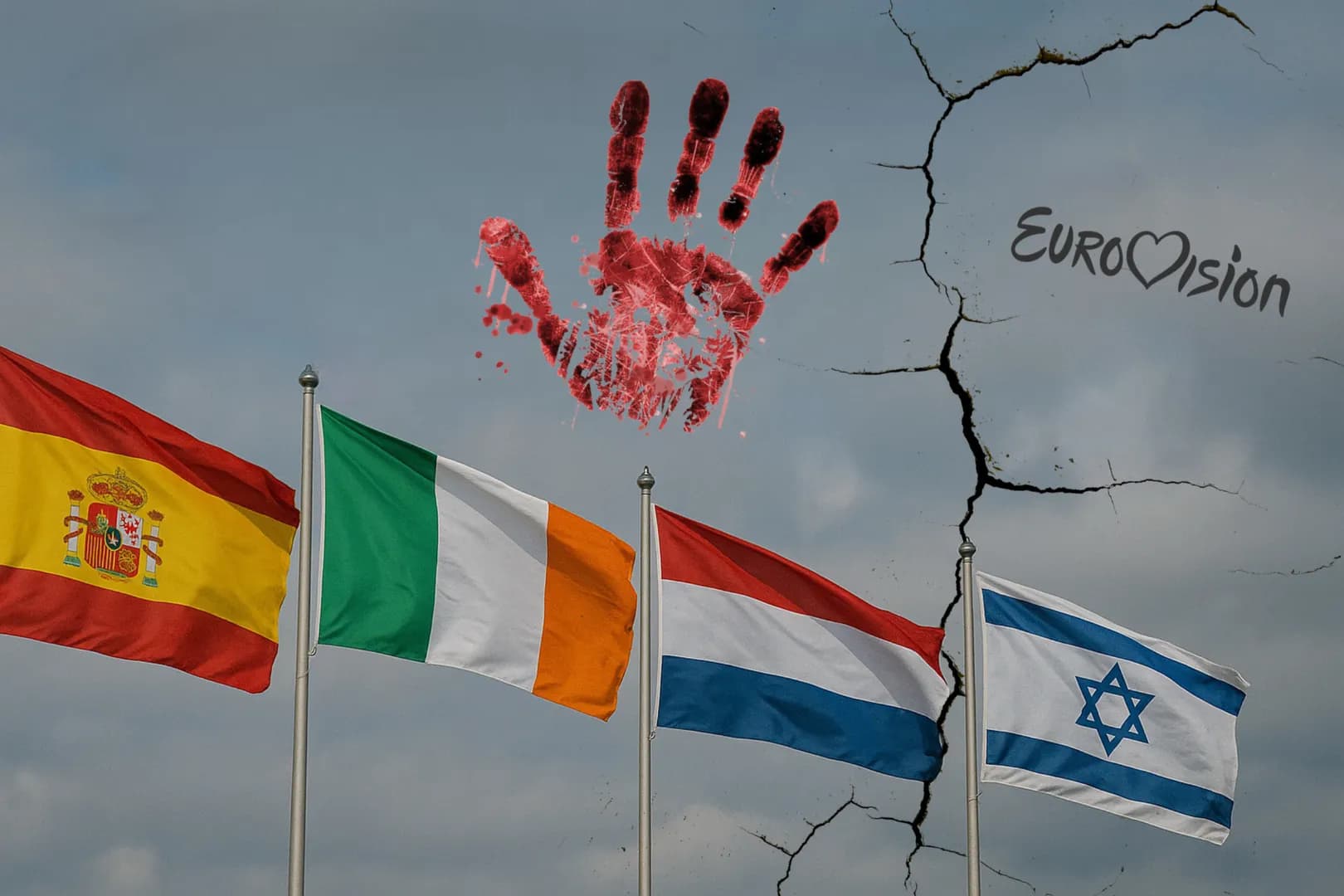
Paris has confirmed its participation in Eurovision 2026, while sharply condemning the boycott of Israeli performers by several European broadcasters. The announcement comes amid a growing political dispute inside the European broadcasting community over Israel’s presence in the contest.
France Télévisions said the country will remain in the competition despite decisions by public broadcasters in Spain, Ireland, the Netherlands, and Slovenia to withdraw from Eurovision in protest. According to the BBC, these broadcasters argue that Israel should have been excluded from the event due to the humanitarian consequences of the Gaza war and alleged irregularities in the voting system during previous editions.
French FM: “France Will Never Boycott a People, Their Artists or Intellectuals”
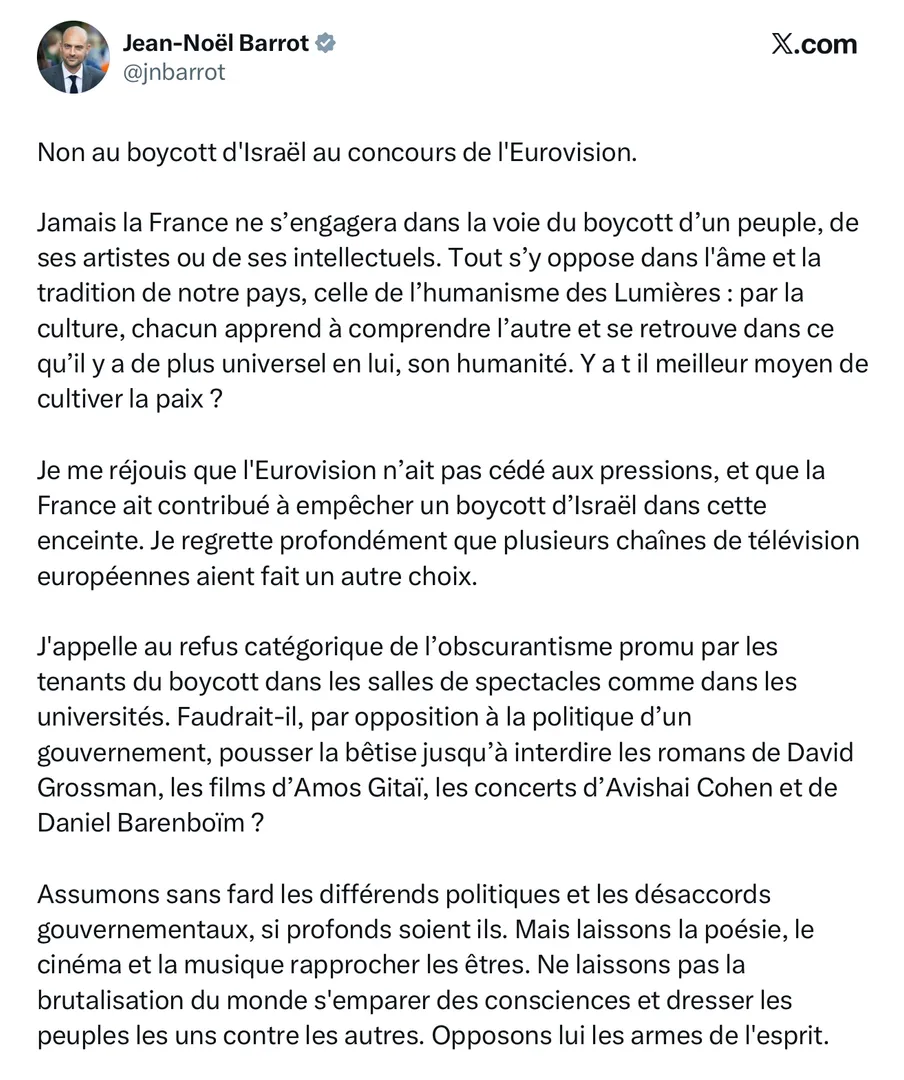
French Foreign Minister Jean-Noël Barrot condemned the boycott movement in a statement posted on X, calling it “obscurantism” and fundamentally incompatible with France’s Enlightenment values.
“France will never commit itself to the path of boycotting a people, their artists or their intellectuals,” Barrot wrote.
“By culture, we learn to understand one another. Is there any better way to cultivate peace?”
Barrot praised the European Broadcasting Union for resisting political pressure and keeping Israel in the competition, adding that France played a role in ensuring that the boycott did not advance inside Eurovision structures.
He criticized the European broadcasters that chose to withdraw, calling for a “categorical rejection of the obscurantism promoted by the advocates of boycotts in concert halls and universities.”
The minister went further, warning against extending political disagreements to the cultural sphere:
“Should we, because we oppose a government’s policy, go so far as to ban the novels of David Grossman, the films of Amos Gitaï, or the concerts of Avishai Cohen and Daniel Barenboim?”
A Divided Europe Ahead of Eurovision 2026
The controversy signals deeper fragmentation within Europe over how to balance cultural values, political activism, and humanitarian concerns. With four broadcasters already withdrawing and others debating their positions, Eurovision—long marketed as a celebration of unity—has become a microcosm of Europe’s geopolitical tensions.
Zhansaya Nurlanovna
Contributing writer at EUReflect.
Follow EUReflect
See more of our reporting on Google
Mark EUReflect as a preferred source and our stories are ranked higher for you in Top Stories, Discover and Google News — and carry a “preferred” badge when they are cited in AI results.
Add EUReflect as a preferred source